Prepare before you view
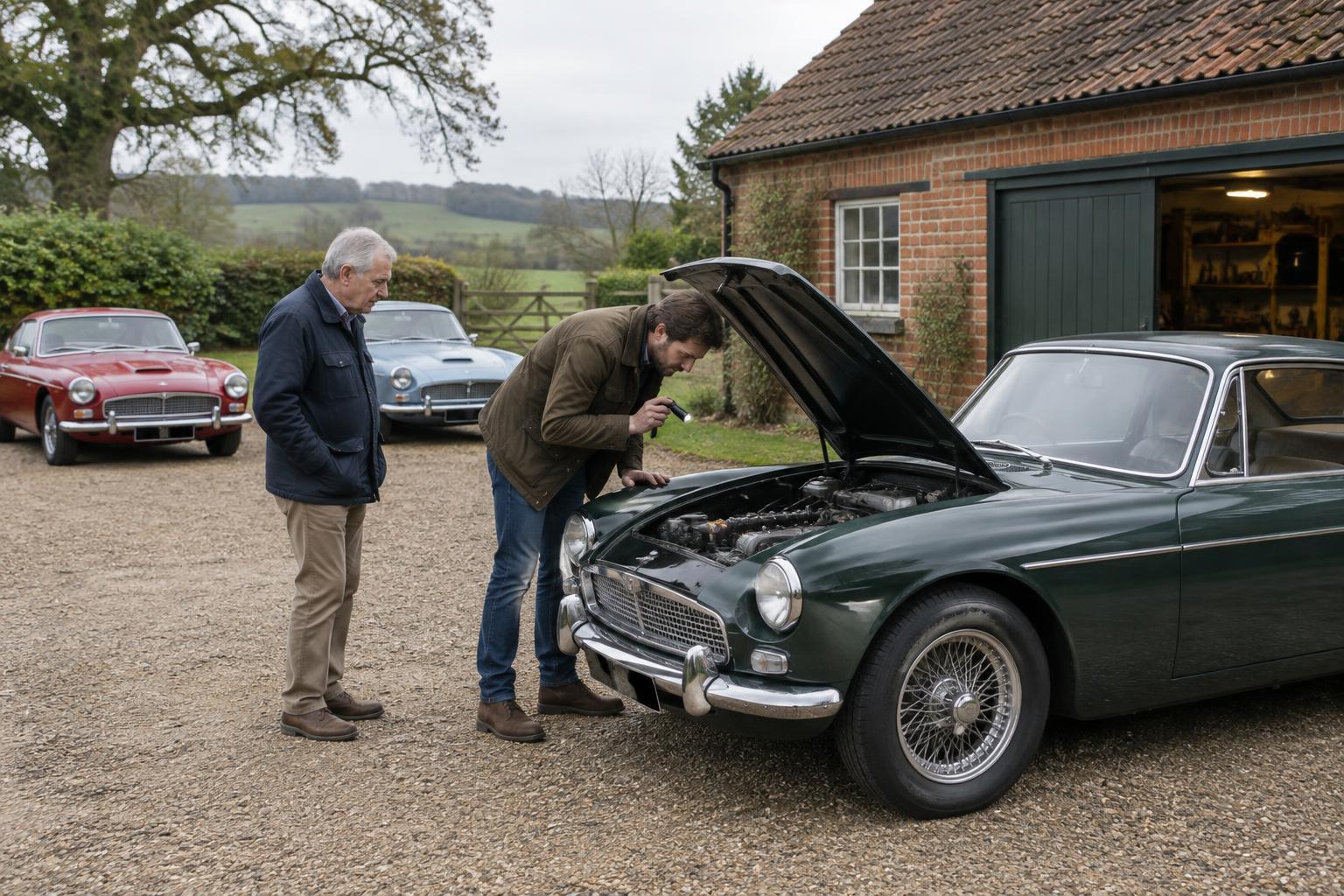
Start by learning how the particular model was built. A separate-chassis car, a monocoque saloon and a body-on-frame sports car can hide trouble in different places. A model-specific buying guide can help you locate known rust traps, but treat it as a prompt to inspect, not proof that every car has the same weaknesses. Take a torch, clean cloth, notepad and, if appropriate, a small mirror. Arrange to see the car in daylight, on dry ground, with the engine cold.
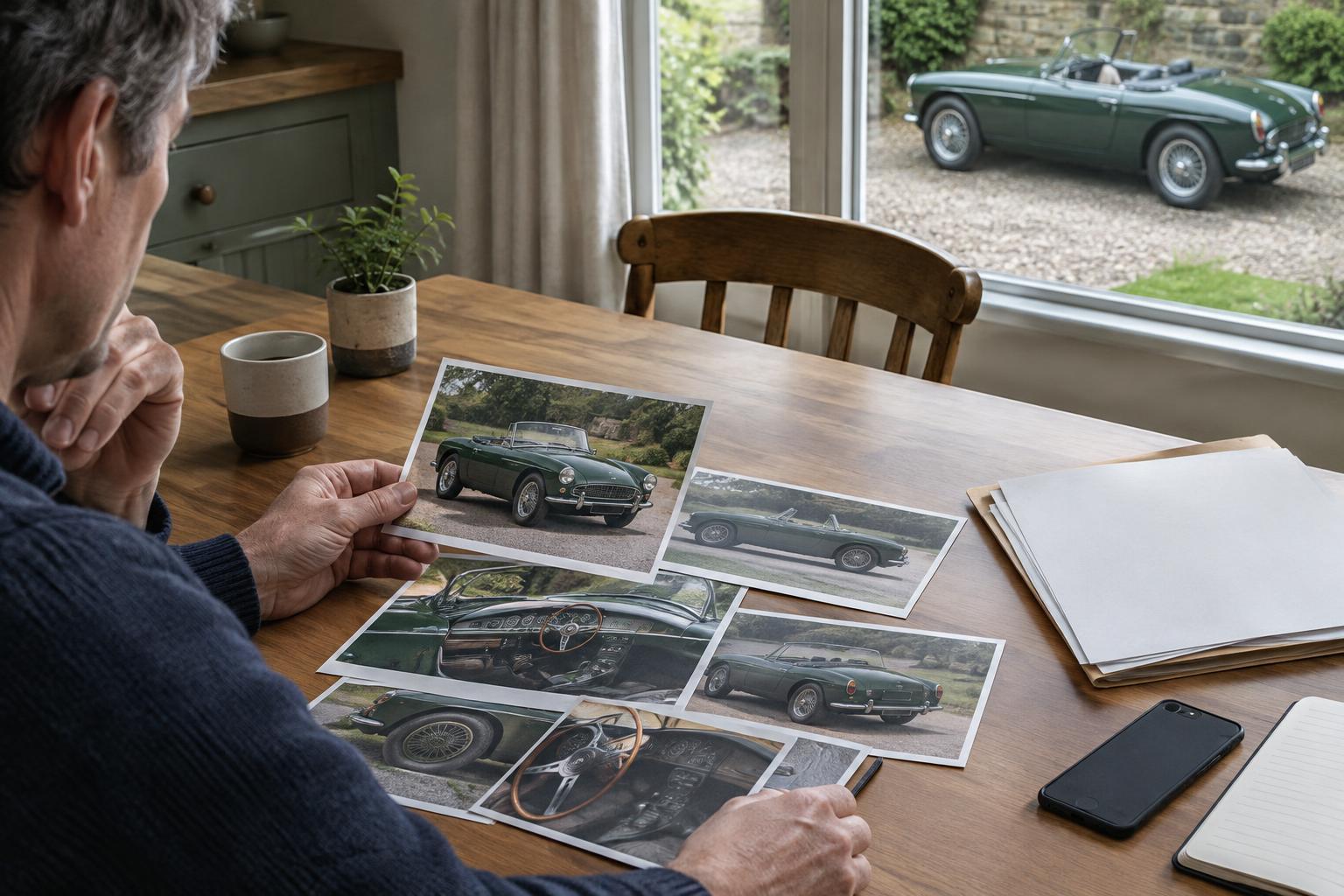
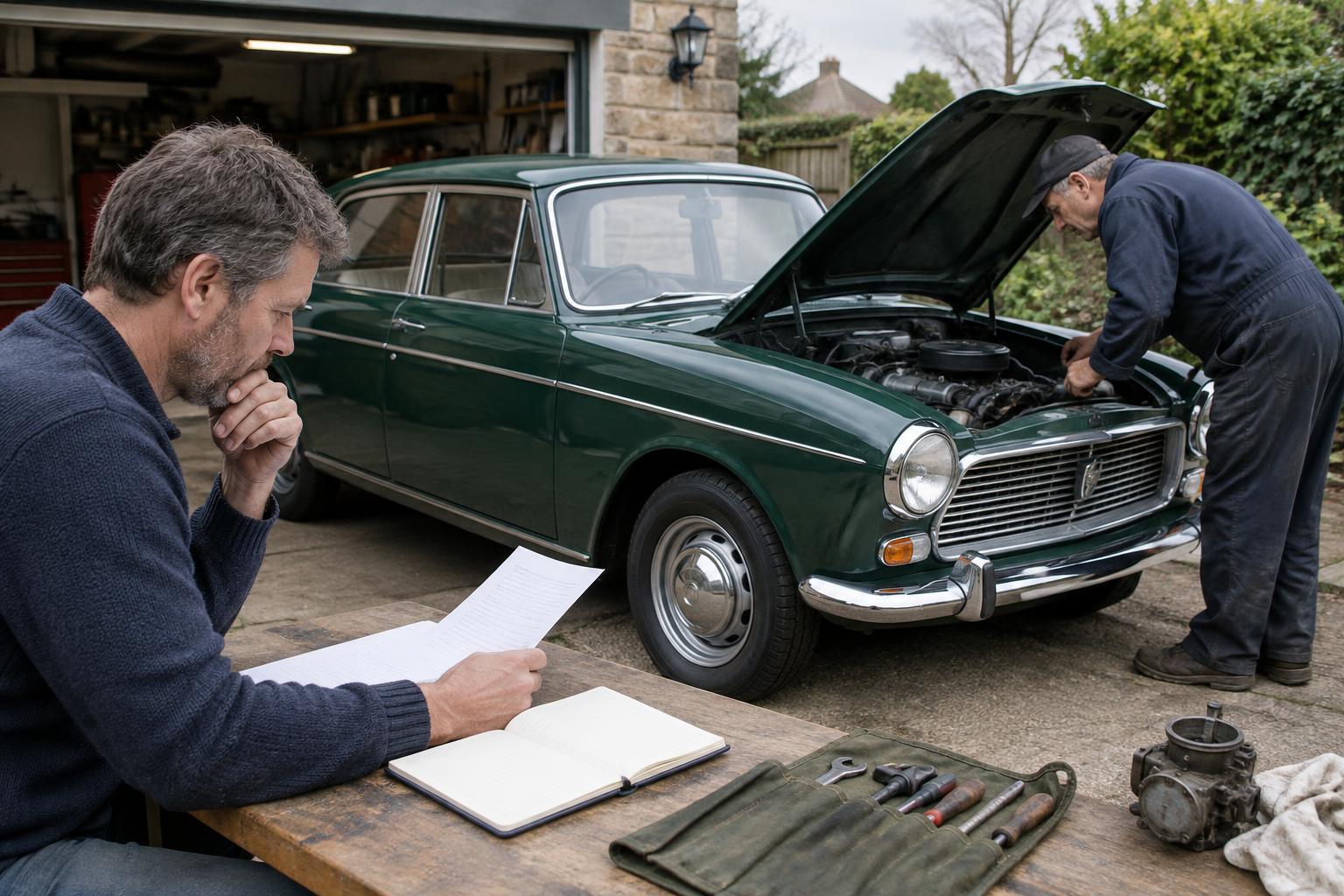
Ask the seller for the registration and identity details, service and repair records, and any photographs of earlier restoration work. Compare the paperwork with the car in front of you: do the recorded engine and chassis details match what is fitted, and do invoices describe work you can actually see? A recent inspection certificate or a thick history file may be useful, but neither replaces your own assessment. If access underneath is limited, note what remains unverified rather than guessing.
Inspect the structure before the shine
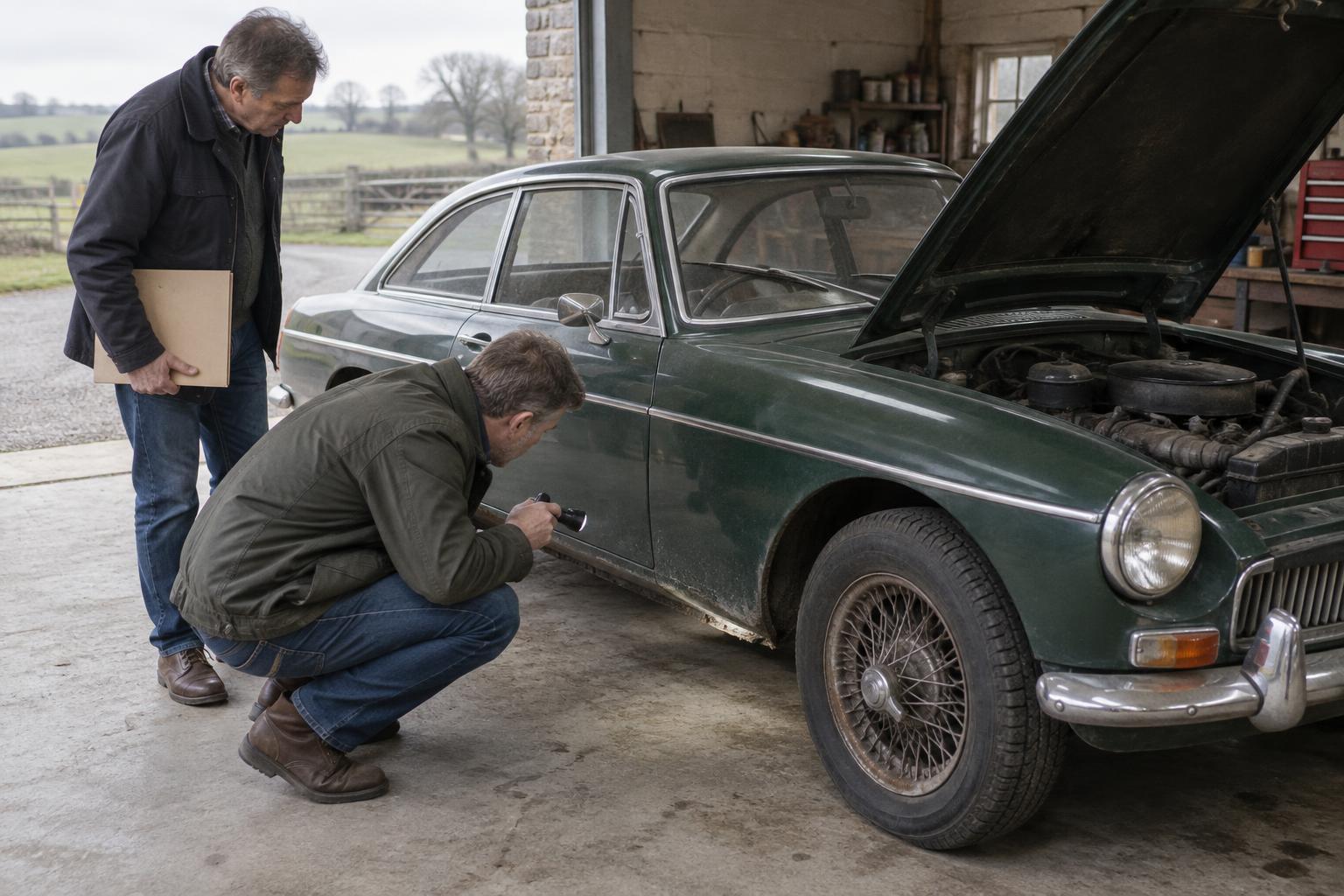
Walk around the car and look along each panel from several angles. Uneven gaps, mismatched paint, ripples or overspray may indicate repairs; they do not automatically mean the car is unsuitable. Check that doors, bonnet and boot open and close without excessive force. A door that drops, catches or changes its gap when lifted deserves closer investigation, especially if the surrounding structure shows corrosion.
Look beneath carpets, mats and loose trim where the seller permits. Check floors, sills, wheel arches, boot floor and the areas around suspension and seat-belt mountings. From below, examine chassis rails or structural box sections, outriggers and jacking points as applicable. Bubbling paint, fresh underseal over a small area, swollen seams and patches welded over older metal can all justify a closer look. Surface rust and serious structural corrosion are different problems; if you cannot tell which you are seeing, budget for a specialist inspection before committing.
Check the engine and driveline
Before the engine starts, look for fluid levels, obvious leaks, damaged hoses, loose wiring and signs of overheating around the cooling system. A clean engine bay is pleasant, but cleanliness alone says little about internal condition. Watch a cold start if possible: note how readily the engine fires, whether warning lights behave as expected and whether unusual noises persist once it settles. Ask the seller before touching hot or moving components.
On a permitted test drive, pay attention to how the engine pulls, whether it runs smoothly at a steady speed and how it responds after warming up. Try each gear without forcing the lever. Listen for transmission noise and check whether the clutch engages predictably or slips under load. Some mechanical sounds and controls vary greatly between older designs, so compare what you feel with the expectations for that model rather than judging it by a modern car.
Assess steering, brakes and electrics
Inspect tyres for age-related cracking, uneven wear and mismatched sizes. With the car stationary, look for obvious damage to suspension parts and leaks around dampers or brake components. During the drive, notice whether the car tracks consistently, whether the steering has excessive free play or knocks, and whether braking feels stable. Choose a safe route and do not attempt abrupt tests to diagnose a fault. A pulling brake or uncertain steering warrants professional attention.
Try the lights, indicators, horn, wipers, heater fan and instruments. Electrical faults may be minor, but several non-working items can make diagnosis time-consuming, particularly if previous repairs have altered the wiring. After the drive, look again for new fluid drips and check whether the engine restarts when warm. Write down every concern while it is fresh, separating faults you have observed from questions you still need answered.
Make the decision on the whole car
Consider how you intend to use the car. A project that needs welding, paint and mechanical work may suit someone with space, skills and time, but it is a different purchase from a car ready for regular touring. Ask for estimates before treating a vague promise that a fault is “easy to fix” as part of your budget. Structural repairs in particular can grow once trim and old patches are removed.
If the car still appeals, arrange an independent inspection by someone familiar with the model or its construction. Be clear about areas you could not access and any symptoms noticed on the road. It is reasonable to walk away if the seller will not allow adequate inspection or if the likely work exceeds your plans. The best classic to buy is not necessarily the most immaculate one: it is one whose condition, history and remaining jobs you understand well enough to take on.