A new car with familiar character
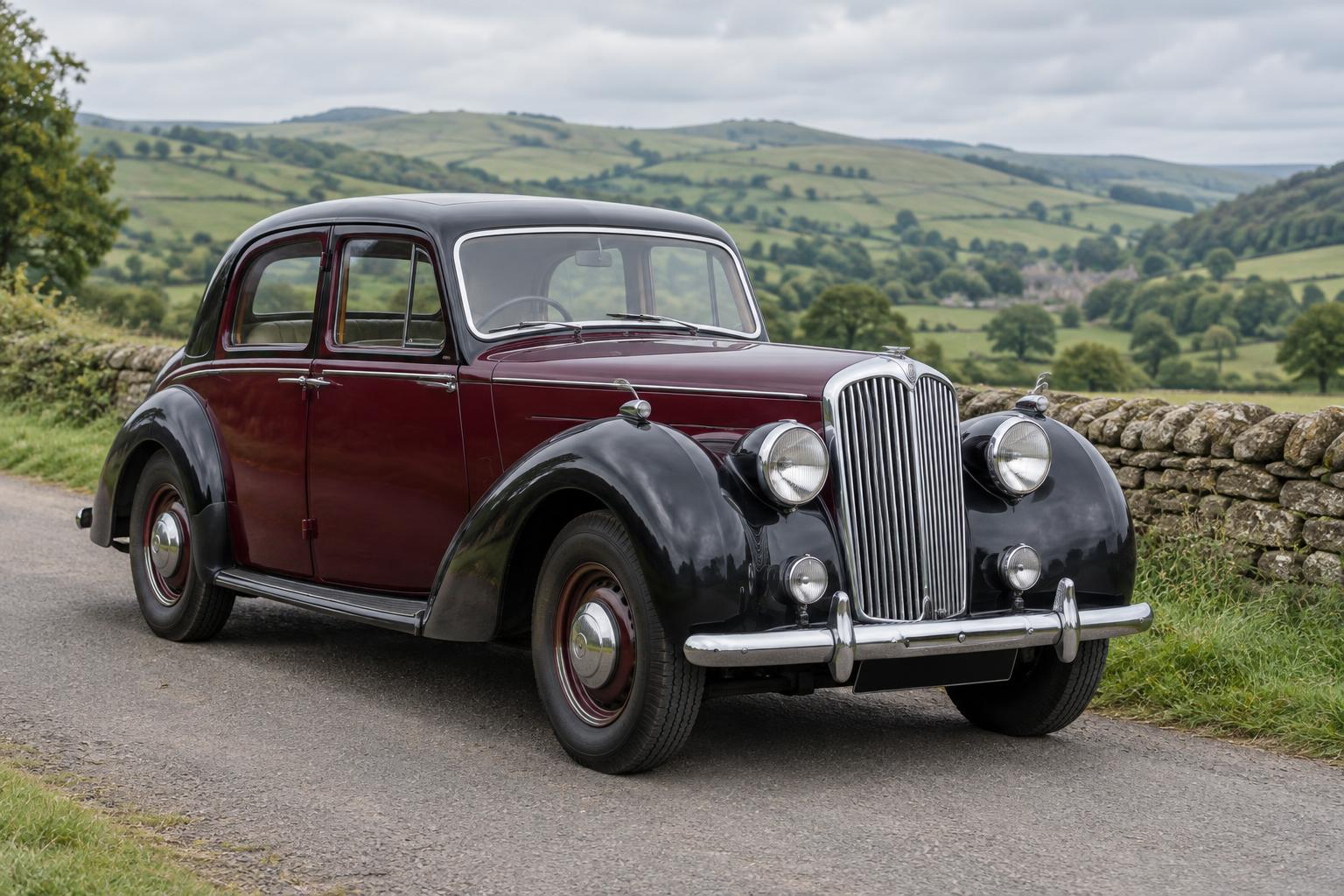
When British carmakers resumed civilian production after the Second World War, they faced a practical challenge: introduce cars suited to post-war buyers without discarding the identity that had attracted customers before the conflict. Riley’s RM series was one answer. Its tall grille, separate wings and generous bonnet looked reassuringly traditional, yet the cars were developed as a new post-war family rather than simply carried over from an earlier model.
The RM story began with the RMA saloon, which used a 1½-litre engine. The larger-engined RMB followed, giving buyers another choice within much the same visual tradition. Both were four-door cars, but their long bonnets and flowing wings set them apart from the increasingly integrated body shapes that would become familiar in the following decade. The appeal of an RM lay partly in that contrast: it offered a recognisably old-fashioned silhouette at a moment when the industry was beginning to move away from it.
Two saloons, several open-air variations
The RMA and RMB are a useful starting point for understanding the range, but the RM name covered more than two saloons. Riley also offered the RMC roadster and RMD drophead coupé, both based on the larger-engined branch of the family. Their different approaches to open motoring show how varied one model line could be. The roadster had a more exposed, sporting character; the drophead combined a folding roof with a more enclosed cabin feel.
These open models were produced in smaller numbers than the saloons and have a different visual balance. A photograph of an RM should therefore prompt more than a quick glance at the grille. The roofline, side windows, seating arrangement and shape of the rear body all help identify what is being shown. For readers interested in how a car’s outline conveys its character, Illustration Notebook offers a place to browse illustration beyond motoring.
What changed in the later RM cars
The family did not stand still. Revised saloons arrived as the RME and RMF, succeeding the earlier RMA and RMB respectively. The familiar distinction between the smaller- and larger-engined versions remained, while details of the cars changed over their production lives. That makes an RM worth identifying by its specific model designation rather than by appearance alone: similar-looking cars need not have the same engine, mechanical specification or production period.
This gradual development also helps explain the RM’s place in British car history. It was not a single design launched and then replaced in one abrupt step. Instead, Riley adapted a recognisable formula as buyers’ expectations and the wider car industry changed. By the time RM production ended, the separate-wing look that gave the series much of its personality was becoming less typical of new saloons. Anyone comparing period car shapes through sketches or photographs may enjoy browsing Creative Practice · Illustration Notebook for broader ideas about creative practice.
How to read an RM as a piece of motoring history
An RM tells several stories at once. Its styling recalls an earlier era of coachbuilt-looking British cars; its range of bodies reflects a market that still made room for open touring as well as family saloons; and its successive versions show a manufacturer refining a design rather than starting again. None of those stories requires treating every RM as identical. The specific model matters, especially when comparing an early saloon, an open car and a later revised saloon.
For an enthusiast encountering one at a show, a good first approach is to look at the whole silhouette before concentrating on badges or trim. Note whether the roof is fixed or folding, how the wings relate to the body, and how much of the car’s visual weight sits ahead of the passenger compartment. Those observations make the model family easier to understand and give closer inspection a purpose. If studying such details inspires a drawing of your own, Materials and Tools · Illustration Notebook is an option for browsing general materials and tools.