Begin with the experience, not the itinerary
A familiar classic can feel entirely unfamiliar to someone sitting in it for the first time. The cabin may be noisier than a modern car, the seats may offer less adjustment, and conversation might require a raised voice on faster roads. Before making plans, describe the car as it is rather than promising a perfectly smooth ride. Ask what your passenger would enjoy: a short countryside loop, time to explore a town, or a leisurely lunch with a drive on either side.
Make the first outing modest. A few hours with an easy option to turn back gives you room to discover whether the pace suits both of you. It also takes pressure off a passenger who may be reluctant to say they are tired or cold. The aim is not to cover impressive mileage; it is to make the journey pleasant enough that they would welcome another one.
Make the car easy to settle into
Before departure, show your passenger how the door catches, windows, seat adjustments and ventilation work. Older controls are not always intuitive, and a quick explanation is kinder than waiting for someone to struggle with a stiff window at a junction. Check that the passenger seat and its surroundings are clear of tools, maps and loose belongings. If the car has a low roof or narrow doorway, allow time to get in and out without rushing.
Talk through the practical details that affect comfort: where a coat can go, whether the cabin tends to be warm or draughty, and how easily you can stop if something needs adjusting. Make sure occupants use appropriate restraints and check the requirements that apply to your car and passengers before travelling. If you are unsure whether the car is suitable for a particular passenger, resolve that question before inviting them aboard rather than improvising on the day.
Agree on navigation and conversation
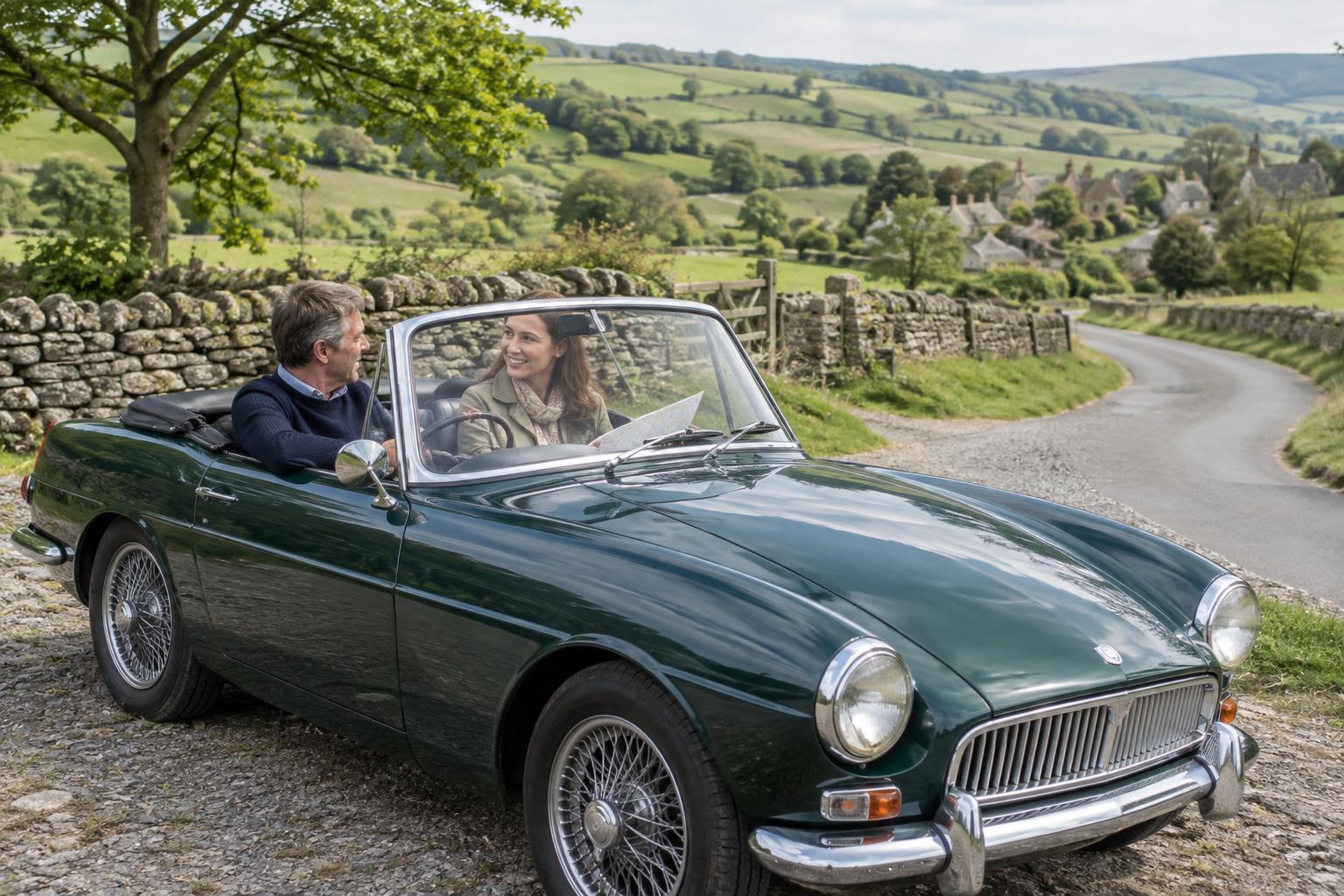
A passenger can make a tour easier by watching for a turn, finding a planned stop or checking a paper map. They should not have to become an unwilling navigator. Ask beforehand whether they would like a role, and give them a simple overview of the route even if you intend to navigate yourself. That way, a missed turning feels like a small change of plan rather than a crisis.
Agree on how to raise a concern while driving. A calm request such as “Could we stop when it’s convenient?” is easier to act on than a last-second instruction at a junction. If the engine or road noise makes conversation difficult, save detailed discussions for a safe stopping place. The passenger can still point out a view or an interesting café, but the driver’s attention needs to remain on the road.
Choose stops that work for two people
A good stop offers more than a photograph of the car. Look for somewhere both people can stretch their legs, use facilities if needed and enjoy the surroundings. Allow for the time it takes to find suitable parking and walk to your destination; an appealing village square may not have a convenient space for a classic. Carrying a little flexibility in the schedule means you can pass a crowded stop without feeling that the day has gone wrong.
At the first break, ask a specific question: is the seat comfortable, is the temperature all right, and would a shorter return route be better? Small adjustments are easiest to make early. Treat an unexpected halt as part of touring rather than an interruption, whether you need to consult the map, put up the hood or simply pause for tea. A shared day out succeeds when both people have enjoyed the time between destinations, not just the places marked on the route.