Start with the car you have
An older car need not feel like a modern one to be a pleasure on a long journey. Its cabin may be narrower, its seats firmer and its engine more audible, but small adjustments can make those characteristics easier to live with. Begin with a short drive on familiar roads before the tour. Notice where your back or legs become tired, whether the passenger has enough room, and how the cabin feels at a steady cruising pace. It is easier to solve these problems at home than after several hours on the road.
Check that seats are securely mounted and that belts fasten and retract or adjust as intended. Set the driving position so you can use every control without stretching, while keeping a comfortable bend in your arms and legs. If the wheel, pedals or seat offer little adjustment, resist piling loose cushions beneath the driver: they can shift and change your reach to the controls. A modest, secure support may help, but it should not interfere with the belt or your ability to drive. Give the passenger the same chance to test their position rather than assuming the other seat is comfortable.
Manage air, temperature and noise
Cabin comfort often changes during the day. A car that feels pleasantly warm on a cool morning may become stuffy in traffic or under strong sun. Learn how its vents, quarterlights, windows, heater and fan work before setting off. Pack layers that are easy to add or remove, and keep water within reach without letting bottles roll into the footwells. A hat or sunglasses can help in bright conditions, provided they do not restrict your view.
Fresh air matters, but do not treat an exhaust smell as a normal feature of classic motoring. If fumes seem to enter the cabin, stop somewhere safe and have the cause investigated before continuing. Noise can also be tiring even when nothing is wrong. Closing a poorly latched window, securing loose luggage or adjusting the cruising speed may make conversation easier. If you use hearing protection, make sure you can still hear important traffic sounds and communicate with your passenger.
Pack for access, not just capacity
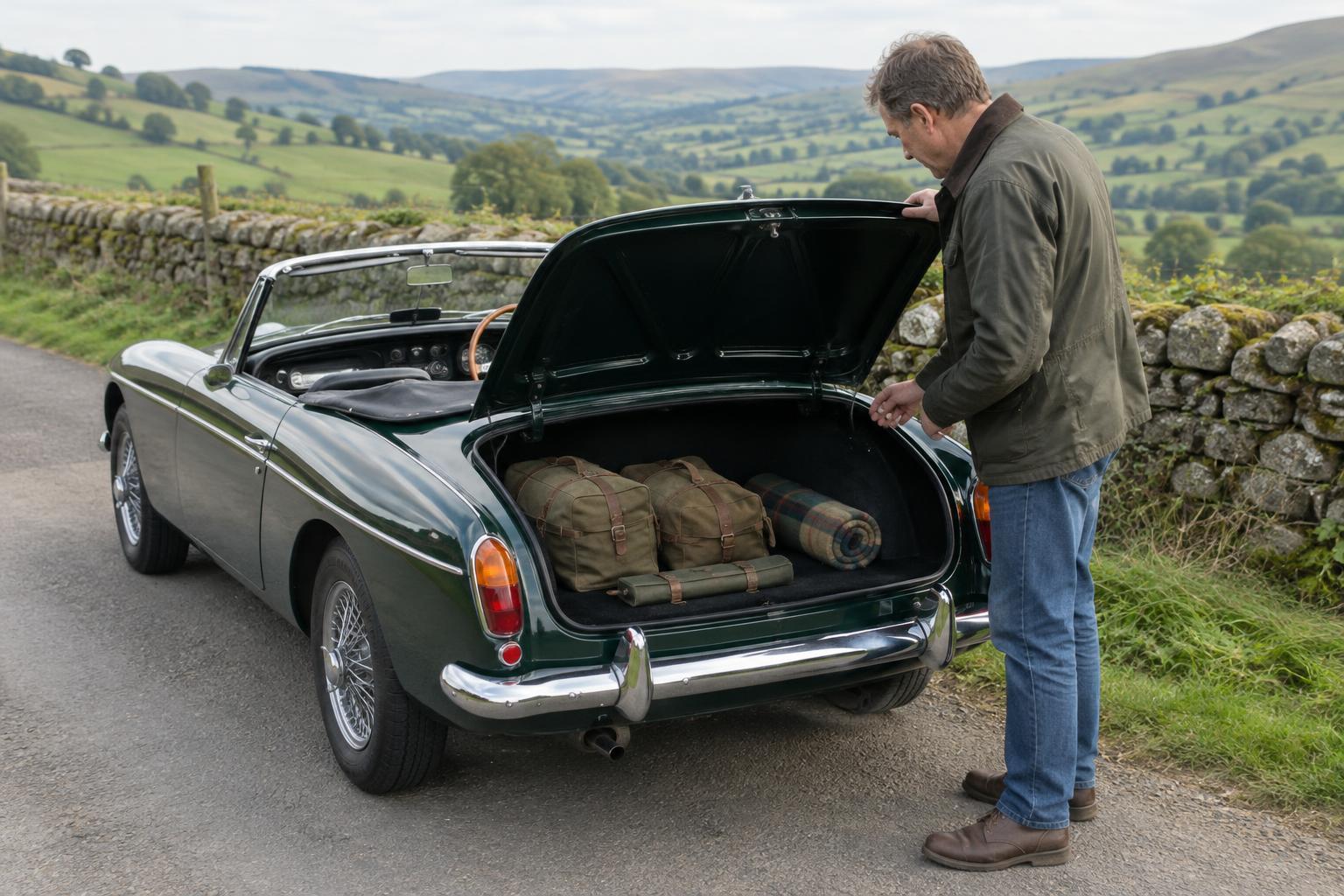
Comfort suffers when coats, maps and snacks fill the passenger’s legroom. Put heavy luggage in the proper storage area and secure it so that it cannot move during braking or cornering. Keep the items needed during a stop, such as an extra layer, a drink and a cleaning cloth for the windscreen, near the top of the bag. Nothing should obstruct pedals, belts, door handles or the driver’s view.
A small shared kit can make pauses more pleasant: water, simple food, tissues, sun protection and a way to charge a phone if your arrangements allow it. Check that a charger or accessory lead cannot snag a control. Older cars sometimes have limited storage and electrical capacity, so it is worth deciding what genuinely needs to ride in the cabin. Leaving a little empty space gives both occupants room to move and reduces the sense of being packed in.
Plan a day with breathing room
A scenic route is not automatically a relaxing one. Narrow lanes, frequent junctions and a busy itinerary can demand more concentration than an easy main road. Plan a realistic distance for the car and its occupants, with time for fuel, meals, photographs and an unhurried walk. Build in an alternative route if weather, traffic or fatigue makes the original plan less appealing. A flexible schedule is especially useful when the purpose of the drive is enjoyment rather than arrival at a precise minute.
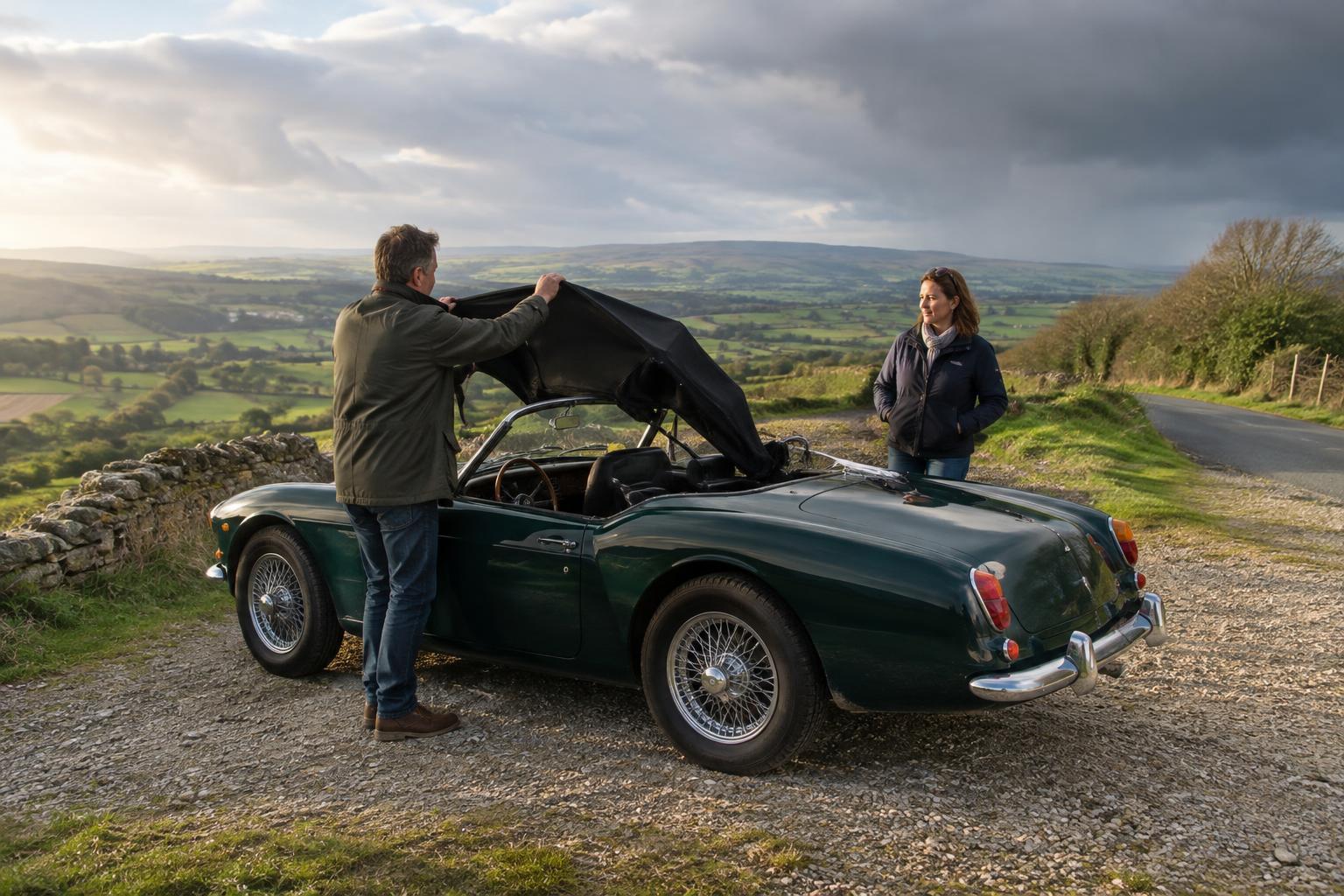
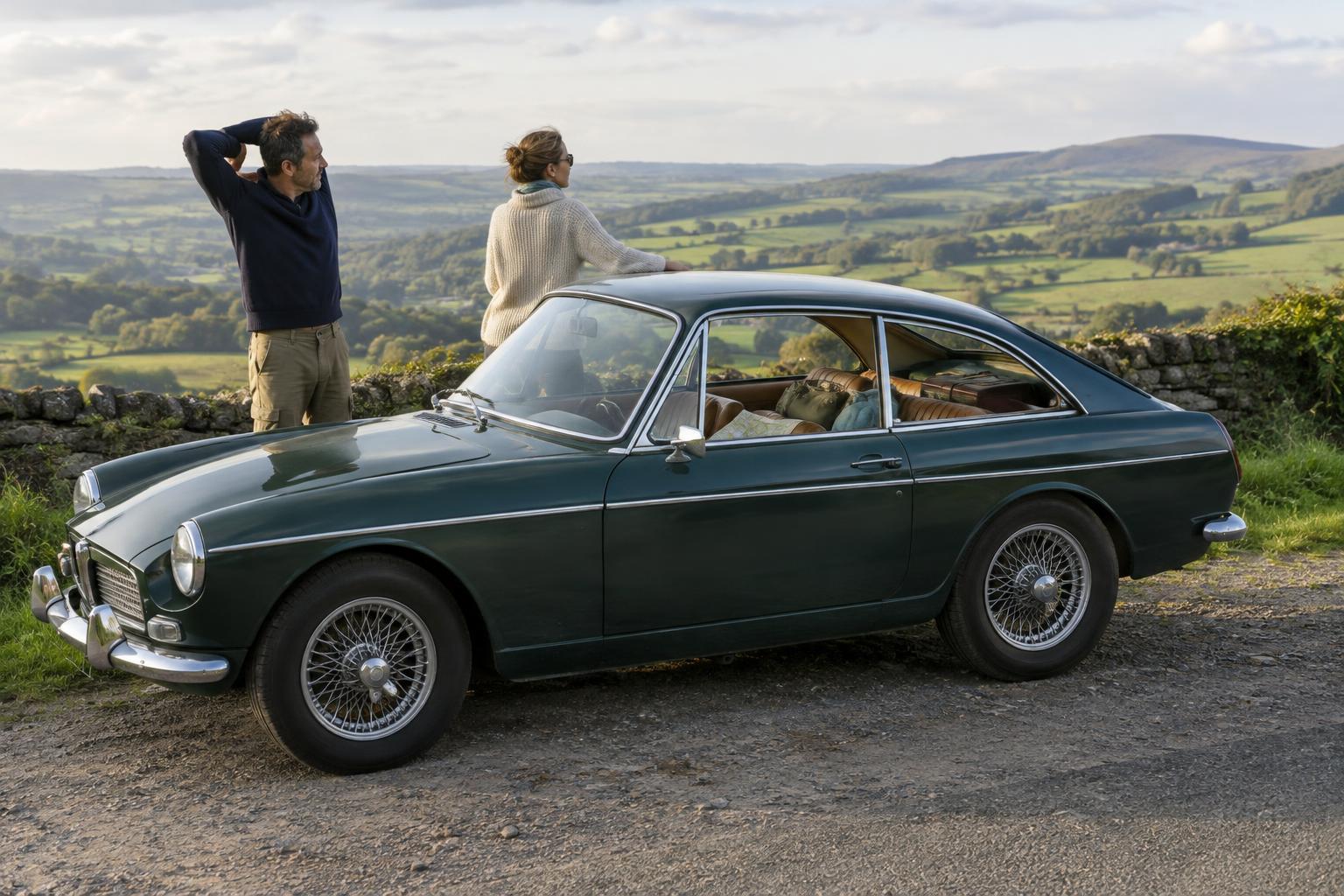
Stop before discomfort becomes the main topic of conversation. A brief break lets the driver stretch, the passenger change position and both people reassess the cabin temperature. It also provides a natural moment to check for anything that has come loose or looks unusual around the car. If the driver is becoming tired or less attentive, take a proper rest rather than relying on fresh air or a change of music to push on.
Make the tour a shared experience
Driver and passenger may experience the same car differently. The driver has a task to occupy them, while the passenger may notice a draught, glare or a seat that becomes uncomfortable after an hour. Agree before departure that either person can ask for a stop or a change of plan. If the passenger is happy to help, they can handle navigation and look ahead for suitable breaks, leaving the driver free to concentrate on the road.
At the end of the day, make a few notes about what worked. Perhaps an earlier lunch stop helped, a different bag arrangement freed the footwell, or a gentler cruising pace made conversation possible. Those observations are more useful than trying to recreate someone else’s ideal touring setup. The best long drive in an older car is one that suits its character while leaving both occupants keen to take the next one.