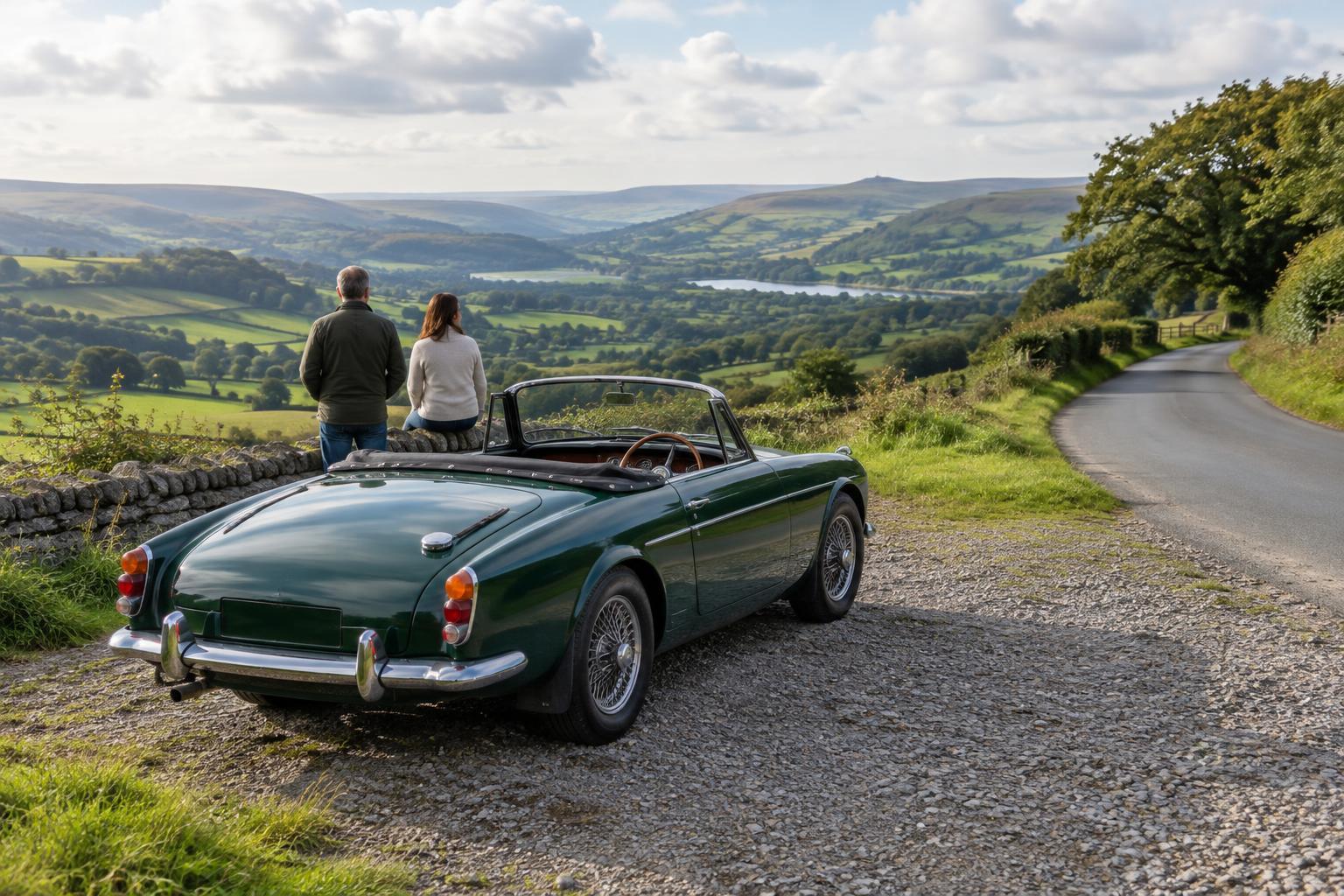
Start with the day you want to have
Choosing a route for a classic-car tour is about more than getting from one place to another. A relaxed drive with time for a village lunch calls for a different plan from a long journey to a weekend gathering. Before tracing a line across the map, decide how many hours you want to spend driving, how often you would like to stop and whether the destination matters more than the journey.
Think about the car as well as its occupants. A classic that feels settled on open roads may be tiring in stop-start traffic; another may be happiest at a modest pace, away from fast-moving traffic. Neither preference makes it a better touring car. The aim is to choose roads that let you enjoy its character without treating every mile as a test.
Use A-roads as the backbone
A-roads can make a useful middle ground. They often link towns and regions directly, with more opportunities for fuel, food and a change of plan than a remote lane offers. Some are broad and flowing; others pass through busy centres or have frequent junctions. The letter on the map tells you less about the driving experience than the particular stretch you intend to use.
For many tours, an A-road works well as the main route, with shorter scenic detours branching off it. Look for places where a bypass might spare you prolonged urban traffic, or where an older route through a market town would make a pleasant planned stop. Allow time for slower vehicles and delays rather than building a schedule around an uninterrupted run.
Save B-roads for the miles you want to savour
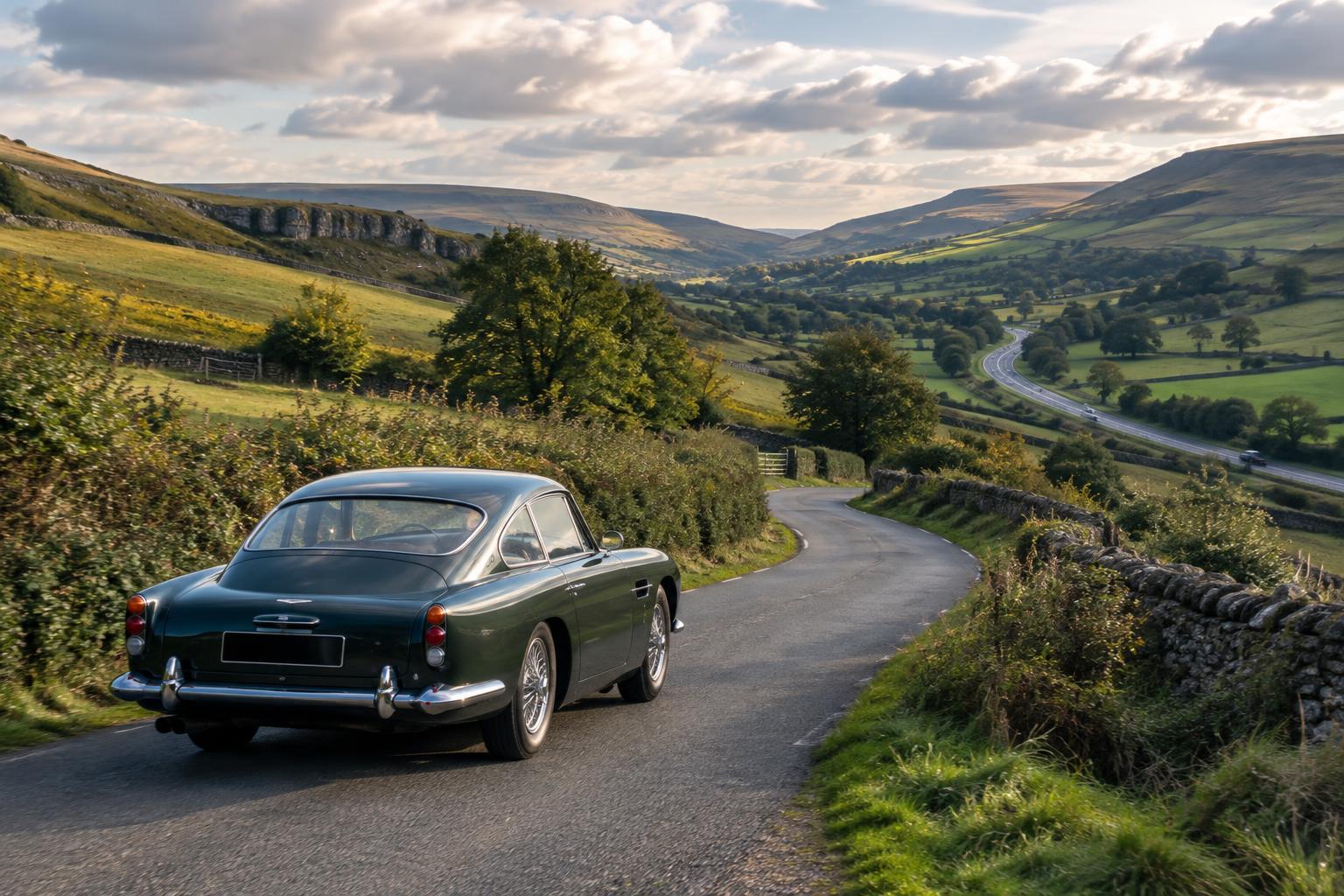
B-roads can offer the sense of discovery that makes touring memorable: changing scenery, smaller settlements and a pace that encourages you to notice the landscape. They are not automatically quiet or easy, though. Width, surface, visibility and traffic can vary substantially, and a road that looks inviting on a map may prove demanding in poor weather or fading light.
Choose B-road sections deliberately rather than filling the entire day with them. A short loop between two dependable stops can be more satisfying than hours of narrow, unfamiliar roads. Leave room to pull over safely, let others pass where appropriate and take a break if concentration starts to flag. If your car has limited luggage space, a firm ride or modest lighting, consider how those qualities will feel near the end of a long day.
Treat motorways as a tool, not a failure
A motorway may not be the romantic choice, but it can help you clear a familiar area, reach the start of a scenic route or get home before you are overtired. It also gives you access to regular stopping places. The trade-off is sustained speed and the need to keep pace with surrounding traffic, which may be noisy or uncomfortable in some older cars.
Before including a long motorway stretch, consider whether the car is running well and whether its cruising speed feels comfortable to you. Check the basics you would check before any substantial drive, including tyres, fluids, lights and fuel. Plan breaks rather than waiting until you need one. If motorway travel feels stressful in your particular car, an alternative route may be worth the extra time.
Build a route with options
A good touring plan often combines all three road types. You might use a motorway for the first leg, an A-road to cross a region and B-roads for the final approach. Mark a few useful stopping points and identify a simpler alternative for each scenic section. That way, rain, congestion or a late departure need not turn the day into a rushed drive.
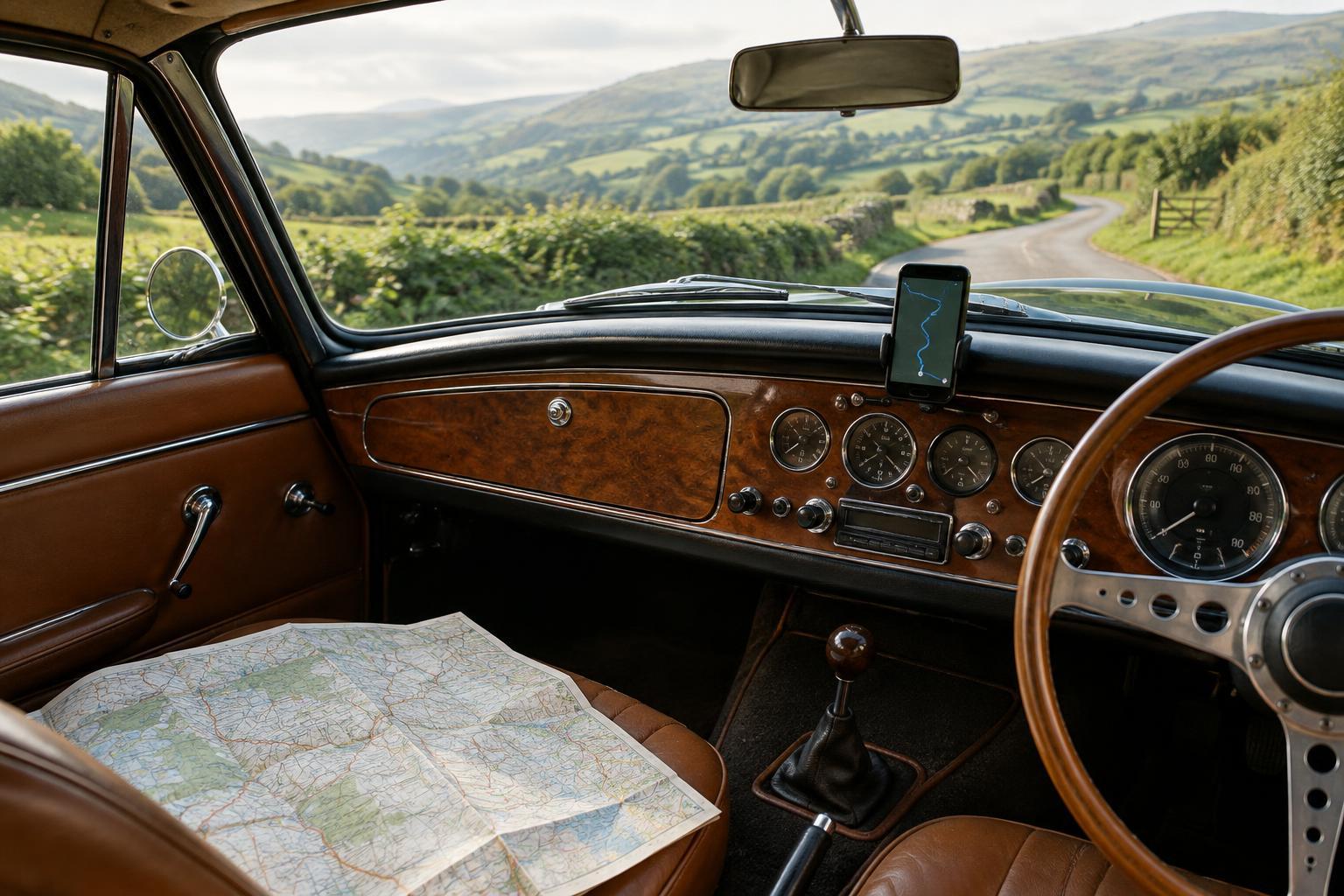
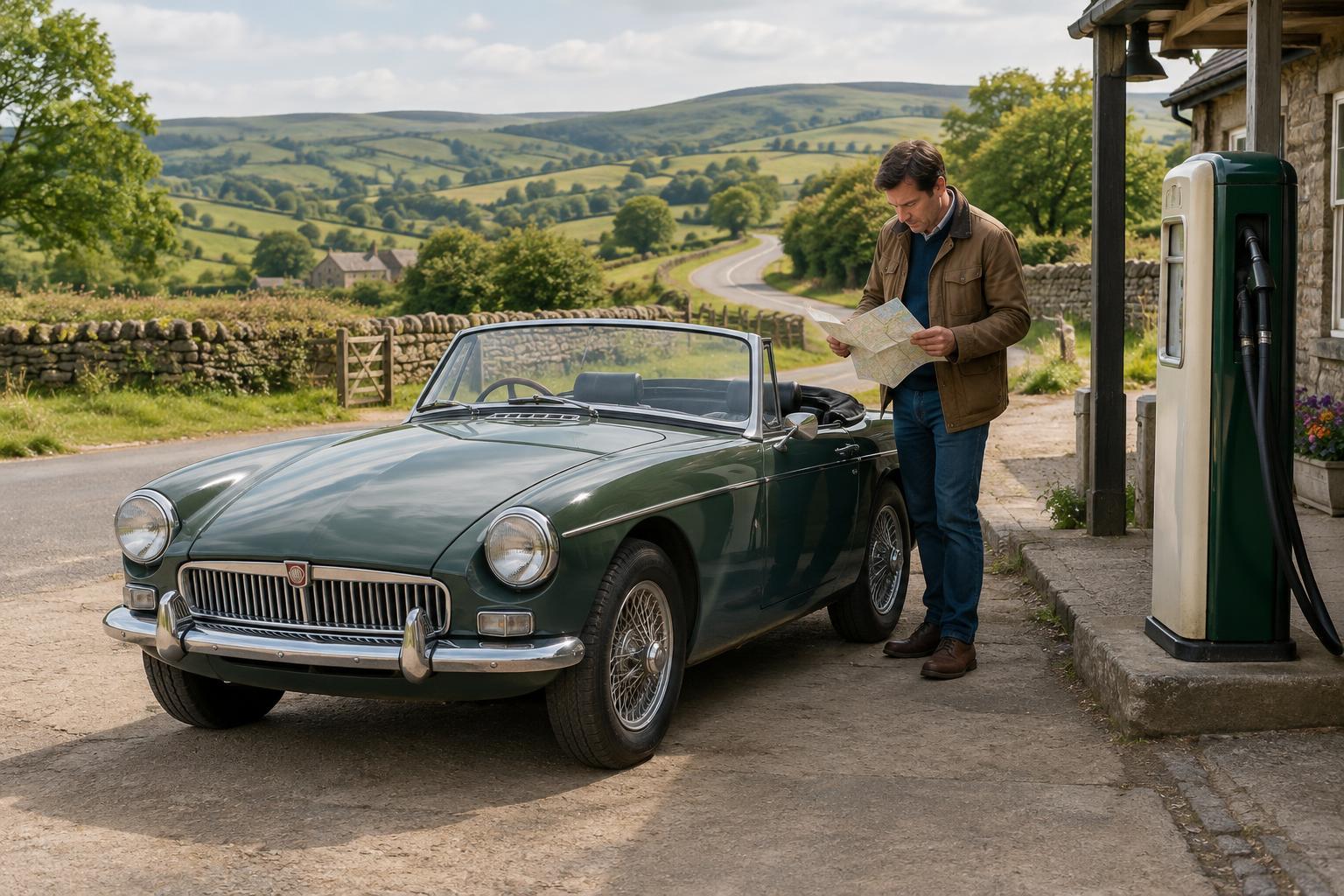
Keep the itinerary loose enough to enjoy an unplanned stop, but clear enough that you know where you can find fuel and finish for the day. Carry directions in a form you can use if phone reception or navigation proves unreliable, and check for route changes before setting off. The best choice is not a particular class of road: it is the mix that leaves both car and crew ready to do it again.