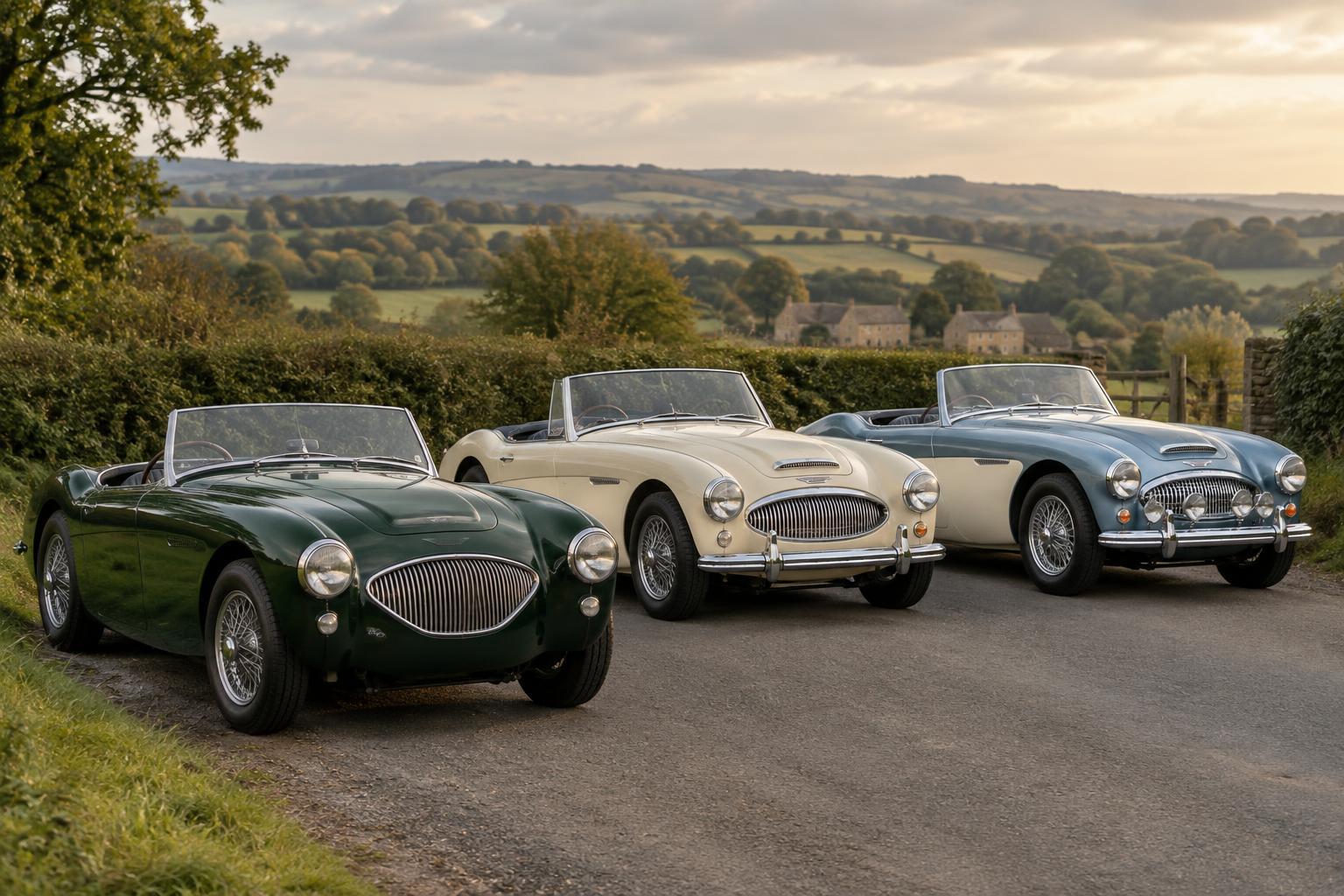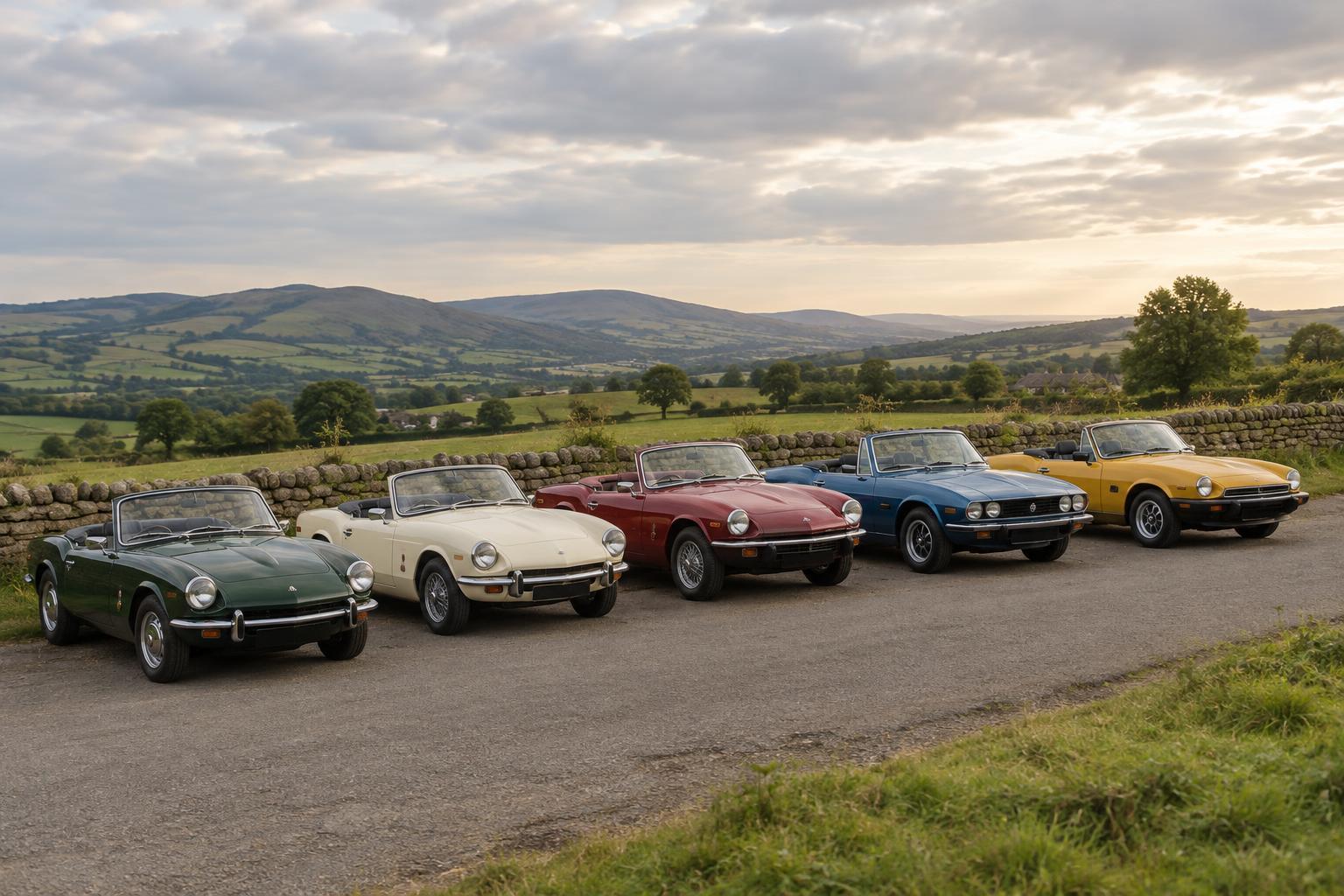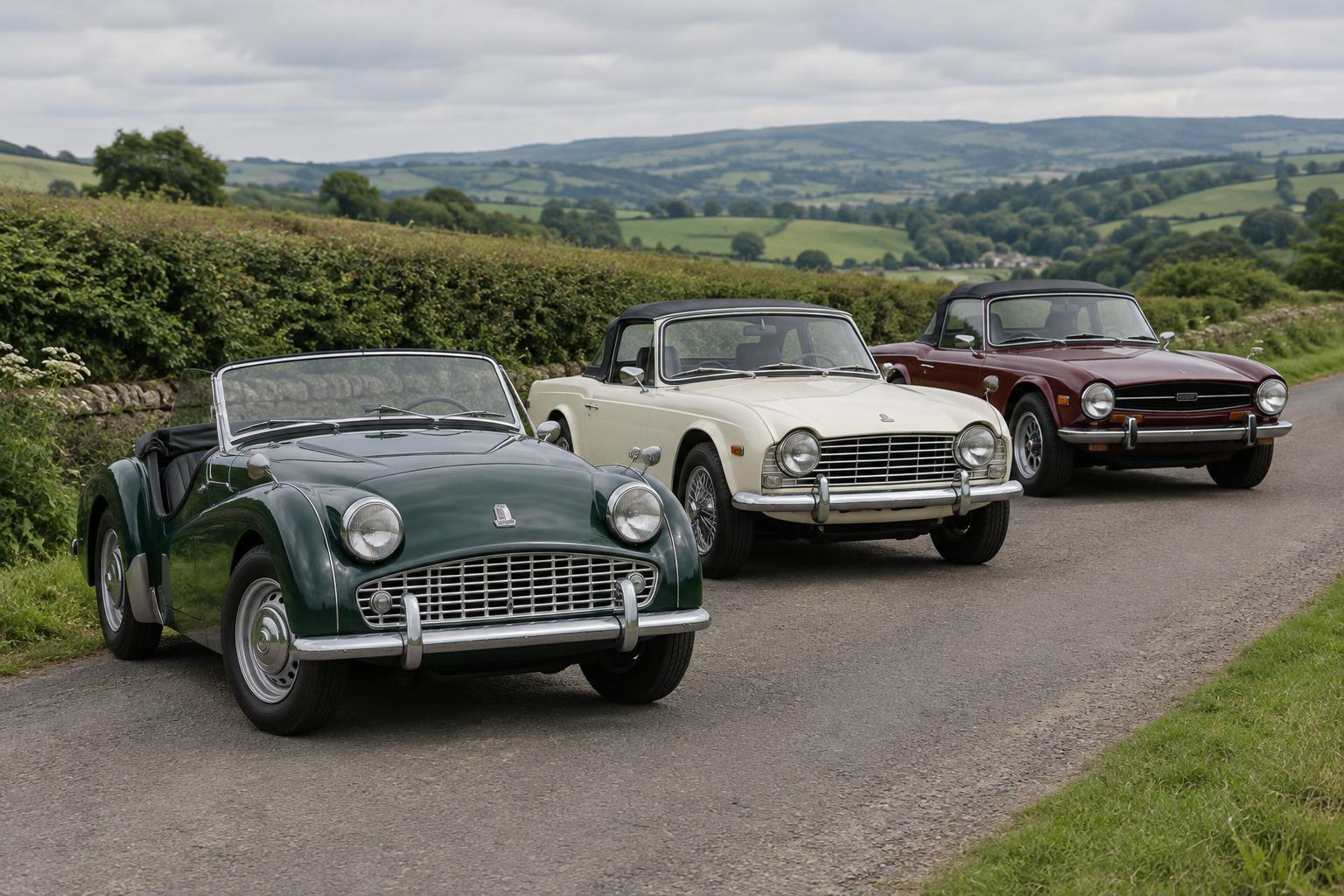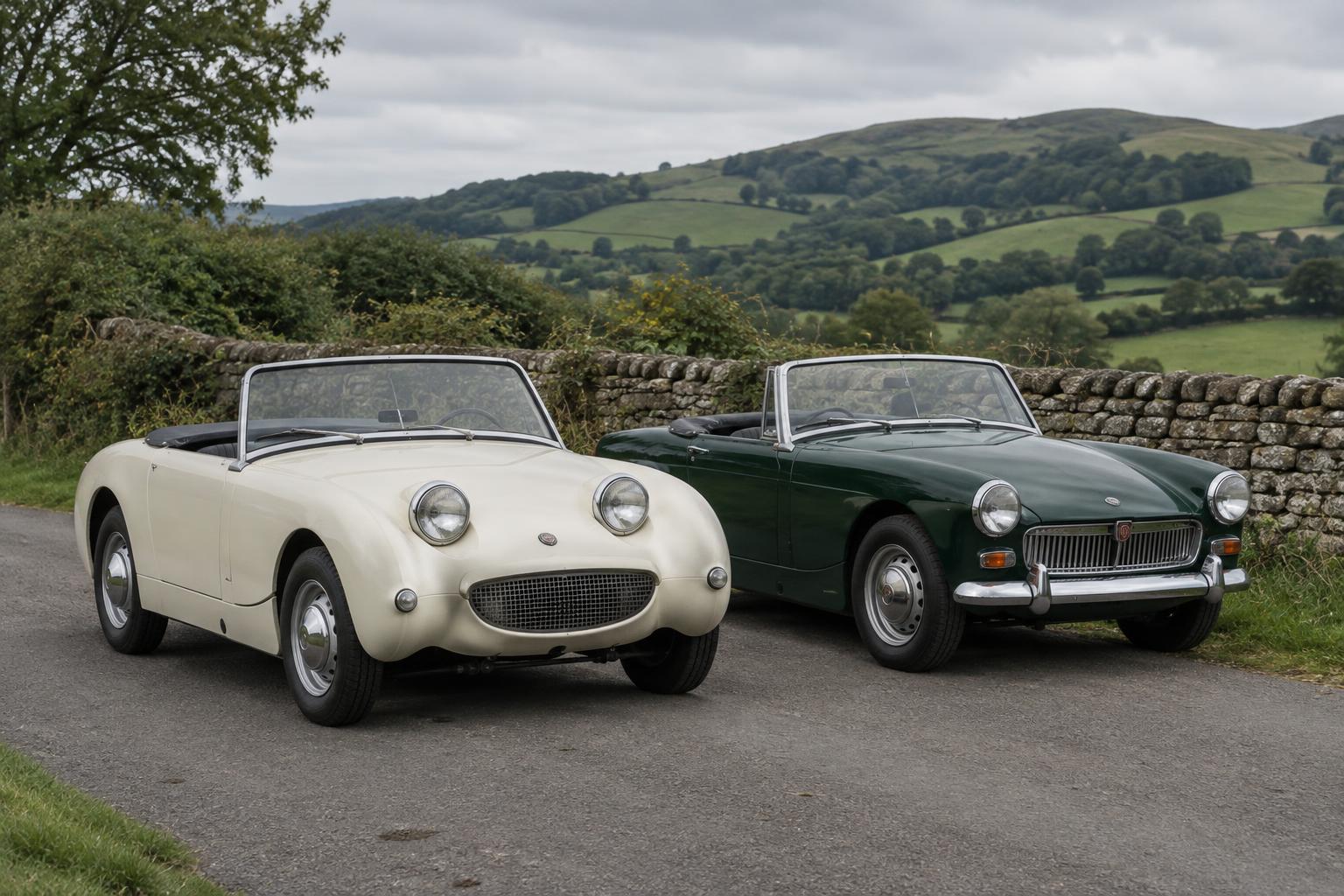
A small sports car with a distinctive face
Introduced in 1958, the Austin-Healey Sprite was conceived as a straightforward, affordable way into open-top motoring. Its compact dimensions, light weight and modest mechanical components were part of the point: enjoyment did not depend on a large engine or elaborate equipment. The first Sprite used a 948cc A-series engine and a simple cabin that left little doubt about its purpose.
The original car is now widely known as the “Frogeye” in Britain, or the “Bugeye” elsewhere, because its headlamps sit prominently on top of the bonnet. Its front bodywork lifts forward to provide access to the engine, while the rear has no external boot lid; luggage is reached from behind the seats. These features give the car much of its character, though they also make it less convenient than the models that followed.
How the MG Midget joined the family
In 1961, the Sprite gained a more conventional body for its second generation. The headlamps moved into the front wings, and an opening boot made everyday use easier. That same year, the MG Midget appeared as a close relative, reviving a name associated with earlier small MG sports cars. The two roadsters shared their underlying design and much of their running gear, but were sold under different badges with differences in trim and detailing.
This was badge engineering in a practical sense, rather than the creation of two entirely separate cars. Sharing major components helped keep the small roadster viable, while Austin-Healey and MG each offered buyers a familiar identity. The family resemblance is clear when the cars are parked together: the most useful differences for a historian or prospective owner are often found in model year, equipment and mechanical specification, not simply in the badge on the grille.
Changes beneath a familiar shape
The Sprite and Midget evolved steadily through the 1960s. Larger A-series engines followed the original 948cc unit, with 1098cc and then 1275cc versions appearing as the cars developed. Changes to the body and cabin brought greater convenience, including wind-up windows in place of the earlier side screens. The basic appeal remained consistent: a low seating position, compact footprint and direct-feeling controls.
It is tempting to treat every Sprite or Midget as interchangeable, but the details matter. An early car can feel more exposed and spare than a later one, while engine, gearbox, suspension and trim specifications vary across the years. Some changes arrived at different times for different versions or markets. When identifying a particular car, its production period and actual components are more reliable guides than a broad description such as “early” or “late.”
The end of the Sprite and the Midget’s final chapter
Austin-Healey Sprite production ended in 1971, but the MG Midget continued. Its later years brought the most visible departure from the earlier shared appearance: revised, protruding bumpers and a higher stance on cars built for changing market requirements. From the mid-1970s, the Midget also used a 1500cc Triumph-derived engine in place of the A-series unit. Production of the MG Midget ended in 1979.
Those changes can divide opinion because the last Midgets look and feel different from their predecessors. They are nevertheless part of the same long story of adapting a compact British roadster to new expectations and requirements. The Frogeye Sprite, the later Austin-Healey-badged cars and the final MG Midgets each represent a distinct stage, rather than a single specification repeated for two decades.
Why the shared history still matters
For an enthusiast exploring these cars today, their common origins make comparisons especially rewarding. The first Sprite offers an unmistakable design and an unusually simple cabin. Later Sprites and Midgets add useful comforts without abandoning the small-car formula. The 1500 Midget offers another variation, with its own appearance and mechanical character.
Understanding the timeline also helps keep expectations realistic. Two cars wearing different badges may have more in common than two Midgets built many years apart. Condition, previous repairs and the quality of maintenance can shape the ownership experience as much as the model name. Above all, the Sprite and Midget show how a modest idea—a small, accessible open car—could be developed over time while retaining a recognisable spirit.