What balancing does—and what it cannot fix
Twin SU carburettors feed separate parts of an engine, so they need to draw similar amounts of air at idle and respond together when the throttle opens. If one begins working before the other, the engine may idle unevenly or hesitate during gentle acceleration. Balancing is the process of matching their airflow; setting the mixture is a related but separate task.
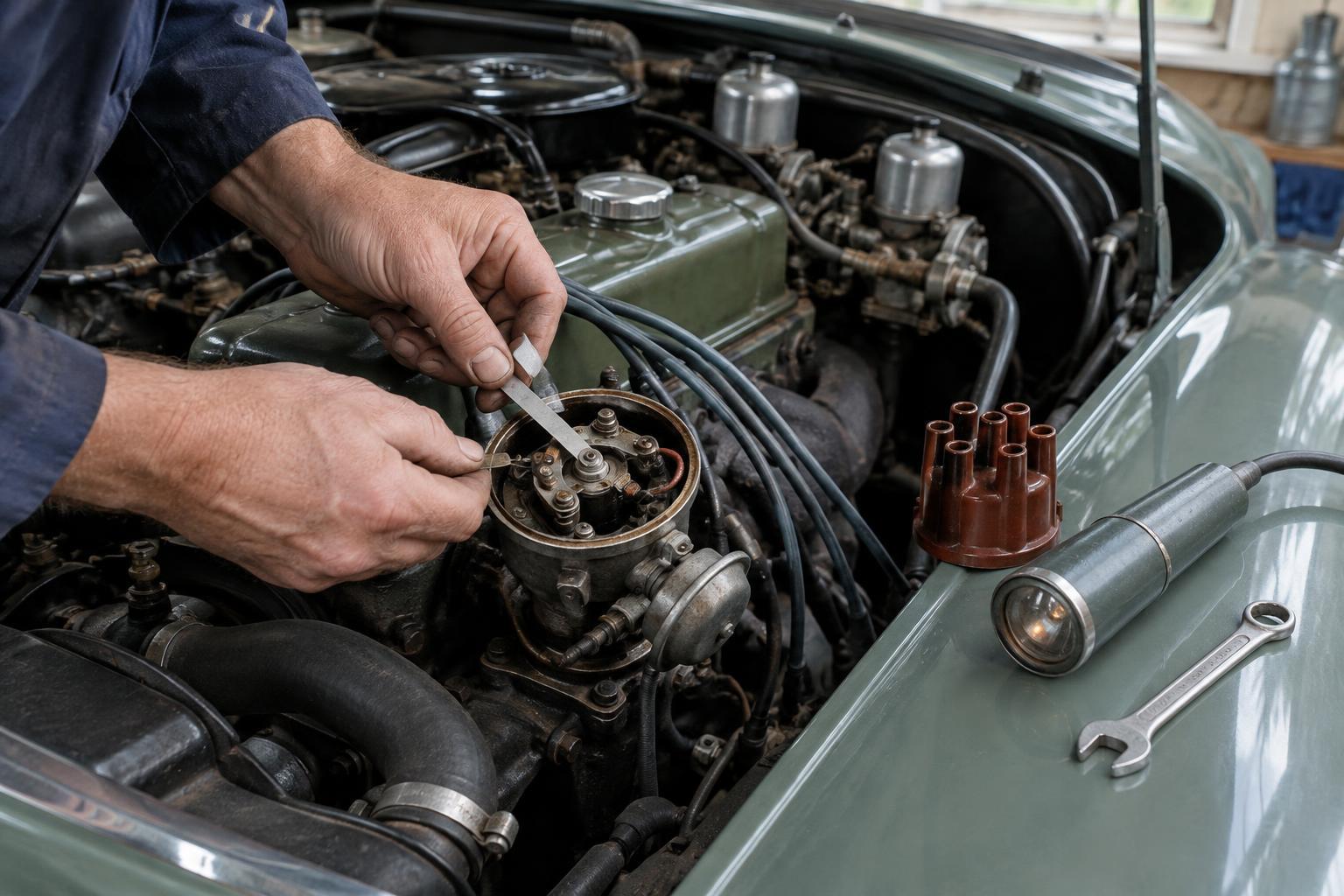
Adjustment will not cure every rough-running engine. Incorrect ignition timing, worn plugs, tight valve clearances, an air leak or a sticking throttle can produce similar symptoms. Before turning carburettor screws, make sure the engine is in reasonable tune and that both carburettors are mechanically sound. Otherwise, it is easy to adjust around a fault rather than fix it.
Prepare the car and identify the adjustments
Work in a well-ventilated area, never an enclosed garage: a running engine produces carbon monoxide. Keep loose clothing, hair and tools clear of belts and fans, and take care around hot manifolds. You will need a suitable airflow meter or carburettor synchroniser, basic hand tools and the service information for your particular car. Make a note of the initial screw positions so you can return to them if necessary.
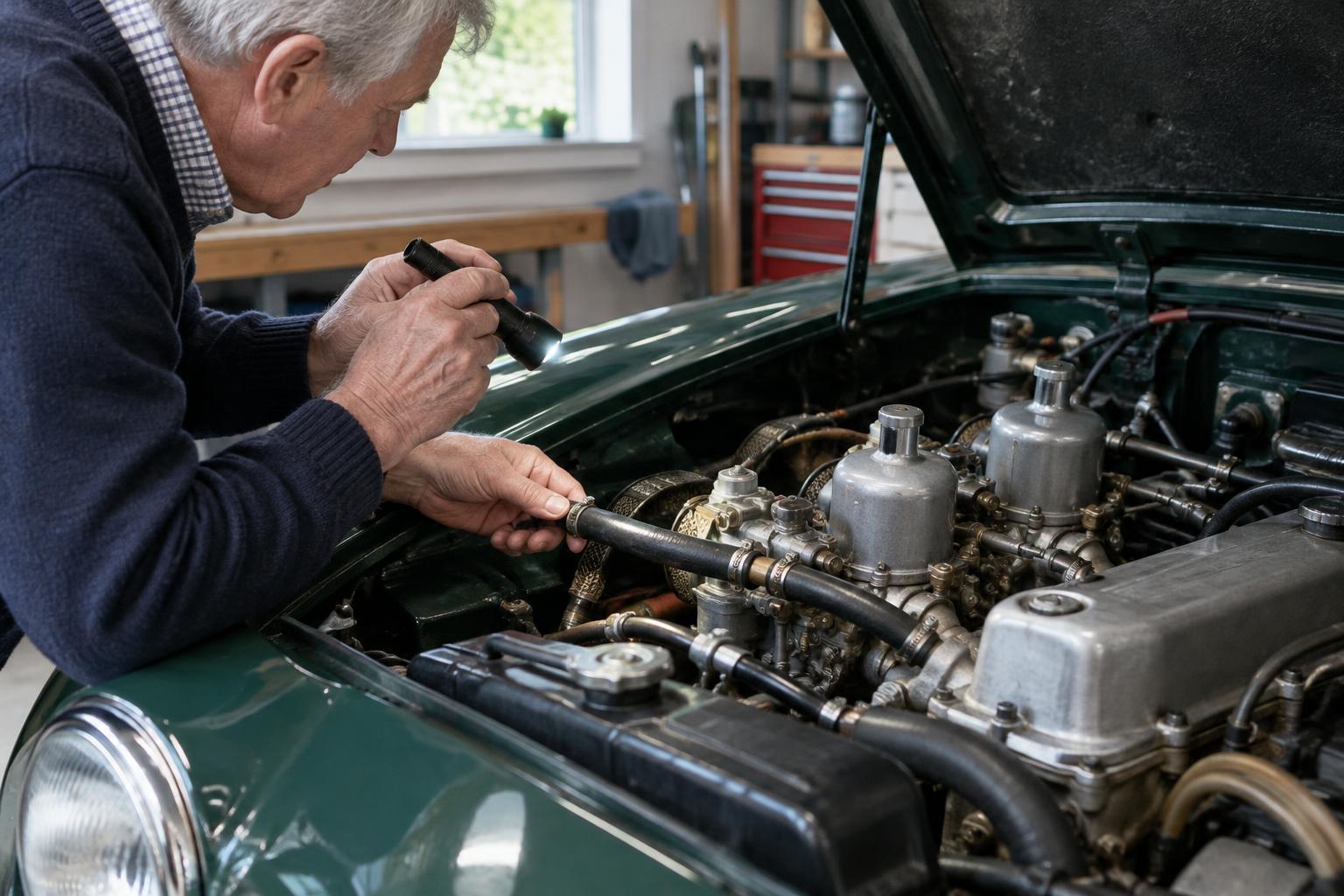
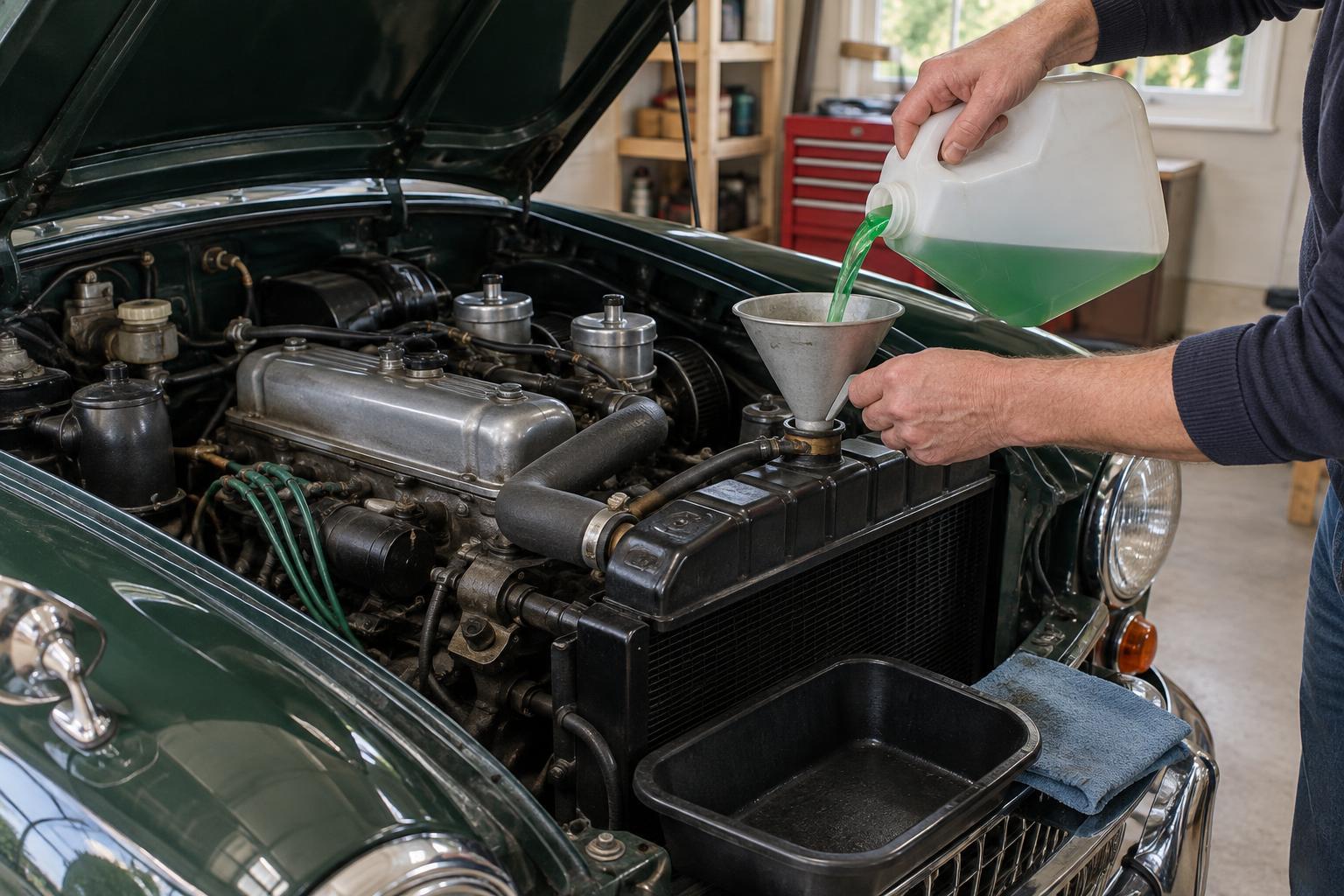
Check that the air filters are clean, the choke returns fully, the throttle linkage moves freely and both dashpots contain the specified damper oil. Look for split hoses, loose mounting nuts and other possible air leaks. The pistons should rise smoothly and return without sticking. SU designs vary—including H, HS and HIF types—so identify the idle-speed, mixture and linkage adjustments on your pair before making changes. Do not assume that turning a mixture adjuster in the same direction will have the same effect on every type.
Warm the engine to its normal operating temperature, then switch it off before disconnecting or loosening the throttle linkage as directed by the car’s service procedure. The aim is to let each carburettor rest on its own idle stop while you compare them. Record anything you change, and make adjustments in small steps.
Match airflow at idle
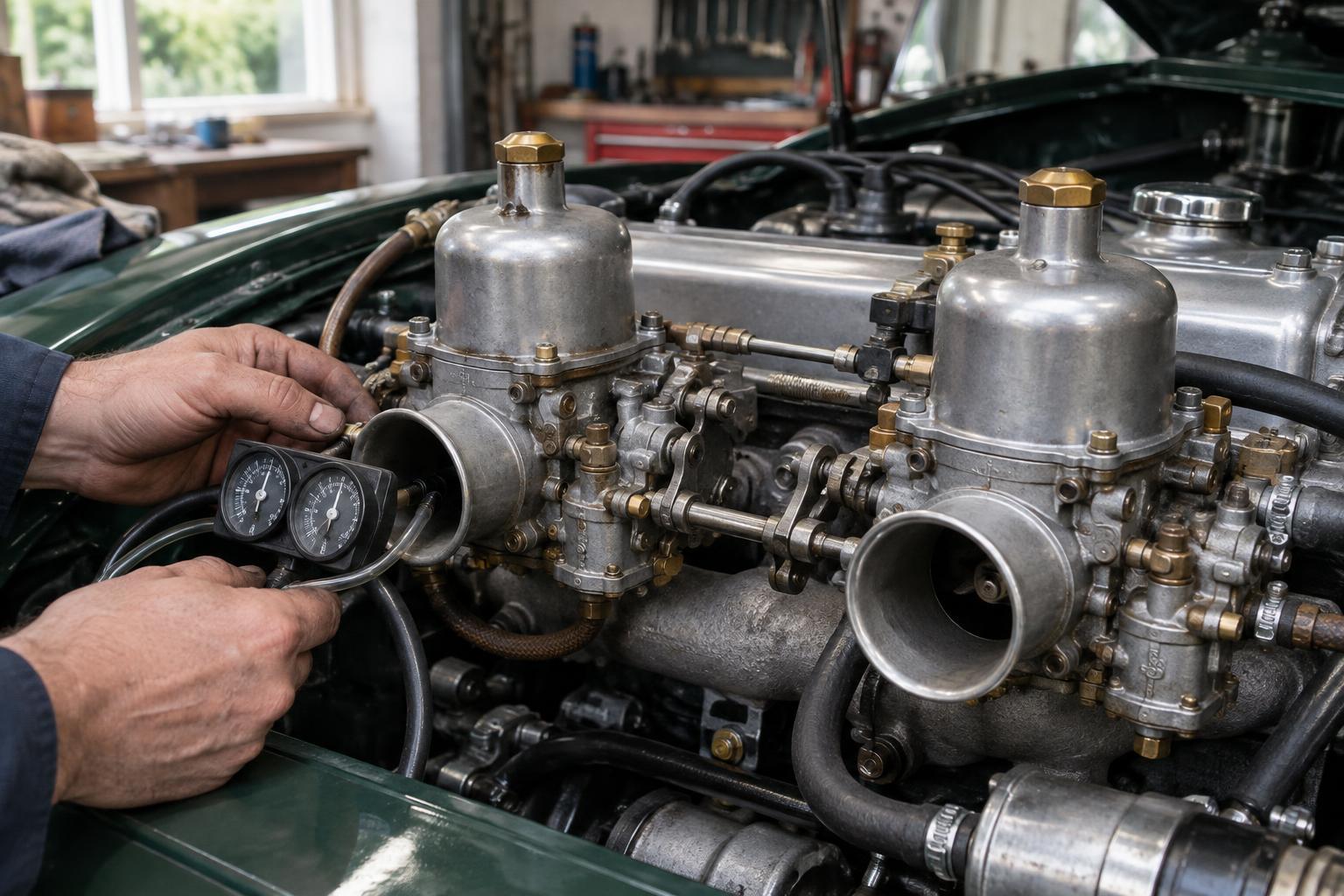
Restart the warm engine and place the airflow meter at the mouth of one carburettor, then the other, following the meter’s instructions. If the air cleaners have been removed to reach the intakes, keep fasteners and other objects safely away from the openings. Use the same meter position for each reading. Avoid trying to judge suction by putting fingers near an open intake.
Adjust the idle stops until both carburettors show similar airflow at a sensible idle speed for the car. Changing one stop may alter the overall engine speed, so move between the two carburettors and recheck. The goal is equal airflow with a stable idle, not simply matching the number of turns on the screws. If one adjustment seems to have little effect, stop and investigate whether the linkage is holding a throttle open or an air leak is interfering with the reading.
Check mixture without chasing perfection
Once airflow is matched, assess the mixture using the procedure for your SU model. On carburettors fitted with a piston-lifting pin, a very small lift can give a useful indication: a brief rise in engine speed that settles suggests the setting is close; a sustained rise can suggest richness; and a stumble or drop can suggest leanness. Lift gently and consistently. A large lift will not give the same useful indication.
Adjust only the appropriate mixture control, in small increments, and allow the engine to settle between checks. Keep track of each change and compare both carburettors. Because wear, air leaks and other tune faults can distort the result, avoid repeatedly enriching or weakening the mixture to compensate for an idle that remains poor. If the adjustment range runs out or the response is unclear, return to the recorded starting point and investigate further.
Reconnect, recheck and road-test
With the idle airflow and mixture close, switch off the engine and reconnect or set the throttle linkage so both throttles begin to open together, without holding either one off its idle stop. Restart and check the airflow again at idle; tightening a linkage can disturb the setting. Confirm that the throttle returns reliably and that the choke and fast-idle mechanism operate and release as intended. Refit the air cleaners and anything else removed for access.
Finally, take a gentle drive and note cold starting, warm idle, light-throttle response and any hesitation. A smooth idle in the workshop is only part of the result. If the car still runs poorly, resist making large adjustments by guesswork. Recheck the basic engine tune and consult the correct service information; carburettor wear or a fault elsewhere may need attention before a lasting balance is possible.