Decide what you want the car to become
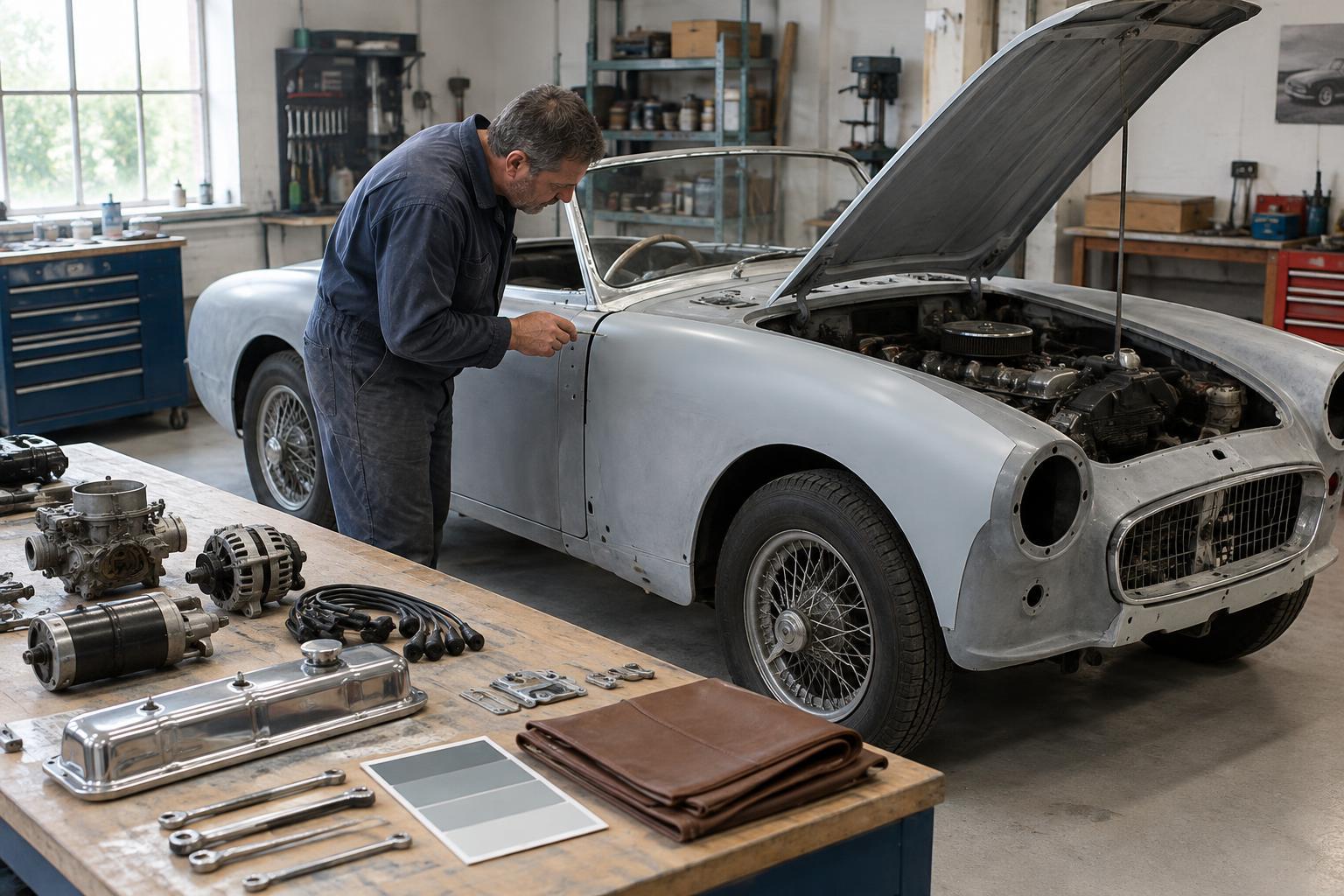
A restoration begins with a purpose, not a spanner. Do you want a presentable car for regular outings, a faithful period-style rebuild or a sound survivor with its aged finishes intact? These aims lead to different decisions. A worn but serviceable interior, for example, might suit a touring car and be worth preserving, while a car intended for a more thorough rebuild may need extensive trim work. Decide what matters most to you before judging every imperfection as a fault.
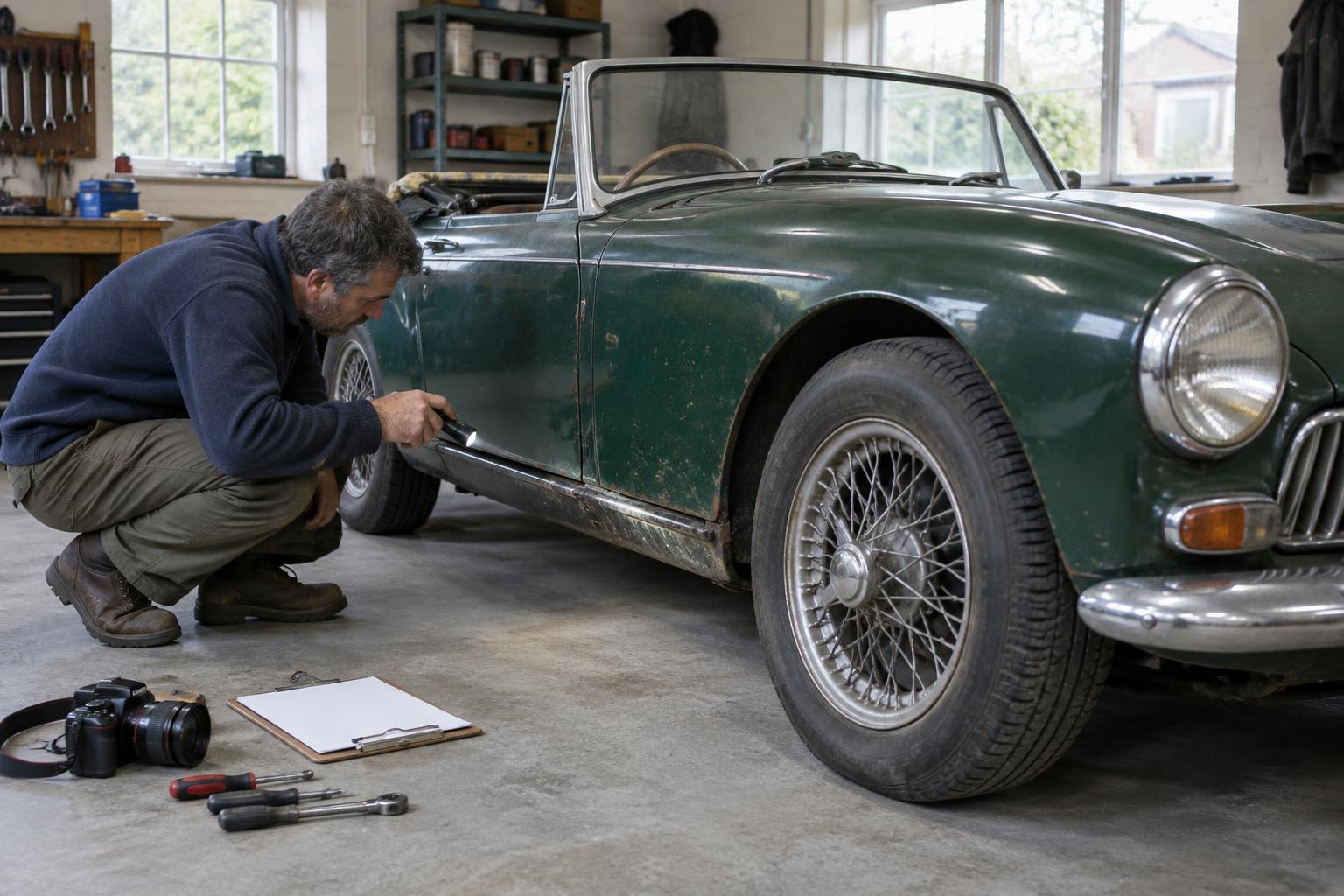
Start with the least invasive assessment you can make. Look at the assembled car in good light, take photographs from every side and write down what you can see, hear and operate. If it can be run safely, note how it starts, idles, shifts and stops. An assembled car offers clues that disappear when parts are scattered across a workshop: panel alignment, trim fit, wiring routes and the way components work together. Do not drive a car with uncertain brakes, steering or structure simply to complete the assessment.
Inspect the structure before the shiny parts
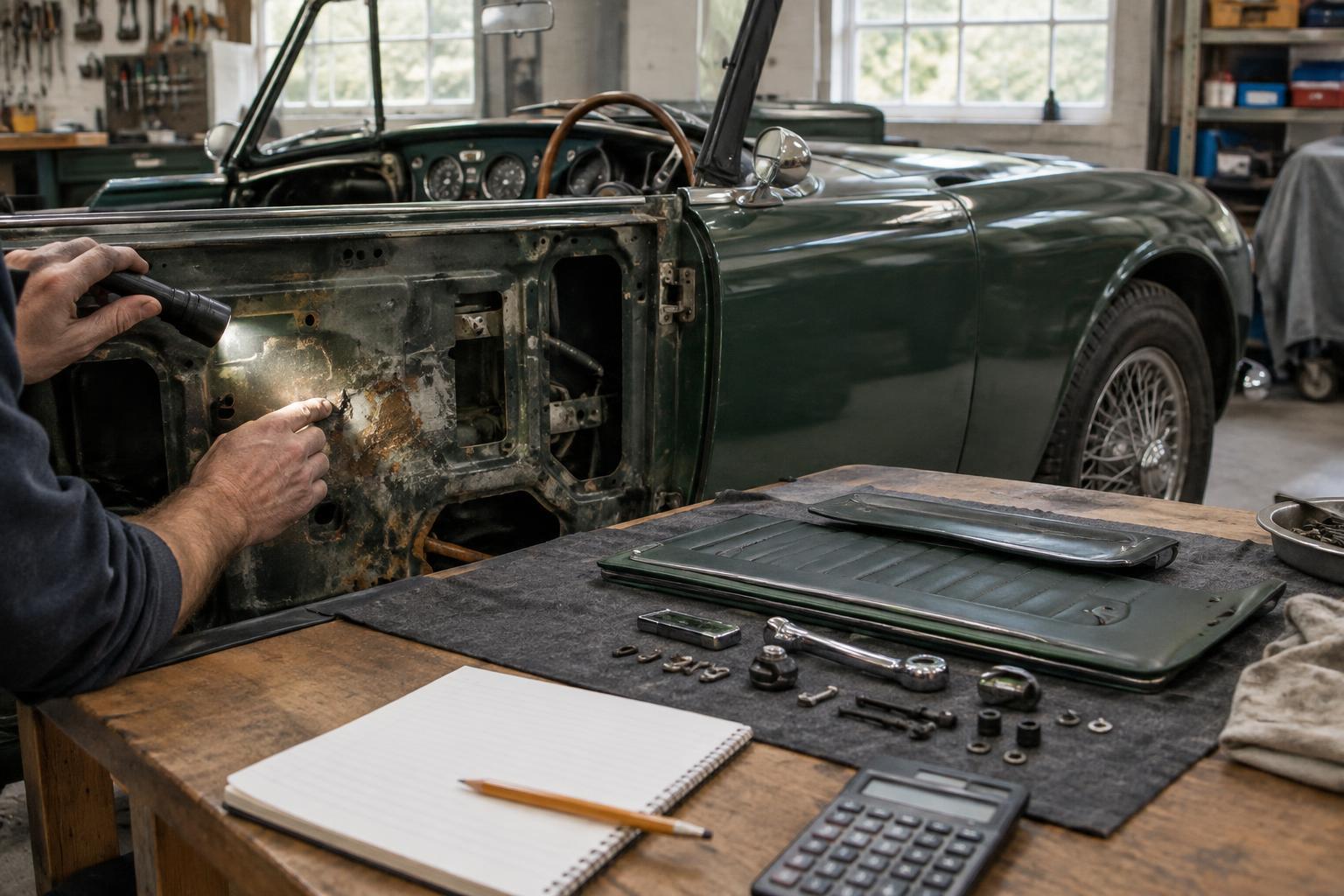
Paint, chrome and upholstery are easy to notice; corrosion in load-bearing areas is more consequential. On many British classics, useful starting points include sills, floors, wheel arches, chassis rails or outriggers where fitted, suspension mounting points, door pillars and the edges of the boot and bulkhead. The exact trouble spots vary by model and construction, so use a model-specific reference where possible. Inspect both sides of a suspected area: a tidy outer panel does not establish that the metal behind it is sound.
Look for bubbling paint, swelling seams, uneven underseal, recent patches and repairs that conceal rather than resolve damage. Check door gaps and whether doors open and close consistently, while remembering that poor adjustment can also affect fit. A magnet or gentle probing may help identify areas needing closer inspection, but neither can establish the full extent of hidden corrosion. If structural condition is unclear, seek an experienced body specialist’s assessment before committing to dismantling or ordering large panels.
Check identity, completeness and previous work
Record the car’s identifying numbers and compare them with the documents available to you. Keep copies of paperwork, old invoices and any notes about earlier repairs. This is not just an exercise in provenance: records can help you work out which specification the car has and which work has already been attempted. British classics often carry parts changed during decades of use, so avoid assuming that every component matches the car’s original configuration.
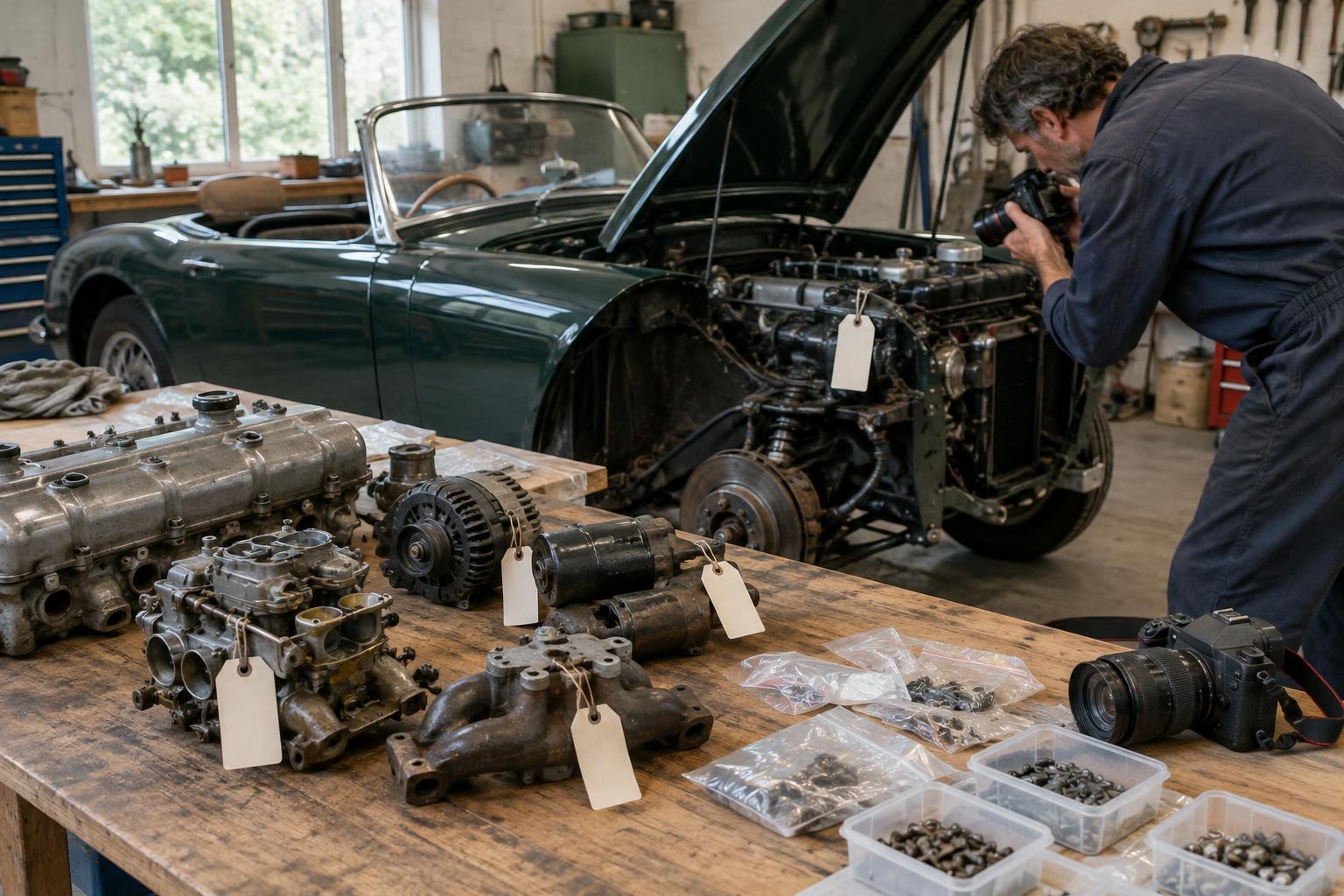
Make an inventory before removing anything. Check for missing trim, instruments, lamps, hood frames, brackets and model-specific fittings, as well as larger mechanical assemblies. Small pieces can be surprisingly difficult to identify later, and a box marked “interior parts” may not tell you which fastener belongs where. Photograph details, label loose items and note modifications such as an alternative engine, altered wiring or non-standard brakes. Changes are not automatically problems, but they should be understood before you decide what to retain or replace.
Assess the mechanical systems as a whole
A car that starts is not necessarily ready to use, while one that does not start is not necessarily beyond reasonable repair. Check visible leaks, fluid condition, cooling-system components, exhaust condition and the state of hoses and belts. Look for play or wear in steering and suspension parts, inspect tyres for age-related deterioration and establish what can be learned about the brakes. If the engine runs, record observations rather than jumping to conclusions from one noise or a short period of idling.
Think in systems rather than isolated purchases. Replacing a master cylinder, for instance, may expose the need to address old pipes, hoses or seized components elsewhere in the braking system. A fresh engine may be of little practical use if the cooling system remains unreliable. Separate faults you have confirmed from those you merely suspect, and identify checks that could narrow the uncertainty. This helps prevent a restoration plan from becoming a sequence of expensive guesses.
Set the scope before taking it apart
Turn your notes into three lists: work needed for safety and soundness, work needed for dependable use, and appearance or specification changes you would like to make. Decide which jobs can be done with the car largely intact and which require access that justifies major disassembly. Consider your workspace, available time, skills and access to specialist services. Parts availability also deserves checking for the exact model and variant, particularly when a project is incomplete.
Allow for discoveries without treating a full strip-down as inevitable. You may find that a sound, complete car benefits most from careful preservation and staged repairs; another may require substantial structural work before its mechanical condition matters. Set a stopping point for assessment, then write a brief scope that states what you know, what remains uncertain and what you will inspect first. When dismantling does begin, photographs, labels and organised storage will turn that early assessment into a practical guide for putting the car back together.