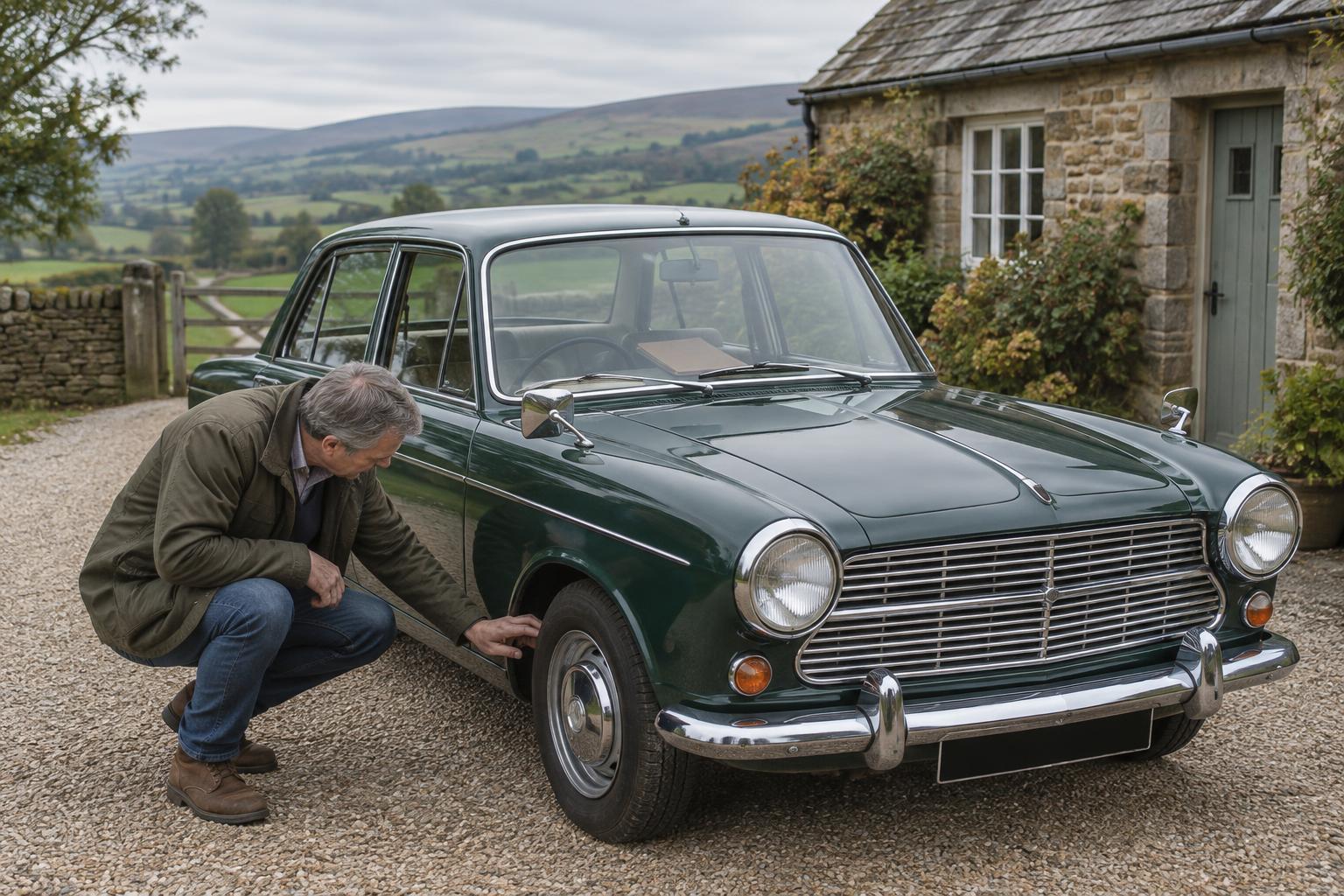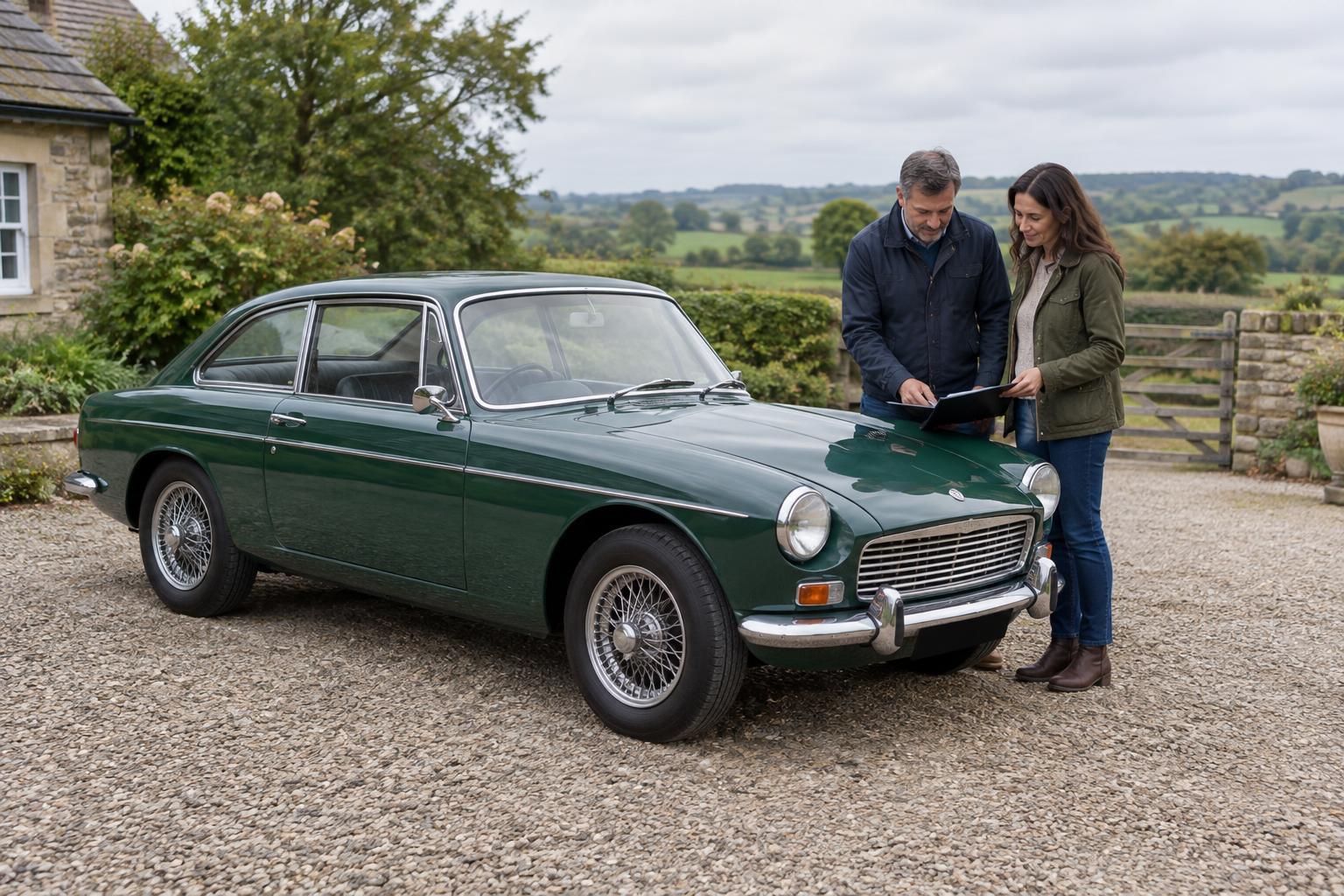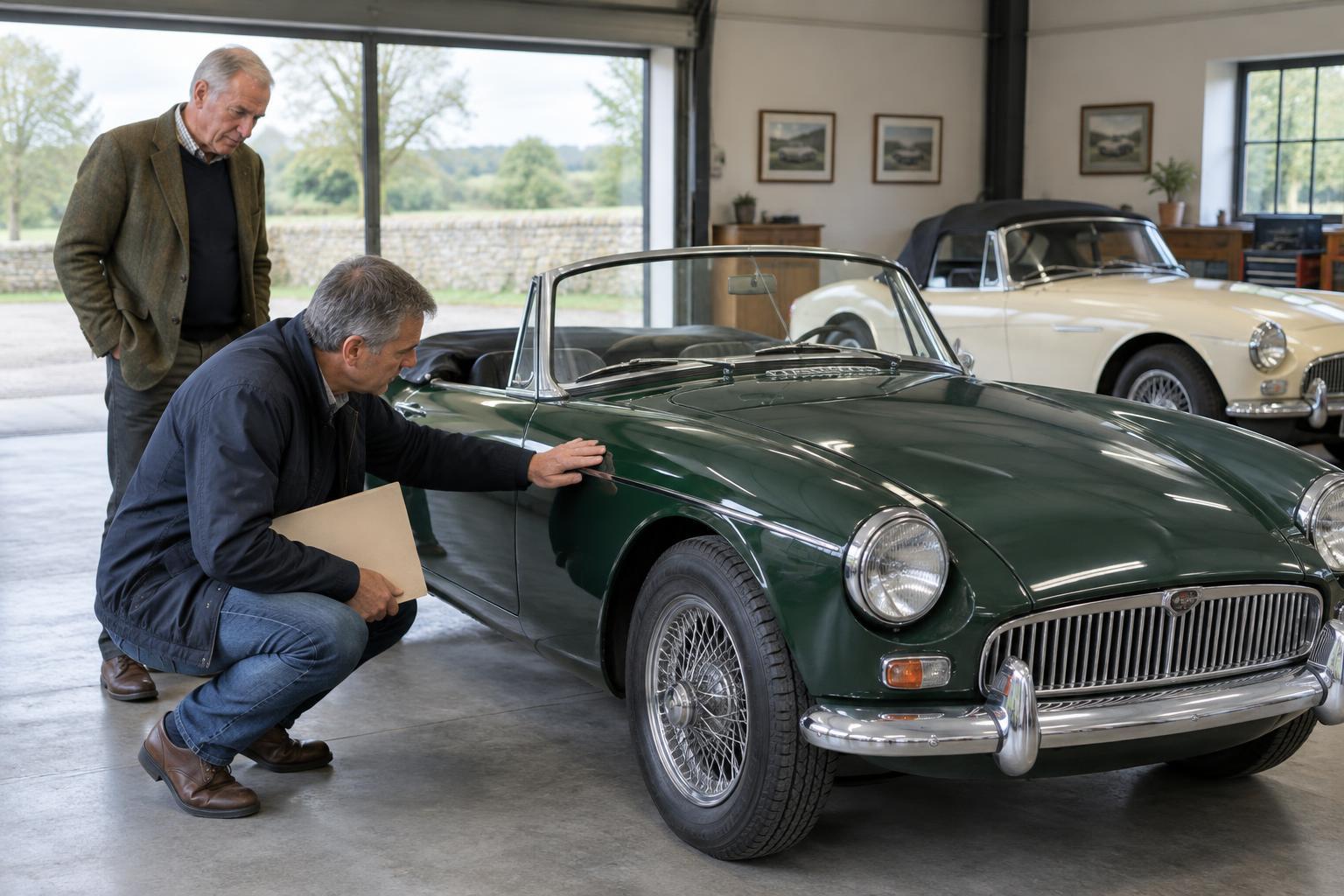
Start with the car, not the paperwork
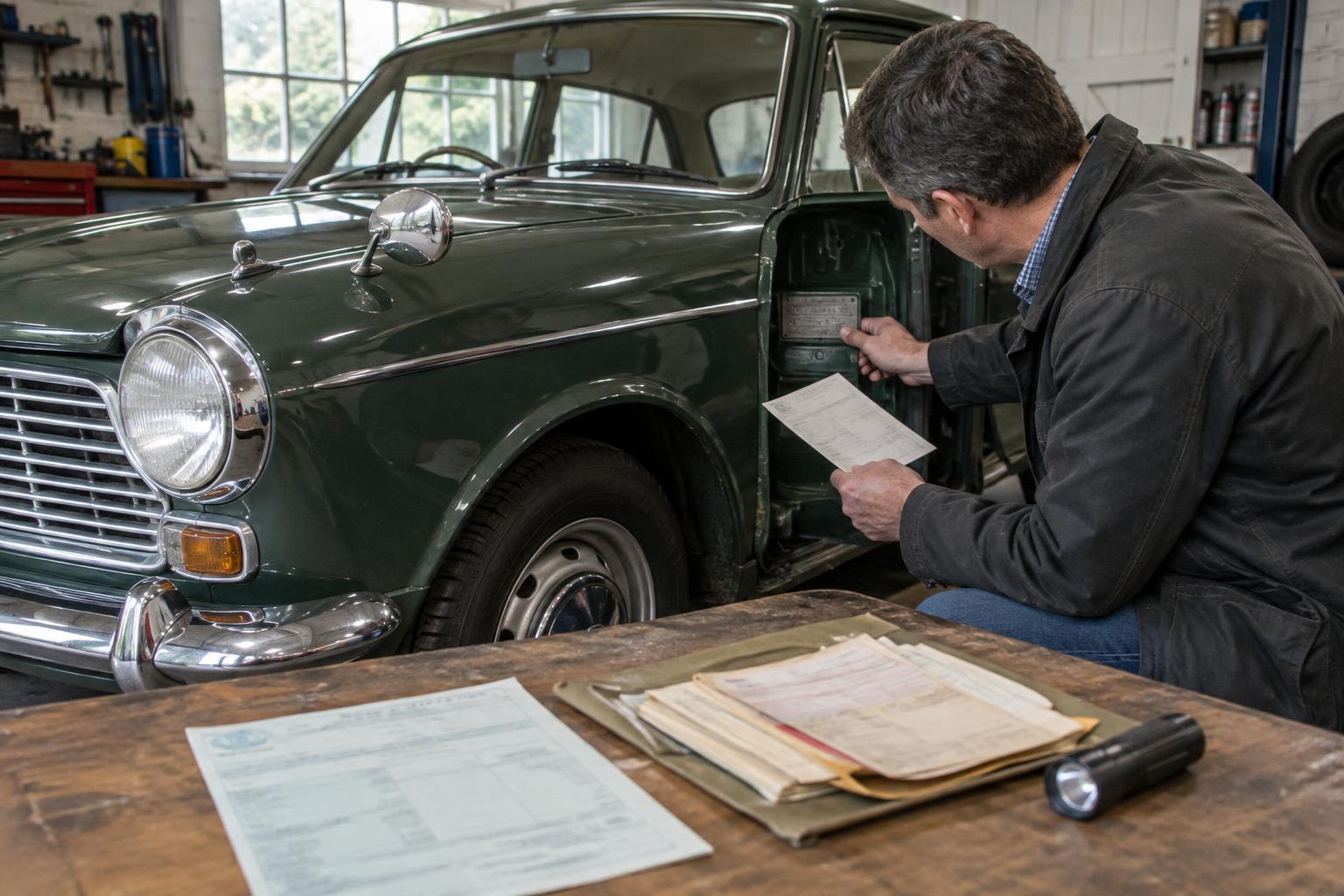
A convincing history file can make a classic car appealing, but begin by establishing which car you are looking at. Find its chassis or vehicle identification number and compare it with the number on the V5C registration certificate. Depending on the model and period, the number may appear on a plate, a stamped part of the body or chassis, or both. Consult model-specific guidance if you are unsure where it should be; an engine number is not a substitute for a chassis or VIN check.
Look closely at how each number is presented. A plate with fresh fixings on a weathered car, disturbed metal around a stamping, or different numbers in different locations merits an explanation. None proves wrongdoing on its own: classics may have undergone legitimate repairs or replacement of major components. The aim is to understand what changed, when, and what evidence supports the account. If a number is missing or difficult to read, pause rather than guessing what it says.
Also compare the registration mark, make, model, colour and other recorded details with the vehicle. Some descriptions on older records are broad, and colours and engines can change over decades. Nevertheless, the more differences you find, the more important a clear documentary trail becomes. Take notes and, with the seller’s permission, photographs of the relevant details so you can compare them calmly later.
Understand what the V5C does—and does not—show
For a UK-registered car, ask to see the original V5C before agreeing to buy. Check that its registration mark and VIN or chassis number match the car, and review the name and address of the registered keeper. A V5C records the registered keeper; it is not, by itself, proof of legal ownership. The person selling the car should be able to explain their connection to both the vehicle and its documents.
A seller may have a reasonable reason for not being the named keeper, such as selling on behalf of a family member or an estate. In that case, ask who owns the car, who is authorised to sell it and how the sale will be documented. Be especially careful if the seller cannot produce the V5C or asks you to accept a promise that missing paperwork will arrive later. Replacement or correction may be possible, but it is usually easier to resolve an issue before money changes hands.
Check the registration details through the relevant official vehicle-enquiry service if available, and ask the seller to explain any discrepancy. You can also consider a reputable vehicle-history check for possible finance or other recorded concerns, while recognising that no single check establishes a complete history. Confirm the current process for notifying a keeper change rather than relying on an old guide found in a glovebox.
Build a timeline from the history file
A useful history file is more than a thick folder. Lay its contents out in date order: older registration documents, service records, invoices, inspection or test records, photographs, correspondence and receipts for major work. Look for a continuing connection between the registration mark, chassis number, names, locations and recorded mileage. Gaps are common in an older car’s life, and a recorded mileage may not represent its total distance travelled. Treat the file as supporting evidence, not a guarantee.
Pay particular attention to events that can affect identity or value. Has the car received a replacement engine, body shell or chassis? Has it carried another registration mark, been imported, or been rebuilt from substantial parts? These circumstances are not automatically problems, but they call for documents that explain what happened. If a claim such as “original engine” or “continuous ownership history” matters to your decision, ask what evidence supports that specific claim.
Make copies or photographs of relevant papers only with permission, and handle personal information in older documents respectfully. If the seller describes a period that the documents do not cover, record it as an account rather than a verified fact. An honest, incomplete history is easier to assess than a confident story that repeatedly changes under simple questions.
Resolve doubts before paying
Give yourself time to compare your notes with the car and documents after the viewing. Write down each unresolved point and ask the seller for a specific answer or supporting record. For an unfamiliar marque, an independent specialist or owners’ community may help you identify where numbers should appear and which changes are typical, although they cannot certify ownership from a photograph alone. A pre-purchase inspection is particularly valuable when identity questions sit alongside concerns about structural repairs.
If you proceed, use a written receipt that identifies the car by registration mark and chassis or VIN, states the agreed price and date, and records the names of buyer and seller. Keep copies of the advert, messages and any statements about identity or included paperwork. Do not let attractive paintwork, a short test drive or pressure to leave a deposit replace these checks. It is reasonable to walk away when important inconsistencies remain unexplained.