Start with the journeys you cannot miss
A classic car may be a pleasure on a quiet road yet awkward when every journey has a fixed arrival time. List the trips you make in a normal week: work, school runs, shopping, appointments and visits to people who depend on you. Note which trips could be delayed and which need a dependable alternative at short notice.
Think about the route as well as the distance. Stop-start traffic, hills, motorway speeds and limited parking can expose different compromises. So can a full load of passengers or luggage. If you are considering a particular car, ask whether its seating, visibility, heating and storage suit the trips you actually make, rather than the drives you imagine taking.
Make room for maintenance, not just mileage
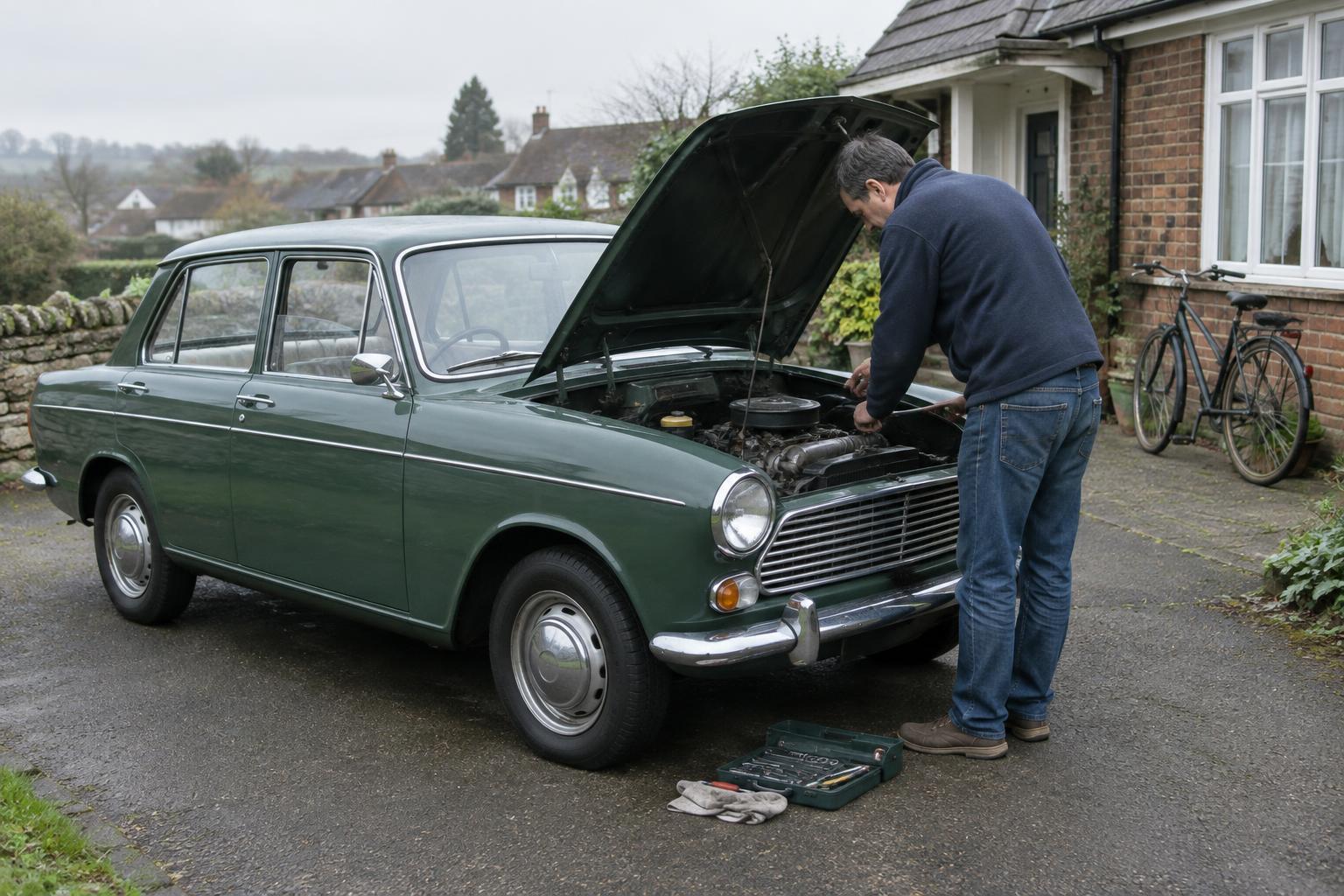
Even a well-kept classic needs attention. Small issues are easier to deal with when you can leave the car parked until you have checked them properly. If it is your only transport, the pressure to make tomorrow’s journey may tempt you to postpone a repair or rush a diagnosis.
Build a routine around your available time and abilities. Decide who will handle regular checks, servicing and unexpected faults, and how you will get the car to them if it cannot be driven. Parts availability varies by model and by the component needed; an apparently minor job may take longer if you have to confirm the right part or wait for a specialist. Allow for that possibility when planning your week, not just when setting aside money.
Consider comfort and weather honestly
Daily use means taking the car out when the drive is inconvenient, not only when the weather is inviting. Demisting, ventilation, wipers, lighting and door seals deserve particular attention if you expect to travel early, late or through wet conditions. Try the car on representative journeys before deciding that its everyday comfort works for you.
Think about where it will live between trips. A suitable parking space gives you room to inspect the car and deal with wet clothing, luggage or a flat battery without blocking other vehicles. If the car is regularly exposed to rain, road grime or winter conditions, you may also need more time for cleaning and checks. These are manageable tasks for some owners, but they become part of the weekly routine.
Set up a genuine backup plan
A backup plan is more useful when it names an actual option. Could you use public transport, borrow another vehicle with permission, arrange a lift or change a journey to remote work? Check whether each option works for the times and places you travel. A bus that serves your workplace on weekdays may not help with an early appointment elsewhere.
Consider what you would do if the car became unavailable away from home. Keep the contact details you might need accessible, and understand the recovery arrangements you have chosen before a breakdown occurs. If another person depends on your car for a regular journey, agree on the alternative with them in advance. The goal is not to predict every fault; it is to make one off-road day inconvenient rather than unmanageable.
Test the idea before committing
If you already own the car alongside another vehicle, try using the classic for your ordinary journeys over several weeks while keeping the other vehicle available. Record when you choose not to use it and why. The pattern may reveal practical limits that a weekend drive would not: awkward parking, insufficient luggage room or too little time to deal with a developing fault.
If you are still deciding what to own, be cautious about assuming that enthusiasm will solve every inconvenience. The right answer depends on your schedule, the particular car, your support network and how much disruption you can accept. A classic can be a satisfying regular companion without having to carry every transport responsibility alone. Choosing a backup is not an admission that the car has failed; it is a way to enjoy it without forcing it to meet a deadline at any cost.