Start with the correct procedure for your gearbox
There is no single oil-checking method for every classic gearbox. Some manual transmissions have a dipstick, while others are checked at a side-mounted filler or level plug. An automatic transmission may have a dipstick with a procedure that depends on fluid temperature, engine operation and selector position. An overdrive unit may share the gearbox oil supply or have its own checking requirements. Before opening anything, identify the gearbox and consult the car’s workshop manual for its check procedure, oil specification and service interval.
This matters because a low reading is not always caused by a leak, and an apparently correct reading can be misleading if the car is tilted or the specified procedure has not been followed. Do not assume that a modern gearbox oil is suitable simply because its viscosity sounds familiar. Oil choice can affect how a particular gearbox, its synchronisers and any overdrive operate. If the gearbox has been replaced or modified, the original car handbook may no longer describe what is fitted.
Prepare for a safe, useful inspection
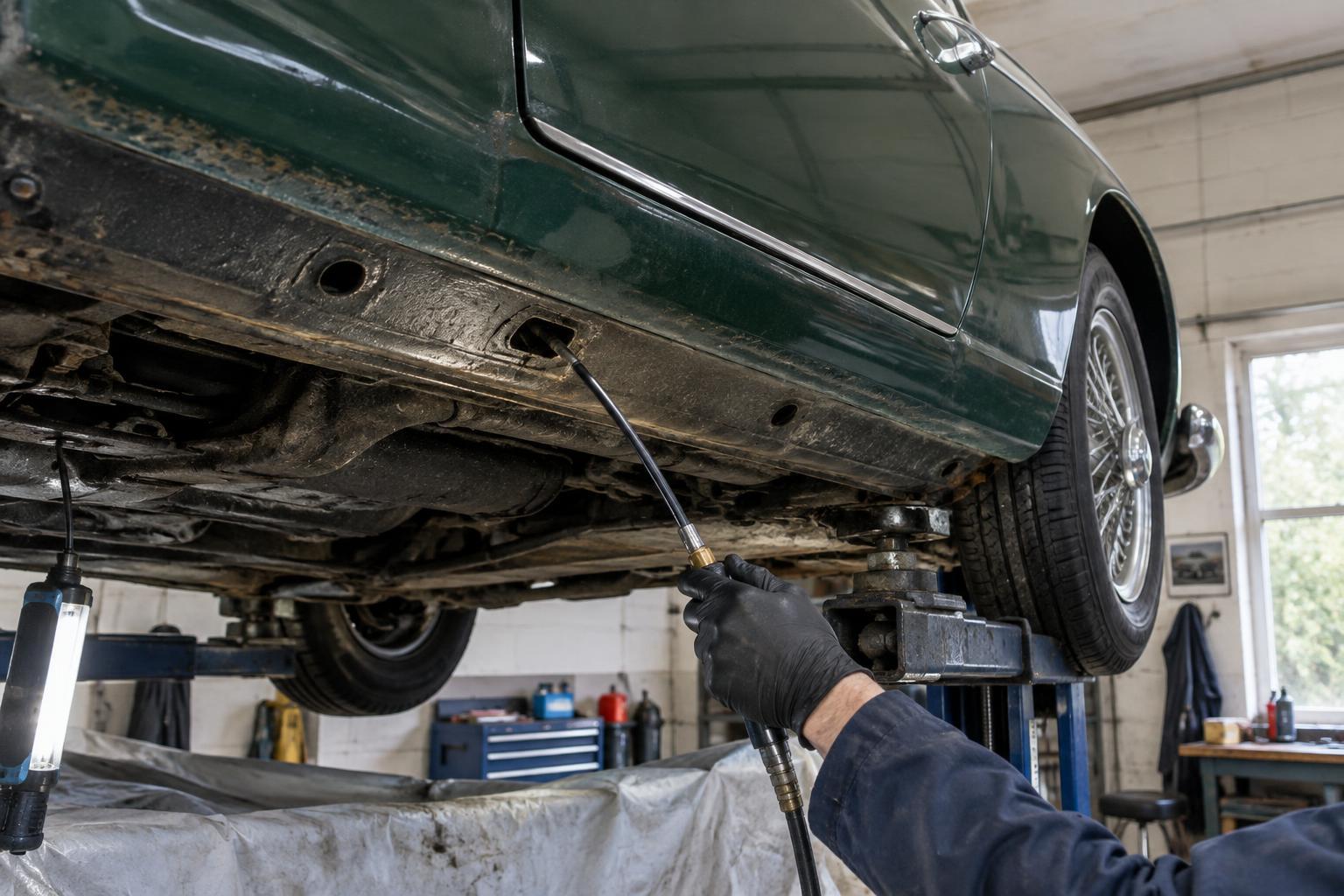
Park on firm, level ground and allow hot components to cool enough to work around safely, unless the specified checking procedure calls for a particular operating temperature. Keep loose clothing away from moving parts. If access beneath the car is necessary, use suitable ramps or axle stands on sound ground; never go underneath a vehicle supported only by a jack. If you cannot reach the level point safely, arrange a check at a workshop rather than improvising.
Clean dirt from around a dipstick or plug before opening it. Grit introduced during a level check can do more harm than a small delay in topping up. On a filler-plug gearbox, loosen the filler plug before considering any oil drain: a stuck filler plug is an unpleasant discovery after the oil has been emptied. Have the correct tool and a clean container or pump ready, and keep different oil types clearly separated.
Check the level without overfilling
For a dipstick-equipped manual gearbox, follow the handbook’s instructions for wiping, reinserting and reading the stick. On a gearbox checked through a level plug, the specified level is often near the lower edge of the opening when the car is level, but confirm that rule for the unit in question. Remove the plug carefully and check with a clean finger or suitable probe if the manual directs it. A small amount of oil at the opening does not necessarily mean the gearbox has been overfilled; oil can settle or move when the car is disturbed.
If a top-up is needed, add the specified oil gradually and recheck. Avoid filling by guesswork or by a quoted capacity alone: stated capacities can refer to a fully drained unit, not the amount needed for a top-up. Refit the dipstick or plug as specified, taking care not to damage its threads or seal. Wipe away spilled oil so that any fresh trace found later is easier to interpret.
Recognise the early signs of a leak
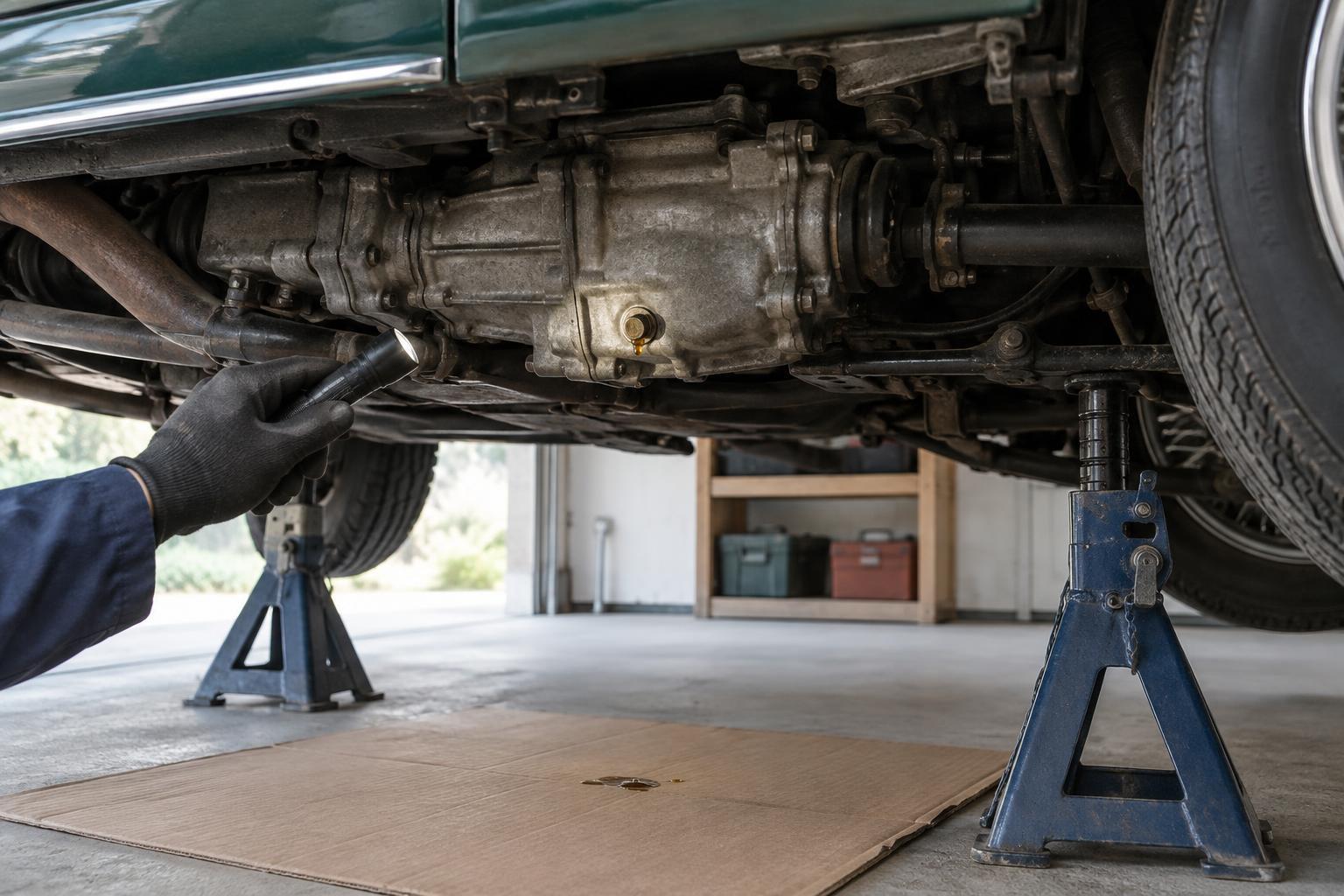
A new spot where the car is usually parked is a useful clue, but it does not identify the source on its own. Oil can travel along a casing, crossmember or propeller shaft before it drips. Look for fresh wetness around the gearbox casing joints, filler and drain plugs, selector openings, speedometer drive, and the front or rear of the unit. On cars with overdrive, inspect its joints and connections too. A damp film that collects dust may point to a slow seep; a fresh drip or oil flung across nearby parts suggests a more active leak.
Changes in operation can provide another warning. Increasing gear noise, reluctance to engage a gear or altered overdrive behaviour deserves attention, although these symptoms have several possible causes. Check the level rather than assuming the gearbox is short of oil. Also distinguish gearbox oil from engine oil or fluid leaking elsewhere: its colour and smell may offer clues, but older fluids and road grime make visual identification uncertain.
Track the problem before it becomes expensive
After cleaning an accessible oily area, place clean cardboard beneath the parked car and note where any new drops appear. Recheck the level using the same correct procedure, and record how much oil a top-up requires. This simple record helps distinguish a longstanding light seep from a leak that is getting worse. Inspect again after a drive, when airflow and moving parts may have spread fresh oil.
Do not keep topping up indefinitely without finding the cause. A loose plug or tired seal may be straightforward to address, but the visible drip may also originate higher up or from another component. If the level falls repeatedly, oil is dripping steadily, or gearbox operation changes, limit driving and have the source assessed. A few careful checks can protect a gearbox while leaving you better informed about what repair, if any, is actually needed.