Start with the shell, not the stripping method
Removing old paint is often the point at which a restoration becomes more complicated. Filler, previous repairs and corrosion may be hidden under an apparently sound finish. Before choosing a method, decide whether you need to expose the entire bodyshell or only the areas being repaired. A local repair may need no more than careful stripping around the affected panel; a full rebuild may justify taking the shell back to bare material.
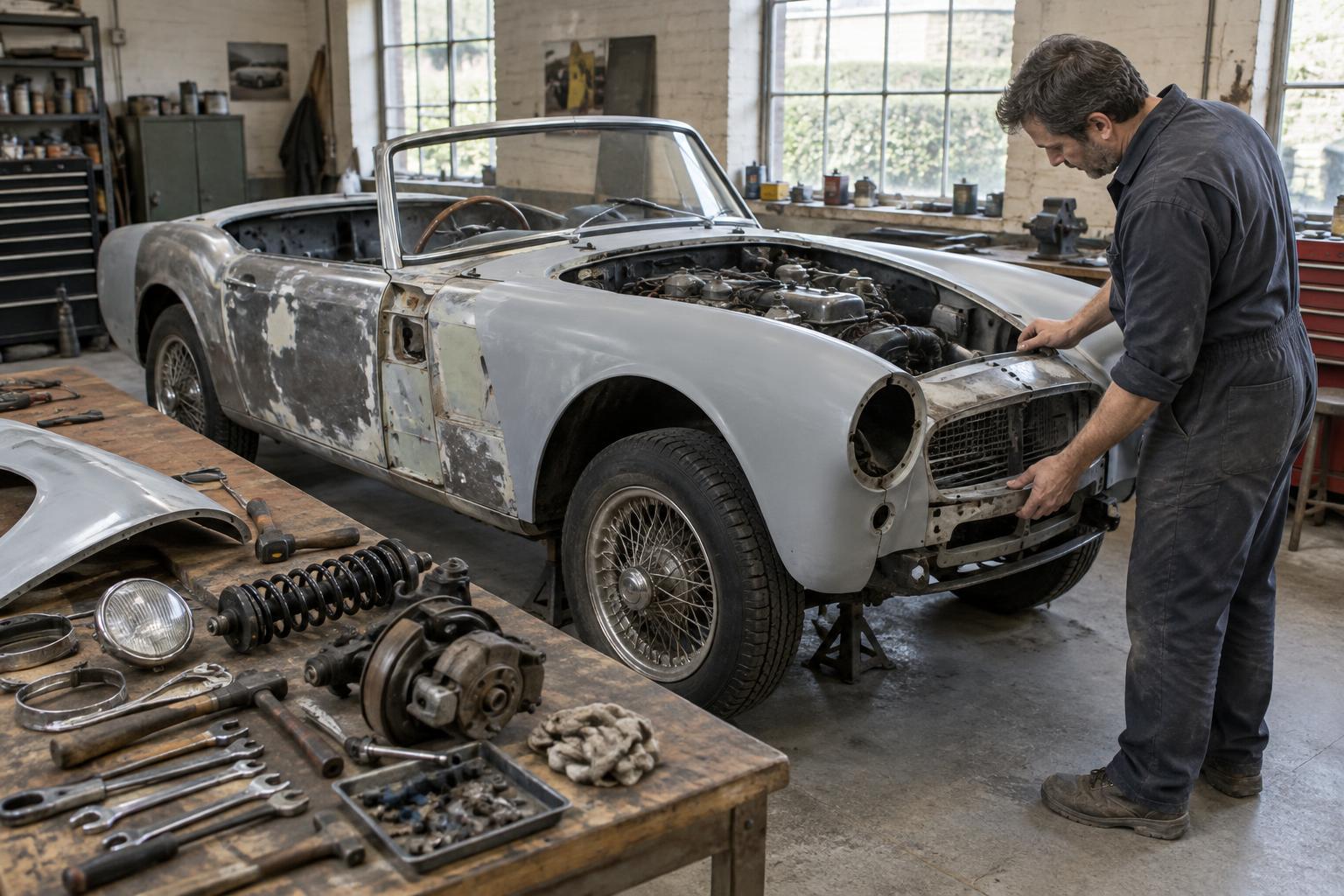
Record the car before work begins. Photograph panel gaps, seams, visible repairs and areas that may contain factory finishes or markings worth preserving. Identify what you will be stripping: a steel body can include aluminium panels, lead-loaded joints, plastic trim or glass-fibre sections. One process will not necessarily suit every part. Removing fittings and cleaning out loose dirt also makes it easier to see where paint, sealant and rust actually end.
Hand sanding and mechanical removal
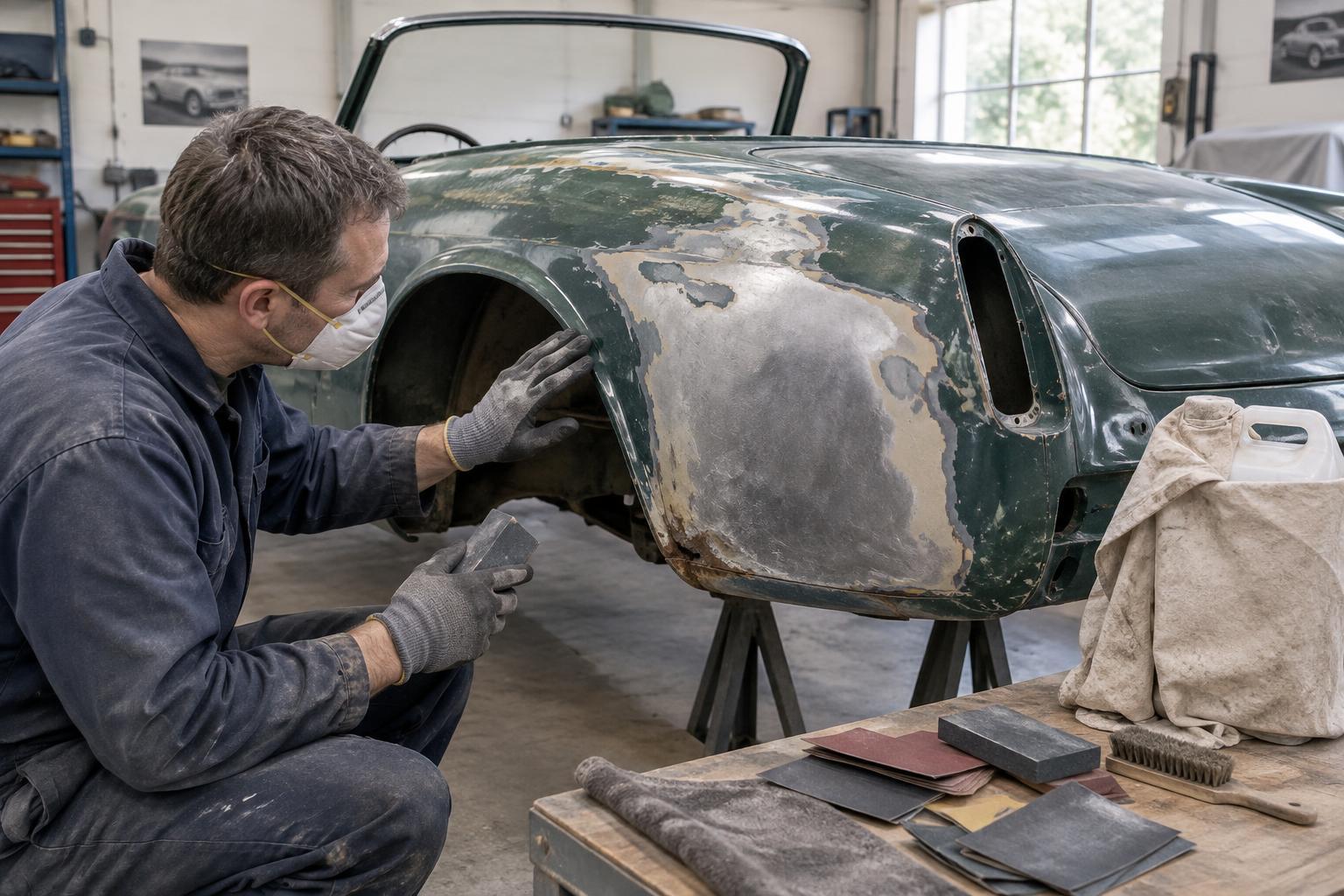
Hand sanding offers control around edges, seams and small repairs. It is slow, but it lets you pause when you uncover filler or an unfamiliar material. Machine sanding can clear broad, accessible panels more quickly, provided the operator avoids lingering in one spot or cutting into the metal. Aggressive grinding discs are a poor shortcut on thin outer panels: they can leave deep scratches and remove sound metal along with paint.
This approach is often useful when the shell is largely sound and you want to work one panel at a time. It is less convenient inside boxed sections or around intricate pressings. Old coatings and filler create dust, and their contents may be unknown. Plan for suitable respiratory and eye protection, dust containment and cleanup before starting; do not assume an old paint system is harmless.
Chemical stripping: access without abrasion
Chemical paint removers can soften multiple coats without the mechanical force of sanding. On a removable panel or a broad, accessible surface, they may make it easier to lift paint while leaving the underlying shape intact. Results vary with the coatings present, so a small trial area is more informative than committing the whole car at once.
The difficulty is controlling what remains afterward. Stripper can collect in folded edges, spot-welded flanges and other seams, where residue may interfere with later coatings. Follow the product’s instructions for application, removal and surface preparation, and protect adjacent materials that it could damage. Chemical stripping is a less attractive choice where hidden cavities cannot be reached for thorough cleaning. Used product and loosened paint also need appropriate containment and disposal.
Blasting and dipping: useful, but not universal
A specialist can blast a shell with an abrasive chosen for the material and the job. Blasting is particularly helpful for exposing corrosion in awkward corners, but technique matters. Excessive pressure, heat or time on a large, thin panel can distort it. Different media leave different surface finishes, and a gentle paint-removal process may not remove heavy rust. Ask a prospective contractor how they will treat outer panels, seams and areas containing softer metals or historic repairs.
Immersion stripping can reach places that tools cannot, including some internal surfaces. That thoroughness is also its main planning challenge: liquid can enter seams and cavities that are difficult to rinse, dry and recoat. If considering a dipping service, establish how the shell will be cleaned afterward and how newly exposed metal, including internal areas, will be protected. Neither blasting nor dipping removes the need to inspect and repair damaged metal.
Make the next step part of the decision
Bare metal should not be treated as a convenient stopping point. Once exposed, it can begin to deteriorate if left in damp conditions or handled without care. Before stripping, arrange a dry workspace, a way to keep panels clean and a coating plan compatible with the products to be used later. If a contractor will do the stripping, agree in advance who will clean, inspect and prime the shell, and when.
A mixed approach is often sensible. You might sand accessible outer panels, use a suitable process on removable parts and have a specialist treat badly corroded or complex areas. Choose according to the material, access and condition of each part, not simply the fastest way to remove visible paint. The best result is a shell that can be inspected honestly, repaired properly and protected promptly.