Make parking part of the route plan
On a classic-car tour, an overnight stop is more than a bed and a good breakfast. It is also the place where the car will sit unattended for several hours, possibly loaded with luggage and exposed to unfamiliar traffic or weather. Suitable parking need not be elaborate, but it should be easy to find, practical to use and appropriate for your particular car.
Start by deciding what matters most. A low-slung sports car may need a gentle entrance and level ground. A larger saloon may need a wider space and room to swing into it. A car with a soft top may make covered parking especially appealing during wet weather. These needs can help narrow a choice between a country inn, a town-centre hotel and a small guesthouse before you become attached to a room.
Ask what the parking is actually like
A listing that says “parking available” leaves plenty unanswered. Before booking, ask whether spaces are on site, whether they can be reserved and how far they are from the accommodation. Check if the car park is open to the public, behind a gate or shared with a busy restaurant. None of these arrangements is automatically unsuitable, but the details help you judge how comfortably you can leave the car.
Ask about the approach as well as the space itself. Steep ramps, pronounced speed humps, gravel, narrow gateways and tight turns can all be awkward in an older vehicle. If a garage is offered, check the entrance width and height rather than assuming that fitting inside means you can also open the doors comfortably. A helpful host may be able to describe the layout, even if they cannot promise a particular bay.
It is also worth establishing what happens if you arrive late. A locked gate is reassuring only if you know how to get through it, and a small private car park may fill while you are still on the road. Clear arrival instructions are often more useful than a vague promise of “secure parking”.
Balance shelter, visibility and convenience
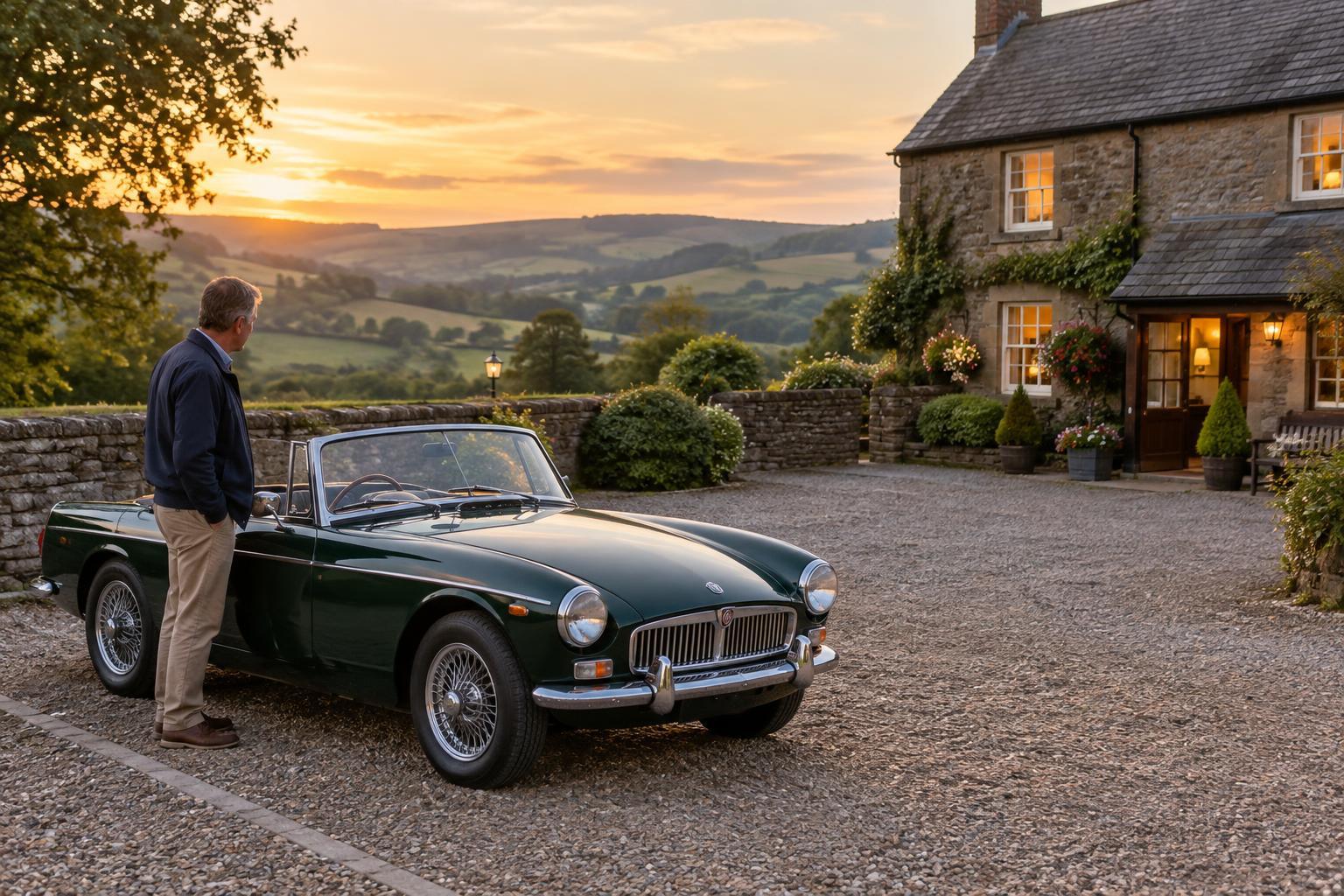
There is no single ideal place to park every classic car. A covered space can reduce exposure to rain and falling debris, while an open space near your room may let you keep a casual eye on the car. Good lighting can make unloading easier after dark, although a brightly lit position beside a busy entrance may bring more passing foot traffic. Look for a sensible balance rather than one feature in isolation.
Consider what you will need to carry from the car. If your luggage, tools and spare parts are packed across several compartments, a distant overflow car park can turn check-in into a chore. Ask whether you can stop briefly near the entrance to unload, then move to the overnight space. Where possible, choose a spot away from delivery routes, tight corners and places where other drivers may have to reverse close to your car.
Weather and surroundings matter too. Overhanging trees can drop sap or debris, and poorly drained ground may become muddy after heavy rain. These are usually minor inconveniences, but they are easier to manage when you know about them before arrival.
Arrive with enough time to look around
A little daylight gives you more chance to spot an awkward entrance and choose a space without rushing. On arrival, follow the property's parking instructions, then take a moment to assess the ground and the clearance around the car. If the allocated spot does not work, ask about an alternative before squeezing in. It is better to have a brief conversation than to risk scraping a sill or blocking another guest.
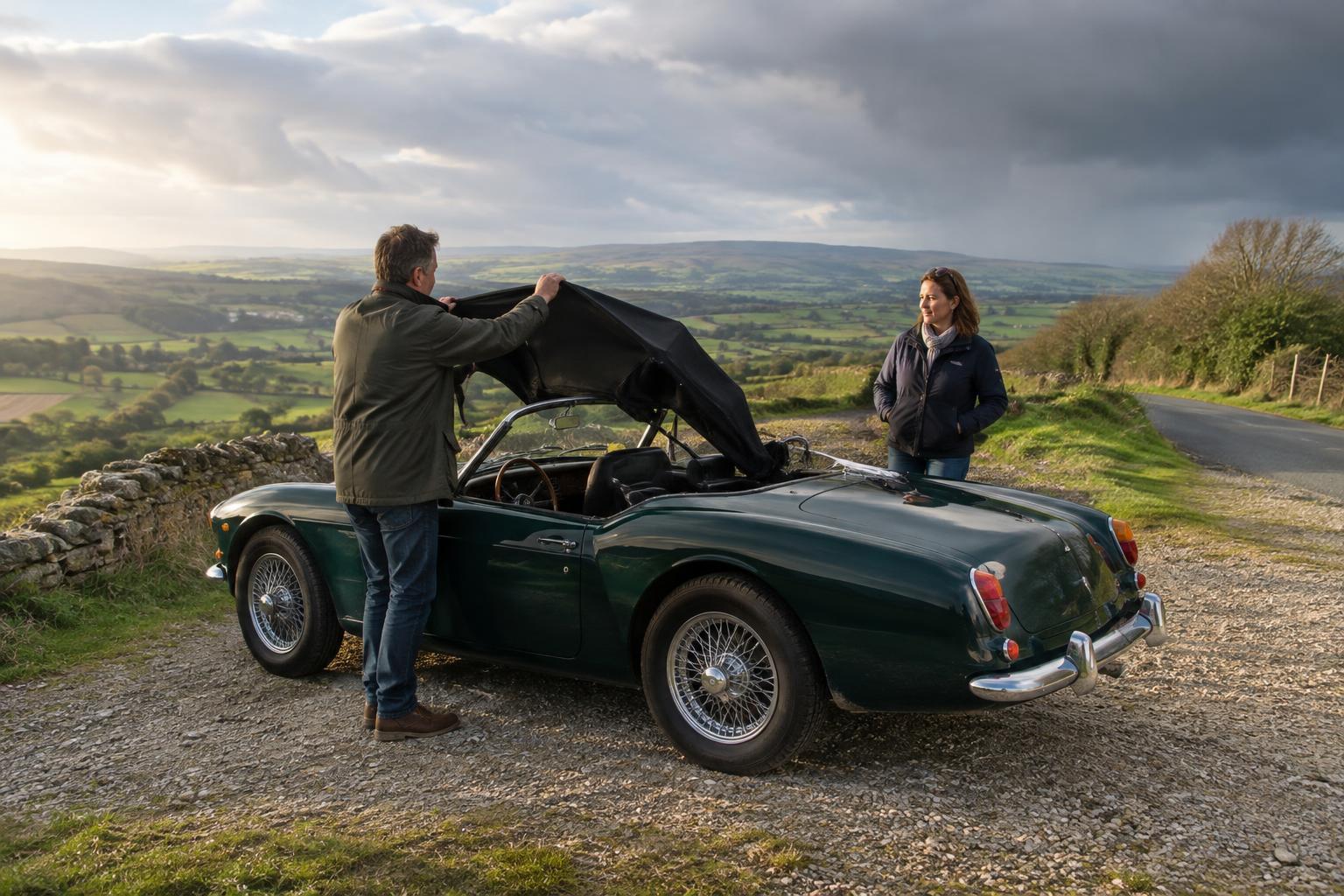
Before leaving the car, close windows and the roof securely, take the keys and remove valuables or keep them out of sight. If you use a cover, make sure it is clean, fits well and is suitable for the expected conditions; a loose cover can rub against paint in a breeze. Allow a hot engine and exhaust to cool before fitting anything that might touch them.
Note where you have parked and how you will leave in the morning. An exit that looks straightforward on arrival can feel different when the car park is full. Planning your first manoeuvre makes an early departure less stressful.
Keep a fallback and enjoy the stop
Even a well-chosen stop may not match its description perfectly. Save the accommodation's contact details, and identify another reasonable place to park nearby in case the offered space is unavailable or unsuitable. If the route takes you through several towns, leaving some flexibility in your arrival time can make it easier to address a problem calmly.
Parking is one consideration among many: a convenient location, welcoming host and enjoyable evening are part of the tour as well. The aim is not to eliminate every possible risk, but to avoid obvious difficulties. A few specific questions before booking, followed by an unhurried check on arrival, can make the overnight stop feel like a pleasant stage of the journey rather than a test of your reversing skills.