Begin with the journeys, not the badge
A British classic can mean a small roadster for sunny Sunday lanes, a saloon for relaxed touring or a compact car that feels at home on local errands. Before comparing models, picture how you will actually use yours. Will you drive mainly in fair weather, take a passenger and luggage away for weekends, or hope to use the car regularly? Your answer affects how much cabin space, weather protection and motorway comfort you need.
Think about the roads around you as well. A light sports car may make a short country drive memorable but feel busy on a long, fast journey. An older saloon may offer more room and shelter while demanding more storage space. Try to sit in several cars, and drive examples where possible. Visibility, pedal position, steering effort and ease of entry matter more in daily enjoyment than a specification sheet suggests.
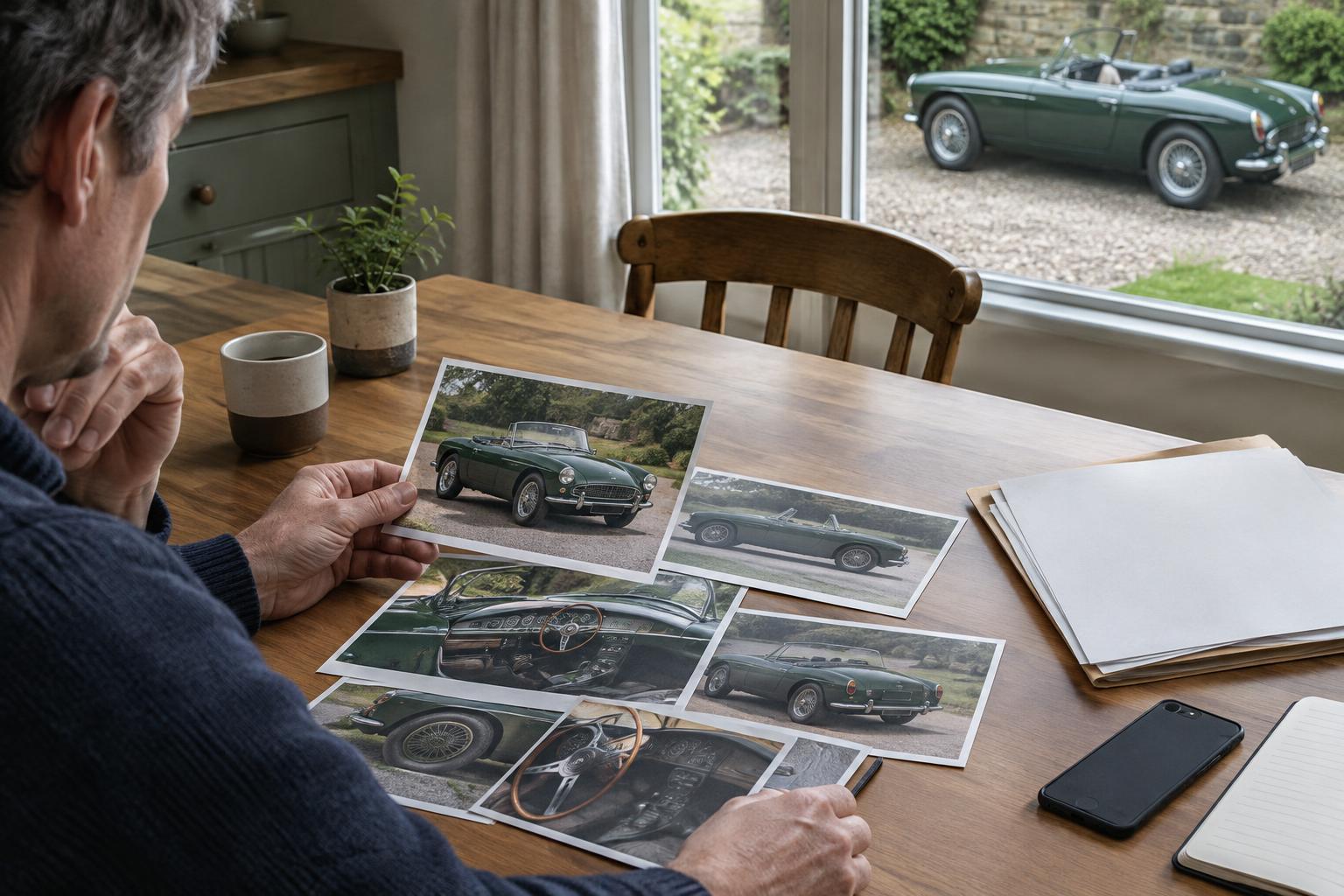
Keep a short list of models rather than searching for any attractive classic within your price range. This makes it easier to learn their usual weak points, compare asking prices and recognise a well-kept example when one appears.
Set a budget for ownership, not just purchase
The advertised price is only the beginning. Leave room for insurance, suitable storage, routine servicing, tyres and the repairs that may emerge once you start using the car. A cheaper project can become an expensive way to obtain a car you cannot yet drive. Equally, a costly restoration is not automatically the right purchase if its finish makes you reluctant to take it out.
Condition deserves particular attention because bodywork and structural corrosion can be demanding to put right. Fresh paint, tidy upholstery and a clean engine bay are appealing, but they cannot establish what lies underneath. Ask how the car has been maintained, what work has been done and whether there are records to support the story. Allow for an independent inspection if you are unsure what you are seeing.
Consider where the car will live. A dry, secure place to park makes cleaning, small jobs and regular checks easier. If it must stand outside, think realistically about weather exposure and how often you will be able to attend to it. The most affordable classic to buy may not be the most comfortable one to keep.
Match the car to your mechanical confidence
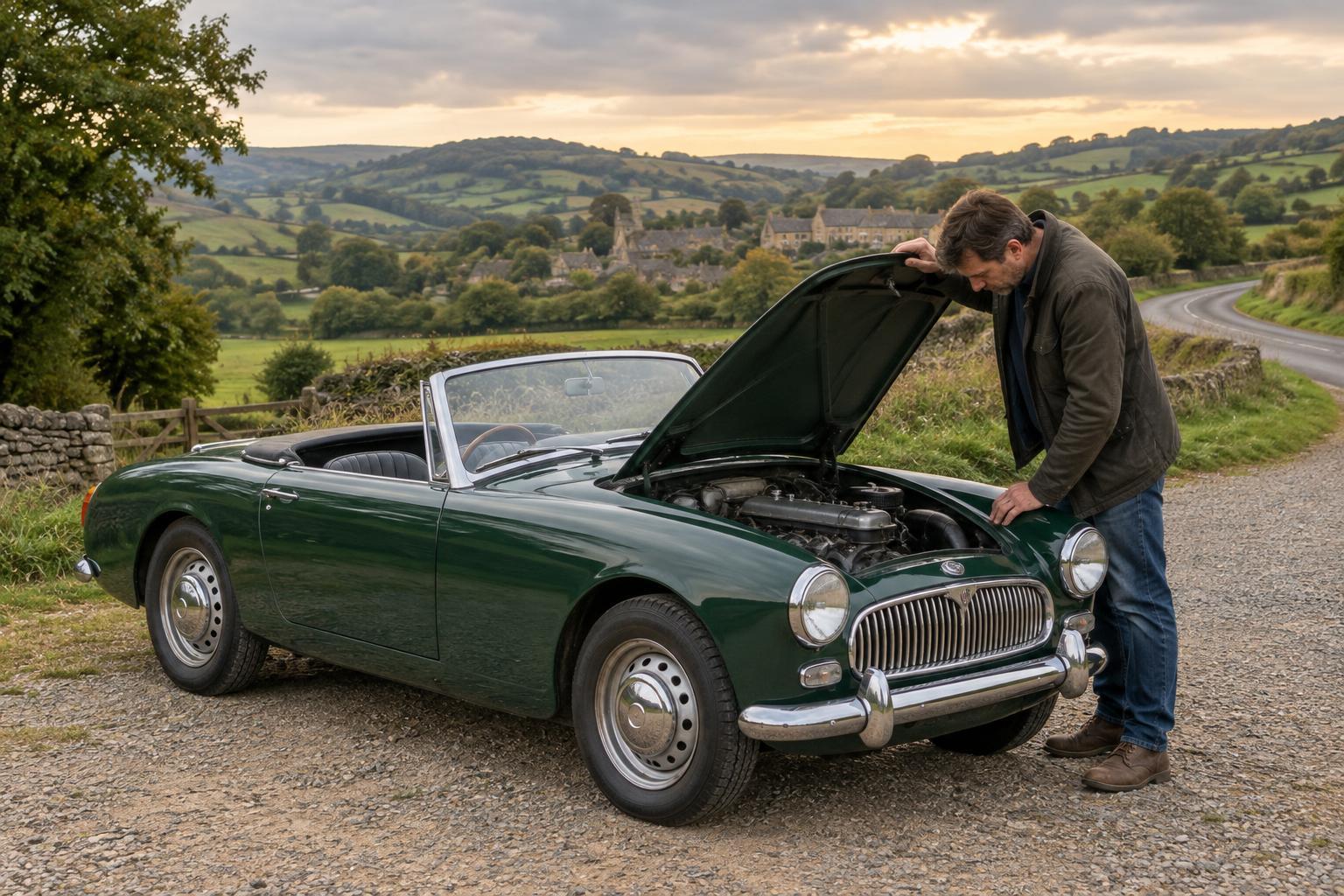
You do not need to be an experienced mechanic to enjoy a classic, but you should be willing to pay attention to it. Older cars often reward regular checks of fluid levels, tyre condition, lights and developing noises. Decide which jobs you would happily learn, which you would rather give to a specialist and whether suitable help is accessible where you live.
A familiar, widely supported model may be a reassuring first choice. Workshop information, parts supply and knowledgeable specialists can make ordinary maintenance less daunting. Availability still varies by model, component and location, so check the parts you might need rather than assuming every item can be ordered easily. A less common car can be deeply satisfying, provided you are comfortable with the extra planning it may require.
Be honest about your appetite for a project. If you chiefly want to drive, seek a car that starts, stops and behaves properly now, even if its paint or trim is imperfect. If you enjoy fault-finding and have the time, space, tools and patience, a car needing work may suit you. Avoid choosing a major restoration merely because its initial price fits your budget.
Inspect for substance and driveability
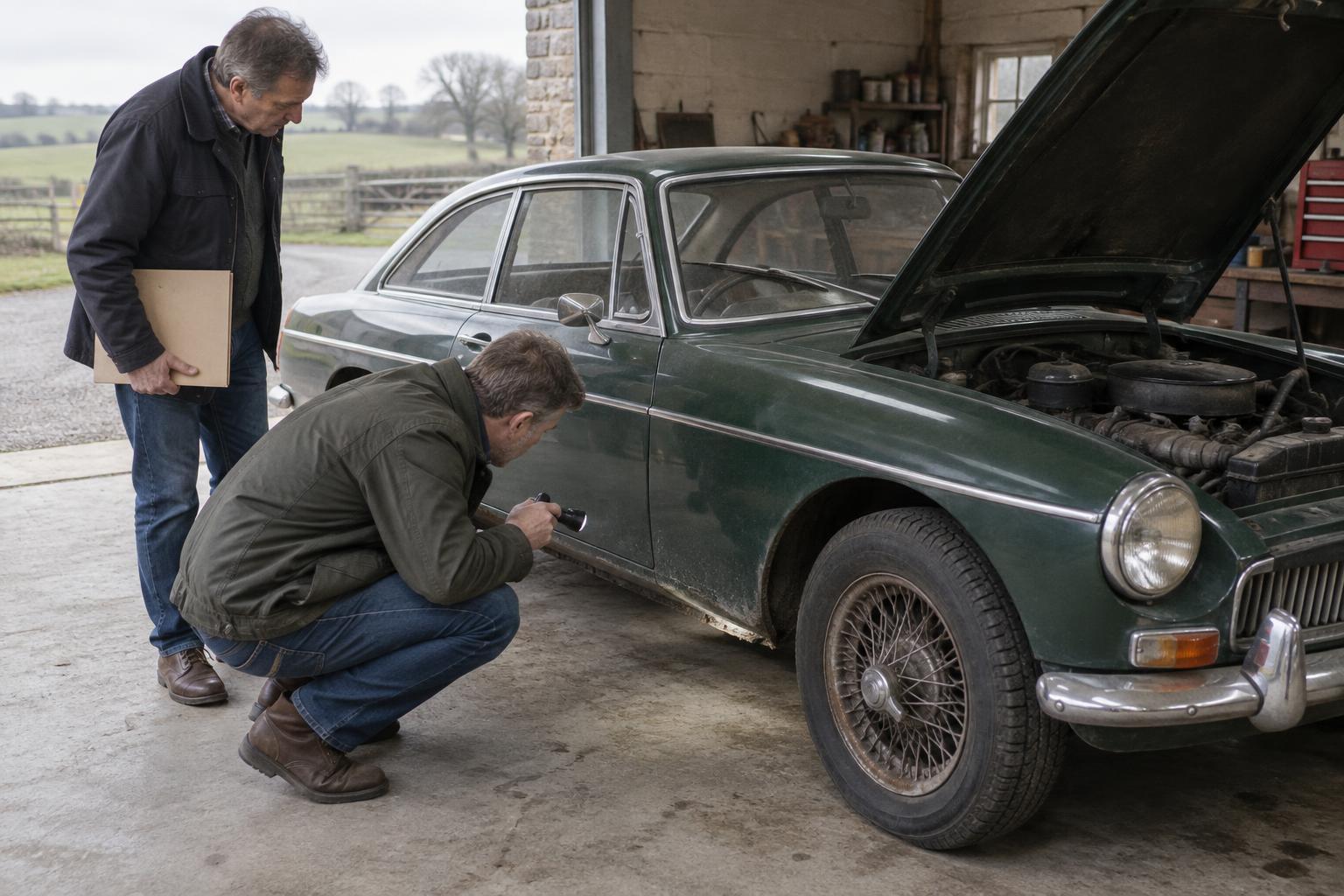
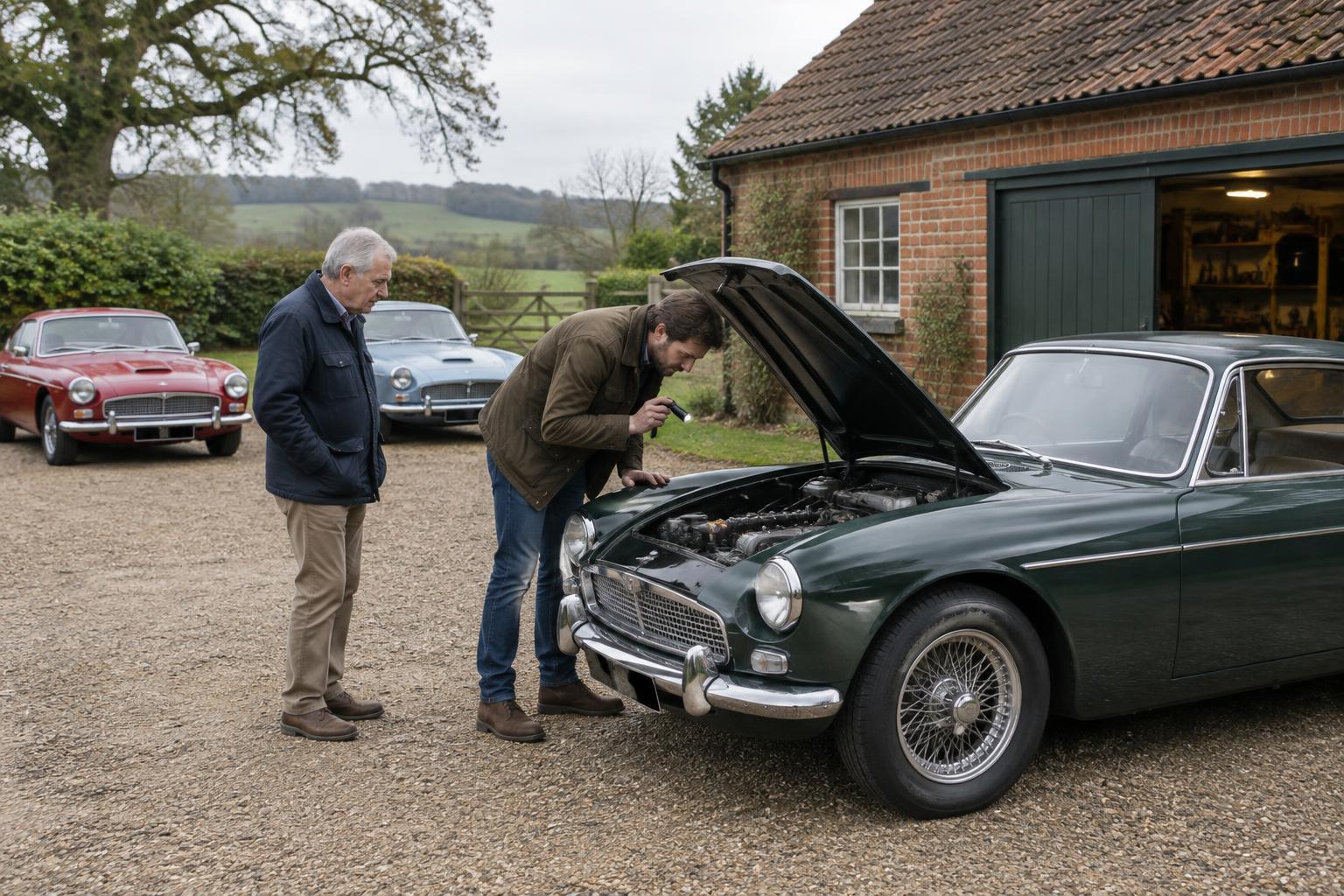
When viewing a car, give yourself time and arrange to see it in good light. Look for signs of corrosion or poor repairs around the underside, wheel arches, sills and other model-specific trouble spots. Check that panels, doors, hood or roof operate as expected. Uneven wear, leaks or a strong smell of fuel deserve questions rather than quick reassurance. A clean exterior is only one part of the picture.
On a test drive, notice how the engine starts from cold, whether it settles into a steady idle, and how the gearbox, brakes, steering and suspension feel. Expect an older car to differ from a modern one, but do not dismiss every fault as character. If the seller cannot offer a satisfactory drive, find out why. Check the vehicle’s identity and paperwork against the car, and make sure the account of previous work is clear enough for you to understand.
A knowledgeable companion or independent specialist can help you distinguish routine fettling from work beyond your plans. Their view is especially valuable when a car looks appealing but you have not yet learned the model’s typical corrosion points.
Choose the example you will actually enjoy
The right first British classic balances three things: a price that leaves you breathing room, a condition you understand and a driving experience that suits your plans. It need not be concours-perfect. Sound structure, dependable basic operation and evidence of thoughtful upkeep are often more useful to a newcomer than gleaming details alone.
Take your time comparing cars, and be prepared to walk away from one that raises more questions than answers. A sensible first purchase gives you space to learn its habits, plan improvements and enjoy the journey in between. That is a better introduction to classic motoring than spending every weekend trying to make an unsuitable car fit the dream.