Before you arrive
A village show, a concours and an informal cars-and-coffee meet can have very different expectations. Read the event information before setting off, particularly the arrival window, entry route, parking arrangements and any instructions for display cars. If you have entered a judged class, check what the organisers ask owners to provide and whether they expect you to remain near the car at a particular time. Do not assume that a routine from one event will apply at the next.
Give the car a simple pre-trip check and bring what you normally need for a day out: water, weather-appropriate clothing and a way to protect the interior if rain is forecast. Keep any paperwork you intend to show together, rather than searching through the boot when someone asks a question. Arriving with time to spare makes it easier to follow directions calmly and avoids turning the entrance into a last-minute parking exercise.
Park with the whole event in mind
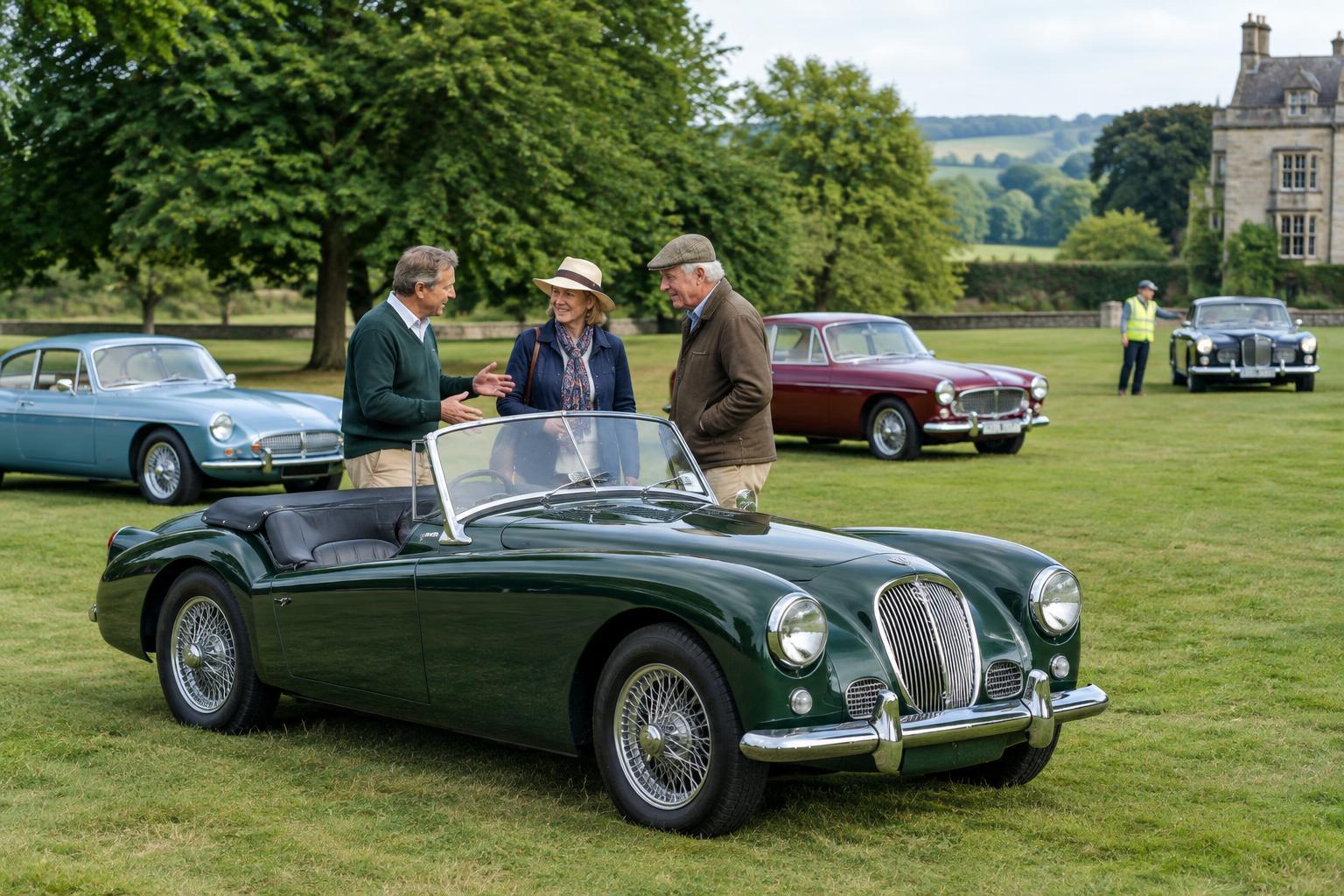
At the gate, follow the marshals’ directions even if you can see a space you would prefer. They may be leaving room for later arrivals, emergency access or a planned display layout. Drive at a walking pace among people and parked cars, and ask for a guide if visibility is poor or the space is tight. Once positioned, leave enough room for neighbouring owners to open doors and for visitors to move along the row.
Think about what extends beyond the car. An open bonnet, a picnic chair or a display board can block a walkway just as easily as a poorly parked vehicle. Keep tools, bags and spare parts out of the route people will use, and take particular care around grass that may become soft in wet weather. If you need to move the car during the show, speak to a marshal first where possible; a quiet gap in the crowd may be easier to arrange than an unexpected departure.
Your display need not be elaborate. A clean car and a short, legible note identifying the model and any details you are happy to share are often enough to start a conversation. Put valuables away and secure the car whenever you leave it unattended.
Approach judging as a conversation, not a verdict
Judged events may value different things: originality, condition, presentation, period-correct details or the quality of a restoration. Read the class description rather than trying to guess what will score well. If the event has rules about open bonnets, documentation or owner presence, follow those rules; otherwise, prepare the car as you would like it to be seen and keep relevant records available if you have them.
When judges reach the car, give them space to inspect it and answer questions directly. It is fine to explain a sympathetic upgrade or why a feature differs from the original specification. There is no need to apologise for every sign of use: a car that is driven has a story of its own. Avoid comparing your car unfavourably with a neighbour’s or campaigning for a result. If feedback is offered, listen and ask a brief, specific question if something is unclear.
An award can be pleasing, but it is only one part of the day. Different judges and event formats may reach different conclusions. Congratulating other owners and thanking volunteers helps keep the gathering welcoming, whether or not your car receives a prize.
Make spectator conversations welcoming
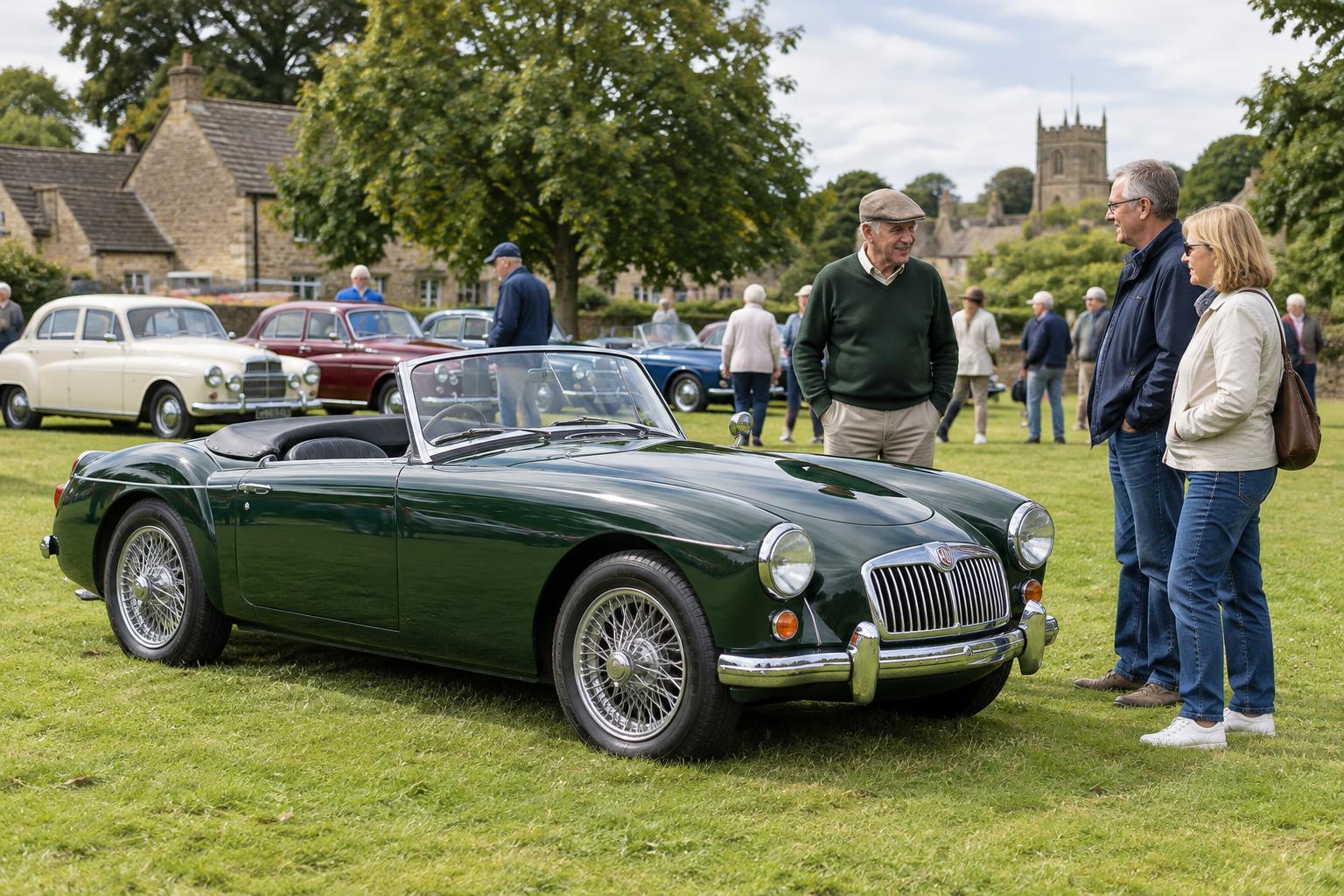
Visitors may be lifelong enthusiasts, former owners or people seeing the model for the first time. A friendly answer to a basic question can be more inviting than a recital of specifications. If someone asks whether the car is original, describe what you know and distinguish documented history from what a previous owner told you. When you do not know the answer, saying so is better than turning a guess into a fact.
Set boundaries politely. You might welcome photographs while asking people not to lean on the paintwork or open a door without permission. If you invite someone to look inside, check that they can do so safely and keep children close to the adult accompanying them. Be considerate when photographing other people’s cars too, especially if an owner or visitor would be prominent in the picture. A show is a shared space, not an obligation to give a guided tour: it is perfectly reasonable to step away for a break.
Leave as thoughtfully as you arrived
Before starting the engine, make sure the route out is clear and any display items are packed away. Follow the event’s departure arrangements, watch for pedestrians and resist the temptation to make a dramatic exit. A slow, predictable departure is kinder to other cars, people and the organisers managing the gate.
Take your rubbish with you and check that nothing has been left behind on the grass or beside the next car. The best event etiquette is straightforward: respect the layout, be honest about your car and give other people room to enjoy theirs. Those small habits make a gathering more pleasant for everyone, from the first arrival to the last departure.