Understand where moisture collects
A clean, painted outer panel can conceal corrosion developing on its reverse side. On many classic cars, water enters doors through window seals, reaches sills through joints or settles in boxed chassis sections after wet journeys. Road grit and old coating residue can hold that moisture against steel. British classics vary considerably in their construction, so begin by learning where your particular car has hollow sections, seams, access holes and drains rather than assuming every cavity is alike.
Pay attention to the difference between an exposed underbody surface and an enclosed cavity. The former can usually be washed, examined and coated directly. The latter may be reachable only through an existing opening with a probe. A protective treatment can slow deterioration, but it cannot restore steel that has already become thin or perforated.
Inspect before applying anything
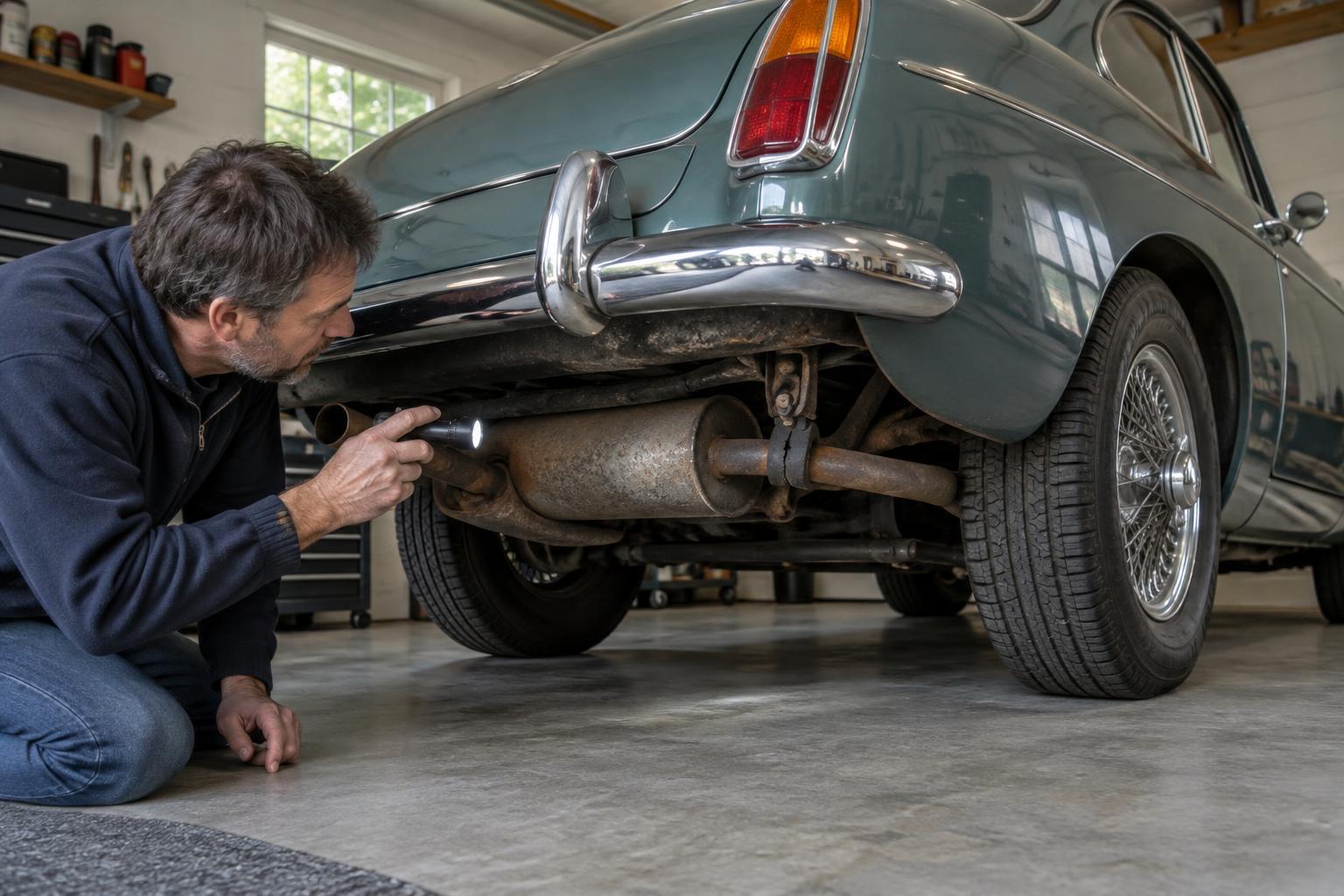
Choose a dry day and start with a visual survey in good light. Look for bubbling paint, swollen seams, staining around spot welds, flaking metal and previous repairs. Check that door and sill drains are open; a small amount of trapped debris can turn a protective hollow section into a water reservoir. An inspection camera may help reveal hidden surfaces, though its view will still be limited by internal braces and old deposits.
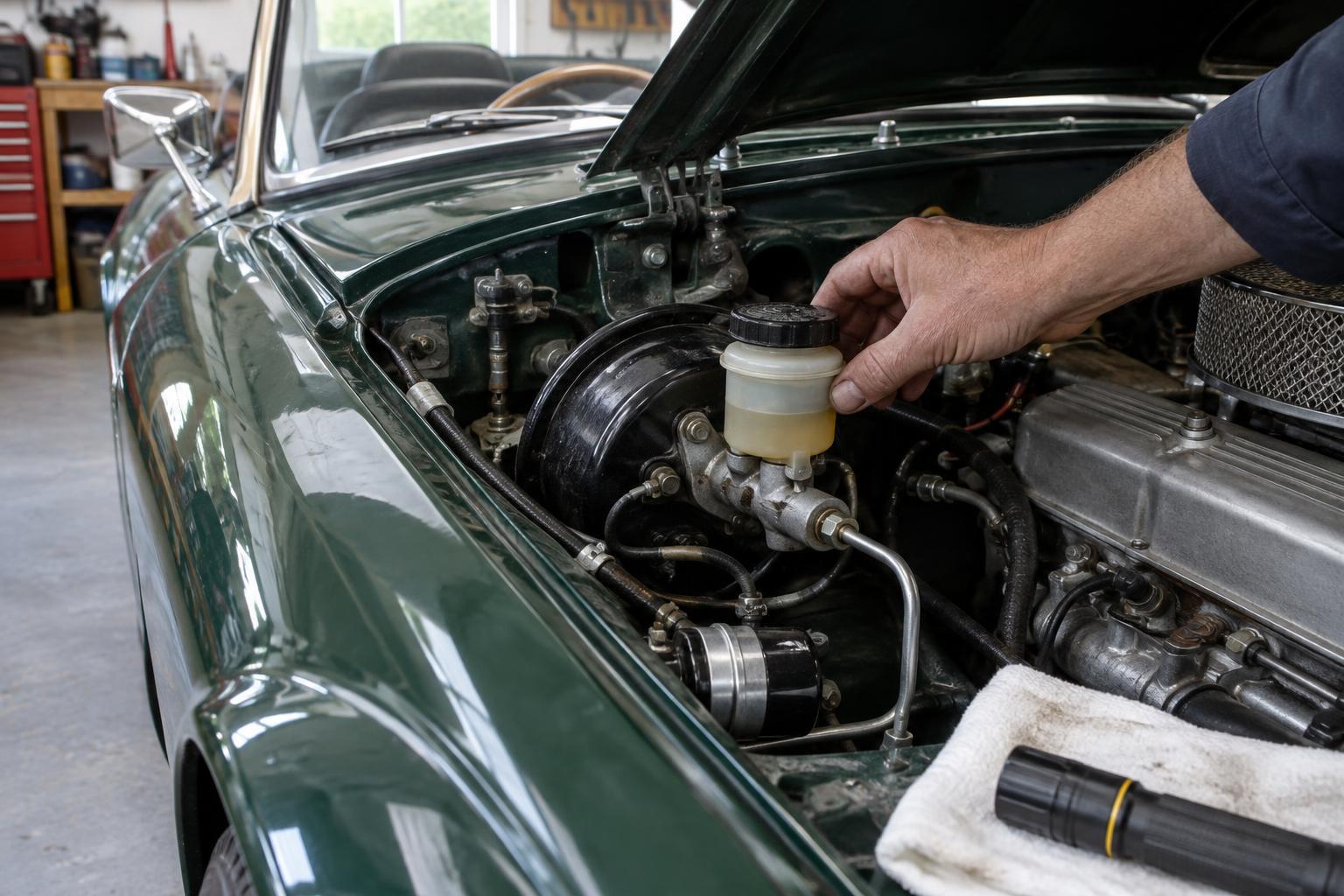
Treat soft metal, holes or suspect structural areas as a repair question, not a coating job. Sills, chassis members and mounting points may contribute to the car’s strength. If their condition is unclear, seek an experienced classic-car repairer’s assessment before covering them. Also identify existing fuel lines, wiring, rubber parts and ventilation openings so that cleaning tools and spray products do not disturb or clog them.
Clean gently, then allow time to dry
Remove loose mud and grit from the accessible underside with a brush and a modest flow of water, concentrating on ledges and wheel-arch returns. Avoid directing a powerful jet into seams or enclosed sections: it may drive water farther inside than it can readily drain. Clear drain openings carefully without enlarging them or damaging surrounding paint. For a cavity with heavy accumulated material, specialist cleaning may be more effective than trying to flush it blindly.
Drying matters as much as washing. Let water drain, then give the car enough time in a ventilated, dry setting before applying a moisture-resistant treatment. If a cavity remains wet or packed with debris, coating over it may hide the problem rather than solve it. Follow the cleaner’s and protectant’s product instructions, particularly where residues or existing coatings could affect adhesion.
Apply protection where it can reach
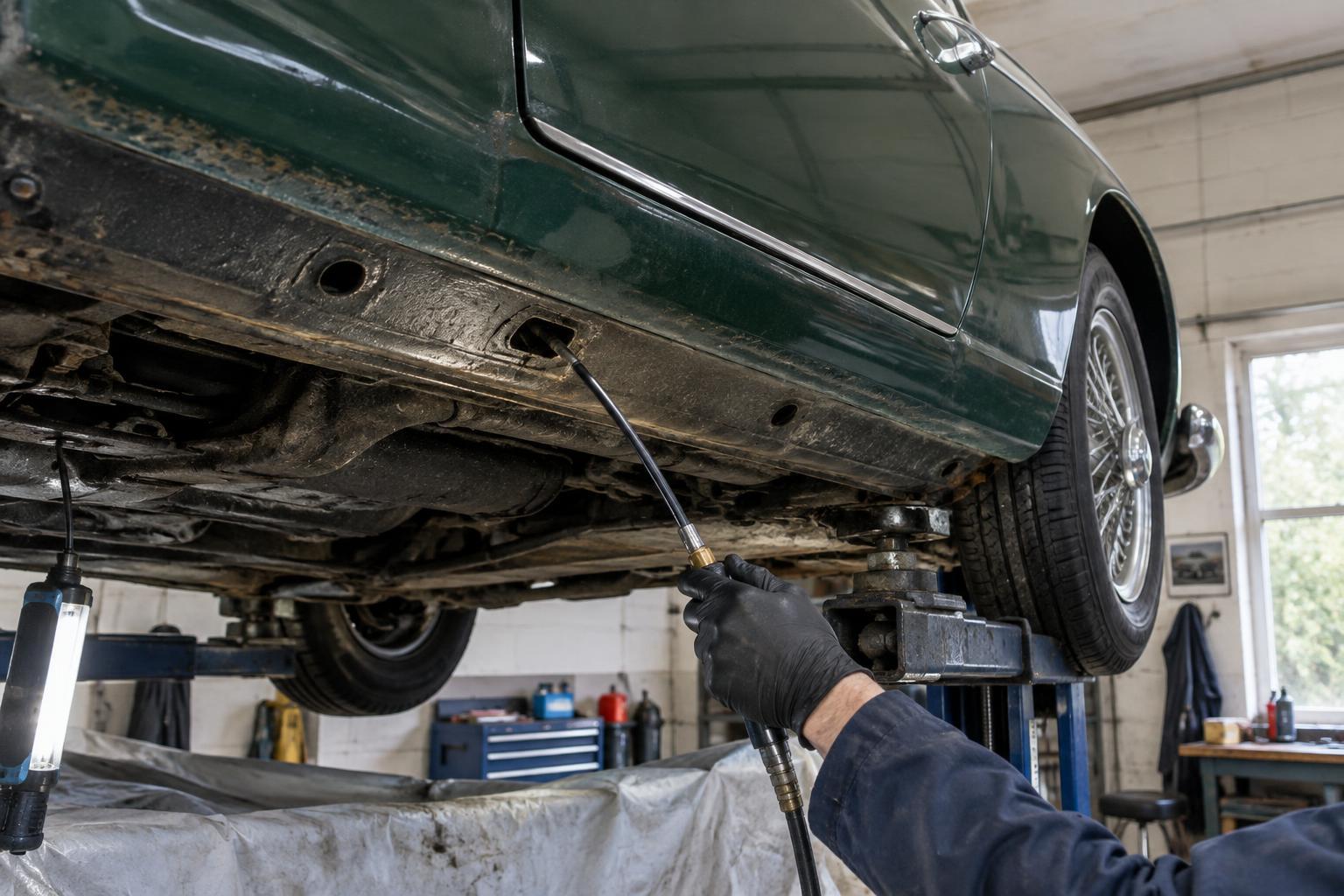
Cavity wax is commonly used inside hollow steel sections because it can be delivered through a flexible probe and is intended to creep into seams. An external underbody coating serves a different purpose: it faces grit and spray but may not penetrate overlaps. Select products intended for the surface and for use together if both are needed. On an older car, test a small area where practical, since an existing coating may react poorly to a new one.
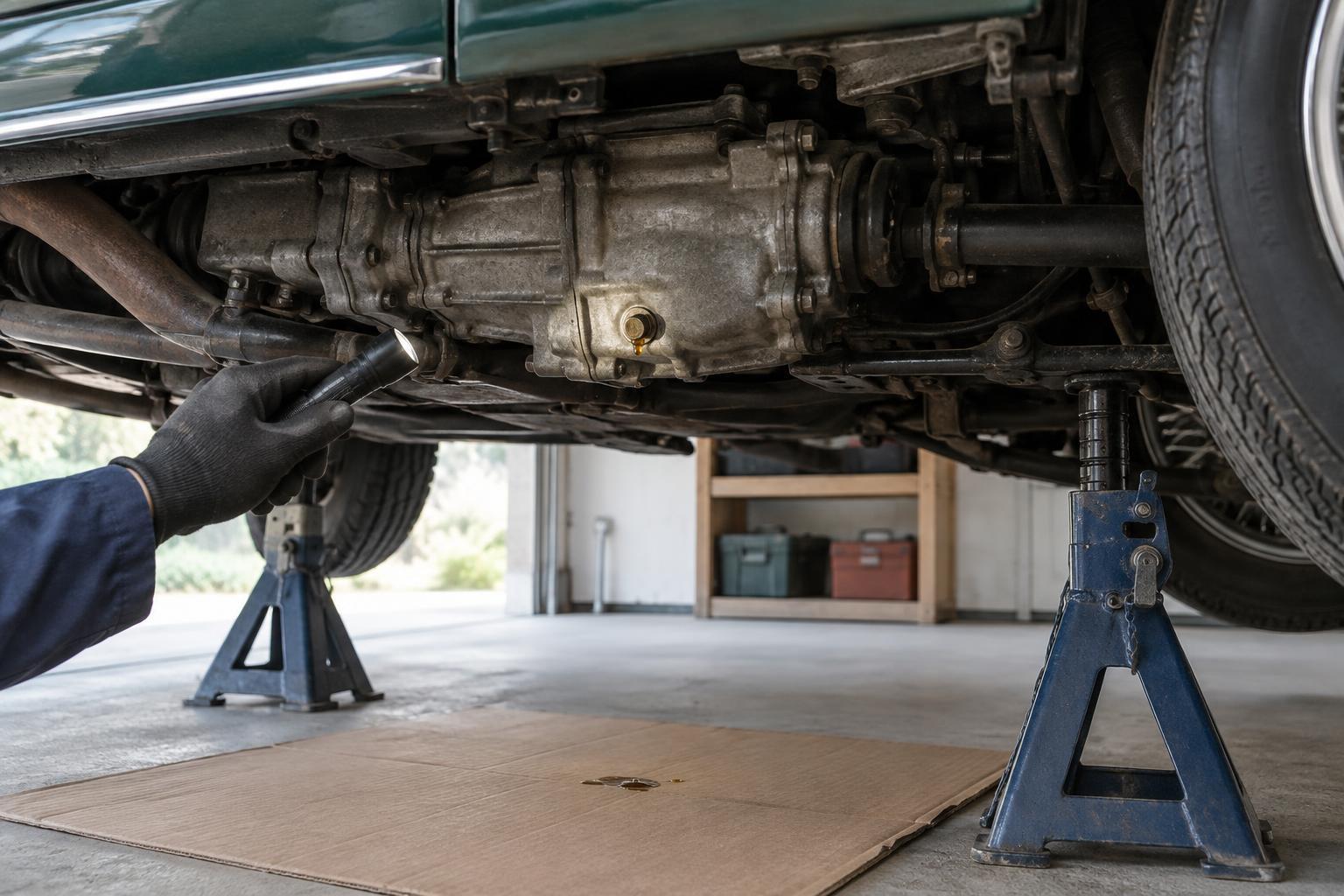
Use existing access points where possible and plan the order of application so you can see which sections have been reached. Apply an even treatment rather than filling a cavity until it overflows. Keep drains clear, wipe away excess at their outlets and avoid spraying brakes, exhaust components, belts or electrical connections. Work in good ventilation, follow the label’s protective-equipment and fire-safety guidance, and dispose of contaminated materials as directed locally. If safe access requires raising the car, use appropriate supports on sound ground; never work beneath a vehicle supported only by a jack.
Make inspection a continuing habit
Protection is not a one-time cure. After the coating has settled, check that drain holes remain open and note any places where excess product continues to drip. Keep a simple record of which cavities were treated and what was used. That makes later inspection easier and helps avoid layering incompatible products without knowing what is already there.
Revisit vulnerable areas during routine care, particularly after prolonged wet use or journeys on salted roads. Wash accessible deposits away, allow the car to dry and look for new staining, blocked drains or coating that has lifted from the underside. The most useful habit is to respond early: cleaning a drain or investigating a fresh rust mark is simpler than discovering extensive corrosion after it has spread behind an apparently tidy exterior.