Treat the first drive as a test, not a celebration
After a full restoration, many parts have been removed, replaced or adjusted at once. Even careful work can leave a hose clamp needing attention, a cable requiring adjustment or a trim panel touching something it should not. Commissioning is the process of checking the assembled car in stages, rather than assuming that a successful engine start means it is ready for the road.
Begin with a written checklist and a notebook for observations. Record fluid levels, tyre pressures, fasteners checked, work completed and any symptoms noticed on each drive. Keep the specification and workshop guidance for the particular model close at hand: capacities, adjustment procedures and fastening requirements vary. If a specialist completed the restoration, agree who will address faults found during the shakedown and how to document them.
Inspect the car before starting the engine
Start with the car stationary, on level ground and safely supported where an underside inspection is necessary. Check that steering and suspension components are secured, wheels are correctly fitted, tyres have appropriate pressures and clearance, and nothing can foul the pedals or moving parts. Confirm that brake and clutch controls move as intended. A qualified mechanic should resolve any uncertainty about critical systems before the car moves under its own power.
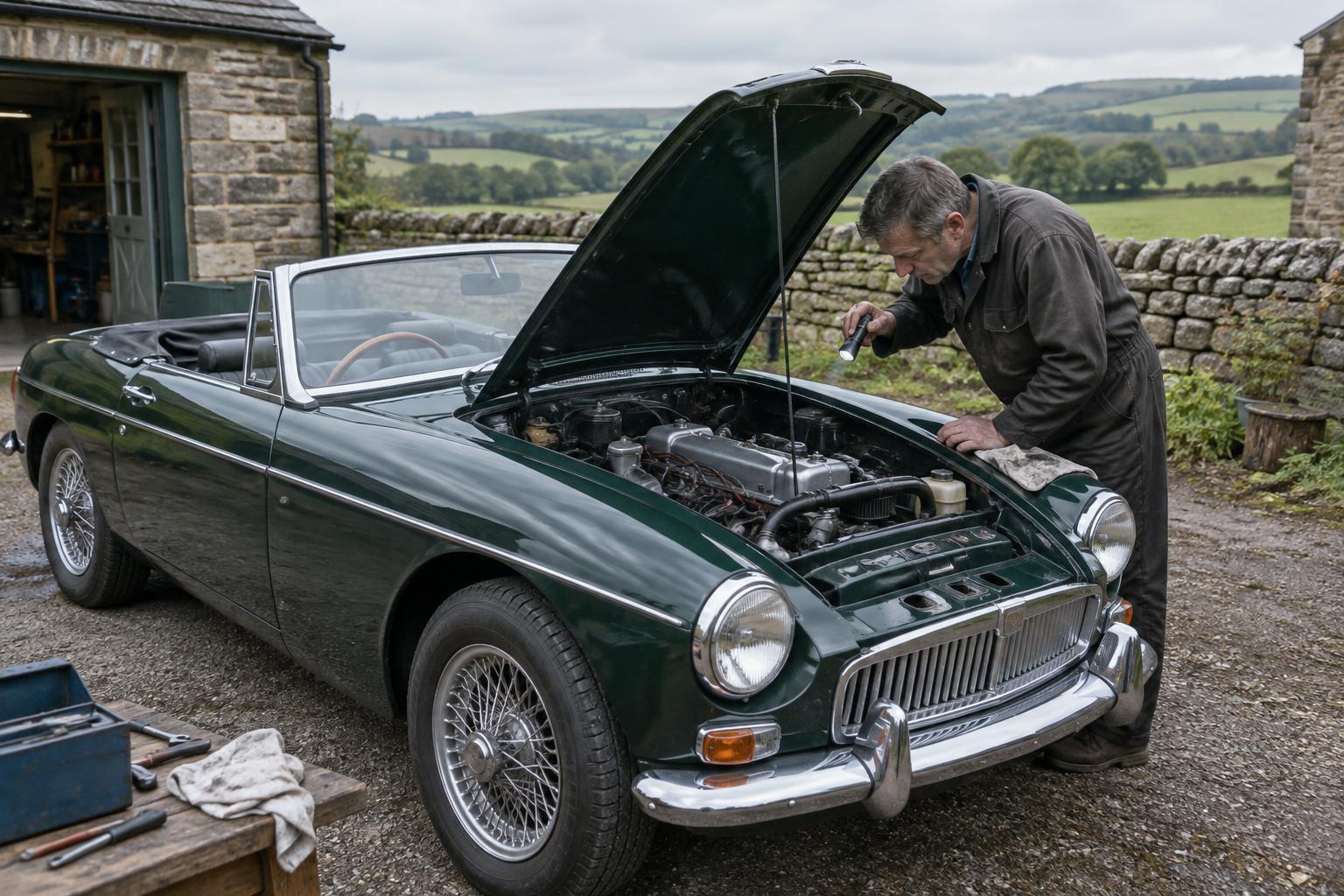
Look over fluid connections and levels, including the cooling system, engine, gearbox, axle, brakes and fuel system as applicable. Inspect beneath the car for fresh drips and around the engine bay for chafing wires, unsecured lines or tools left behind. Test the lights, indicators, horn, wipers and instruments. Check that the bonnet, doors and boot latch securely and that seat belts, where fitted, are properly installed and operate correctly.
Make the first start controlled and observable
Before starting, confirm the engine has the correct fluids and that any model-specific procedures for initial lubrication or a rebuilt engine have been followed. Have someone watch for leaks and unusual movement while the driver monitors the instruments. Start in a well-ventilated place, with a suitable fire extinguisher nearby. Do not leave a newly assembled car running unattended.
At idle, watch for oil-pressure and charging indications appropriate to the car, then observe how the temperature develops. Listen for knocks, rubbing or exhaust leaks and check for fuel, coolant and oil seepage without reaching near belts, fans or hot components. Shut the engine down if an essential reading is abnormal, a significant leak appears or a new noise cannot be explained. After it cools, recheck levels and inspect the ground beneath it. Starting and stopping successfully is a useful milestone, not proof that the car is ready for a long drive.
Build road miles in small steps
Choose a quiet, familiar route close to home for the first outing, provided the car is road legal and insured. Begin at low speed and check that the brakes respond consistently, the steering feels predictable, the clutch engages smoothly and the gears select without unexpected difficulty. Increase distance and speed gradually over several outings rather than heading straight for a motorway or a remote scenic route. Follow any running-in guidance for a rebuilt engine or other new components.
After each short drive, park safely and check for leaks, hot smells, loose fittings and tyres rubbing bodywork. Note whether the engine restarts when warm, the cooling system behaves consistently and the instruments give plausible readings. Some newly assembled components settle and may require inspection or adjustment according to their instructions. Do not dismiss pulling under braking, excessive heat, fuel smells or worsening vibration as normal bedding-in; stop using the car until the cause is identified.
Finish the shakedown with a review
Use your notes to separate minor finishing jobs from faults that affect safety or reliability. Recheck accessible fasteners and adjustments using the correct procedures rather than tightening everything by feel. Ask a suitable specialist to inspect work outside your experience, particularly braking, steering, fuel and electrical systems. A second set of eyes can also catch issues hidden by familiarity with a long project.
Once the car has completed several uneventful local trips, plan a modest first tour with time for stops and a route that allows an easy return. Carry the tools and spares appropriate to the model, along with the contact details needed if recovery becomes necessary. The aim is not to prove that the restoration is perfect in one afternoon. It is to learn how the finished car behaves, deal with faults promptly and build confidence mile by mile.