An Oxford garage with sporting ambitions
The letters MG stand for Morris Garages, an Oxford business associated with William Morris’s growing motor trade. In the early 1920s, the garage sold and serviced Morris cars. It was not initially a separate manufacturer with a range conceived from the ground up. Its starting point was a familiar production car and a question: could that car offer a more engaging drive and a more distinctive appearance?
Cecil Kimber was central to the answer. As the garage’s manager, he encouraged the development of sporting versions of Morris cars, bringing together mechanical components, coachwork and details that suited customers looking for something livelier than standard transport. This origin helps explain MG’s enduring appeal. The early cars were connected to everyday motoring, yet they offered the style and character of a sports car.
From modified Morris cars to an MG identity
The earliest MGs did not arrive as a single, neatly defined model line. Sporting Morris-based cars appeared with different bodies and specifications as the business found its market. The 14/28 Super Sports, introduced in the mid-1920s, is among the better-known examples. It used Morris mechanical foundations but presented them in a more purposeful package. For a buyer, that combination offered sporting character without requiring an entirely unfamiliar car.
The octagonal MG badge gave these varied cars a recognizable identity. It is tempting to imagine that the badge marked an instant break from Morris, but the transition was gradual. Morris components remained important, while the cars increasingly became products customers knew and asked for as MGs. Early histories can therefore differ over which vehicle deserves to be called the first MG: the answer depends on whether one means the first modified car, the first to carry the badge or the first distinct model.
One car often mentioned in that discussion is the 1925 special known as Old Number One, built for Kimber’s use in competition. It matters as an illustration of the garage’s sporting ambition, though treating it as the uncomplicated starting point of every production MG would overlook the Morris-based cars already taking shape.
Sporting use shaped the reputation
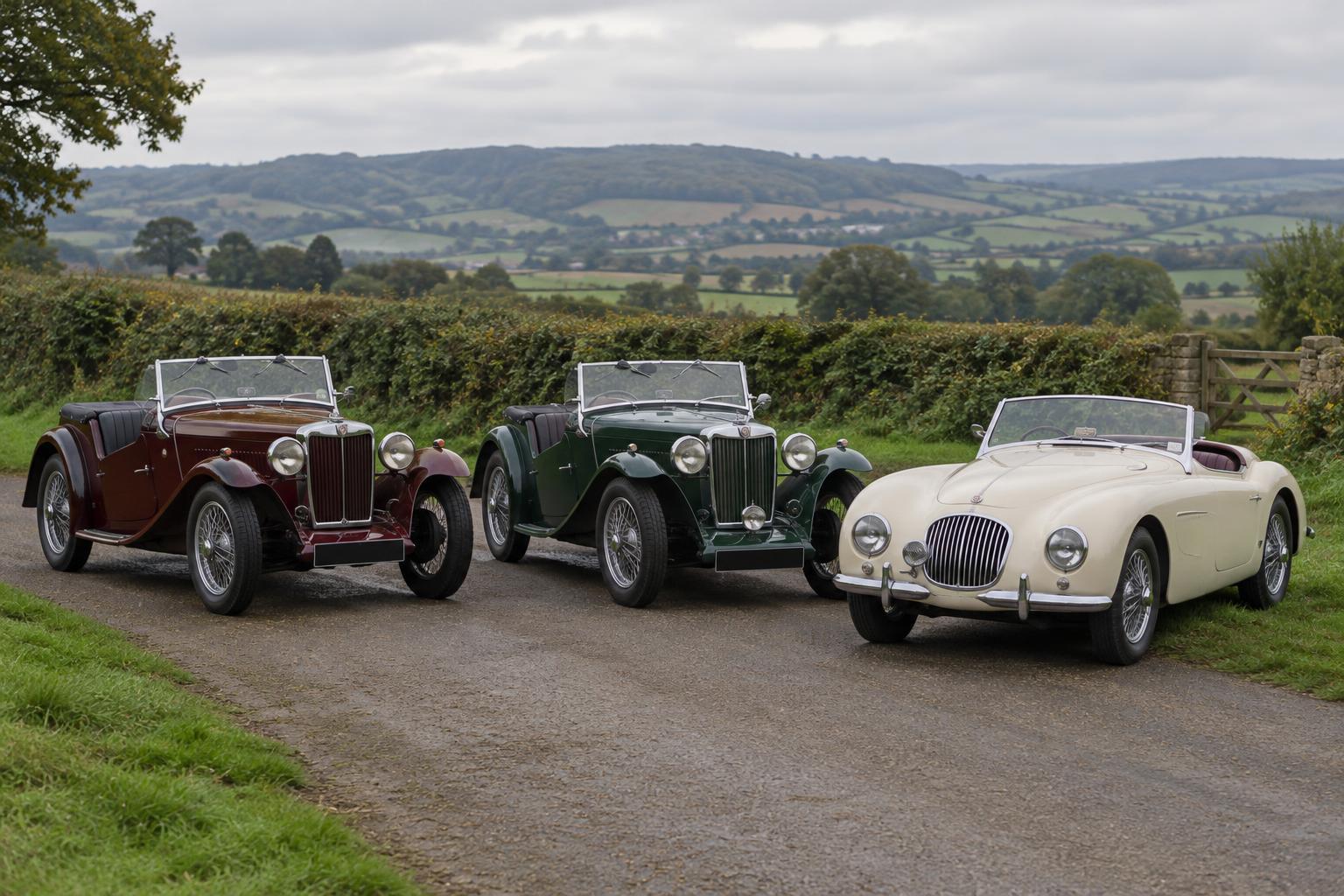
In the years between the world wars, motoring trials and other competitive events offered a practical way to demonstrate a car’s abilities. Such events tested more than outright speed. A useful sports car needed manageable dimensions, dependable mechanical parts and a driver willing to work with both. MG’s participation helped connect the badge with enthusiastic driving rather than appearance alone.
Competition also influenced how prospective owners viewed a road car. A small, light machine could be enjoyable on ordinary roads, even when its performance figures were modest. That approach suited drivers who wanted open-air touring and responsive handling as much as a place on an entry list. The distinction matters: MG’s early success was not simply a racing story. It was also about making sporting motoring feel attainable.
The Midget makes a wider impression
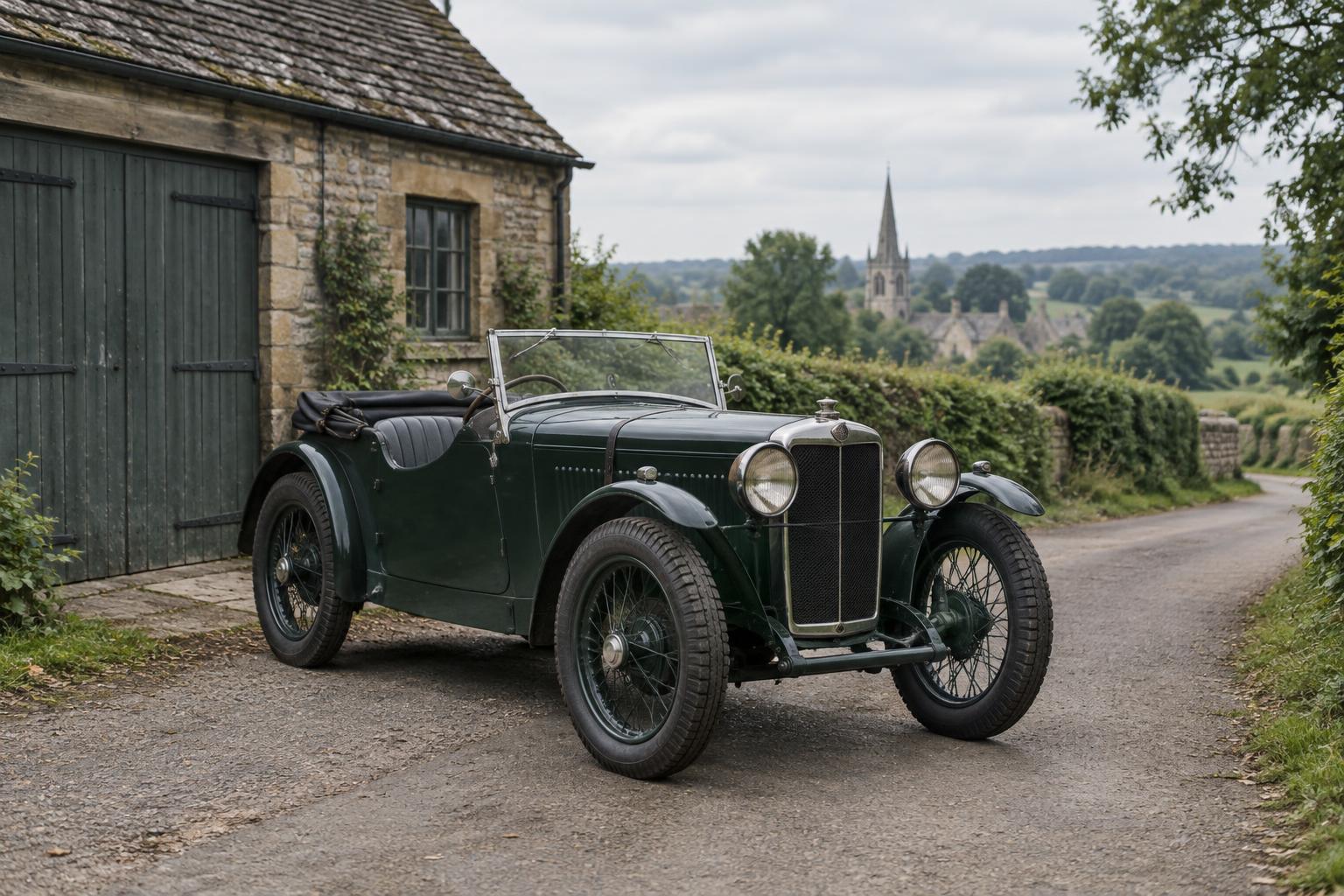
By the end of the 1920s, MG’s range was moving beyond garage-built variations on Morris saloons. The M-type Midget, introduced in 1929 and drawing on Morris Minor components, became an important step. Compact and relatively affordable for a sports car, it helped establish the small two-seater as a defining MG form. Its modest engine did not prevent it from offering the essential pleasures of a light car: immediacy, a sense of involvement and the freedom of an open body.
Larger models also showed that MG was not confined to one formula. The 18/80, introduced around the same period, represented a move toward a more distinct MG design rather than a simple sporting rebody of a standard Morris. Taken together, these cars show a business learning how to serve different drivers while developing a clearer identity of its own.
Why the beginnings still matter
MG’s early development was evolutionary rather than sudden: an Oxford garage adapted existing cars, built a sporting reputation and expanded into a recognizable range. Production moved to Abingdon in 1929, giving the growing operation a home that would become closely associated with the marque. The roots, however, remained visible in the blend of accessible mechanical parts and driver-focused design.
For anyone exploring an early MG today, that gradual history is useful context. Model names, body styles and specifications can vary, so identifying a particular car calls for attention to its own records and physical details rather than assumptions based on the badge. For the wider enthusiast, the story offers a simpler lesson: MG did not begin with a grand declaration. It grew from people finding a more enjoyable way to use the cars and resources already at hand.