The TR2 establishes the formula
The Triumph TR2 arrived in the early 1950s with a straightforward proposition: lively open-air motoring at a price below that of many more exotic sports cars. Its separate chassis, two-litre four-cylinder engine and compact body made it a purposeful roadster rather than a small luxury car. Low doors, detachable side screens and a simple folding hood kept the experience close to the elements.
The TR2 set a pattern that would last well beyond its production run. Triumph used sturdy mechanical components and developed them for sporting use, giving owners a car that could feel energetic without being especially complicated. Its appeal rested as much on the sensation of driving as on outright performance: a responsive engine, a long bonnet ahead and relatively little between driver and road.
TR3: familiar shape, useful refinements
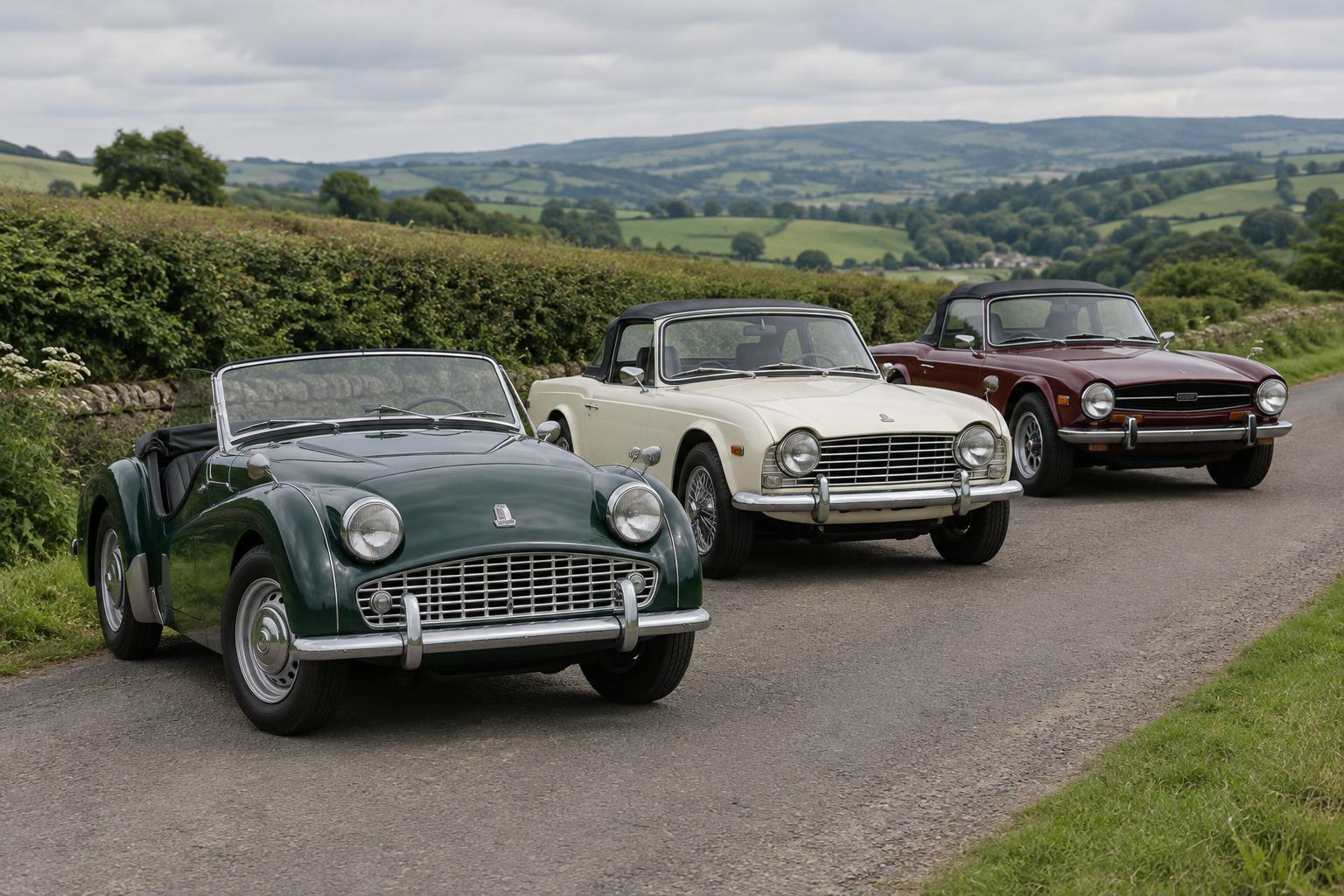
The TR3 retained the TR2’s basic layout and character while receiving a series of improvements. Greater engine output helped it feel more capable, and front disc brakes, introduced during the TR3’s life, brought an important change to its stopping performance. The underlying car was still recognisably an early TR: upright, direct and more weather-exposed than the models that followed.
The names TR3A and TR3B can make this period look tidier than it was. TR3A is commonly used for the restyled version with a wider front grille and exterior door handles, while the TR3B was a short-lived continuation sold as the newer TR4 arrived. For an enthusiast comparing cars today, the meaningful differences may lie in a particular example’s specification and condition, not just the badge or familiar nickname.
TR4 and TR4A move toward everyday usability
The TR4 marked a more visible break. Giovanni Michelotti’s body design replaced the earlier car’s rounded, low-cut appearance with sharper lines, a wider cockpit and wind-up windows. Drivers still had a traditional, separate-chassis sports car, but its better weather protection and less exposed cabin made longer journeys easier to contemplate. Rack-and-pinion steering also distinguished the TR4 from its predecessors.
Under the new body, the TR4 continued with a development of the four-cylinder engine. The subsequent TR4A kept much of that character while adding an important chassis choice: independent rear suspension was offered, although some cars retained a live rear axle. That distinction matters because the two arrangements can feel different on uneven roads. Neither specification tells the whole story of an individual car; suspension condition and setup also shape how it drives.
TR5 and TR250 introduce the six-cylinder era
The TR5 looked closely related to the TR4A, but its six-cylinder engine changed the line’s direction. In its home-market form, the TR5 used petrol injection, giving it a different delivery and character from the earlier four-cylinder cars. The extra cylinders also brought a smoother feel that suited touring as well as brisk driving.
North American buyers encountered a related car called the TR250, fitted with carburettors rather than the TR5’s injection system. The two names therefore identify more than a change of badge. They also show how market requirements could lead Triumph to offer different versions of essentially the same sports-car idea. When reading a listing or planning ownership, it is worth checking a car’s original market and present mechanical specification rather than assuming every six-cylinder TR from this period is alike.
TR6: a familiar foundation in a bolder suit
The TR6 carried forward the six-cylinder, separate-chassis formula but gave it a more squared-off front and rear. Its styling looked more substantial than the early side-screen cars, while the central body structure remained closely related to the TR5 and TR250. As before, specification varied by market: fuel-injected TR6s were sold in some markets, while North American cars used carburettors.
Seen together, the TR2 through TR6 are not a simple march from primitive to perfect. The early cars offer an unusually open, elemental experience; the TR4 and TR4A add comfort and a different visual identity; the six-cylinder models bring a smoother, more muscular character. For anyone drawn to this line, understanding those changes is more useful than trying to name one definitive TR. Each represents a different balance between the pleasures of a traditional British roadster and the demands of the journey ahead.