Start by identifying what you are cleaning
A folding hood has several surfaces with different needs: the outer covering, a lining if fitted, clear windows, rubber seals, stitching and the frame beneath. Before reaching for a cleaner, check whether the covering is woven fabric or vinyl. A product intended for one may be unsuitable for the other. If you do not know what is fitted, ask the hood supplier or test a mild cleaner on a small, inconspicuous area before treating the whole roof.
Inspect the hood while it is dry and raised. Look for loose stitching, chafing where the material meets the frame, splits at folds and gaps around the windscreen header or side windows. Cleaning will not repair worn material, but it gives you a chance to spot small problems before a wet tour makes them obvious. Remove loose leaves and grit from seams and the base of the hood so they cannot be dragged across the surface.
Wash gently, then let the hood dry completely
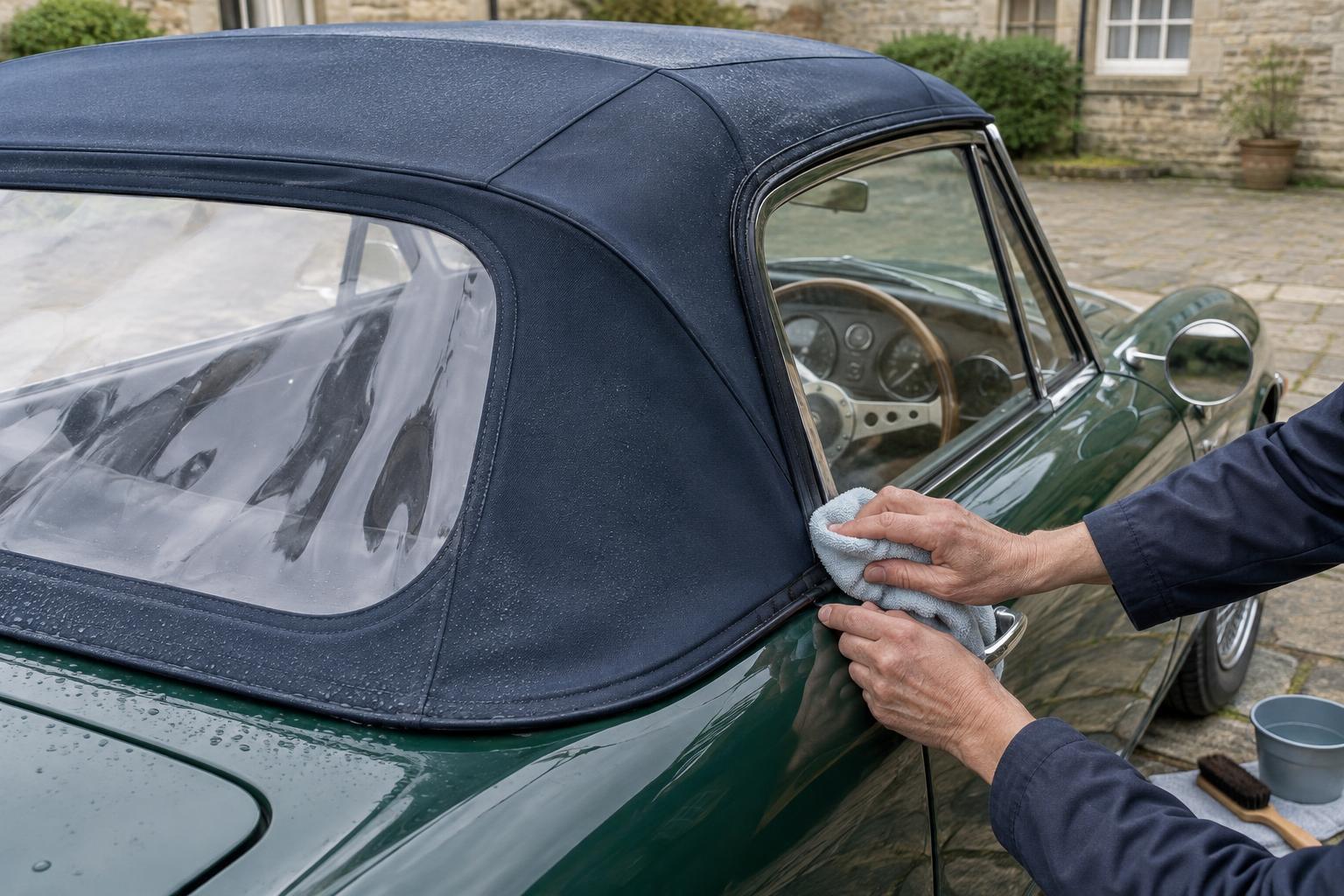
Choose a shaded spot and brush loose dust from a dry fabric hood with a soft brush. For routine washing, use lukewarm water and a cleaner suitable for the covering, following its dilution and rinsing directions. Work with a soft sponge or brush and light pressure; hard scrubbing can abrade fabric or strain old stitching. On vinyl, a soft cloth and a mild, compatible cleaner are usually a better starting point than a stiff brush. Avoid household bleach, strong solvents and pressure washers, particularly near seams and window edges.
Rinse carefully so cleaner does not remain in seams or leave marks. Keep the hood raised until both its outer surface and any lining are dry. Folding it while damp can trap moisture against the material and frame. If the car must be put away after a wet drive, raise the hood again as soon as practical in a ventilated space. A breathable storage environment is more useful than sealing a damp car tightly beneath a cover.
Treat windows and seals as separate jobs
Clear flexible rear windows scratch easily. First rinse away grit, then wipe with a clean, soft cloth and a product suitable for flexible plastic if one is needed. Do not use glass cleaner unless its label confirms compatibility. Avoid folding a cold or stiff window sharply; follow the hood maker’s folding method, which may involve unzipping or protecting the window before lowering the frame.
Clean rubber weather seals with water and a mild cleaner, paying attention to the channels where grit gathers. Dry them, then check for tears, flattened sections and joints that have pulled apart. A rubber-care product can help maintain some seals, but check its compatibility first and apply it sparingly: a slippery residue on glass or paint is not helpful. Check drainage paths around the hood well and door openings, clearing debris gently rather than forcing a tool into a drain.
Protect without masking a fault
Some fabric hoods benefit from a compatible water-repellent treatment once they are clean and fully dry. Apply it only as directed, protecting glass, paint and trim from overspray. It should not be used to disguise failed stitching or a damaged seam. Likewise, a shiny dressing is not a substitute for repairing cracked vinyl. If water enters, note when and where it appears: rain while parked, spray while driving and water after washing may point to different gaps.
Check that the hood closes evenly and that seals meet the glass without being crushed. Resist tightening latches or bending frame parts merely to stop a drip; excess tension can damage the hood or distort its fit. Persistent leaks, torn seals and loose attachment points are worth discussing with an experienced hood trimmer. Routine washing, complete drying and occasional inspection will not make an old hood new, but they can help preserve the one you have and make open-top motoring more dependable.