Start with a safe, unhurried inspection
An exhaust system has a difficult job on any car, but age can make inspection especially worthwhile on a classic. Joints loosen, hangers harden or split, and steel can corrode from the outside or from moisture that collects within it. A change in exhaust note may be the first clue, yet a quiet system is not necessarily sound. A visual check during routine care, and again before a longer trip, gives you a better chance of spotting trouble early.
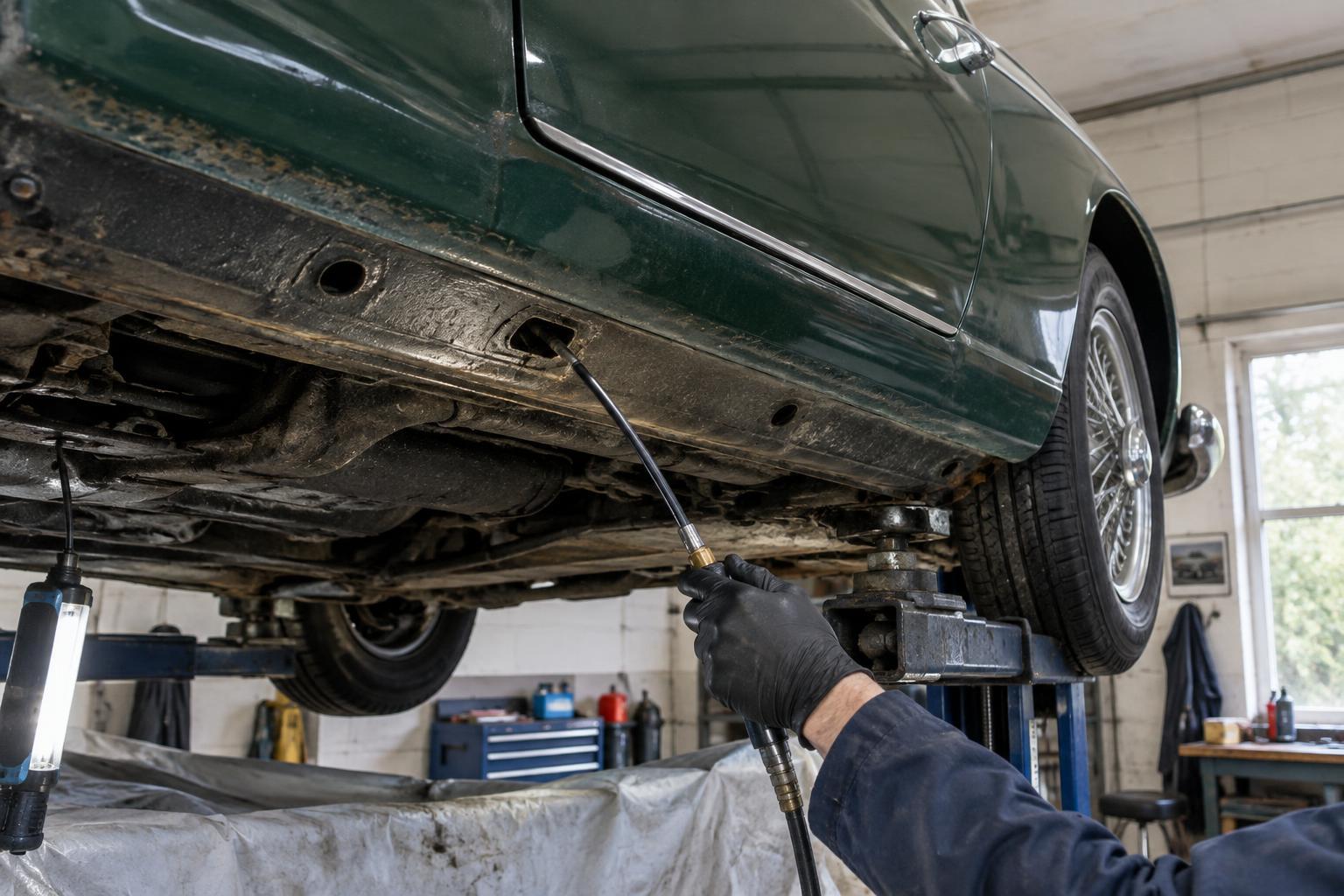
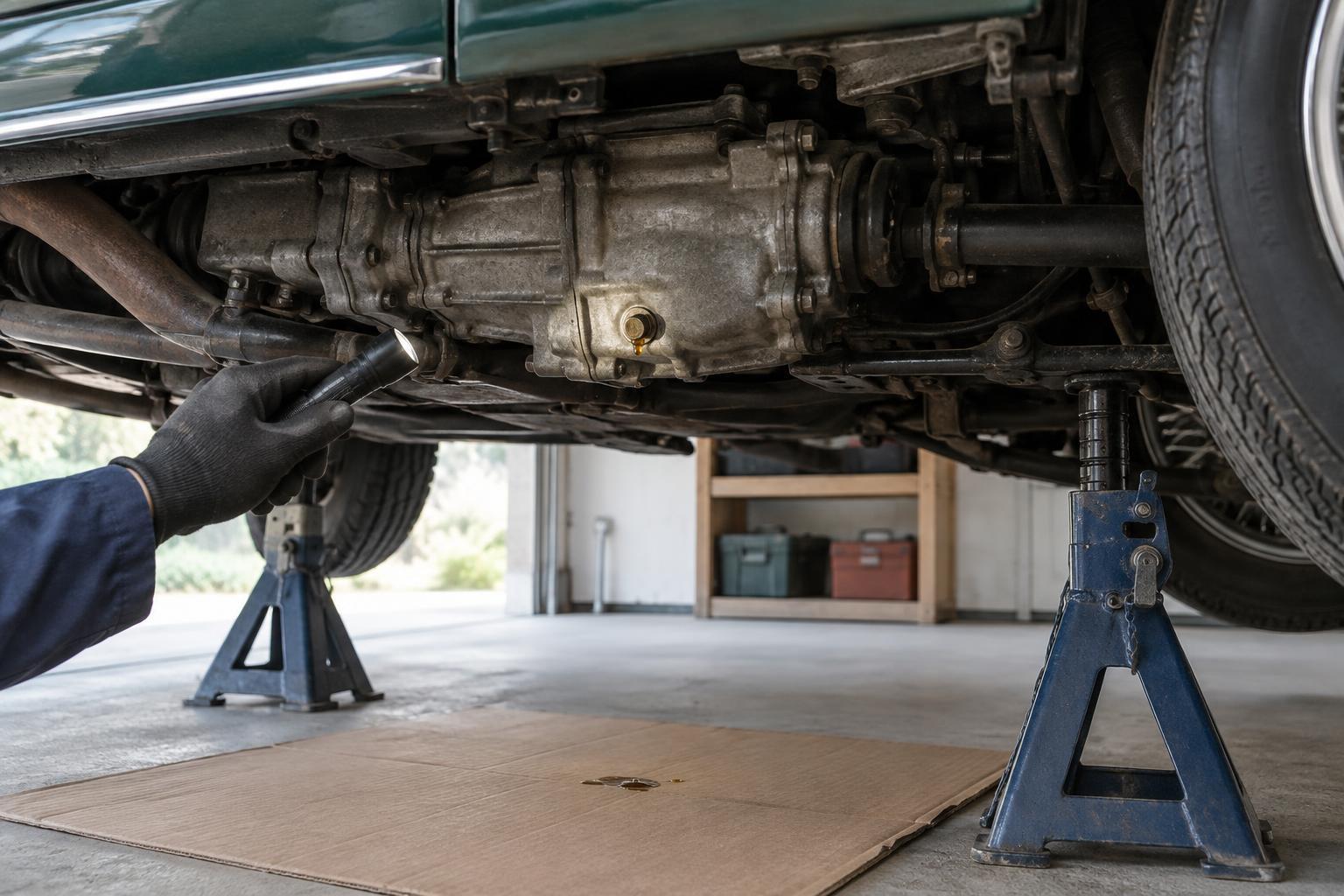
Park on firm, level ground, switch off the engine and let the entire system cool before touching any part of it. An exhaust can remain hot well after a drive. Never run the engine in a garage or other enclosed space: exhaust gases can contain dangerous carbon monoxide, which has no smell. If you need access underneath, use suitable lifting points and properly rated stands on a stable surface. Never rely on a jack alone. If safe access is limited by the car’s low ground clearance, ask a workshop to inspect it on a lift.
Follow the route from engine to tailpipe
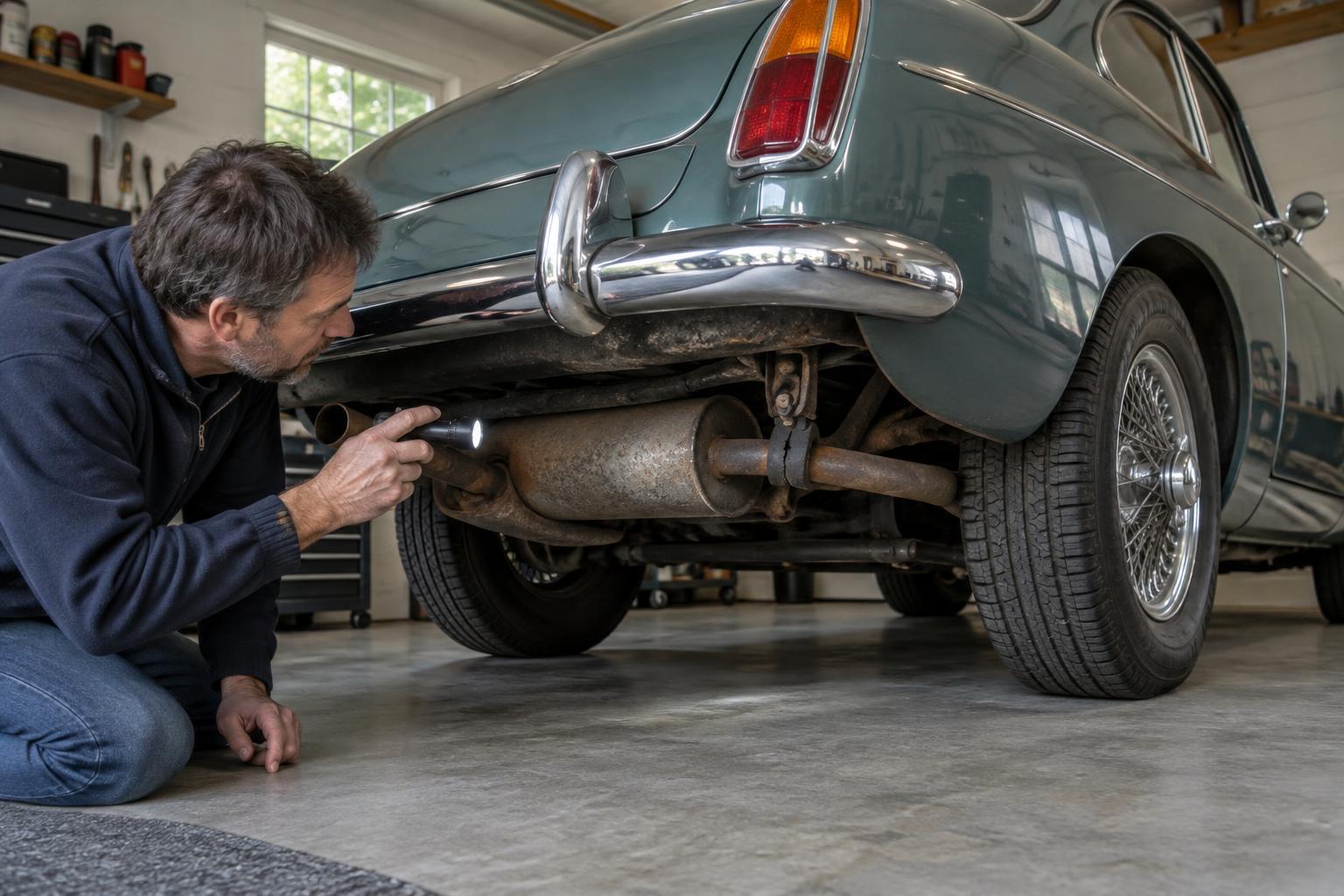
With the system cold, trace it from the exhaust manifold or header to the downpipe, any intermediate pipes and silencers, and finally the tailpipe. Layouts vary between models and may differ from a car’s original specification. Look for black, powdery soot around flanges, clamps, welds and pipe joints. Soot can indicate escaping exhaust gas, although old deposits may remain after a previous repair. Fresh-looking deposits accompanied by a new ticking or blowing sound deserve closer attention.
Check that the pipes sit clear of the body, chassis, suspension and other nearby components. Look for polished contact marks, damaged paint or a pipe that appears to have shifted. A small clearance when everything is cold may disappear as the system moves and expands in use. Heat shields, where fitted, should be secure rather than resting against a pipe. Do not reach near belts, fans or hot exhaust parts while the engine is running; a workshop can investigate a suspected leak that is not visible during a cold inspection.
Check hangers, brackets and joints
Exhaust mounts hold the system in position while allowing some movement. Inspect rubber hangers for cracks, stretching or separation, and metal straps and brackets for corrosion or broken fixings. Look for a silencer hanging lower than expected or a tailpipe sitting unusually close to the bodywork. With the engine off and the exhaust cold, a gentle hand check may reveal a loose section or a rattle. Do not force the pipe: sound mounts need to carry its weight without excessive strain.
Pay particular attention to joints where one section meets another. A clamp that has slipped, a missing fastener or a deteriorated gasket can allow a leak even when the pipes themselves are sound. Repeatedly tightening a badly corroded joint is unlikely to be a lasting answer and may damage thin metal. If the exhaust has been replaced in sections over the years, check that the parts line up naturally. A system held in place under tension can be hard on its mounts and joints.
Distinguish surface rust from serious corrosion
Light surface rust on an exposed steel pipe does not always mean it needs replacing. More concerning signs include swelling around seams, flaking layers, pinholes, cracks and metal that looks thin where a clamp or hanger attaches. Silencers can corrode along their lower edges and seams, while bends and welded areas also merit a close look. Moisture can collect inside an exhaust, particularly on cars used mainly for short journeys, so the outside may not tell the whole story.
Avoid scraping or striking suspect metal aggressively just to test it. You could turn a weak spot into a hole or dislodge old material. If you find a perforation, a loose bracket welded to thin metal or widespread scaling, arrange a proper assessment. A small leak and a failing silencer call for different repairs; a patch may not be worthwhile if the surrounding metal is nearly worn through. Take care around unfamiliar old wraps or insulating materials, and leave their removal to someone equipped to identify and handle them safely.
Decide what needs attention before the next drive
After the cold inspection, make a short note of any soot, corrosion, missing support or clearance problem and where you found it. A new, louder exhaust note, rattling over bumps or visible movement at a joint gives useful context for a workshop. Do not dismiss an exhaust smell in the cabin simply because you cannot see a hole. Stop using the car until the cause has been checked, particularly if occupants feel unwell.
The aim is not to make every older exhaust look new. It is to keep gases moving safely away from the car and to ensure the system remains secure without rubbing or placing strain on other parts. Sound mounts and joints can often be dealt with before they damage an otherwise serviceable pipe. Where corrosion is extensive or a leak is difficult to locate, a professional inspection is a more dependable basis for choosing between a local repair and replacing a section.