Start with the kind of day you want
Before choosing roads, decide what the outing is for. A quiet morning among villages calls for a different route from a full-day drive with a long lunch and several viewpoints. Think about who is coming, how long they enjoy sitting in the car, and whether the pleasure lies in driving, exploring on foot or simply arriving somewhere attractive. That gives you a better starting point than trying to fit every promising road into one trip.
Pick one or two places that matter most, such as a landscape, a town or a café you would like to visit. Treat everything else as optional. For a classic car, a modest distance can make a satisfying day: slower roads, stops and conversations often become the highlights. A route with fewer commitments also makes it easier to enjoy an unexpected lane or linger where the view is good.
Build the route around anchors, not a strict timetable
Sketch a main route with a clear start, a comfortable destination or turning point, and an easy way home. Then add a small number of anchors: perhaps a morning break, a lunch area and a place to stretch your legs. Mark them as opportunities rather than appointments wherever possible. If a particular venue is essential, check its arrangements before setting off; otherwise, have a second option nearby.
Break the drive into manageable legs and allow more time than a navigation estimate suggests. Those estimates may not reflect the pace you choose for narrow lanes, the effort of finding parking or a stop to look at the car. Leave open space between the final planned stop and your expected return. That margin is useful whether you meet a diversion, find a place worth exploring or simply decide to take the long way round.
Choose roads that suit the car and the company
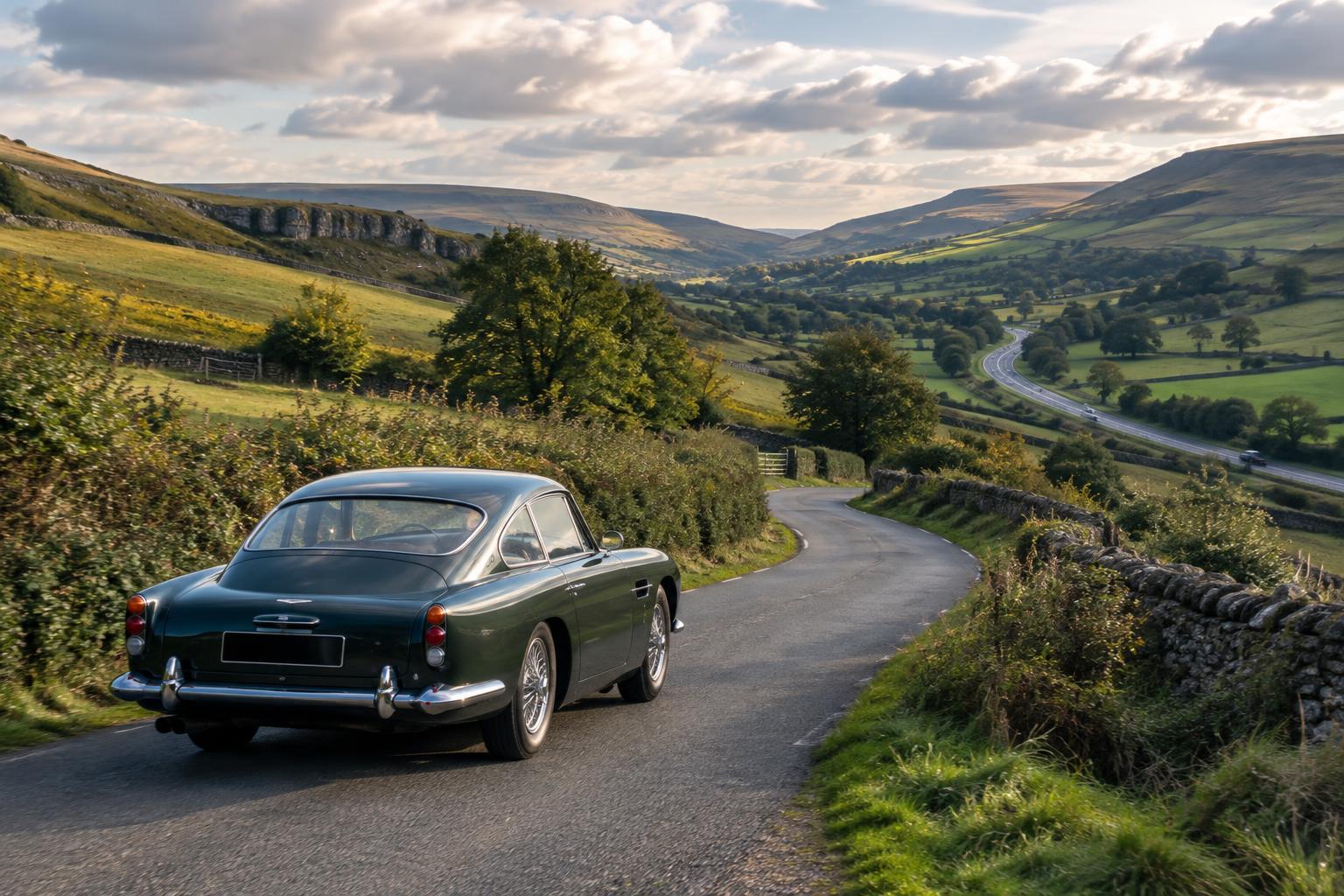
The prettiest line across a map is not always the most pleasant drive. Consider road width, steep gradients, busy junctions and how easily you can stop. A winding minor road can be delightful in a small group but tiring if every bend demands intense concentration. Mixing scenic stretches with straightforward connecting roads often gives everyone more time to appreciate the surroundings.
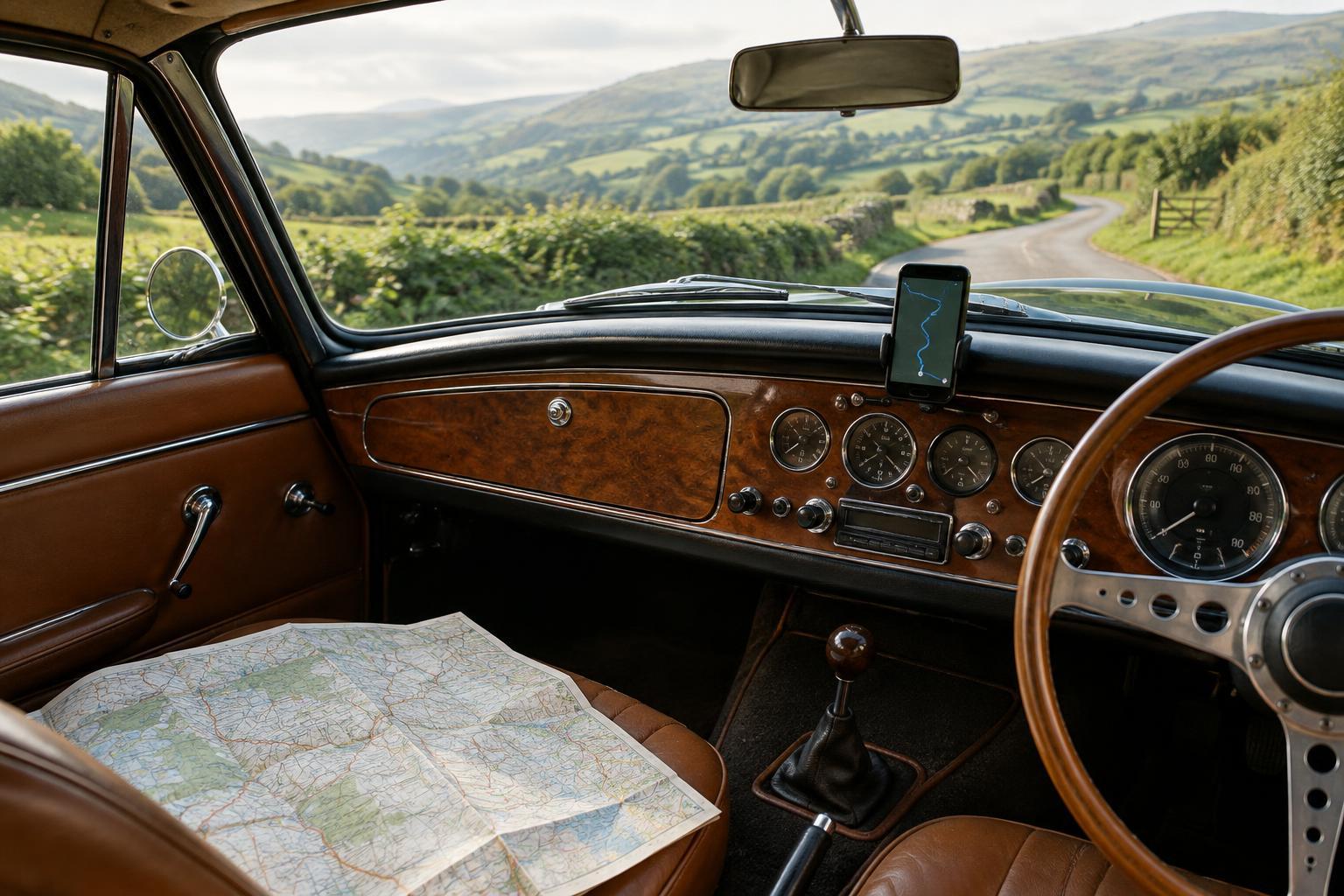
A paper map or a broader map view helps reveal alternatives that turn-by-turn directions can hide. Note a shorter loop, a more direct return and a few convenient places to pause. You need not decide which to use in advance. If the weather changes or the day feels longer than expected, taking the simpler road home is a sensible choice, not a failed tour.
Make room for the car’s needs
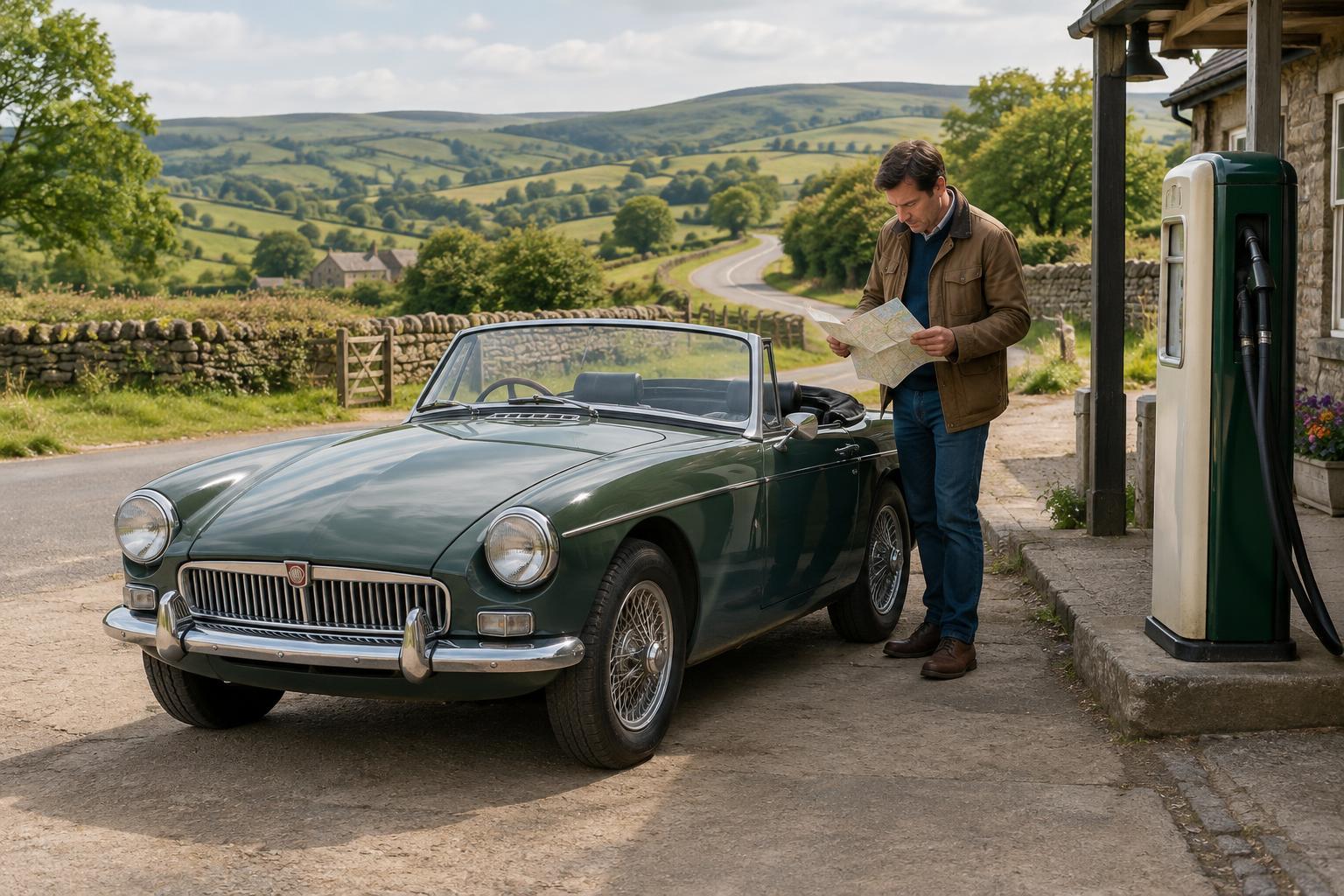
A relaxed touring plan includes ordinary practicalities. Check the car in the way you normally would before a longer drive, and think about fuel, suitable parking and any items you usually carry for minor roadside needs. If the car is unfamiliar or has recently had work done, a shorter outing may be a more enjoyable first test than an ambitious cross-country loop.
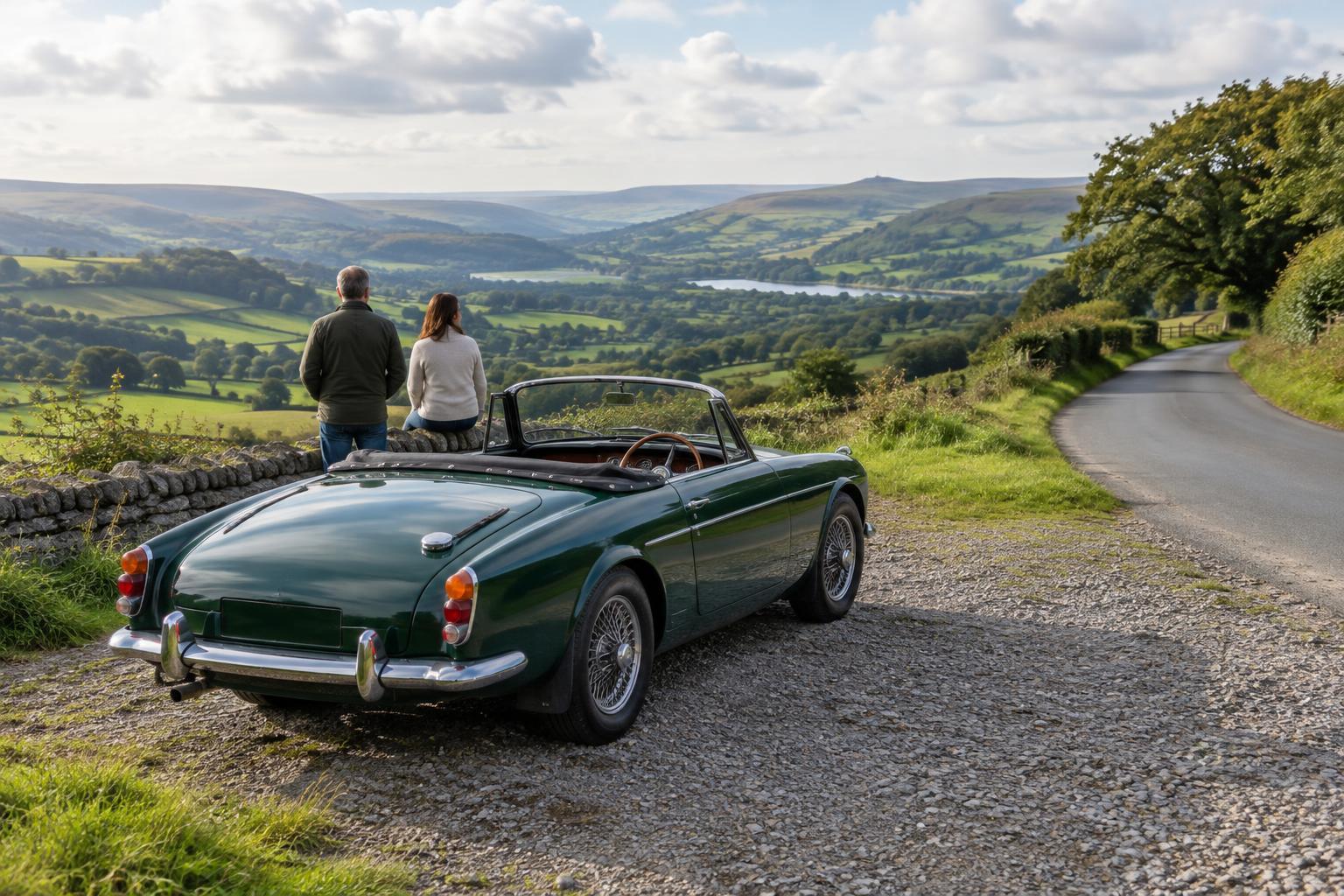
Plan breaks as part of the drive rather than as interruptions to it. They give passengers a chance to move, let you take stock of how the car feels and create natural moments to reconsider the route. Agree with your companions that an unusual noise, fatigue or worsening weather is reason enough to change plans. The aim is a good day with the car, not completion of every mile originally drawn on the map.
Keep the day open once you set off
On the morning of the drive, share the broad plan: the main direction, the likely lunch area and the approximate point at which you will head home. If travelling with other cars, agree on a place to regroup rather than relying on everyone staying close together. A passenger can help with navigation, but avoid making constant route decisions at junctions; pull over somewhere appropriate when the plan needs a proper rethink.
Give yourself permission to follow an appealing signpost, spend another half-hour in a market town or skip a stop that no longer seems worthwhile. Keep an eye on the remaining daylight and the distance home, then choose the return route that suits your energy. A flexible scenic drive is not one without a plan. It is one with enough structure to feel comfortable and enough space to discover something along the way.