Why age and pressure both matter
A classic car may cover few miles each year, so its tyres can look unworn long after they were fitted. Tread depth is only part of the picture: rubber can harden or develop damage with time and exposure. Pressure matters too. An underinflated or overinflated tyre can change how a car steers, brakes and rides, even on a short outing.
Make tyre checks part of getting to know the car rather than a last-minute task before a tour. Note the tyre size, type and pressure at each wheel, including the spare if one is carried. That simple record makes it easier to spot a slow leak, an unexpected tyre change or a pressure figure copied from a different version of the car.
Finding and interpreting a date code
Inspect both sidewalls of each tyre, as the full identification code may appear on only one side. On tyres with a DOT identification number, the final four digits give the manufacturing week and year. For example, 2319 indicates the 23rd week of 2019. The code describes when the tyre was made, not when it was fitted or first used. Some tyres carry date markings in a different format, so check the maker’s guidance if the marking is unclear.
Older three-digit DOT date codes are less straightforward and identify tyres made before the four-digit system became standard. If you find one, or cannot establish a tyre’s age, ask a knowledgeable tyre supplier to inspect it rather than treating its remaining tread as reassurance. Read the codes on all four road tyres and the spare; a matching set by appearance may contain tyres of very different ages.
There is no single age figure that settles every replacement decision. Storage, use, tyre construction and visible condition all matter, while age-related deterioration may not be obvious from a quick glance. Cracks, bulges, cuts or an unexplained loss of pressure warrant prompt assessment. If a tyre’s history is uncertain, discussing replacement with a tyre specialist is a sensible step.
Finding the right pressure for your car
Start with the handbook or other reliable guidance for the exact model and tyre specification. Period documents may give different front and rear pressures, or different figures for a heavily loaded car. Check which units they use before adjusting anything. Avoid adopting a figure simply because it appears on the sidewall: that marking is not a recommended everyday setting for your particular car.
Many classics no longer wear the size or construction of tyre specified when new. A switch from cross-ply to radial tyres, a different size, or a change in wheels can make an old handbook figure a poor assumption. If the car’s specification has changed, seek pressure advice from a supplier familiar with both the tyre and the vehicle. Ask for a starting cold pressure and whether loaded touring calls for a different setting. Make a note of the answer and the tyre specification it applies to.
A repeatable cold-pressure routine
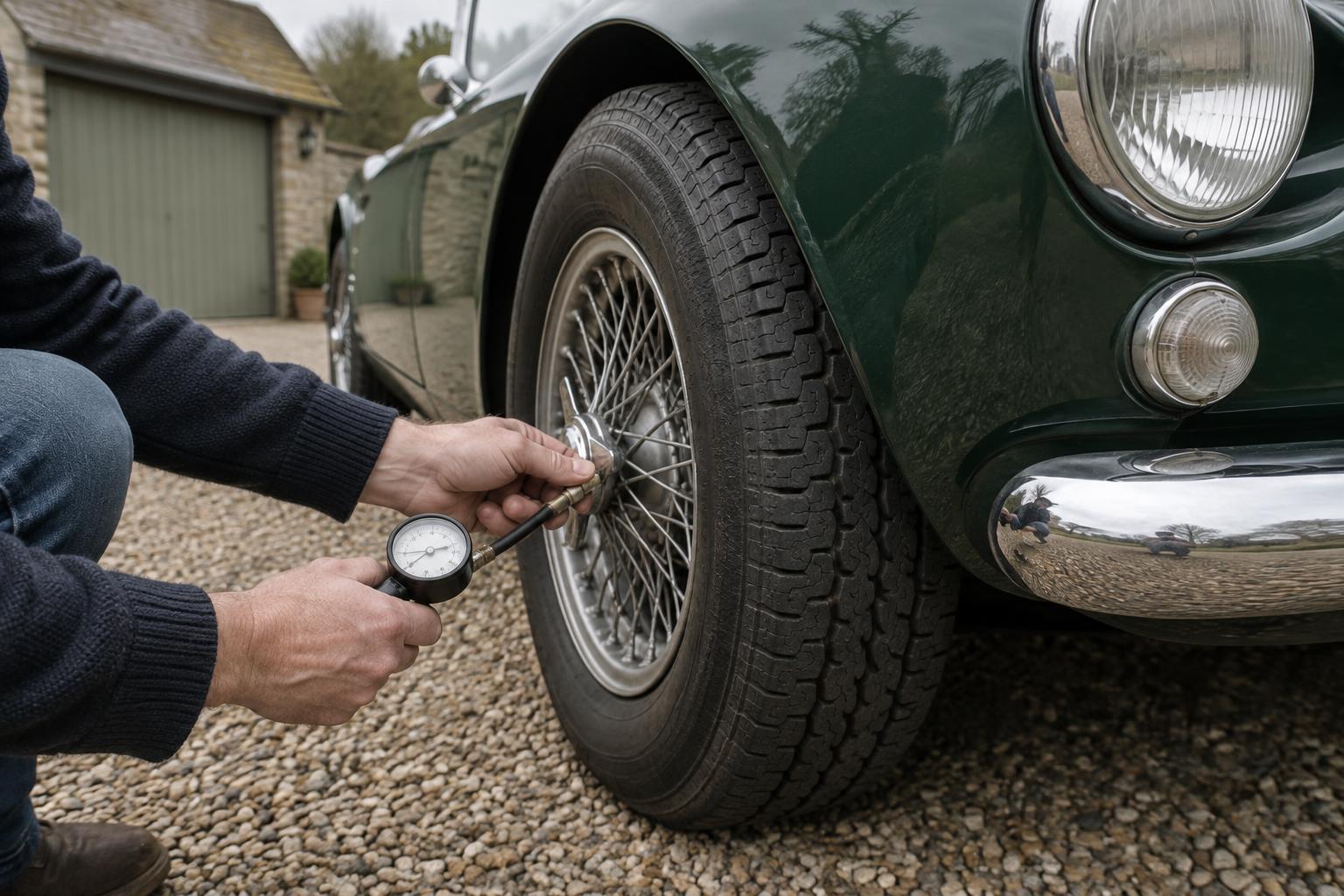
Measure pressures before driving, while the tyres are cold and have not been warmed by a journey. Use a dependable gauge, remove each valve cap, take a reading and adjust to the chosen figure. Check the spare as well: it may need a different pressure, so confirm its specification rather than assuming it matches the road wheels. Refit the caps and look for damage around the valves.
Tyre pressure normally rises as a tyre warms in use. Do not release air solely because a hot reading is higher than your cold target; check again when the tyres have cooled. A monthly check and another before a long trip provide a manageable routine. If one tyre repeatedly needs topping up, have the tyre, valve and wheel checked for the cause.
Look beyond the gauge before setting off
While checking pressures, examine the tread and accessible sidewalls for uneven wear, embedded objects, cracking or distortion. Uneven wear may have several causes, including pressure, alignment or suspension condition, so avoid assuming an adjustment at the valve will solve it. Check the inner sidewalls when you can safely access them, as damage is not always visible from beside the car.
For a classic that spends long periods parked, keep a dated note of pressures and observations alongside the tyre codes. Before a scenic drive, that record helps distinguish a familiar reading from a new problem. It also gives a tyre specialist useful context if you need advice. The aim is not to find one universal pressure or age limit, but to make informed checks that suit the car actually sitting in your garage.