Start with the car, not the cleaning products
A classic car may wear original paint, an older respray or several finishes from different periods. Some paint is thin or fragile; some chrome is already worn through or pitted. Before washing, look closely at lifting edges, cracks, blisters, loose trim, failing seals and areas where water could collect. If a finish is flaking, a normal wash may do more harm than good. Clean that area cautiously by hand and seek an experienced opinion before attempting to polish it.
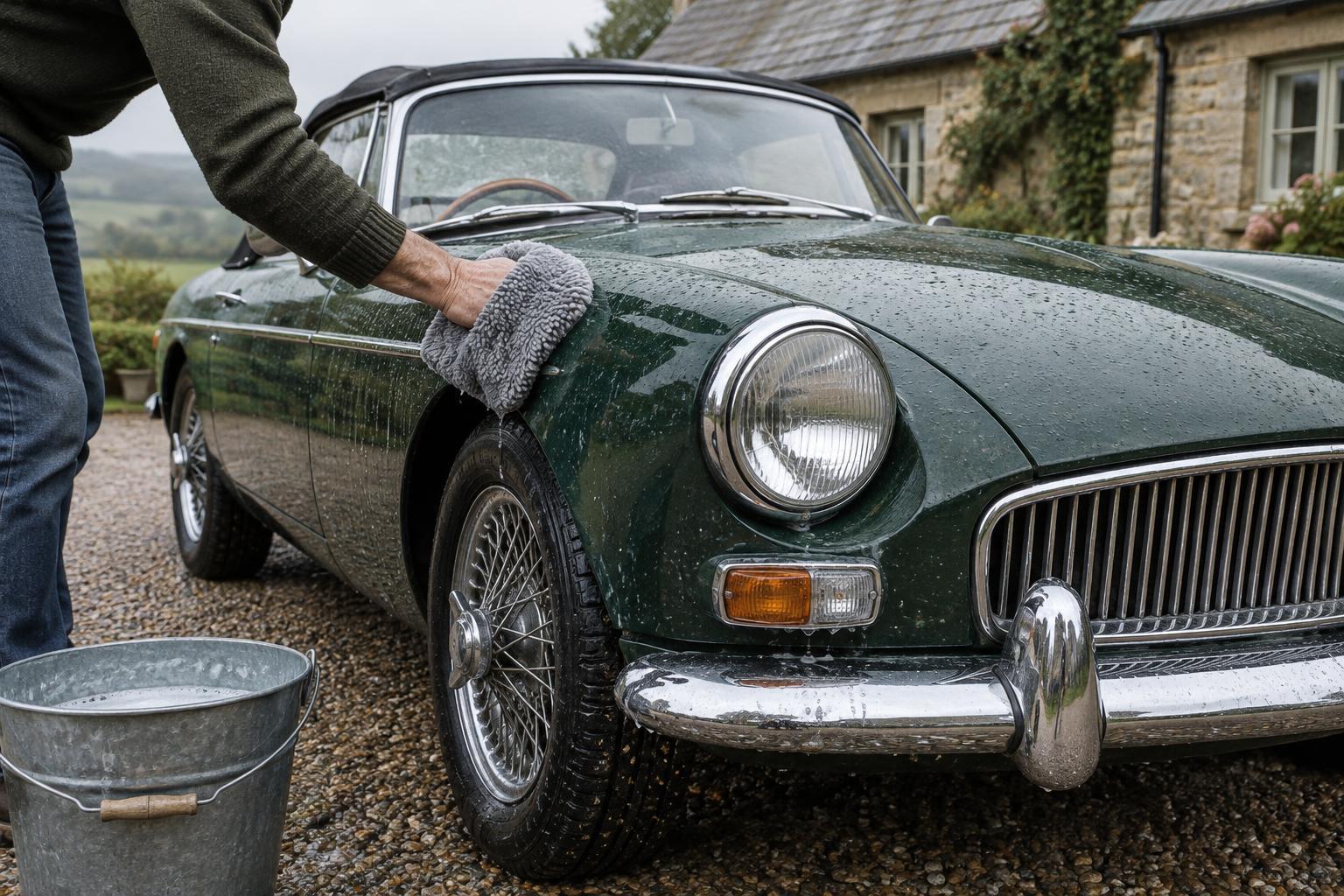
Park in the shade and let the bodywork cool. Set out clean, soft wash mitts or cloths, a mild car shampoo, several microfiber towels and separate tools for wheels and dirty lower panels. Household scouring pads, stiff brushes and strong all-purpose cleaners have no place near delicate paint or brightwork. If trying a new product, test it on a small, inconspicuous area first.
Remove loose dirt before touching the paint
Grit dragged across a panel is a common cause of fine scratches. Begin with a gentle flow of water to lift loose dust and road dirt, working from the top down. Avoid directing a forceful jet into window seals, door gaps, lamp housings or vulnerable trim. On cars with uncertain weather sealing, use only as much water as needed. A damp, well-lubricated wash is usually safer than rubbing a dusty panel dry.
Mix car shampoo according to its label and wash one manageable area at a time. Use light pressure and straight, overlapping strokes rather than scrubbing. Rinse the mitt frequently in a separate bucket of clean water, or change cloths often so collected grit does not return to the paint. Leave sills, wheel arches and the dirtiest lower sections until last, using tools reserved for those areas. Rinse each section before shampoo dries on it.
Treat stains and aged paint with restraint
Dried insects, bird droppings and other deposits should not be picked off with a fingernail or rubbed hard. Soften them with water and a wet, clean cloth, then lift them gently. If a mark remains, resist repeating the same pass with more pressure: it may be staining within the finish rather than dirt sitting on top.
Washing removes surface dirt; polishing removes or alters a small amount of material. That distinction matters on older paint, especially around panel edges and raised body lines. Do not assume that a modern cutting compound, machine polisher or stain remover is suitable for a classic finish. Once the car is clean and dry, a compatible, non-abrasive wax may help protect sound paint, but try it discreetly first and avoid forcing residue into badges, seams and textured trim.
Clean chrome without chasing every blemish
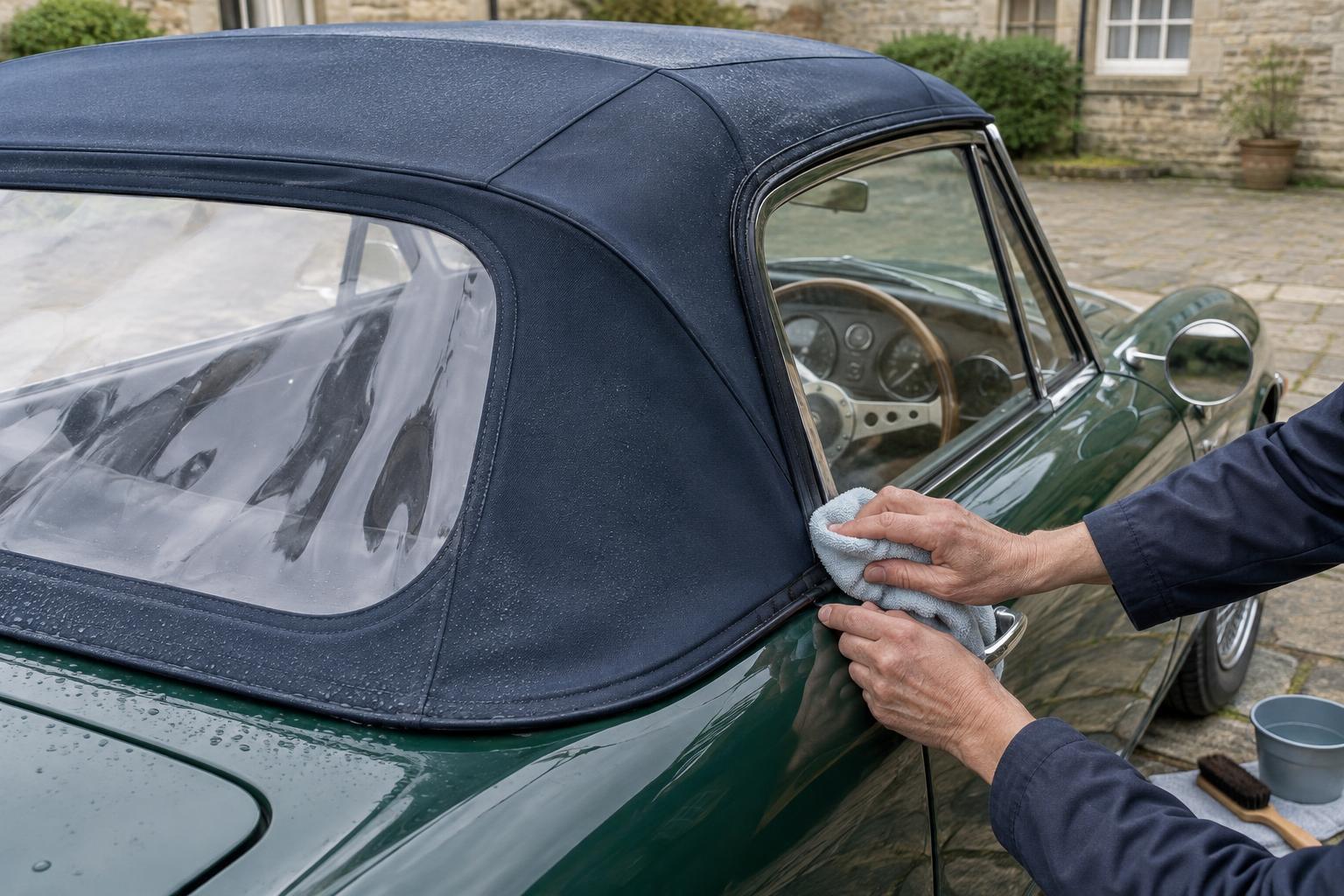
Wash chrome trim with the same gentle shampoo and plenty of water, then dry it promptly with a clean, soft towel. Pay attention to the undersides of bumpers, around fasteners and where trim meets rubber: these spots can hold moisture and dirt. Keep cleaning products away from damaged seals and painted edges, and do not let them sit in joints.
A light haze on sound chrome may respond to a product intended for chrome, used sparingly and tested first. Pitting, peeling or rust showing through plating is different; vigorous polishing cannot replace missing metal or restore failed plating. Abrasive pads, steel wool and acidic cleaners can scratch or worsen a compromised surface. For damaged pieces, gentle cleaning and thorough drying are better first steps than trying to polish away every mark.
Dry the details before putting the car away
Rinse with a gentle flow of clean water, then lift standing water with soft towels rather than letting it evaporate on the panels. Use fresh towel faces as they become damp or dirty. Blot around badges, handles, grille slats and chrome joints, where droplets tend to reappear after the main panels look dry. Open doors, the boot and the bonnet where practical to check accessible channels and edges, taking care not to drag wet cloths across dusty inner surfaces.
Afterward, look for water trapped near seals or in low areas and wipe it away. If the car is roadworthy and conditions allow, a short drive can help shed remaining droplets; check it again before covering or storing it. A cover placed over damp paint or trim can hold moisture where it is least welcome. Gentle technique, clean equipment and a willingness to leave stubborn defects alone will usually serve an older finish better than an aggressive attempt at a perfect shine.