Start with the system you actually have
An older car’s braking system may no longer match its original specification. Pipes, hoses, master cylinders and even complete assemblies can change during decades of repairs or restoration. Before buying fluid or planning work, check the vehicle’s handbook or workshop manual, then compare its description with what is fitted. If the car’s history is uncertain, a classic-car brake specialist can help identify the components and the fluid they require.
Make a simple record of the reservoir location, visible pipe routes and any previous repair notes. Look for labels on replacement parts, but do not treat a label on a reservoir cap as proof that every component in the system is compatible with that fluid. Knowing what is fitted is especially important on a car that has been stored for years or has an incomplete restoration history.
Inspect pipes and hoses without disturbing them
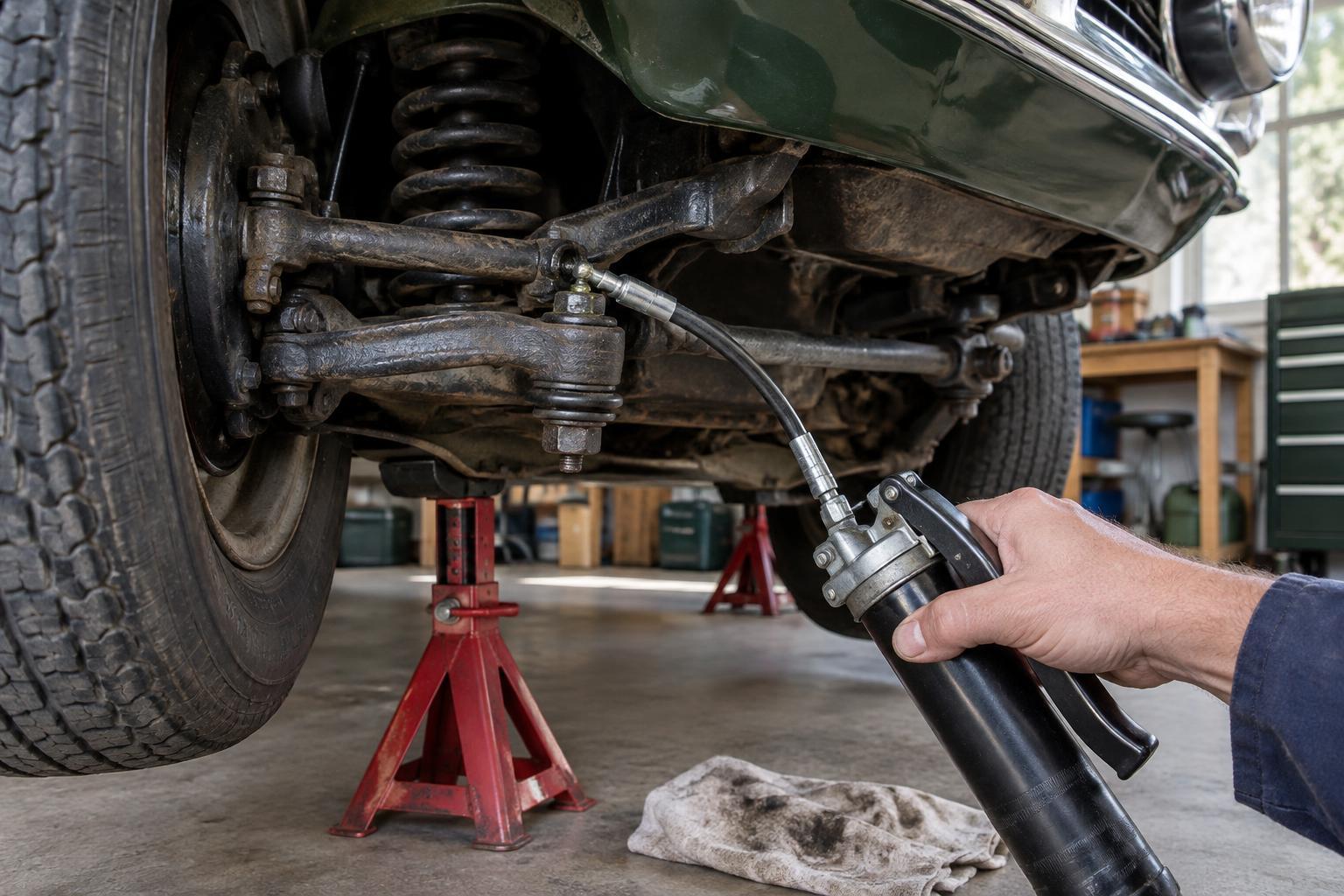
Choose a clean, well-lit place and inspect the car while it is stationary. If access underneath is needed, use proper lifting points and secure axle stands on firm, level ground; never work beneath a car supported only by a jack. Follow each rigid brake pipe as far as you can see, paying particular attention to bends, clips and areas exposed to road spray. Heavy rust, deep pitting, kinks, crushed sections and pipes rubbing against other parts all call for further assessment.
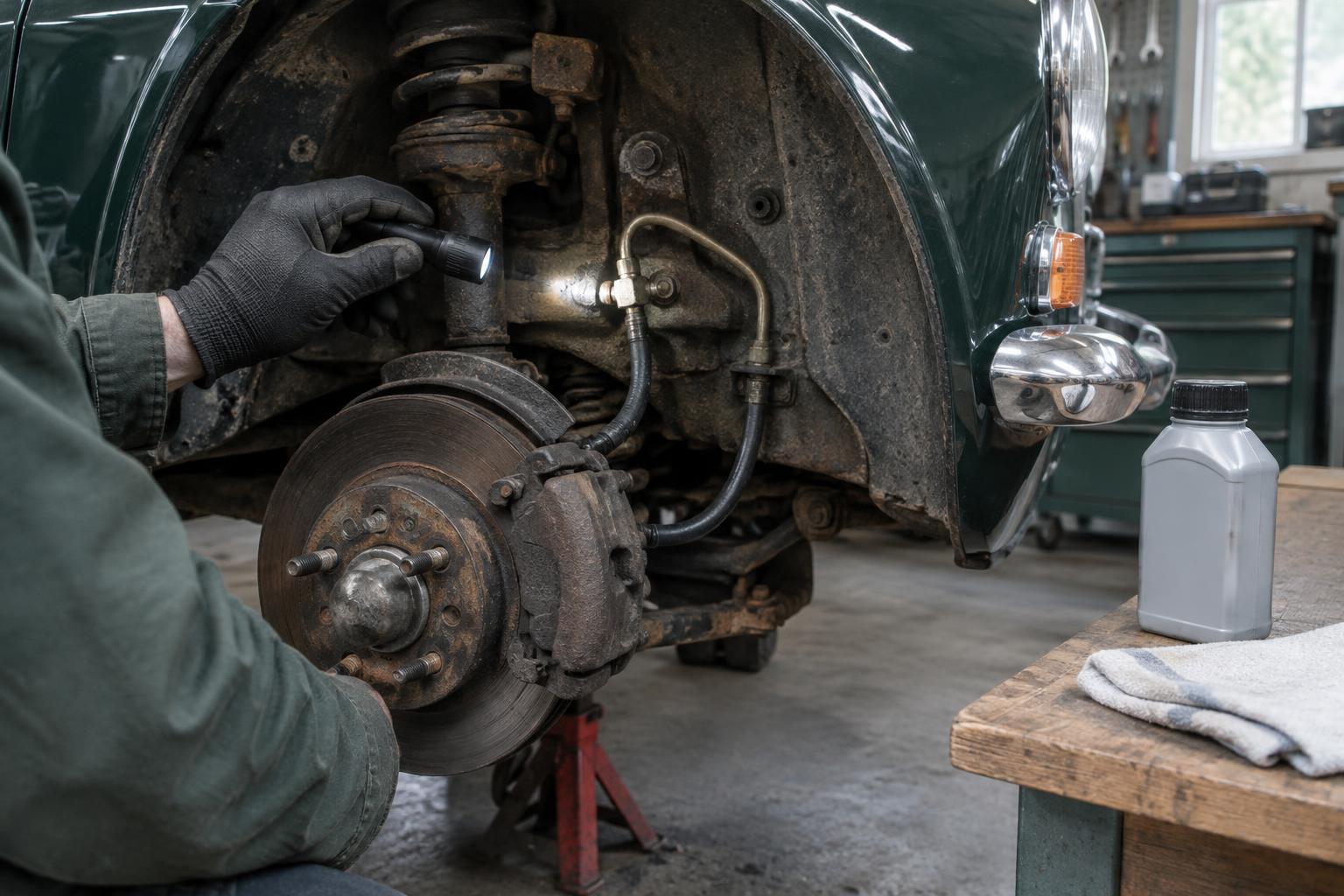
Check unions and nearby components for dampness or staining that could indicate a leak. At each wheel, look around the flexible hose, its connections, the caliper or wheel cylinder and the backplate where applicable. A hose can deteriorate internally without an obvious exterior defect, but visible cracks, swelling, chafing, twisting or contact with the tyre or suspension are clear reasons to have it examined.
Avoid scraping a corroded pipe to see whether it is still strong: disturbing a weakened line may make it leak. Do not paint over suspect areas to tidy their appearance. If the reservoir level has fallen, the pedal feels unusually soft or sinks while steady pressure is applied, or any part of the system appears wet with brake fluid, do not drive the car until the cause has been found and repaired.
Choose fluid by specification, not appearance
Brake fluids are not interchangeable simply because they come in similar bottles. DOT 3, DOT 4 and DOT 5.1 are generally glycol-based classifications, while DOT 5 is silicone-based. The similar names of DOT 5 and DOT 5.1 are easy to confuse, so read the label carefully. Some braking systems require a different type of fluid altogether. Use the specification established for the components fitted to your car rather than selecting a fluid by colour, age or a claim that it is better for classics.
Glycol-based brake fluid absorbs moisture over time, which is one reason service history matters even when a car covers few miles. Silicone DOT 5 has different properties, but it is not a casual top-up for a system containing glycol-based fluid. A change between fluid types may require extensive cleaning and checks of component compatibility. If you cannot establish what is already in the system, seek informed help rather than mixing fluids or guessing from what is left in the reservoir.
Use fluid from a clean, sealed container of the correct specification. Keep dirt and water out of the reservoir, and wipe up spills promptly using precautions appropriate for the car’s finish: brake fluid can damage paint. Note the fluid used and the date in your maintenance record so the next owner or mechanic has a reliable starting point.
Turn inspection findings into a safe plan
A sound-looking exterior is reassuring, but it cannot confirm the condition of hidden pipe runs, internal hose linings or seals. Record areas you could not see as well as defects you found. That distinction helps when arranging a more thorough inspection, particularly before a long tour or after extended storage.
Brake work also involves correct pipe materials, fittings, routing, bleeding and testing. If a line or hose needs replacement, or the fluid history is doubtful, have the system assessed by someone experienced with the car’s braking arrangement. Once repairs are complete, keep the inspection notes and fluid specification with the vehicle’s records. A clear record makes future routine care more dependable than guesswork at the reservoir cap.