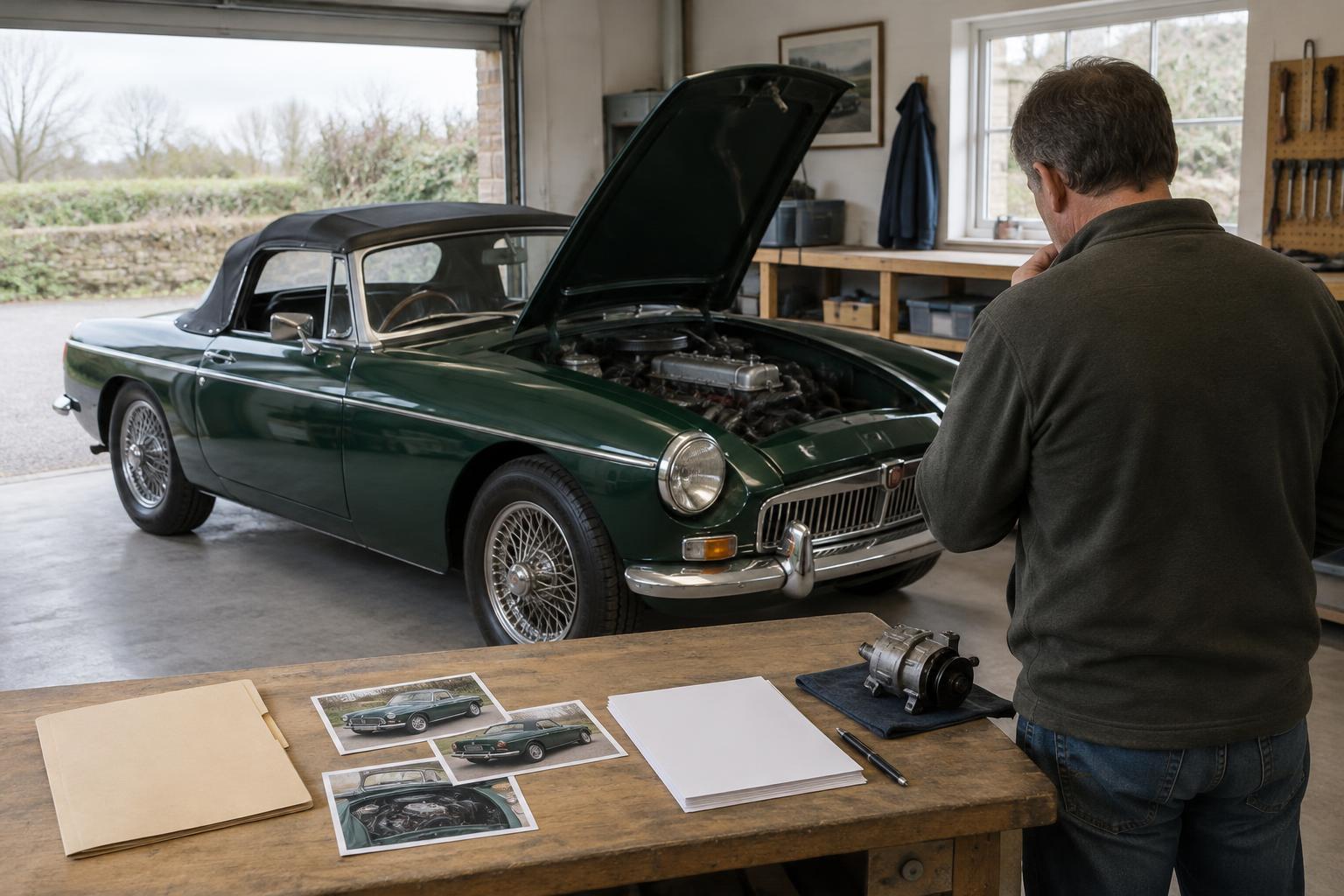
Start with a clear record of the car
A useful ownership file does not have to be elaborate. Its first job is to make it clear which car the records belong to. Keep a summary page with the registration number, chassis or vehicle identification number, engine number if known, model designation and key details of the car’s current specification. Note any differences from its original specification that you can identify, such as a replacement engine, gearbox or interior. Describe what you know rather than guessing at a history you cannot verify.
Store copies of important ownership and identity documents with this summary, while keeping originals secure. If you have older registration papers, photographs or correspondence from previous owners, label them with their source and any known date. For a British classic that has passed through several hands, even a small amount of well-identified paperwork can help distinguish documented history from stories that have simply travelled with the car.
Make the maintenance log useful to your future self
Record routine work as it happens, whether you do it yourself or use a specialist. Each entry should include the date, the odometer reading as shown, the work completed, the parts or fluids used and who did the job. If the odometer is unreliable, has been changed or has passed through an unknown number of cycles, say so. A dated entry with an honest mileage note is more helpful than a precise-looking figure that might be misleading.
Keep invoices, parts receipts and inspection notes alongside the log. For home maintenance, a brief note can explain details a receipt will not show: why you adjusted a setting, which component you removed or whether a replacement part needed modification to fit. Record any checks still outstanding. A note that a small leak was observed and should be reviewed at the next service prevents it from disappearing between one driving season and the next.
The log also makes planning easier. Before a long tour, you can look back to see when tyres, hoses and fluids were last attended to, rather than relying on memory. Records do not replace a fresh inspection, but they help you ask better questions and avoid repeating work unnecessarily.
Keep restoration decisions separate from routine work
A restoration can generate far more paperwork than ordinary servicing. Give major projects their own section, arranged by area of the car or by stage of work. Keep estimates, invoices, parts lists and dated photographs showing what was found before repairs began, what was repaired or replaced, and how the finished work looks. Images of work in progress can be especially helpful where later trim or paint will hide the result.
Record decisions as well as costs. If you chose to retain a serviceable original component rather than replace it, or selected a modern equivalent because a suitable part was unavailable, write down the reasoning. This helps a later owner understand the car as it stands. It may also help you if a similar repair is needed years later.
Be careful with descriptions. An invoice for bodywork does not, by itself, prove that a complete body restoration took place. Keep the language of your own notes proportionate to the evidence, and identify any work reported by an earlier owner that you cannot independently confirm.
Use a simple system you will maintain
Choose an arrangement that suits the amount of paperwork you have. A binder with sections for identity, history, maintenance, major repairs and photographs works well for many cars. File new documents soon after a job, and write a short log entry at the same time. A modest system used consistently is more valuable than an intricate spreadsheet abandoned after a month.
Digital copies provide a useful backup and make documents easier to search. Scan or photograph paperwork legibly, give files descriptive names and keep a backup separate from the device you normally use. Keep original documents where they are protected from damp, heat and unnecessary handling. If you share digital records, check them first for personal details such as addresses, phone numbers or payment information belonging to you or previous owners.
Prepare a straightforward handover
If you eventually sell the car, organise the file before advertising it. A short index can point a buyer towards the identity documents, maintenance log and significant repairs. Separate documented facts from items that are uncertain, and be ready to explain gaps without trying to fill them with assumptions. Few older cars have a perfect paper trail; a clear account of what is and is not known is more useful than a thick, disordered folder.
Keep copies of records you may need after the sale, and handle original documents and personal information thoughtfully when transferring the file. Good records cannot guarantee a particular resale outcome, but they make the car easier to understand and assess. More importantly, they make day-to-day ownership calmer: the next task, the last repair and the reason for a past decision are all easier to find.