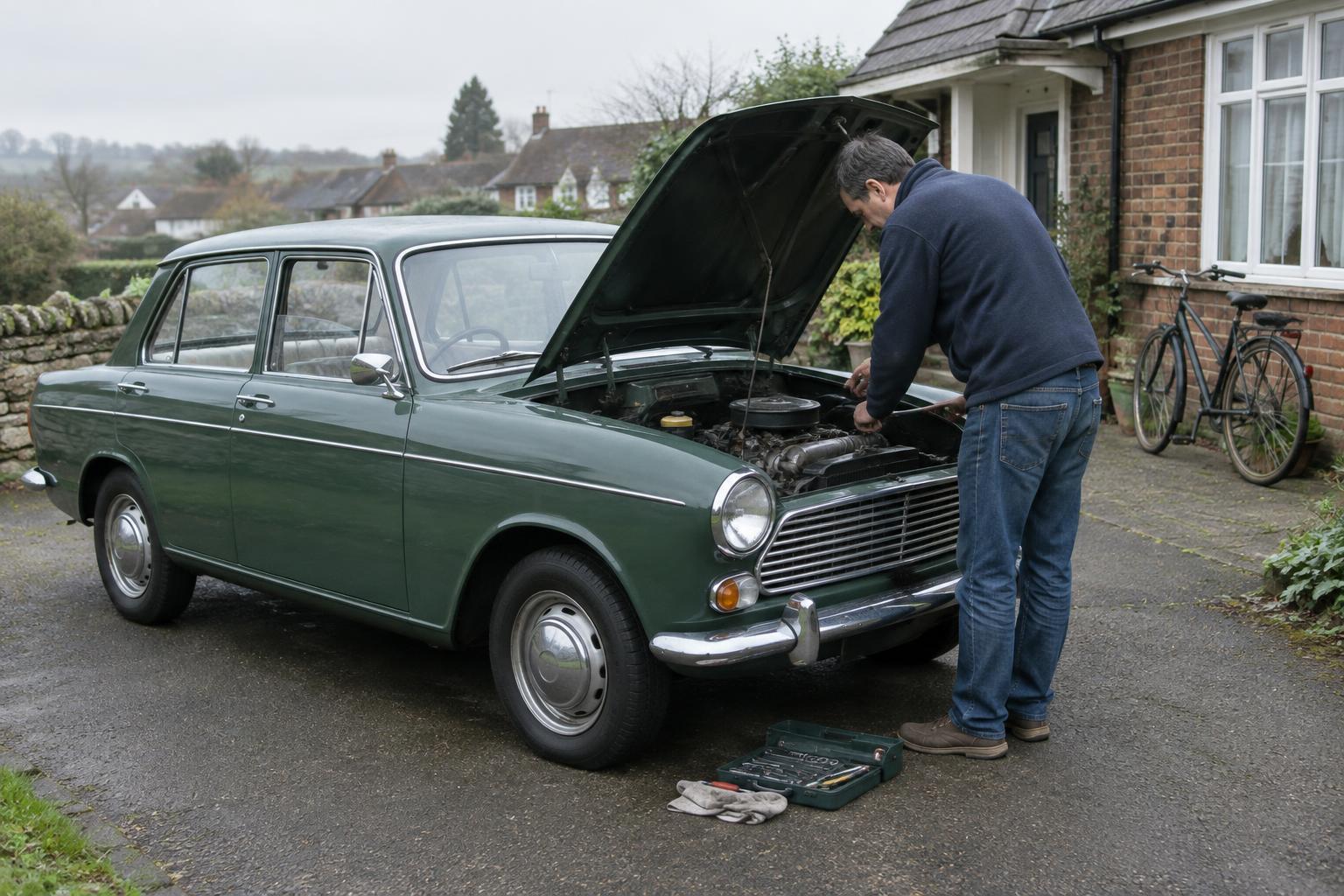
Start with a clear windscreen
A classic car’s wipers may spend weeks at rest, then be asked to clear rain on a touring day. A simple check before setting off is less frustrating than discovering a problem in traffic. Start by cleaning the windscreen thoroughly. Road film, insects and polish residue can make a serviceable blade appear worn, while grit on the glass can damage both the rubber and the surface beneath it.
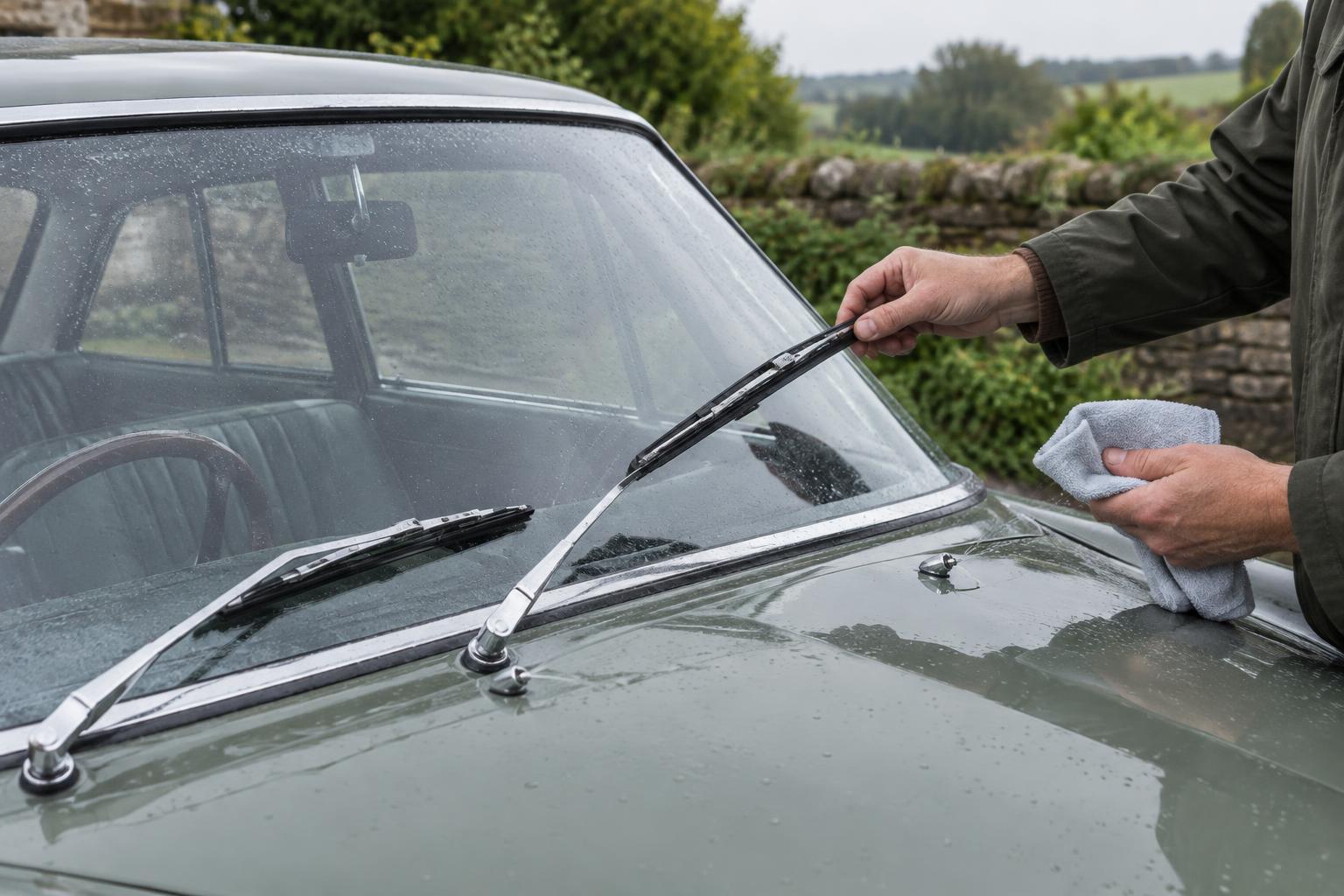
With the ignition off and the wipers parked, look at how each blade sits against the glass. Check for hardened, split or uneven rubber, corrosion around the blade frame, and loose clips where the blade meets the arm. Replacement fittings vary between cars and may have changed during a car’s life, so compare the existing attachment and blade length before buying parts. A blade that is too long may catch a screen surround or the other blade.
Inspect the arms without forcing them
The arm should hold the blade against the screen without twisting it. If one end of a blade misses the glass, check that the blade is fitted correctly and that the arm is not bent. Inspect the arm’s hinge and spring for corrosion or sluggish movement. Do not pull an unfamiliar arm far away from the windscreen: some older designs have limited travel, and forcing one can damage the hinge or mounting.
Check that the arms are secure on their spindles, particularly if a blade has stopped in an unusual position. A loose fitting can slip even when the motor runs normally. It is tempting to reposition an arm immediately, but first confirm where the wipers park and whether the blade has enough clearance throughout its sweep. If a spindle, linkage or arm appears damaged, deal with the fault before testing the system at speed.
Follow the washer fluid from bottle to jet
Find the washer reservoir and inspect its cap, mounting and contents. Top it up with screenwash suitable for the expected conditions and the system’s materials, following the product directions. If the fluid is dirty or has an unpleasant smell, clean the reservoir rather than simply adding more. Old deposits can travel into a narrow jet and block it again after cleaning.
Trace the small hoses where you can see them. Look for splits, hard sections, loose connections and kinks, especially near the bonnet hinge or pump. If the pump operates but little fluid reaches the screen, a disconnected hose or blocked jet may be the cause. If a jet needs clearing, use a gentle method that will not enlarge its opening, then check where the spray lands. Aim for useful coverage of the blade’s sweep rather than a stream that flies over the roof.
On a car with a manual washer pump, a weak spray may also point to a tired pump or a leak that lets air into the line. On an electrically operated system, silence from the pump does not by itself identify the faulty part. Check the obvious connections and fuse specified for the car; if wiring or insulation looks damaged, stop and have the fault assessed rather than repeatedly operating the switch.
Test gently, then make it a habit
Test the wipers on a wet screen, not dry glass. Run them long enough to watch the full sweep and confirm that they park properly. Chattering, missed patches or a blade that lifts at one end can come from dirt, worn rubber or an arm that does not sit squarely. If the blades move slowly or stall, avoid repeated tests that may strain the motor or linkage. Make a note of the symptom so it can be investigated before the next drive.
Wipe the blade edges with a damp cloth during routine washes and lift away leaves or debris trapped at the base of the screen. Before a longer trip, check the washer level and try both systems while the car is stationary. These small habits help preserve visibility without turning a straightforward inspection into an unnecessary restoration project.
For further browsing away from the garage, explore Care and Maintenance · Restful Home Review for home-care topics. Readers thinking about comfort after a day’s drive can also browse Mattress Materials · Restful Home Review and Bedding and Pillows · Restful Home Review.