How the system should feel
In a typical hydraulic clutch, pressing the pedal moves a piston in the master cylinder. Fluid carries that movement through a pipe and, sometimes, a flexible hose to a slave cylinder, which operates the clutch release mechanism. The layout varies between cars, but the basic principle is the same: a sealed fluid circuit should transmit pedal movement consistently.
Get to know your car’s normal pedal travel and engagement point. A gradual change can be easy to miss, especially if you drive the car only occasionally. A pedal that feels spongy, sinks while held down, returns slowly or suddenly needs pumping deserves attention. So does difficulty selecting a gear when the engine is running. These symptoms do not all prove a hydraulic fault, but they are good reasons to inspect the system before another trip.
Check the fluid without guessing its type
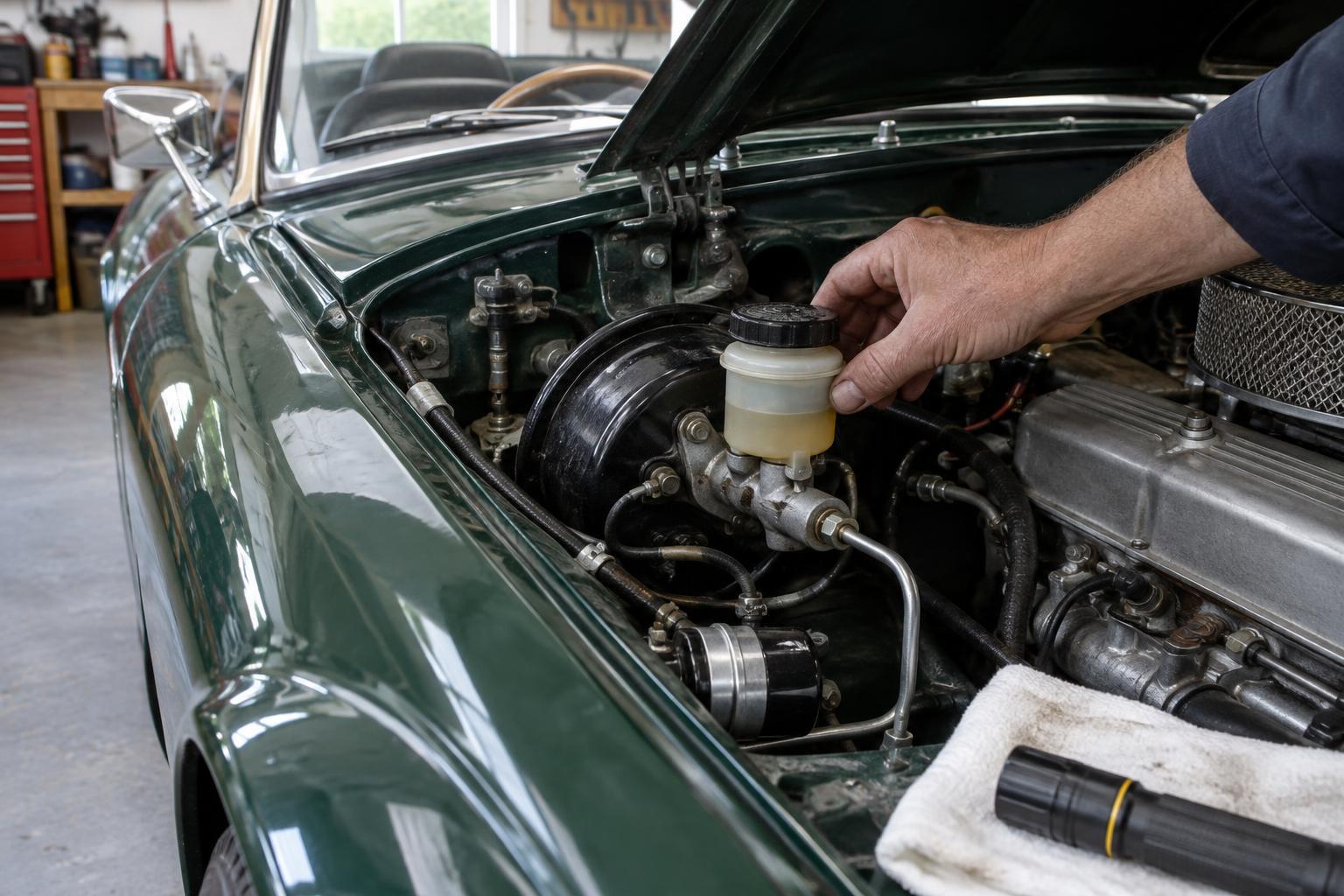
Find the clutch reservoir and check the level against its markings, with the car parked level. Some classics have a separate clutch reservoir; others share a reservoir with the brakes. Wipe dirt from around the cap before opening it, and keep water and grit out. A falling level usually means fluid is escaping somewhere, although the change may be small enough that no puddle is visible.
Use the fluid specification given for the car and the components currently fitted, rather than choosing by colour or assuming every classic uses the same product. Conventional glycol-based brake fluids and silicone DOT 5 fluid should not be casually mixed, and some systems require different fluids altogether. If the system’s history is uncertain, establish what it contains before topping up. Brake fluid can damage paint, so protect finished surfaces and clean any spill promptly according to the product guidance.
Topping up may restore operation briefly, but it does not fix a leak. If a shared reservoir is low, treat the possibility of a brake-system problem as particularly urgent. Fluid replacement intervals also depend on the specified fluid and the car’s use; follow the relevant maintenance information rather than judging fluid condition by appearance alone.
Trace leaks from top to bottom
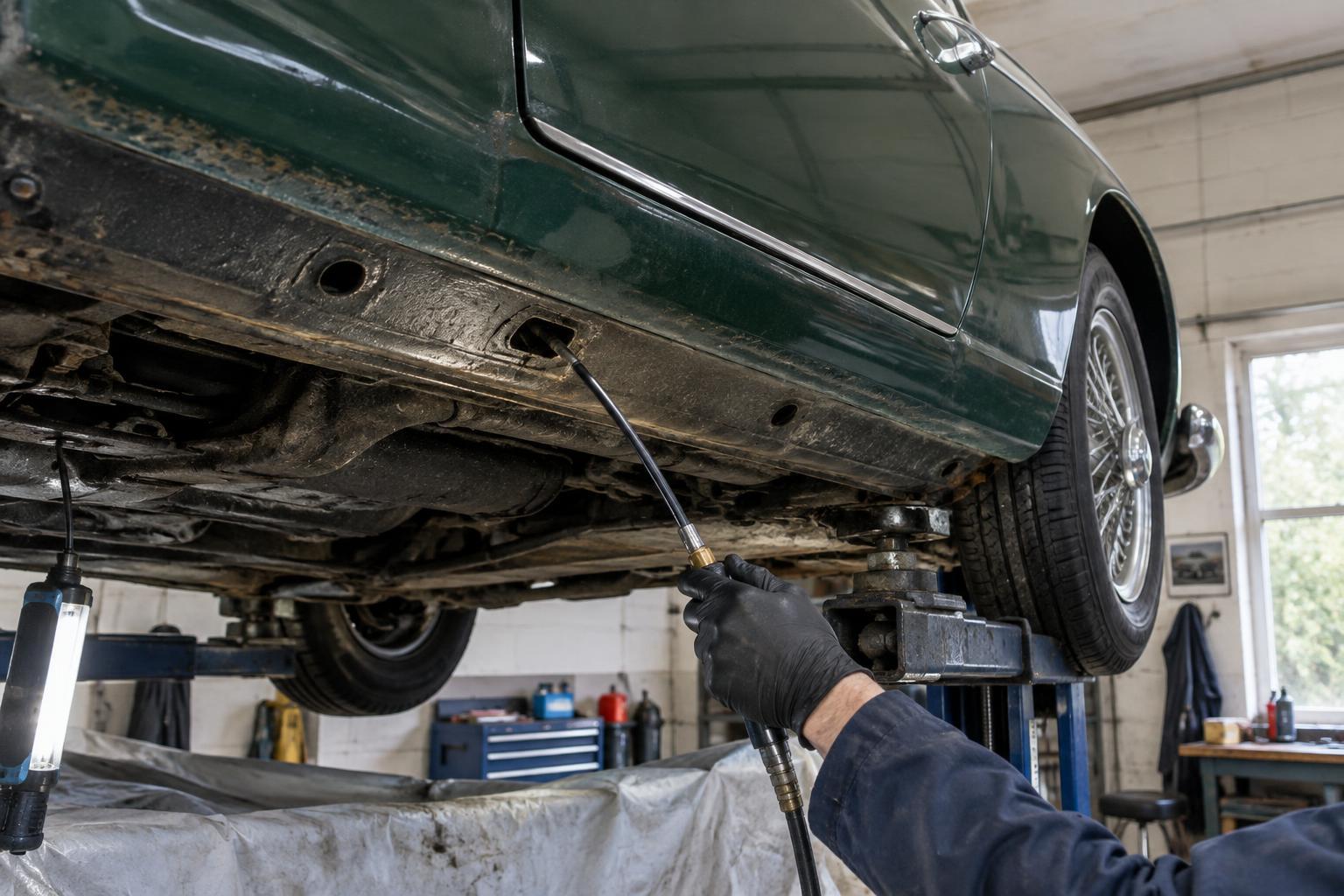
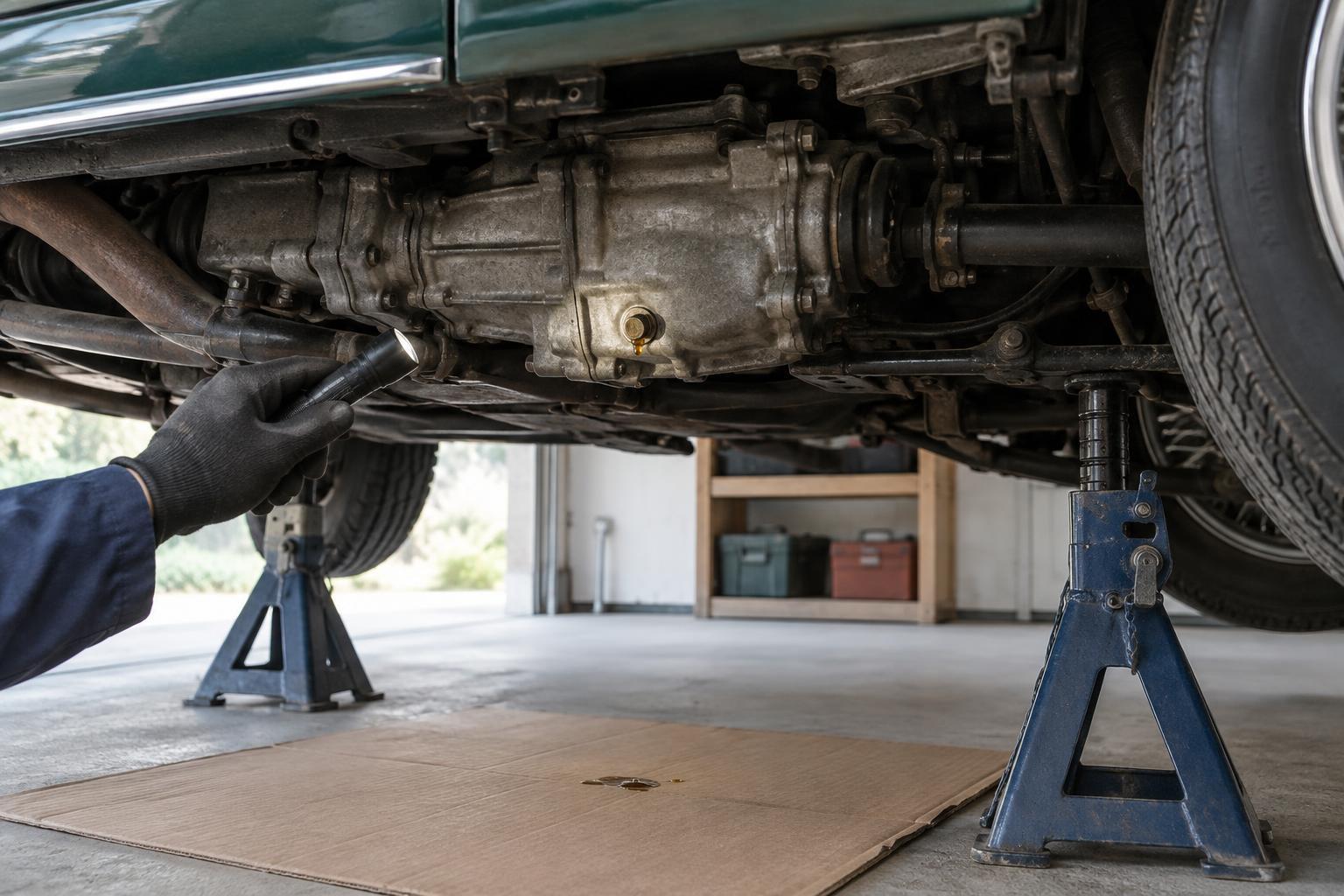
Begin at the pedal box. Dampness on the pushrod, behind the master cylinder or under the carpet can point to a leaking master-cylinder seal. Then follow the metal line and any flexible hose, looking for wet unions, corrosion, chafing or a hose that has become cracked or swollen. Finally, inspect the slave cylinder and its connection. Fluid collecting beneath its dust boot may indicate an internal seal leak, even when the outside looks reasonably dry.
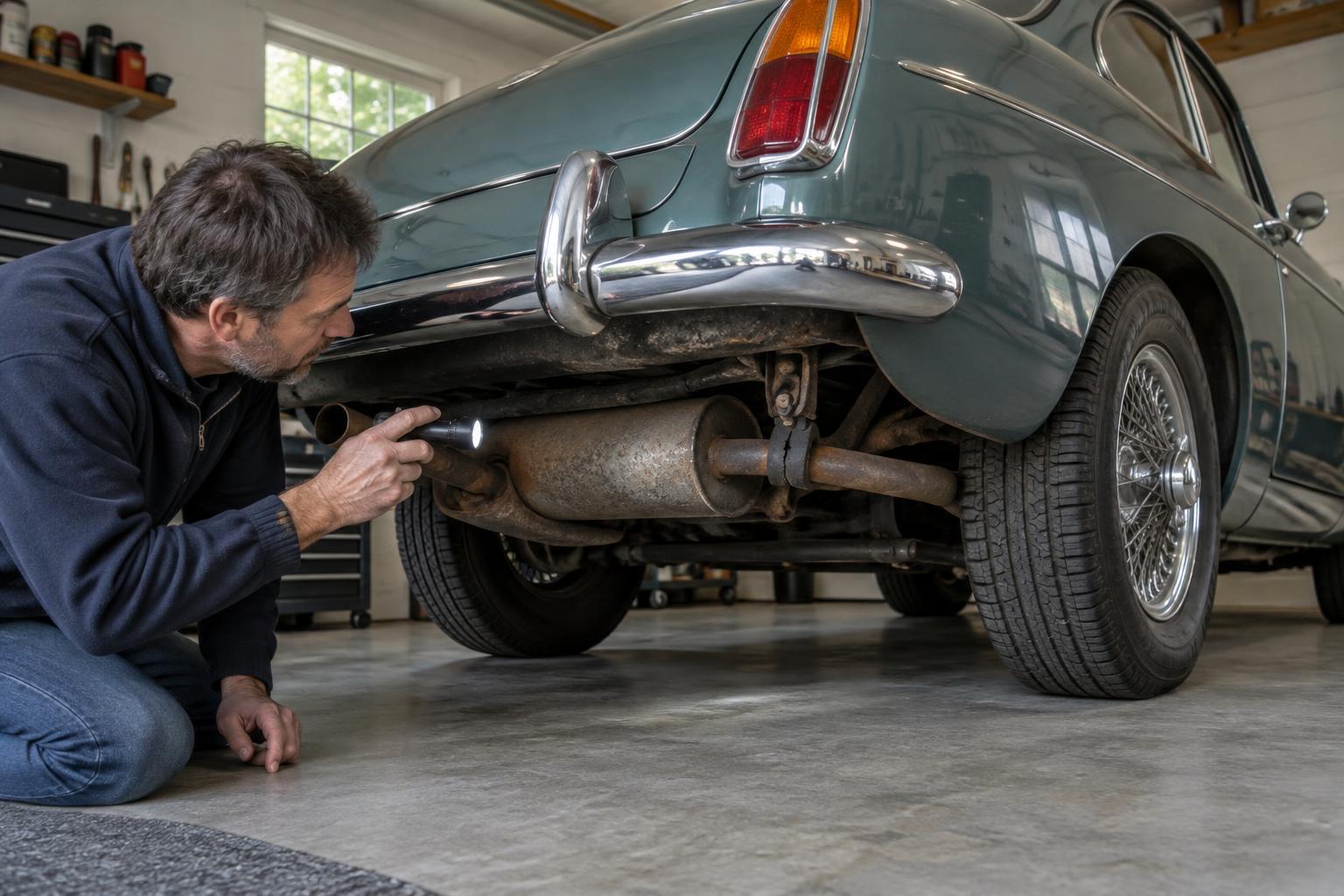
Clean suspected areas carefully, then recheck after the pedal has been operated. Fresh wetness is more useful evidence than an old stain. Keep hands and clothing clear of moving parts, and never rely on a jack alone if access beneath the car is needed. If inspection would require working under an insecurely supported vehicle, leave it to a properly equipped workshop.
A dry exterior does not rule out every fault. A worn master-cylinder seal may allow fluid to bypass internally, producing a pedal that slowly sinks under steady pressure without an obvious loss at the reservoir. Mechanical wear or incorrect adjustment elsewhere in the clutch linkage can also alter pedal feel. Diagnosis is more reliable when you consider the fluid level, visible condition and pedal behaviour together.
Bleeding air and making repairs
Air in the hydraulic circuit can make the pedal soft and reduce slave-cylinder movement. It may enter after a component is changed, through a leak, or if the reservoir runs low. Bleeding generally involves moving clean, specified fluid through the system while releasing air at the slave-cylinder bleed point. The exact method and bleed-screw location vary, so use instructions suited to the car’s arrangement. Keep the reservoir supplied throughout; letting it empty can draw in more air.
If the pedal improves after bleeding but soon deteriorates again, look for a continuing leak or another underlying fault rather than repeatedly bleeding it. Replace damaged parts with components appropriate to the car and fluid in use. When renewing a cylinder, inspect the hose, pipework and fittings too: an old hose or corroded union can undermine an otherwise sound repair.
A useful pre-tour check
Before a longer drive, take a moment to check the reservoir level, look beneath the parked car and press the clutch several times. Notice whether the pedal returns cleanly and whether gears engage as they normally do. These simple observations give you a baseline and can catch a developing problem while the car is still at home.
Do not set out with a clutch that intermittently fails to disengage, a pedal that stays down or an unexplained drop in fluid level. A hydraulic fault can worsen without much warning, and forcing gear changes may add damage. Address the cause, confirm the system is dry and operating consistently, and test it cautiously before returning to ordinary use.