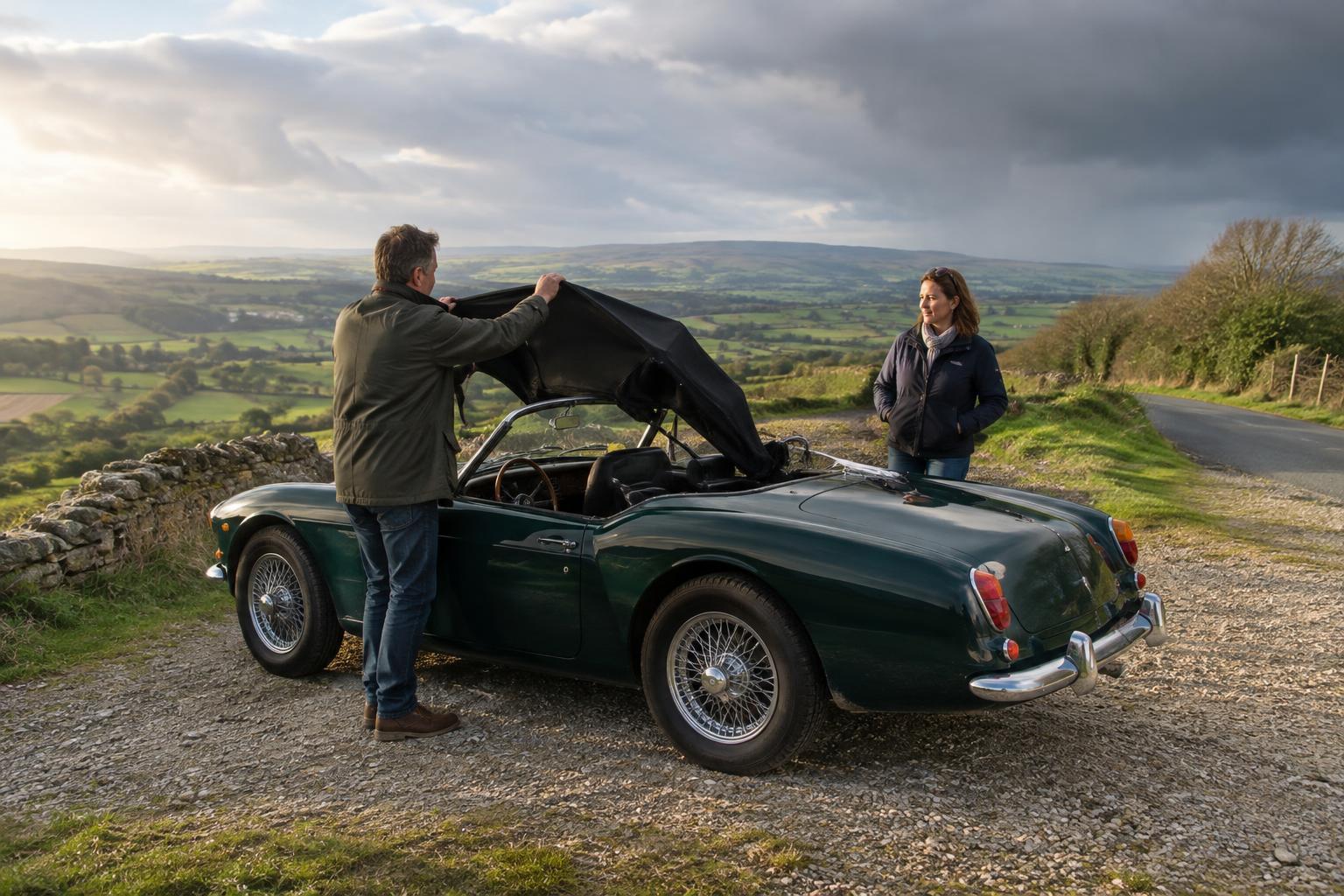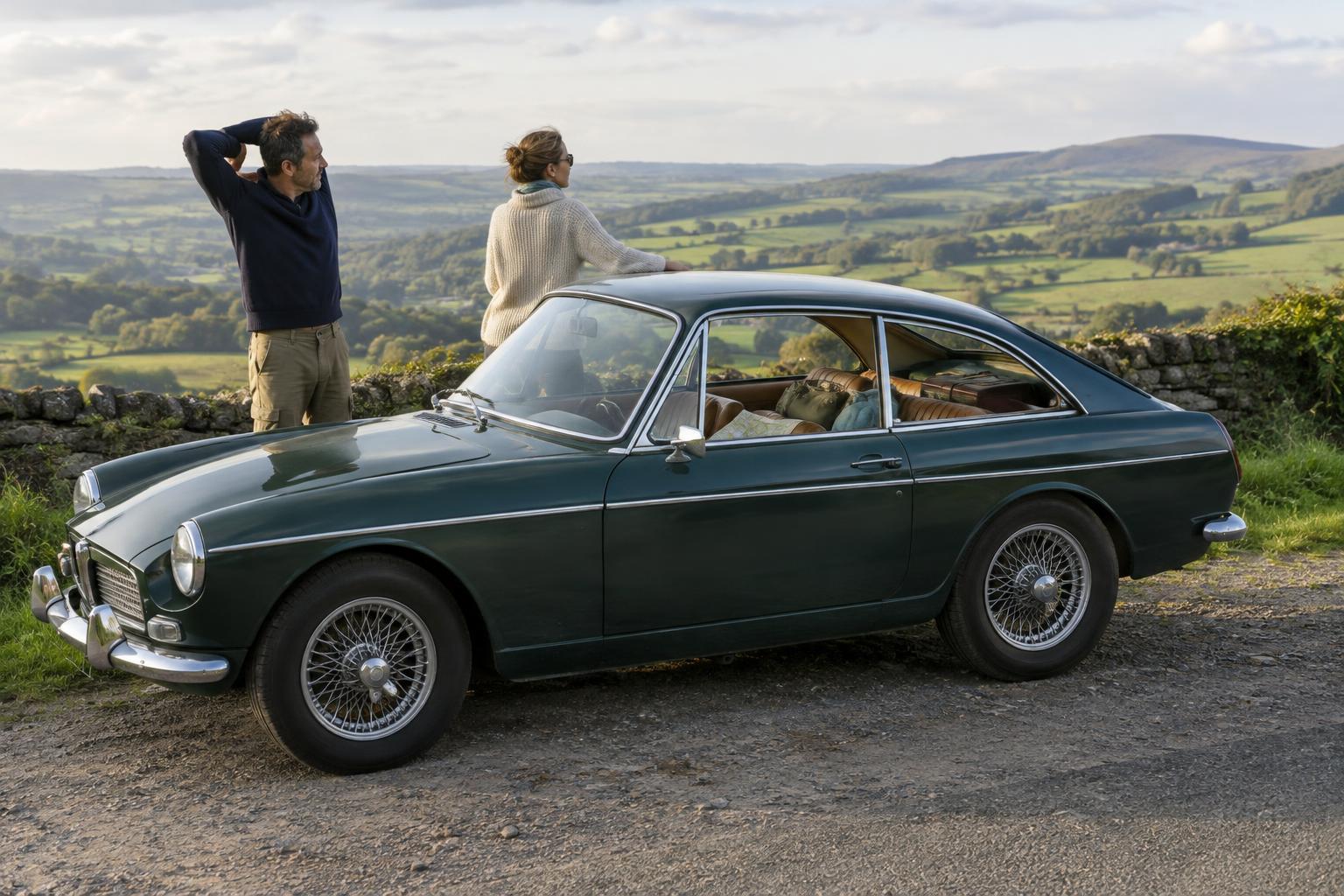
Start with the car, not the suitcase
A classic-car weekend tour is easier to enjoy when packing begins with a simple question: what can this particular car comfortably carry? A small British roadster, a family saloon and a grand tourer offer very different amounts of usable space. Boot volume is only part of the answer. Passenger weight, luggage, tools and any accessories fitted to the car all contribute to its load.
Check the owner’s handbook or reliable model-specific documentation for the car’s permitted loads and tyre guidance, where available. If its history or specifications are uncertain, pack conservatively rather than treating every empty corner as spare capacity. Before setting off, look at how the car sits when loaded. Luggage should not obscure visibility, interfere with controls or make doors and the boot lid difficult to close. A short local drive can reveal rubbing, rattles or a noticeable change in handling while there is still time to repack.
Choose luggage that fits the space
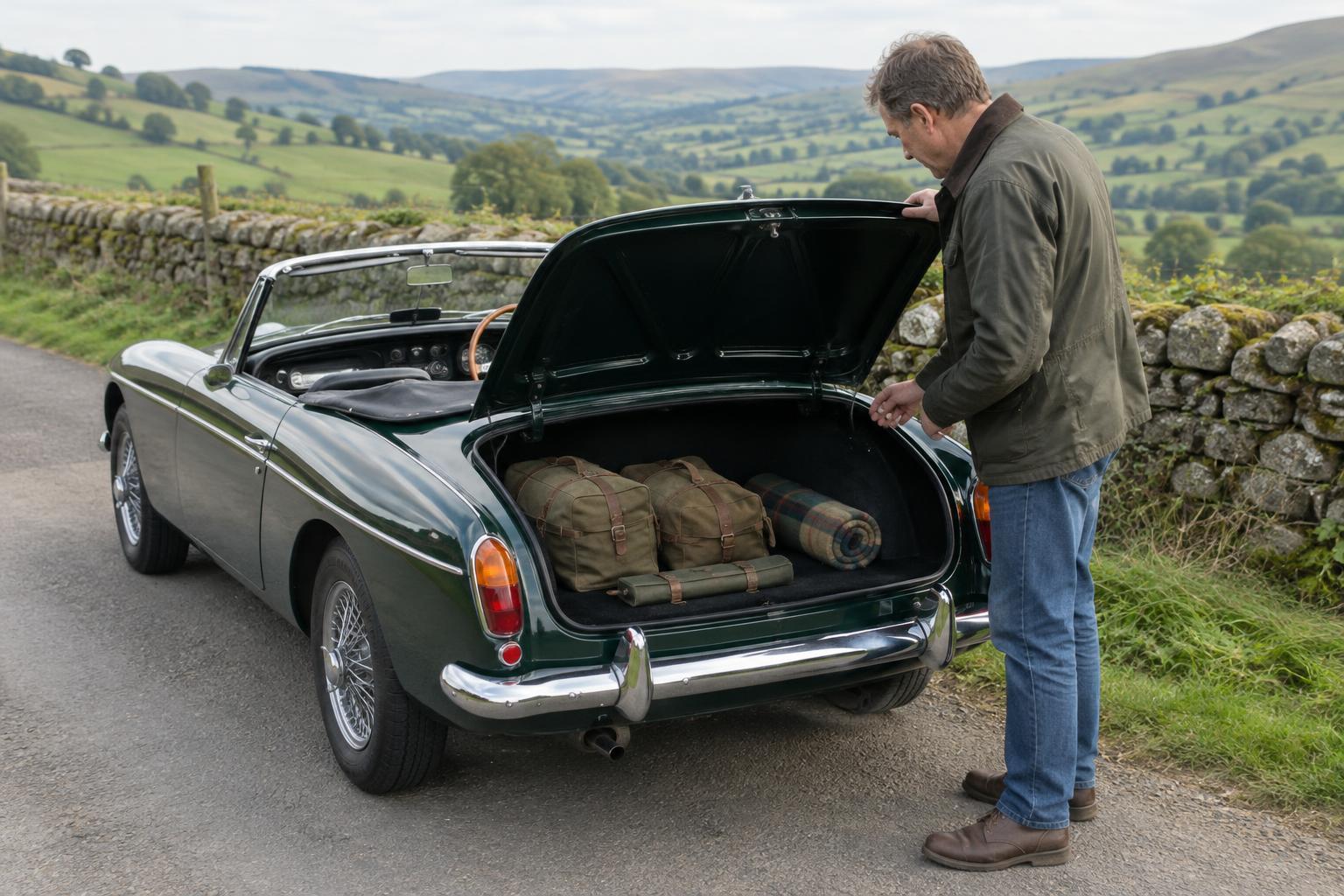
Soft bags are often more useful than rigid cases in a compact classic. They can fit around a boot’s shape without forcing hinges or trim, and smaller bags are easier to lift out at an overnight stop. Pack clothing in layers suited to the likely conditions, then remove anything that only serves an imagined emergency wardrobe. Sharing one wash bag or charging pouch can free up surprising amounts of space.
Keep frequently needed items together: waterproof layers, a warm garment, maps or directions, and overnight essentials should be reachable without unpacking the whole car. Avoid piling belongings high behind the seats or on a rear shelf, where they can shift or obstruct the view. If using a luggage rack, confirm that the rack and its fixings are suitable for the car, respect any stated load limit and secure the bag against movement and weather. A rack adds capacity, but it does not increase the car’s overall carrying limit.
Build a tool kit around the car you know
A weekend kit should help with checks and minor, familiar roadside tasks, not attempt to recreate a workshop. Start with the tools needed to access commonly serviced parts on your own car, plus a torch, gloves, a clean rag and a small selection of suitable fasteners or fuses. Check that any wheel-changing equipment actually fits and works with the wheels fitted. If you carry a spare wheel, make sure it is usable and properly secured.
Choose spares with the car’s known needs in mind. A part is only helpful if it is the correct one and you have the means and confidence to fit it safely. Keep fluids in sealed, clearly identified containers and protect luggage from leaks. Heavy tools and parts belong low in the boot, restrained so they cannot slide into bodywork or passengers. If a fault requires working beside traffic or under an inadequately supported car, stop somewhere safe and arrange assistance instead.
Place weight carefully and leave access
Put the densest items as low as practical and avoid concentrating them at the very back of the car. Even when the total load is acceptable, where it sits can affect steering feel, braking and ride. Use straps or snug-fitting bags to prevent movement, but do not anchor them to fragile trim or fittings that were not designed to hold a load. Nothing should be able to roll into the pedal area.
Leave access to items you may need on the road, including any warning equipment you carry, without having to empty the boot onto a verge. Check tyre pressures against appropriate guidance for the car and its load, and inspect tyres before departure. If the car feels unsettled when loaded, reconsider the packing rather than assuming that an adjustment will compensate for too much weight.
Make the final edit before departure
Lay out everything you intend to take, then sort it into essentials, useful extras and items that can stay home. For a short tour, a compact bag of clothing, weather protection, basic personal items and a modest car kit will often be more valuable than several bulky “just in case” options. Check that passengers have comfortable space for the journey; a cabin crowded with bags quickly turns a scenic route into a chore.
Once packed, close and open the boot normally, confirm that lights and number plates remain visible, and take that brief test drive. Listen for movement and notice whether the car behaves as it usually does. The aim is not to pack to the limit. It is to carry enough for a pleasant weekend while preserving the balance, access and unhurried character that make touring in a classic worthwhile.