Choose the stop before you choose the shot
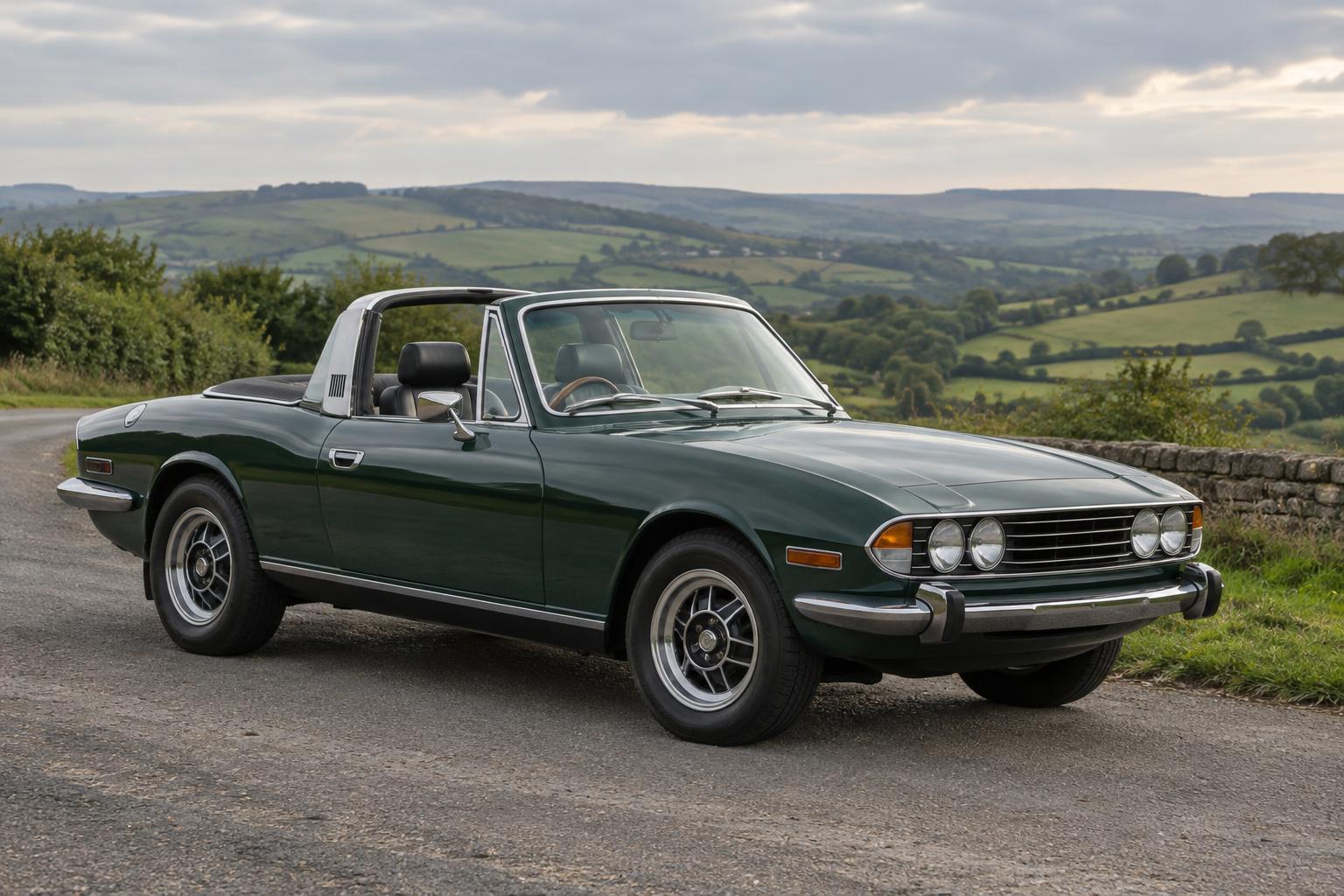
A classic car can look wonderful against a stone bridge, a village street or a broad hillside. The tempting approach is to pull over as soon as the scene appears. A better photograph usually begins with a better stopping place. Look ahead for a proper parking area, a suitable lay-by or another place where the car can stand without narrowing a road, pavement or cycle route. If the location does not offer one, enjoy the view and keep going.
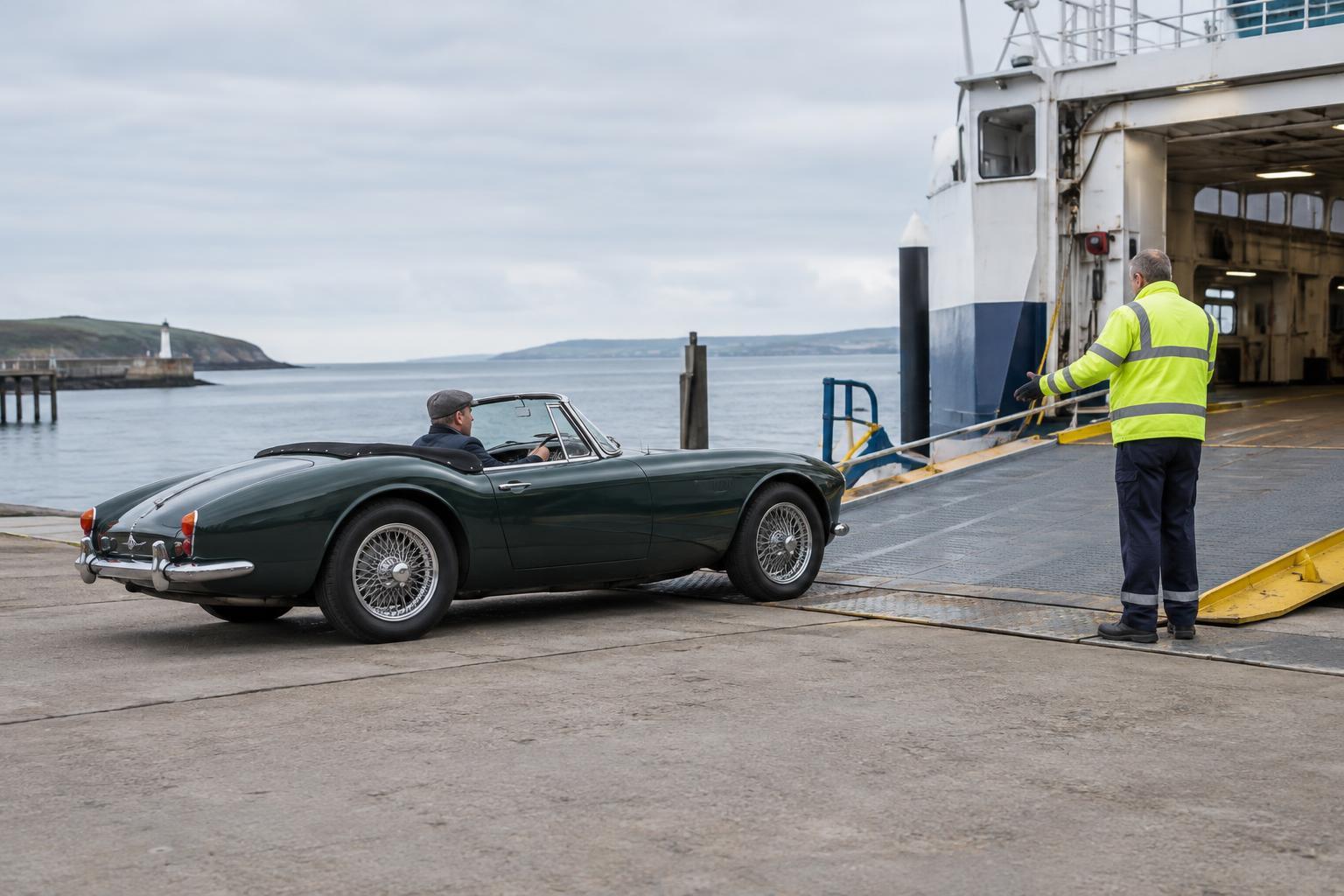
Plan a few possible stops before setting out, but treat them as options rather than appointments. A promising spot may be full, muddy or busier than expected. Allow time to find somewhere else instead of trying to make an awkward space work. On narrow touring roads, never assume that a quiet moment means the road will stay quiet long enough for a photograph.
Keep access genuinely clear
A parked car can obstruct more than the traffic lane. Farm gates, driveways, passing places, footpaths, shop entrances and access for larger vehicles all need room. Leave enough space for people to use them comfortably, not merely enough for your own car to fit. Avoid positioning the car where another driver would have to cross the centre of a road or reverse around a bend to pass it.
Treat a passing place as somewhere for vehicles to pass, not as a ready-made photo bay. The same goes for turning areas and entrances to tracks. If you are travelling with other classics, agree in advance that cars will park only where there is room for the whole group. Several attractive cars stopped together can create an obstruction more quickly than one.
Work from a safe position
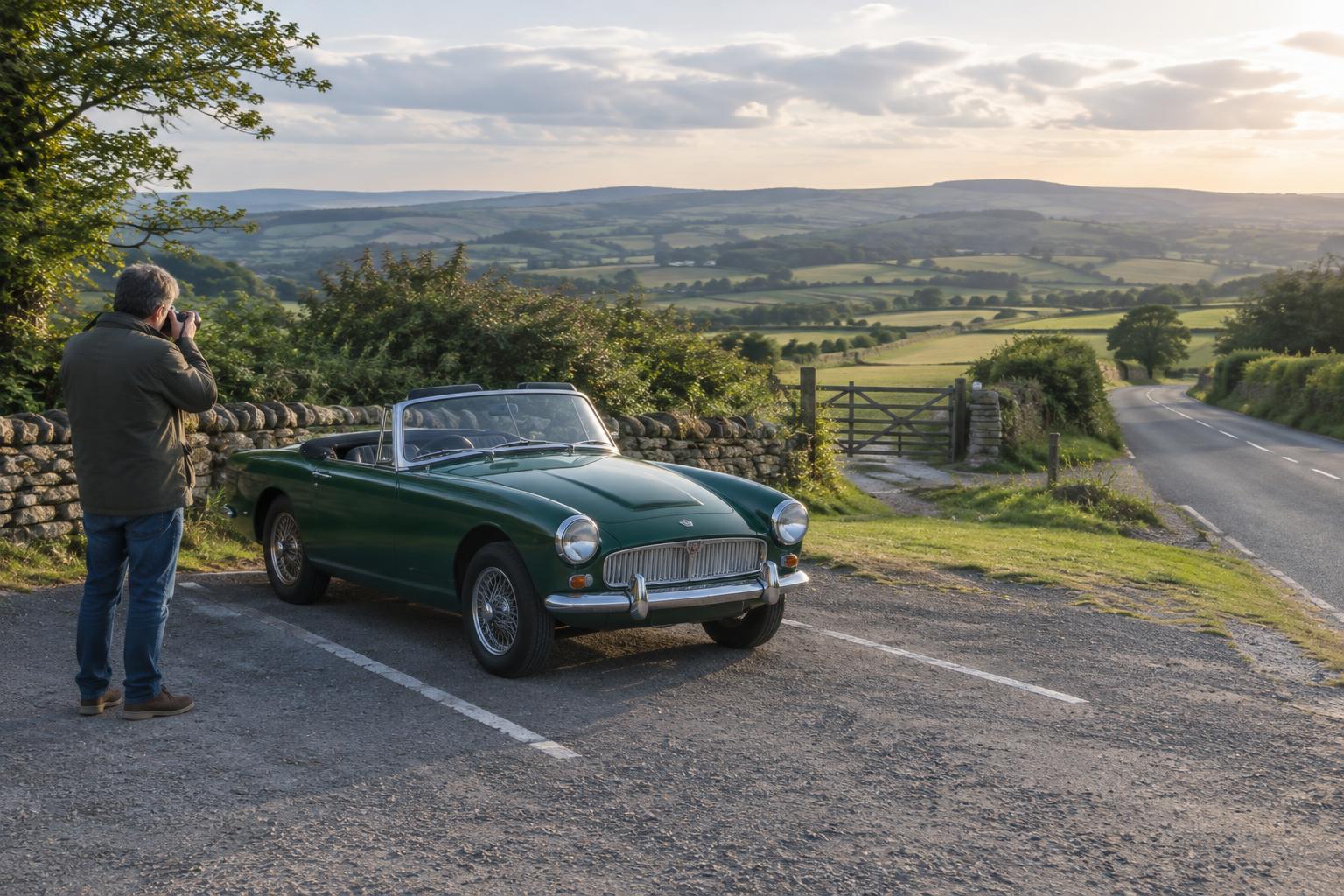
Once parked, take a moment to look at the setting on foot. You may find that moving yourself a few steps gives the car a cleaner background; there is often no need to reposition the vehicle. Keep yourself and any companions out of the carriageway, and avoid stepping backwards while looking through a viewfinder or phone screen. Watch for uneven ground and traffic when moving around the car.
Aim for a short, deliberate session rather than repeatedly getting in and out to adjust the angle. Start with a wide view that shows the car in its touring landscape, then try a closer image of a distinctive detail. A lower viewpoint can make the car stand out, while a little distance can show the scale of the scenery. Neither technique is worth taking a risk beside moving traffic.
Make the most of an ordinary parking spot
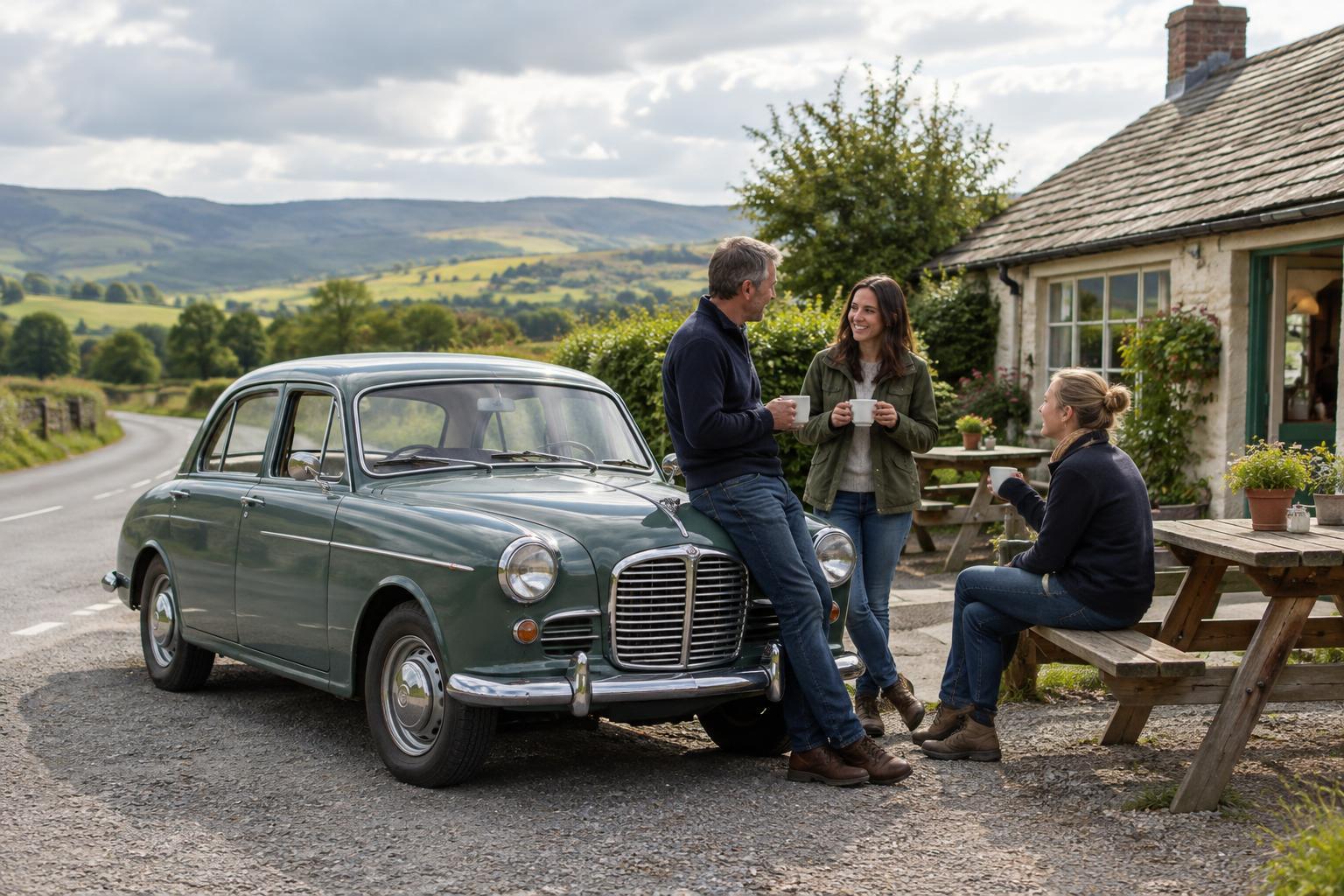
You do not need to stop on a dramatic bend to make a memorable image. In a car park or spacious lay-by, turn your attention to the light, the background and the story of the journey. Gentle morning or late-day light may bring out the shape of older bodywork, while an overcast sky can reduce harsh reflections. A map on the passenger seat, a travel bag or rain on the windscreen can suggest a day on tour without staging the car in a hazardous place.
Before taking the picture, check what sits behind the roofline and whether signs, bins or other cars distract from the subject. Change your own position first. If another vehicle or a person is in the frame, waiting briefly may be simpler than moving the classic. In busy public places, give people space and be considerate about photographing them or their property.
Leave the place as you found it
Scenic routes remain enjoyable when visitors use them thoughtfully. Respect barriers and local parking instructions, avoid driving onto verges or soft ground for a better angle, and take any litter away. If access or permission is unclear, choose another location. The best touring photograph captures both the car and a sense of the journey; it should not depend on inconveniencing someone else to get it.