Decide what the retrim needs to achieve
An interior can look tired without needing to be replaced from end to end. Before ordering a kit or visiting a trimmer, separate worn surfaces from damaged structures. Seat covers may be split while the frames remain sound; a sagging seat may need attention to its padding, webbing or springs before new covers will sit properly. Carpets, door cards, headlining and trim around the dashboard can each be treated as separate jobs.
Set a goal for the car. A sympathetic refresh aims to retain serviceable original material and preserve the cabin’s familiar character. A more extensive retrim may make sense where water damage, previous alterations or general wear have left little worth keeping. Neither approach is automatically better. What matters is deciding the scope before you price it, so that quotes for a seat-only job are not confused with quotes for a complete interior.
Record patterns and details before dismantling
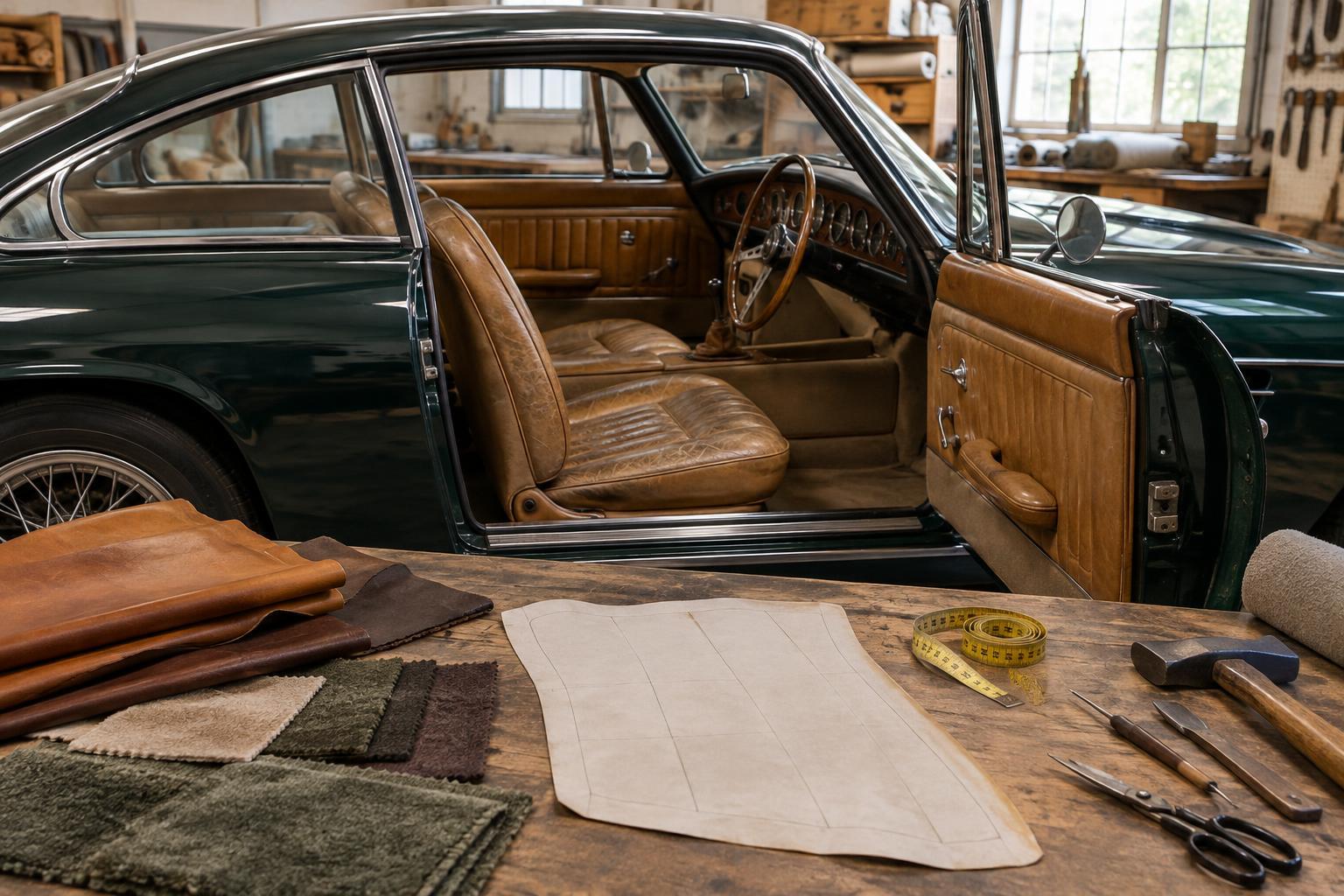
Photograph the cabin in good light from several angles, then take close-ups of seams, piping, pleats, carpet edges and the way panels meet. Record what sits beneath each visible layer as it comes apart. Even if you plan to change the colour, the old pieces may provide useful evidence of shape and fitting order. Label them rather than throwing them away immediately.
Classic British cars often have small trim differences between versions or production periods, and earlier repairs may not reflect the original arrangement. Check that a replacement kit is intended for your particular body style, seat design and trim layout rather than relying on a model name alone. If authenticity is important, compare surviving areas that are less exposed to sunlight and wear. If your priority is comfort or easy cleaning, note where you are willing to depart from the original pattern. Make those choices before cutting material or commissioning panels.
Choose materials for use as well as appearance
Leather can offer a pleasing feel and may develop character with use, but its cost and care needs should be part of the decision. Vinyl is commonly chosen where straightforward cleaning and a period-appropriate look matter. Cloth can suit some interiors, though its weave and durability deserve attention. Ask to see and handle samples in daylight; a colour that looks right in a photograph may feel or appear different inside the car.
The visible covering is only part of the specification. Discuss padding density, backing, carpet type, binding, thread and piping with a supplier or trimmer. Soft new covers fitted over collapsed padding rarely give the intended shape. Likewise, thick carpet can be difficult to fit neatly around pedals, seat runners and tight corners. Think about how the car will be used: a car regularly taken on damp touring days may benefit from materials and fittings that are easy to dry and inspect.
A bespoke interior offers more choice over stitching and panel design, while a ready-made kit may reduce pattern-making work if it fits the car well. Neither route removes the need for careful installation. Request samples where possible, and confirm exactly which pieces are included before placing an order.
Build a budget from the work involved
There is no reliable single price for a classic-car retrim. Costs depend on the number and complexity of panels, material choice, the condition beneath the old trim and how much fabrication is needed. Start with an itemised list: seats, door and rear panels, carpets, headlining, small finishers, hardware and fitting labour. Include delivery charges for parts and materials if applicable. This makes it easier to compare options than a single broad estimate.
Ask a trimmer what the quoted work assumes about seat frames, boards, padding and fixings. Rotten panel boards, corroded seat runners or missing clips may only become apparent during dismantling. Keep a contingency for such discoveries rather than spending the whole budget on the visible covering. If funds are limited, consider a staged plan, but check that matching material will be available when you return to the remaining panels. Ordering all the visible material together may help avoid an unwanted colour or texture difference.
Labour deserves particular attention. Removing old trim carefully, repairing what lies beneath, fitting covers without wrinkles and finishing awkward edges all take time. The cheapest quotation may cover fewer tasks, so ask for a written description of what is included, what is excluded and how additional work will be agreed.
Plan the sequence and protect the finished result
If the car also needs body or paint repairs, settle those first where possible. Welding, leaks and poorly sealed openings can spoil a new interior. Once the cabin is sound and dry, test-fit panels and check that doors, seats, belts and controls still operate freely before calling the job complete. Safety-related fittings should be correctly mounted and unobstructed; if their condition or installation is in doubt, seek competent help.
A retrim is easiest to live with when the result matches the way you use the car, not just the way it looks in a sample book. Keep a record of material names or samples, photograph concealed fixings during assembly and retain usable original pieces if storage allows. Those notes will make later repairs or adjustments much simpler.