Plan a day, not a fixed itinerary
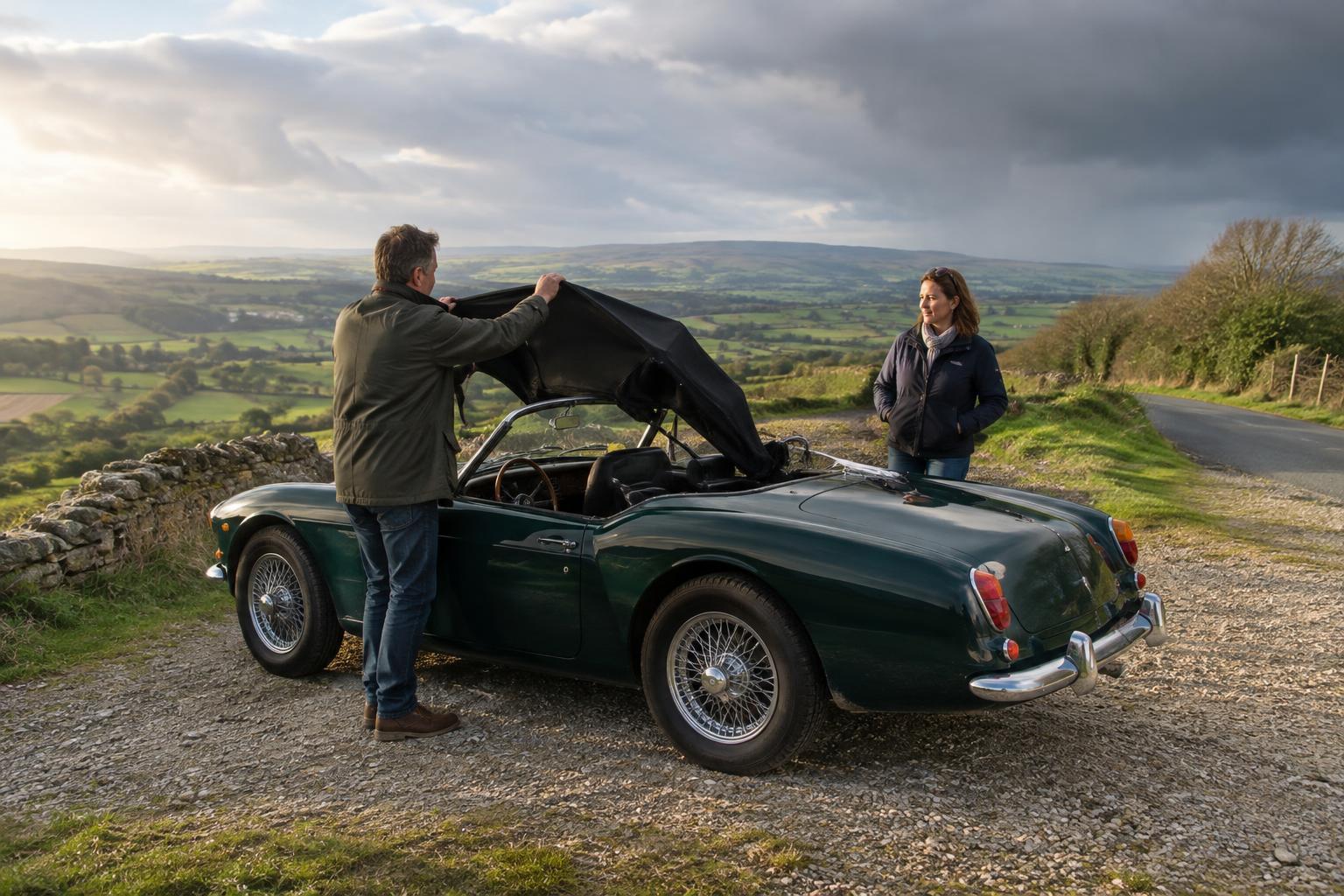
Changing weather is part of the character of a British motoring day. A bright start can give way to showers, while a damp morning may clear just as you reach the most inviting stretch of road. Rather than trying to predict every hour, build an outing that works in more than one set of conditions. Choose a main destination worth visiting even if the drive takes longer than expected, and treat viewpoints and detours as options rather than obligations.
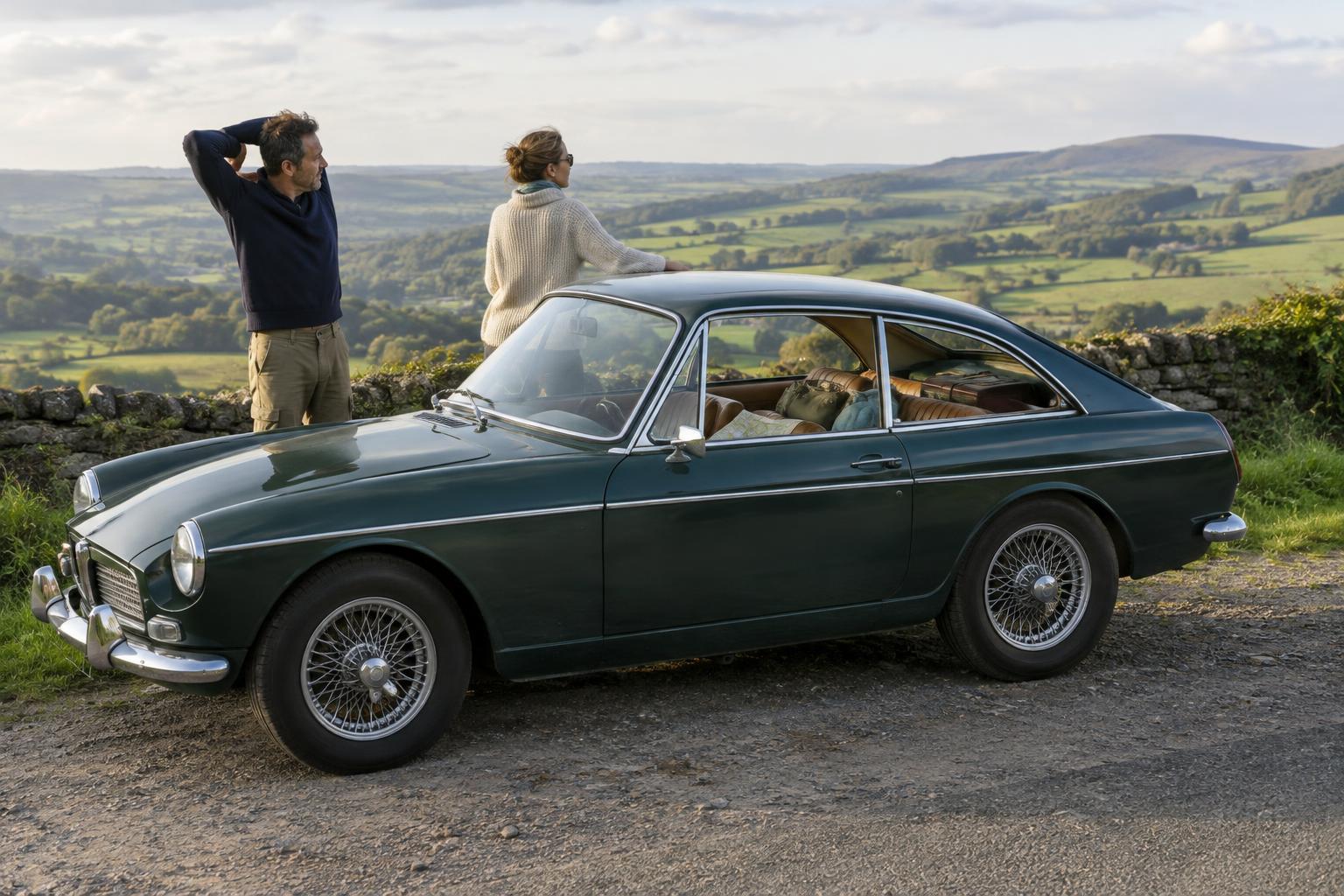
A modest route often makes a better classic-car outing than an ambitious mileage target. Mark a shorter return route, a sheltered stop for lunch and a place where you can pause without blocking traffic. If you are travelling with another car, agree on meeting points in advance; a convoy need not stay bumper to bumper. Leave enough time to get home in daylight if your car’s lighting or demisting is less effective than that of a modern vehicle.
Match the route to the conditions
The most scenic road is not always the best road in poor weather. Narrow lanes can collect standing water, mud and fallen leaves, and high, exposed stretches may be tiring in strong wind. Keep a route that uses broader roads as a fallback, particularly if you are unfamiliar with the area. When visibility is reduced, the pleasure of a sweeping view may be outweighed by the effort of negotiating an unfamiliar junction or passing place.
Before leaving, check a forecast and any available travel information, then look again at a planned stop rather than making the entire day depend on a morning prediction. Conditions can differ between a sheltered valley and an exposed ridge. If rain becomes persistent or roads look unsuitable, changing course is a successful use of the plan, not a failure to complete it.
Prepare the car for visibility and comfort
Weather preparation begins with the ordinary checks that make a classic pleasant to drive. Confirm that tyres are in suitable condition and correctly inflated for the car, and check the operation of lights, indicators, wipers, washers, heater and demister. Clean glass inside and out: a slight film on the windscreen becomes much more noticeable in low sun or rain. If a wiper leaves unwiped patches or a hood seal leaks, it is better to address the problem before setting off than to hope the weather holds.
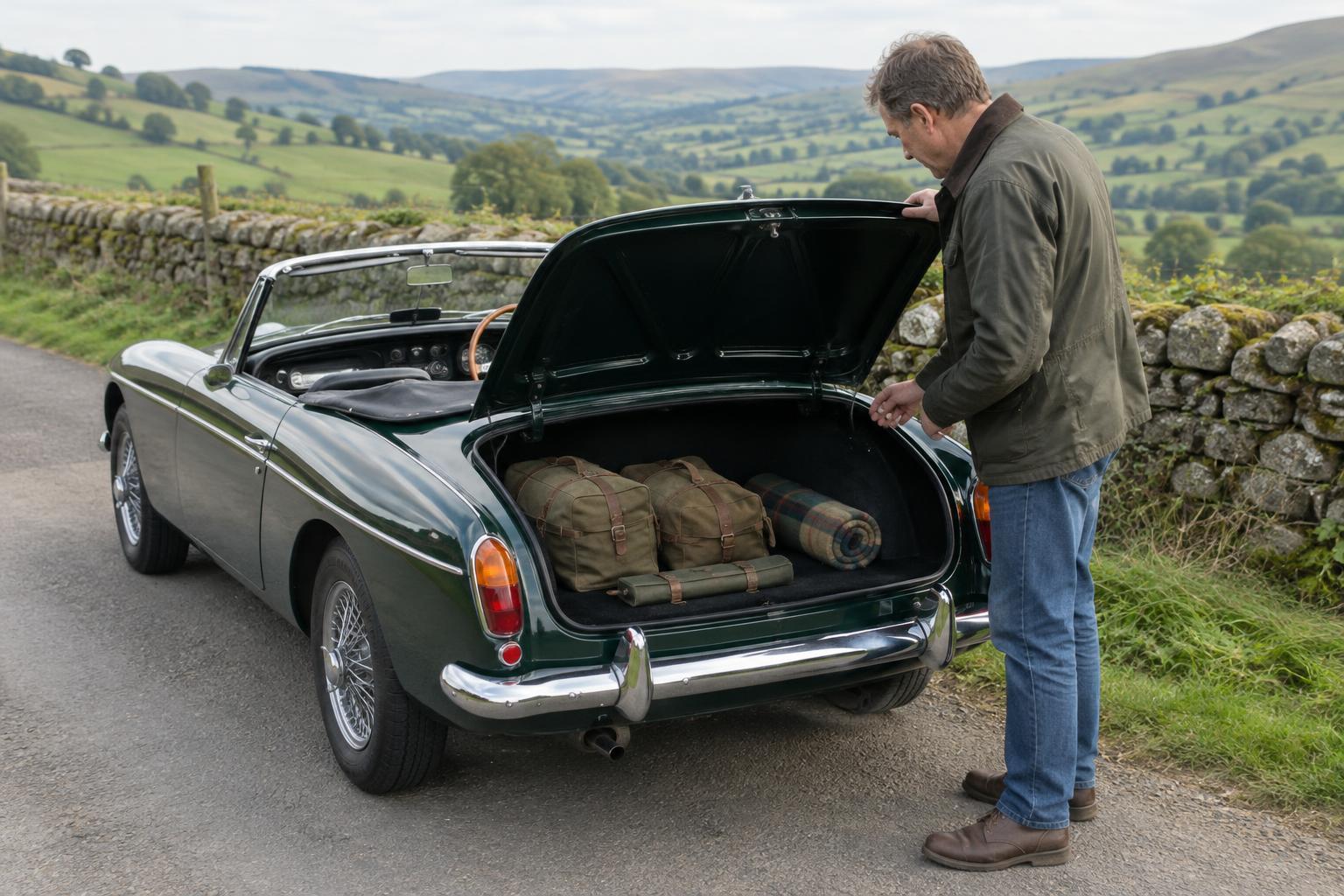
Pack for the occupants as well as the vehicle. A warm layer, waterproof coat, comfortable footwear and a small towel take little space and make an unexpected stop easier. In an open car, remember that sunshine at departure says little about how warm a long drive will feel. Keep essentials accessible rather than buried under luggage, and avoid packing so much that it obscures the rear view or makes the cabin cramped.
Give the car and driver room to adapt
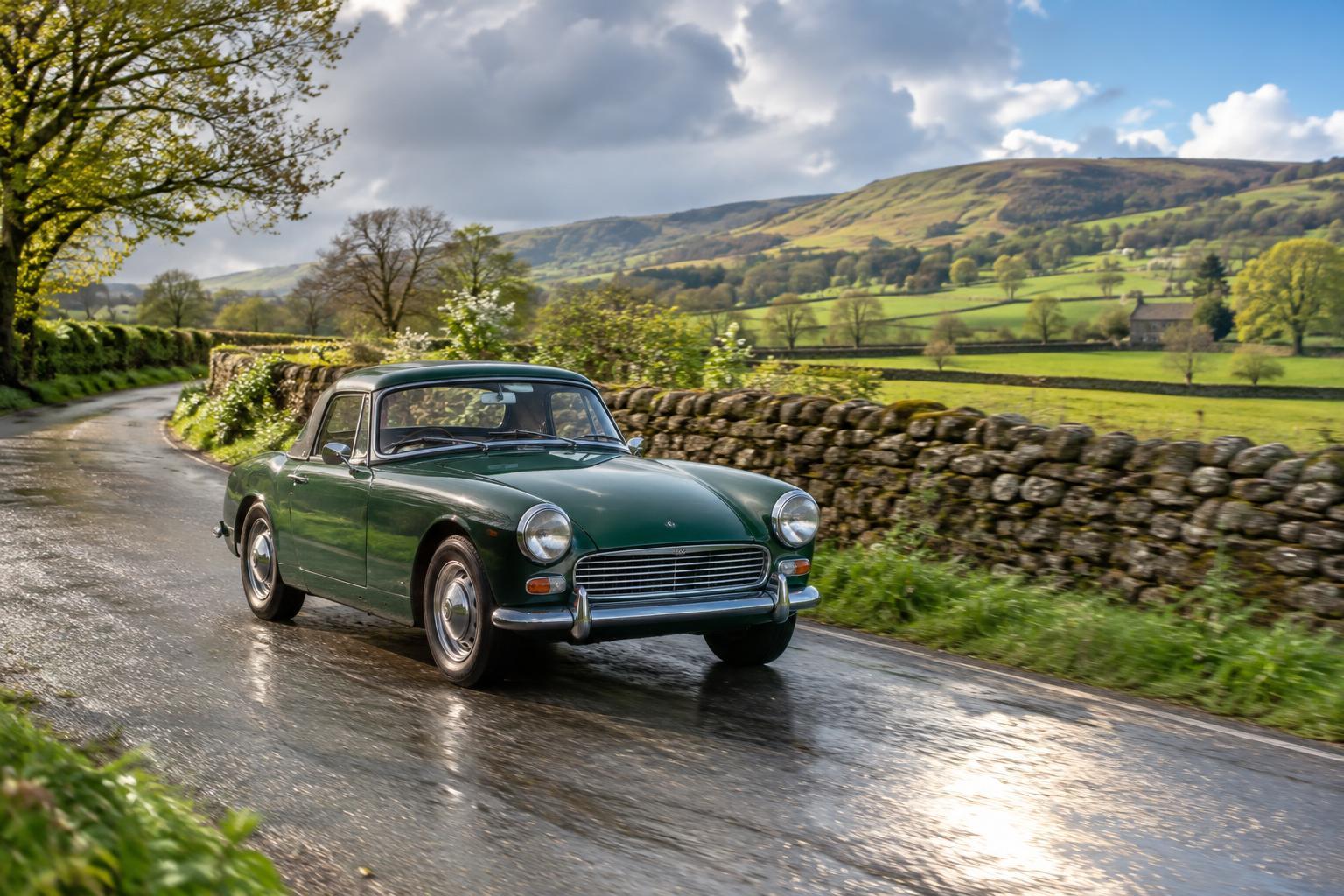
A classic car may have different braking, lighting and ventilation characteristics from the vehicle you drive every day. Allow generous following distance on wet roads, make smooth inputs and slow down early when approaching standing water or a shaded bend. If the windows mist, stop somewhere safe to restore visibility rather than trying to manage it while driving. There is no reward for maintaining a timetable when the conditions have changed.
Plan breaks around enjoyment rather than just fuel. A café, village stop or visitor attraction can give everyone time to warm up, dry out and decide what comes next. It also provides a natural opportunity to check that luggage remains secure and that nothing obvious has changed with the car. If a mechanical concern develops, treat it separately from the weather: find a safe place to stop and assess it without pressure to continue the tour.
Finish the outing with an easy reset
A wet drive need not spoil the day, but a little attention afterwards makes the next outing more inviting. Once the car is safely parked, remove damp items from the cabin and let mats or trim dry as appropriate. If road grime has gathered on the bodywork or underneath, clean it using methods suitable for the car’s finish and condition. Avoid putting a cover over a wet car unless that cover and storage arrangement are intended for it.
Make a brief note of what worked: the stop that offered useful shelter, the road that was less enjoyable in rain, or the item you wished you had packed. Over time, those observations become a personal touring guide. The best weather-aware plan is not one that guarantees sunshine. It is one that leaves you free to enjoy the drive when conditions are kind and make a comfortable change of plan when they are not.