Decide what the finish is meant to achieve
A paint job can mean anything from making a sound, regularly driven classic look tidy to returning a car to a carefully researched factory appearance. Decide which result you want before discussing colours or asking for quotes. A touring car may benefit most from a durable, easily maintained finish; a restoration intended to preserve original details may call for a different approach. Neither aim is inherently better, but changing your mind after stripping has begun can be costly.
Write down the scope in plain terms. Are you painting only the visible exterior, or will door shuts, the engine bay, boot and underside also need attention? Will glass, trim, lights and seals be removed? An exterior-only respray can look striking until a door opens to reveal a contrasting old colour. Conversely, dismantling every area may be unnecessary when the existing finish is sound and the goal is sympathetic improvement.
Research the original colour without relying on one clue
For a British classic, a factory colour name or code is a useful starting point, not a guarantee of an exact modern match. Shades can vary with production period, paint supplier and decades of fading or previous repairs. Check any surviving vehicle records and colour identification marks, then examine sheltered areas such as behind trim, under removable fittings or inside a panel. Treat these findings as evidence to compare rather than proof on their own: a car may have been repainted long ago.
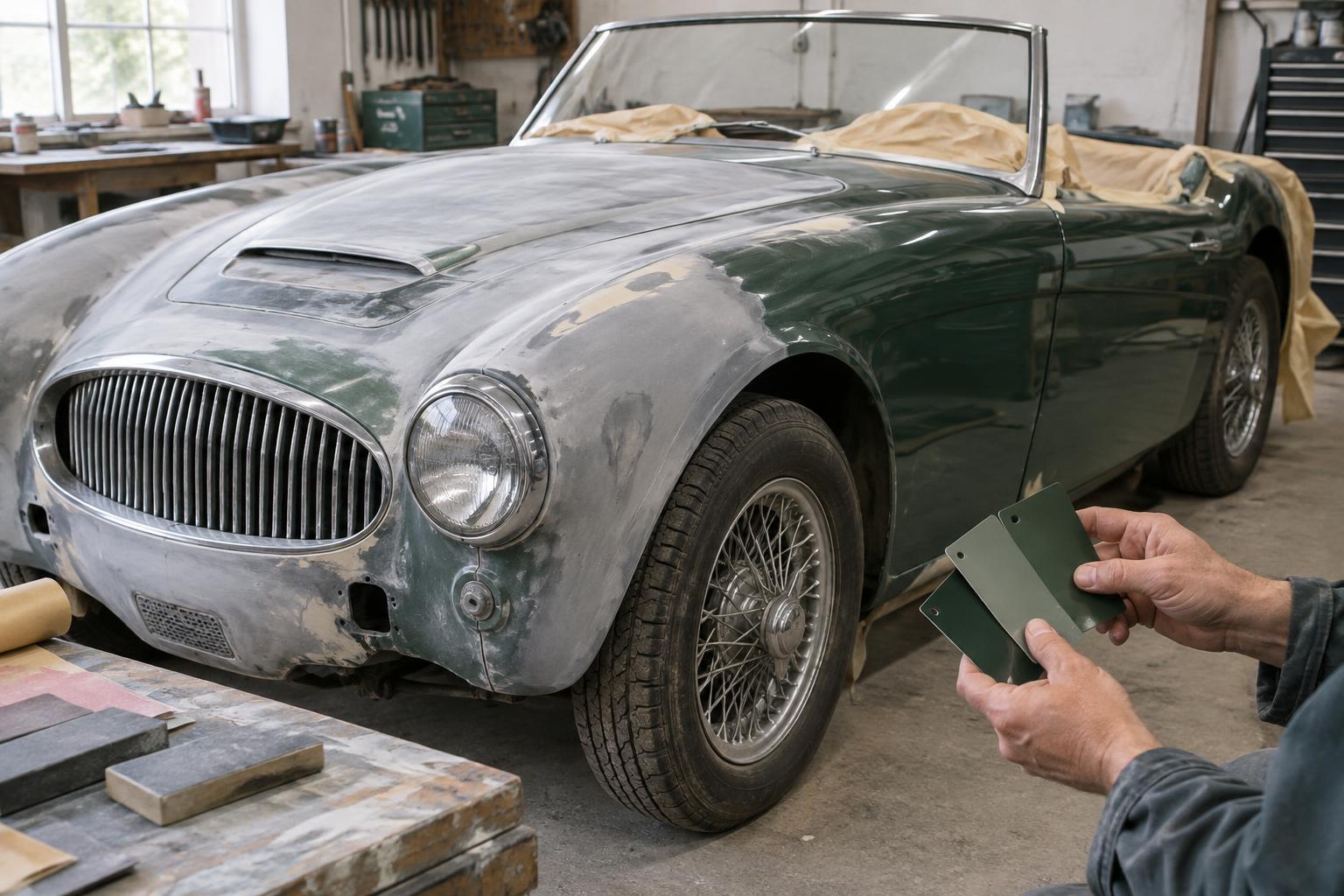
If originality matters, take clear photographs and retain a small record of the evidence before preparation removes it. Ask the paint shop how it will arrive at a final colour, and view a sprayed sample in daylight and shade where possible. A printed chart or screen image is less useful than a sample in the intended paint system. If you prefer a different period-appropriate colour, consider how it will look against any areas you do not plan to repaint.
Choose materials for the car and the workshop
Paint systems differ in appearance, application and repairability. Older finishes, including cellulose on some classics, may be part of the car’s character, while modern systems can offer other advantages in durability and consistency. The choice is not simply old versus new: the condition of the existing coating, the desired gloss and the workshop’s experience all matter. A skilled painter can discuss whether to retain sound paint, use an appropriate primer and apply a compatible topcoat, or strip back further.
Ask to see examples of the shop’s work on comparable cars, particularly around panel edges and curved surfaces. Discuss whether the target is a crisp, highly polished finish or one more sympathetic to the car’s era. Also confirm that the proposed products suit the shop’s facilities and the rules that apply to their use. Spraying and sanding can present serious exposure risks; appropriate controls and protective equipment belong in a properly planned job, not as an afterthought.
Treat preparation as the main event
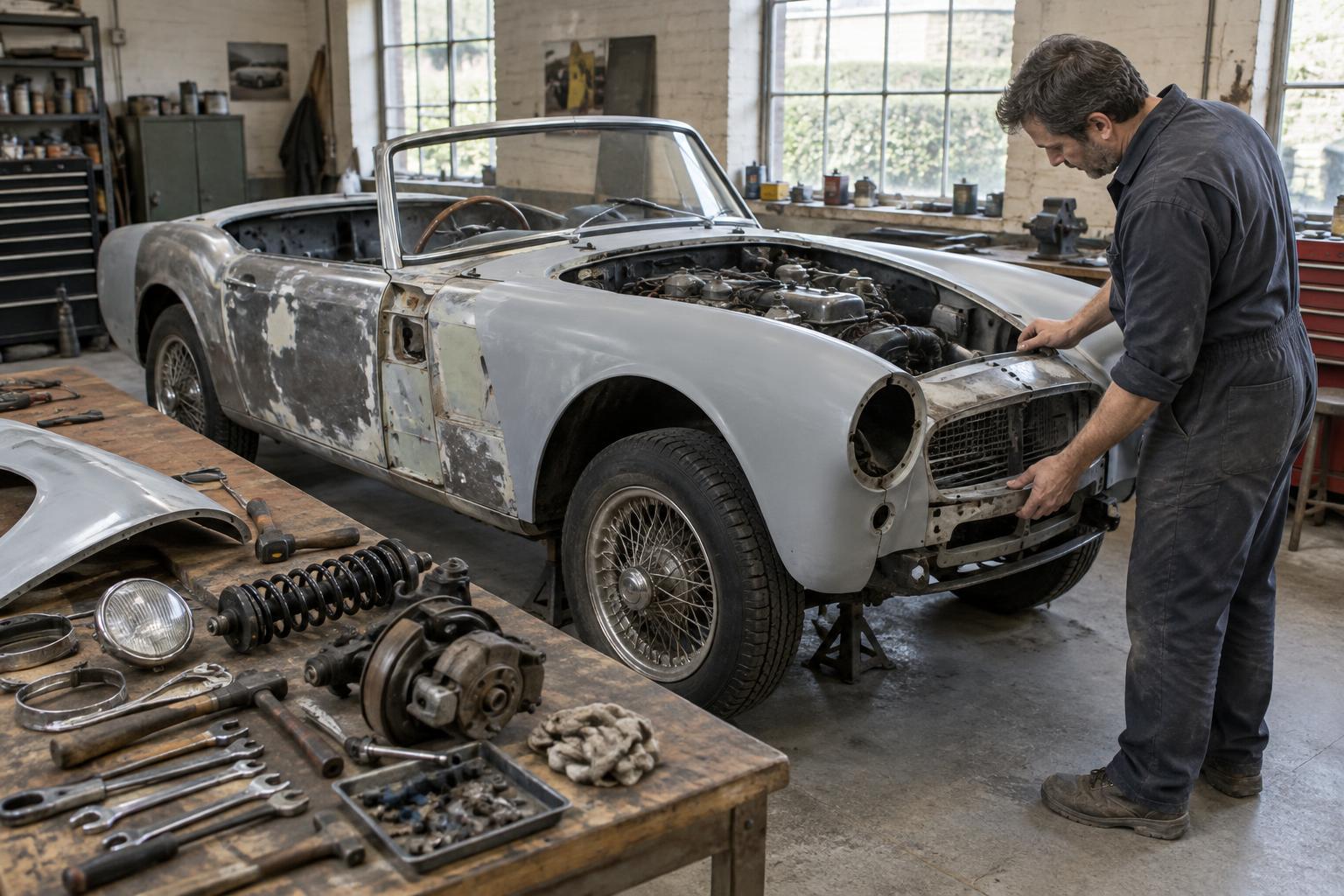
New paint will not conceal corrosion, poor repairs or uneven panels for long. Before committing to a finish, inspect the body with the workshop and identify bubbling, filler, cracking, misaligned panels and suspect seams. On an older car, removing trim or stripping paint may reveal problems that were not visible at the quotation stage. Agree how such discoveries will be photographed, priced and approved before additional work proceeds.
The preparation plan should cover metal repairs, cleaning, treatment of bare areas, filling where appropriate, priming and the fit of doors, bonnet and boot lid. Check gaps and alignment before final paint, when adjustment is less disruptive. Keep removed fittings labelled and stored safely, and decide whether tired seals, clips and badges will be reused or replaced. These small items can delay reassembly or spoil a fresh finish if they are overlooked.
Set a realistic scope and approve the result in stages
Ask for a written description of what the quote includes: dismantling, corrosion repairs, materials, painted areas, polishing and reassembly. It is sensible to separate known work from a contingency for defects that only become clear after stripping. Agree useful inspection points, such as after dismantling, after body repairs and before colour is applied. Photographs at each stage help you understand what has been done and provide a record for future ownership.
Before collecting the car, inspect it clean and dry in good light. Look at colour consistency, edges, panel fit and the areas agreed in the scope, rather than judging only the shine of broad panels. Ask when and how the new finish should first be washed or polished, following the painter’s guidance for the products used. Careful planning cannot eliminate every surprise in an old body, but it gives you and the workshop a shared definition of a successful finish.