Start with the car you intend to drive
Suspension and steering can be easy to overlook when a restoration is dominated by visible bodywork. Yet worn joints, tired springs, leaking dampers and deteriorated bushes can make a freshly finished car feel unsettled. Before buying parts, decide what you want from the completed vehicle: an enjoyable road car, a close match to its original specification, or something between the two. That choice will help you judge repairs and replacements consistently.
Write down what you know about the car before dismantling it. Note uneven tyre wear, play at the steering wheel, knocks over bumps and whether the car sits level. A short drive may be informative if the vehicle is already safe and roadworthy; otherwise, leave driving impressions until it has been checked. These observations are starting points, not diagnoses. Similar symptoms can have several causes, including tyre condition or previous repairs.
Assess the system, not just the obvious fault
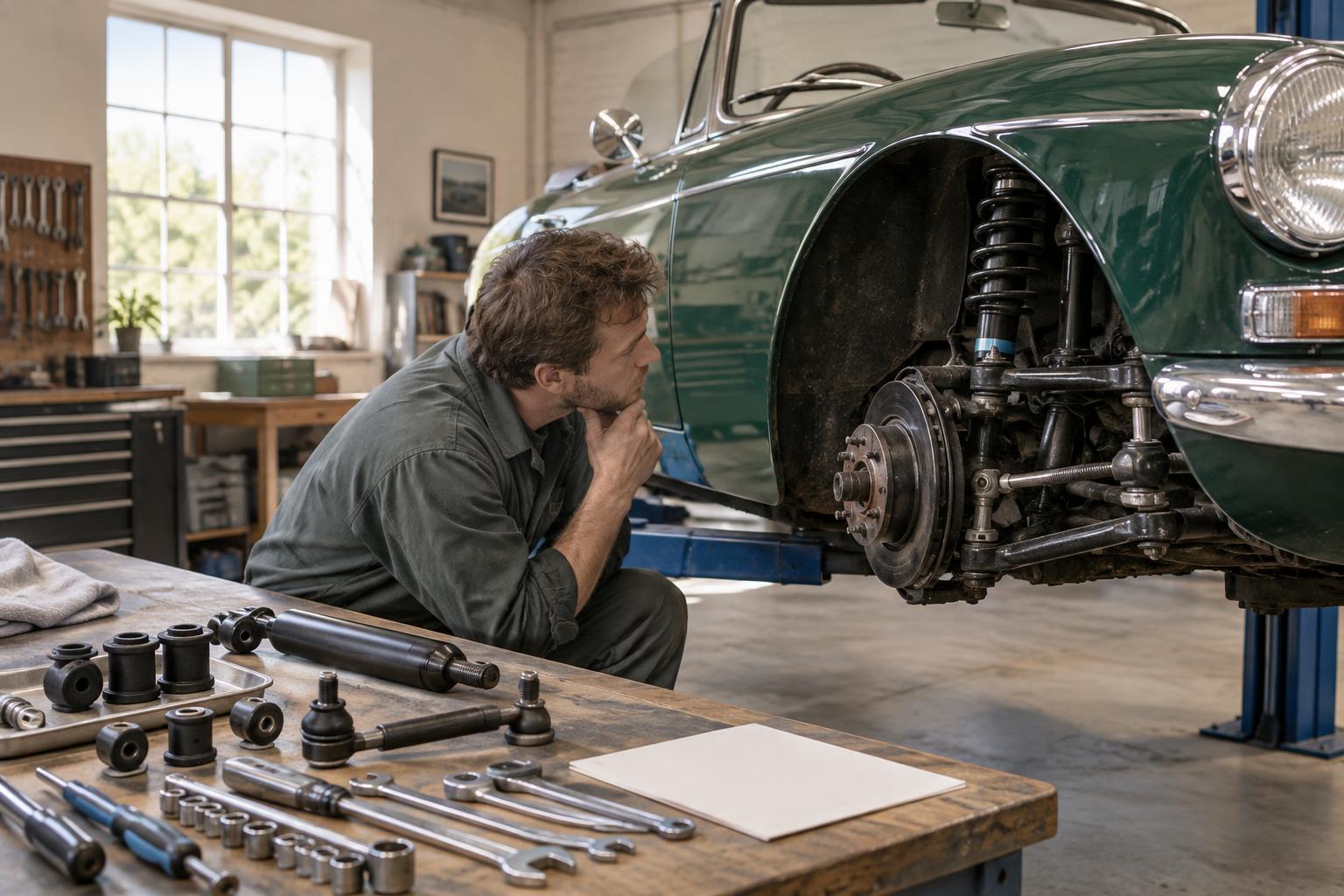
A restoration offers an opportunity to inspect components that are difficult to reach once the car is back together. Look at the condition and fit of suspension arms, springs, dampers, bushes, ball joints, steering links and their mounting points. Check for corrosion, damaged threads, missing hardware and signs of movement where parts should be secure. Record what you find with photographs and notes before removing anything, especially where washers, spacers or brackets have a particular arrangement.
Do not assume that replacing every part is necessary, or that a part is sound simply because it looks clean. A previous owner may have renewed some components but not their neighbours. Equally, a worn joint can affect the way other parts behave. If the structure around a mounting point is weak, deal with that problem before treating the suspension as a straightforward bolt-on job. Where condition or repair quality is uncertain, an experienced classic-car specialist can help establish a sensible scope.
Choose parts as a matched plan
Make a list by assembly rather than ordering one failed component at a time. Include associated bushes, seals, bearings and fasteners that may need attention when an assembly is apart. Check the exact model and specification before purchasing: classic cars can differ across production runs, and an older car may no longer carry all the components it left the factory with. Compare the parts on the vehicle with the replacements before fitting begins.
Think about how each choice affects the intended use. Firmer bushes or different dampers may alter noise and ride comfort as well as handling. Original-style components may better suit a car whose familiar road manners are part of its appeal. There is no universal best choice, so avoid mixing changes without considering their combined effect. Keep a record of part numbers, suppliers and decisions; it will be useful if you need to troubleshoot the finished car.
Fit the work into the wider restoration
Suspension and steering work should be coordinated with structural repairs, paint and underbody protection. Repair and verify mounting areas before installing refurbished assemblies. If the bodyshell is away for major work, agree who will remove, store and refit the running gear, and how exposed threads and mating surfaces will be protected. Clear responsibilities reduce the chance of damage or repeated work.
Allow time for cleaning and assessing parts after removal. Corrosion or an earlier improvised repair may only become apparent once an assembly is apart. Keep left- and right-hand components identified, even when they appear interchangeable. If work is spread over months, a simple record of what has been inspected, refurbished and fitted is more reliable than memory.
Treat reassembly as the beginning of the checks
A refreshed system still needs careful verification. Follow the correct specifications and procedures for the particular car, including any requirements for tightening components at their normal ride height. Confirm that steering moves freely, fasteners are secure, clearances are appropriate and nothing fouls through suspension travel. Steering and suspension are safety-critical: if you cannot verify the work with confidence, arrange for a competent specialist to inspect it before the car is driven.
Once the car is assembled, its ride height and wheel alignment may need checking, particularly if components or settings have changed. Begin with a cautious shakedown rather than a long tour, and investigate unexpected noises, pulling or changes in steering feel promptly. The goal is not merely to tick off a list of new parts. It is to finish with a car whose behaviour you understand and can trust on the road.