Understand where clearance matters
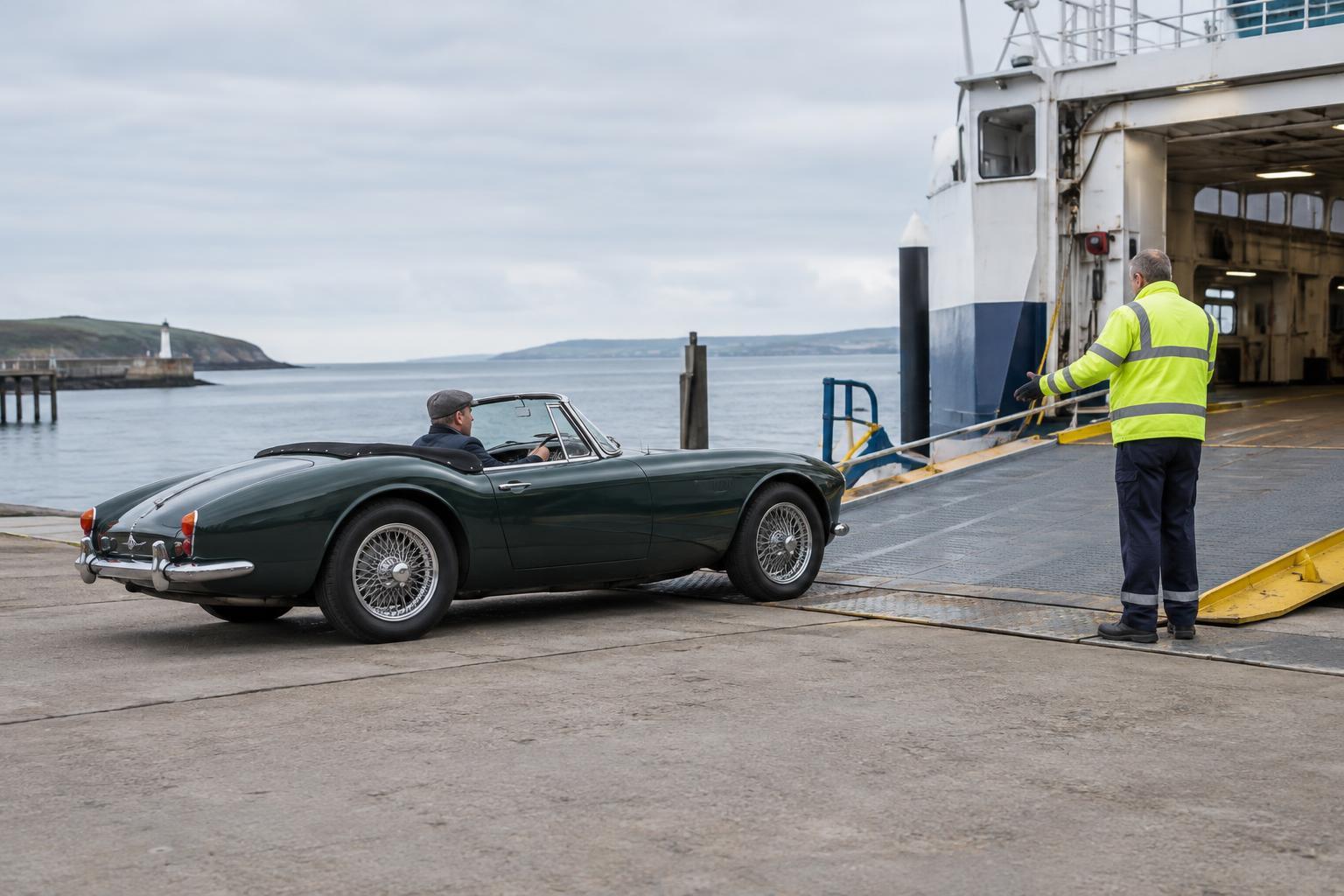
For a low-clearance classic, the challenge is not necessarily the ferry deck. It is often the change in angle between the quay, the loading ramp and the ship. A long front overhang can touch as the car starts to climb; a low exhaust or chassis member can catch as it passes over a crest. The same problem can arise in reverse when leaving the ferry.
Take a look beneath the car before planning the crossing. Note the lowest points, including the exhaust, sump, suspension components and any added spoilers or brackets. Also consider the car’s wheelbase and overhangs: two cars with similar ground clearance may behave differently on the same ramp. A fully loaded boot and two passengers can lower an older car noticeably, especially if its springs are tired.
Ask the ferry operator before booking
Contact the ferry operator with the car’s make and model, overall length, width, height and an honest description of its limited clearance. Explain any particular concern, such as a low-mounted exhaust or a long nose. Ask whether the route uses steep or changing ramp angles, whether a particular sailing or terminal may be more suitable, and what assistance staff can offer during loading. Conditions can vary with the vessel, berth, tide and loading arrangement, so a general reassurance may not apply to every crossing.
Ask how the vehicle should be recorded on the booking. A classic that is wider than expected, fitted with a luggage rack or towing a small trailer needs accurate dimensions. If the operator offers a way to note special loading needs, use it, then keep the booking details handy. Staff instructions on the day take priority over a plan made at home; if the approach looks unsuitable, stop before the ramp and ask for guidance rather than hoping the car will clear.
Prepare the car and pack with weight in mind
A routine inspection before departure helps separate a ramp problem from a mechanical one. Check tyre condition and pressures against the car’s usual guidance, look for loose exhaust mounts or underbody fittings, and make sure the brakes and handbrake work reliably. A loaded touring car should not be the first test of recently completed suspension work. If you already know the car scrapes on ordinary driveways, discuss the crossing with the operator well ahead of travel.
Pack so that heavy items are secure and do not unnecessarily burden one end of the car. Leave room to remove luggage if staff advise reducing the load, but do not unload or alter the car in a traffic lane without permission. Carry the essentials you may need away from the vehicle in a separate bag; access to the car deck may be restricted during the crossing. Before travelling, check the operator’s vehicle requirements and any documents relevant to your route.
Board slowly, with staff guidance
Arrive with time to spare and tell check-in or marshalling staff about the clearance concern. When called forward, leave space from the vehicle ahead so you can approach at a steady walking pace. Sudden acceleration, braking or steering can make a marginal approach harder to manage. Follow the crew’s directions about lane choice and alignment; do not attempt to take a ramp diagonally unless staff explicitly guide you to do so and there is room.
Keep windows open if it helps you hear instructions, and ask a passenger to watch for signals rather than trying to inspect the underside while driving. If you hear contact or feel the car hang up, stop and alert the crew. Forcing the car onward may cause more damage. Once parked, follow the crew’s instructions for securing the vehicle, applying the handbrake and leaving it in gear or park as appropriate. Switch off the engine and make a note of where you have parked.
Plan for the other end of the crossing
Disembarkation deserves the same care as boarding. The ramp angle may be different at the destination, and a car that boarded cleanly is not guaranteed to exit without difficulty. Let crew know if you remain concerned, wait for clear instructions and resist pressure to keep pace with faster traffic. After reaching level ground in a safe place, check for fresh scrapes, leaks or loose fittings before beginning a long drive.
Build some flexibility into the touring day. A ferry crossing involves queues, manoeuvring and unfamiliar surfaces, none of which rewards haste in an older car. With accurate booking details, a sound vehicle and a willingness to ask for help before committing to a ramp, the crossing can remain an enjoyable part of the journey rather than an anxious obstacle.