Make the drive the destination
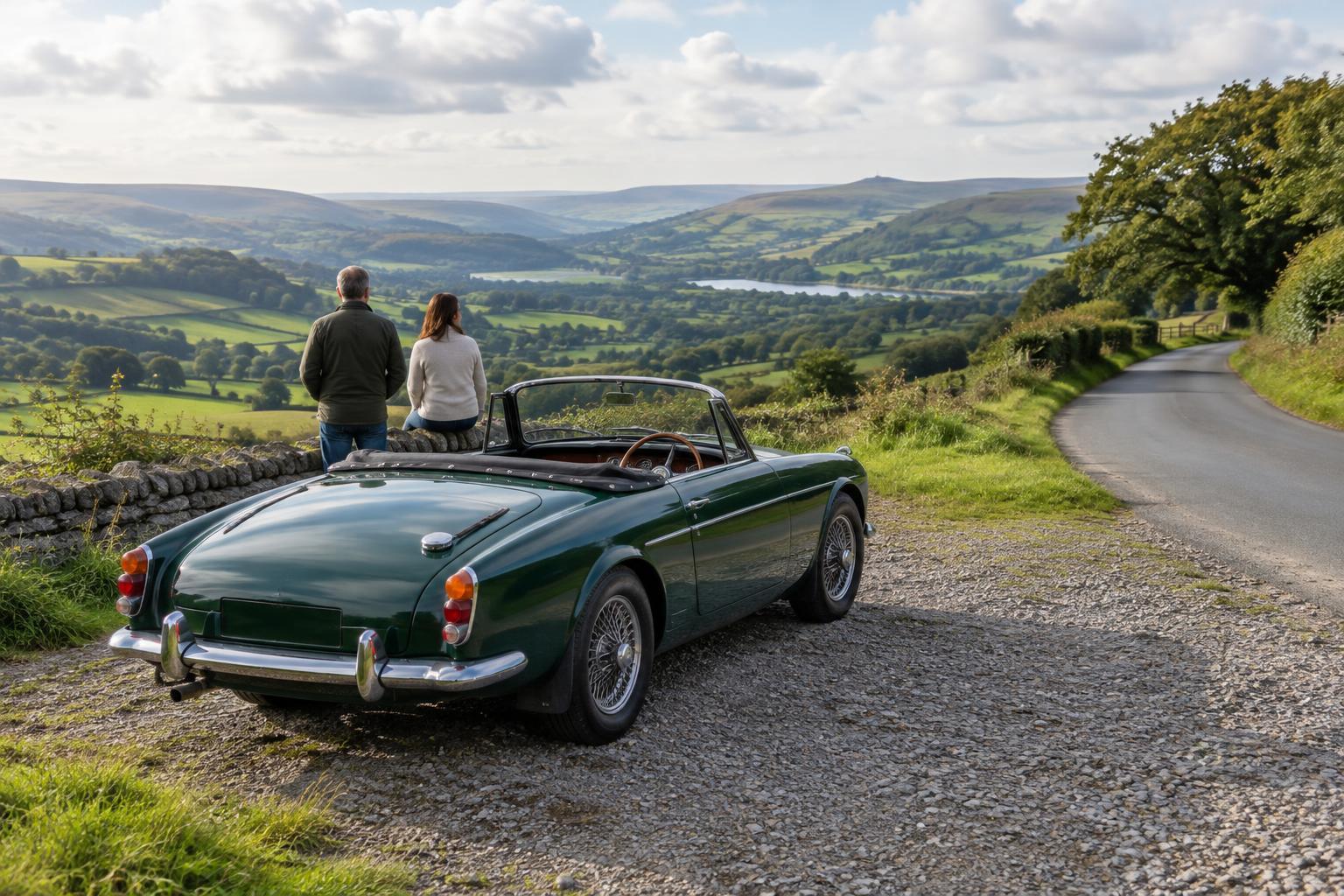
For a first day trip, choose a route that sounds enjoyable at a modest pace rather than one designed to cover impressive mileage. A British classic may be happiest on flowing A-roads and quieter lanes, but narrow roads, town centres and summer traffic can make progress slower than a map suggests. A café, viewpoint or village makes a good destination; reaching it need not be the whole purpose of the day.
If the car is new to you, or has recently returned to the road, begin with a loop close enough to home that you can shorten it easily. Think in terms of driving time rather than distance alone. A short route with a scenic diversion and a proper lunch stop may feel more satisfying than a long out-and-back run. Leave space to pull over for a photograph, adjust the hood or simply take a break.
Choose a distance with room to change your mind
Build a route around two or three manageable legs. That gives the driver and passengers natural chances to stretch, get warm or cool down, and decide how the car is behaving. Plan a shorter alternative after the first stop and a straightforward route home from the main destination. You do not have to use either, but knowing they exist removes pressure to press on when you are tired or the weather turns.
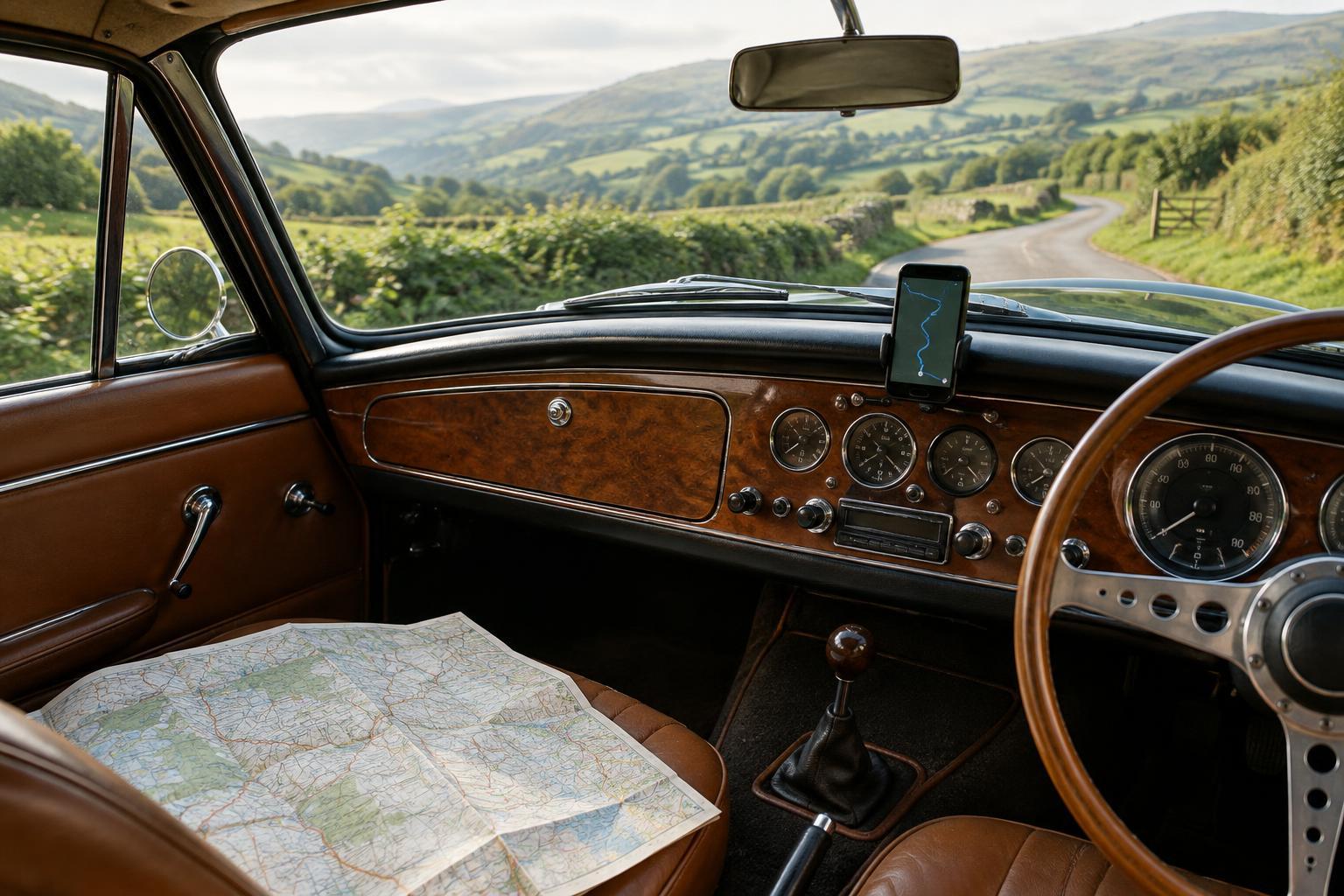
Consider what the route asks of the car as well as how far it goes. Steep hills, stop-start traffic and long high-speed stretches can be more demanding than easy miles at a steady pace. If you are unsure how the car will cope, avoid making a remote or complicated road the only way home. Carry a map or saved directions in case phone reception is patchy, and let someone know your broad plan if you are travelling alone.
Plan stops that are useful, not just picturesque
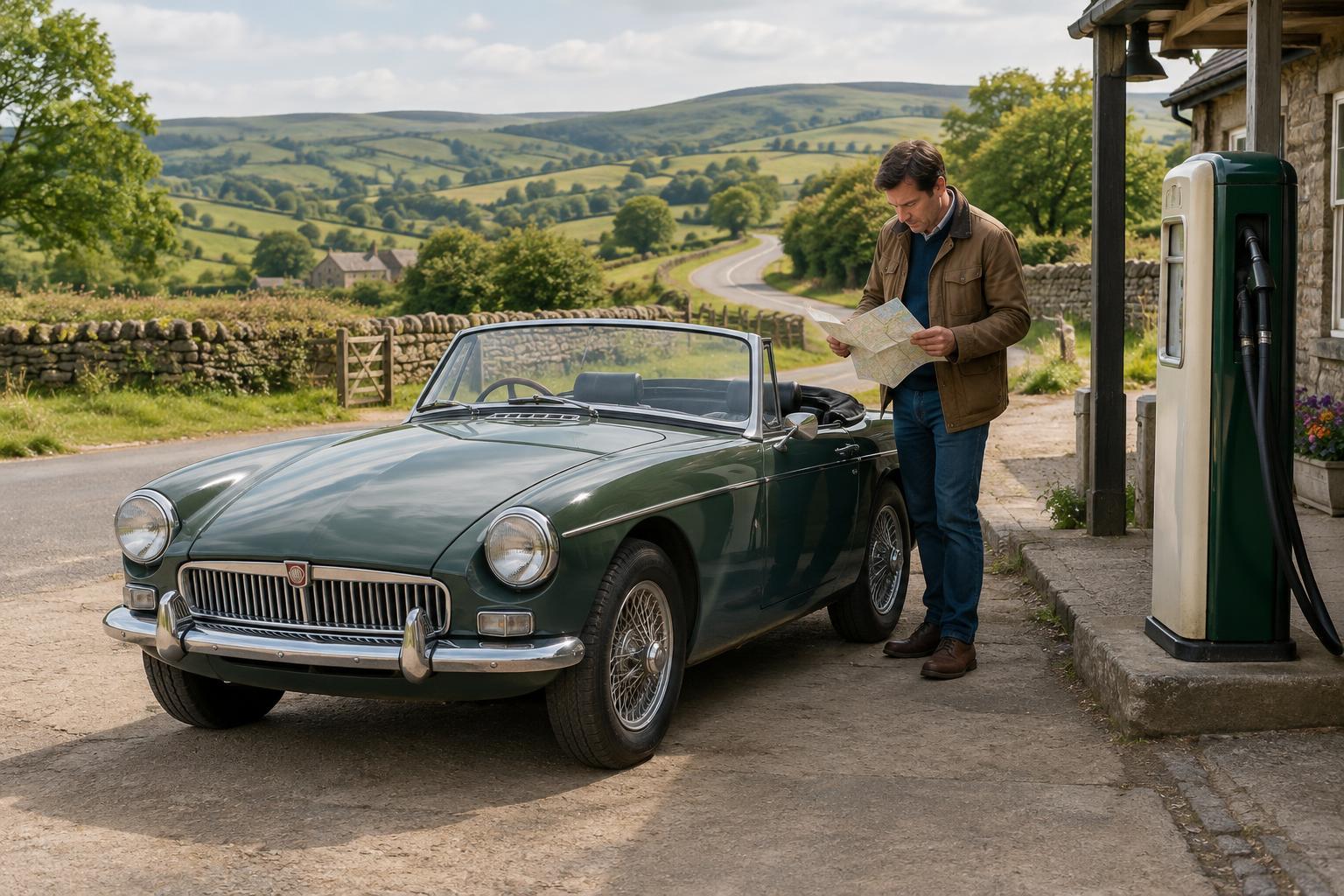
A good stop has somewhere sensible to park, facilities you might need and enough time to enjoy being there. Before setting off, check the opening hours of any place that matters to your plan; do not assume a café or attraction will be available when you arrive. It is also worth identifying a fuel stop before the gauge becomes a concern, especially if you do not yet know the car’s typical range.
On a first trip, allow a few minutes at each stop to look around the car. Check for anything unusual beneath it, notice any new smells, and pay attention to changes in how it starts or runs. There is no need to turn every pause into an inspection. The aim is to learn what is normal for your particular car while giving everyone a chance to rest.
Treat daylight as part of the route
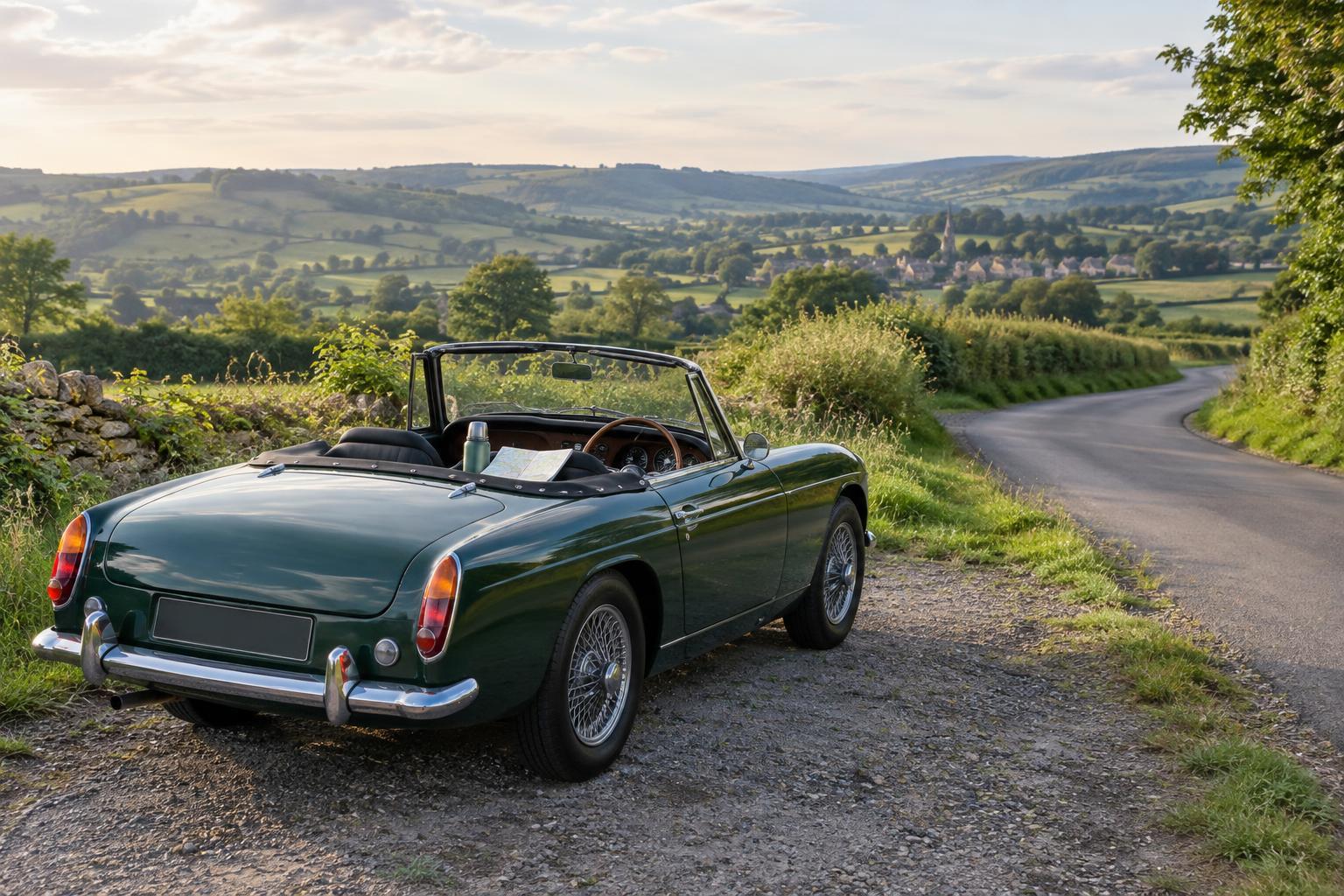
Work backwards from when you would like to be home, not merely from when you hope to reach lunch. Include time for stops, a slower-than-expected road and an unhurried final leg. Daylight is especially valuable on unfamiliar lanes, where bends, surface changes and entrances can be harder to judge after dusk. A daylight return also gives you more time to deal calmly with a delay.
Check the forecast and the day’s sunset time before you leave, then be willing to revise the plan. In an open car, a pleasant afternoon can become chilly late in the day; in any classic, rain or mist may make an unfamiliar return less appealing. If the schedule begins to slip, skip a diversion rather than trying to recover time by rushing. The best route is one you can still enjoy on the way home.
Prepare the car, then keep the day simple
Before departure, make the routine checks appropriate to your car: tyres, fluid levels, lights, wipers and fuel are sensible starting points. Make sure the spare, tools or repair equipment you rely on are present and usable. Bring water, suitable clothing, a charged phone and any small supplies the car normally needs. If you have noticed a fault on recent drives, investigate it before committing to a longer outing rather than hoping the trip will resolve it.
Finally, set expectations with your passengers. A classic-car day out may include extra stops, a slower cruising pace and a change of plan. That flexibility is part of its appeal. With a modest distance, useful stopping points and daylight in reserve, your first trip can be a chance to get to know the car and discover which kinds of road you most enjoy together.