Plan for the car in pieces, not just the car
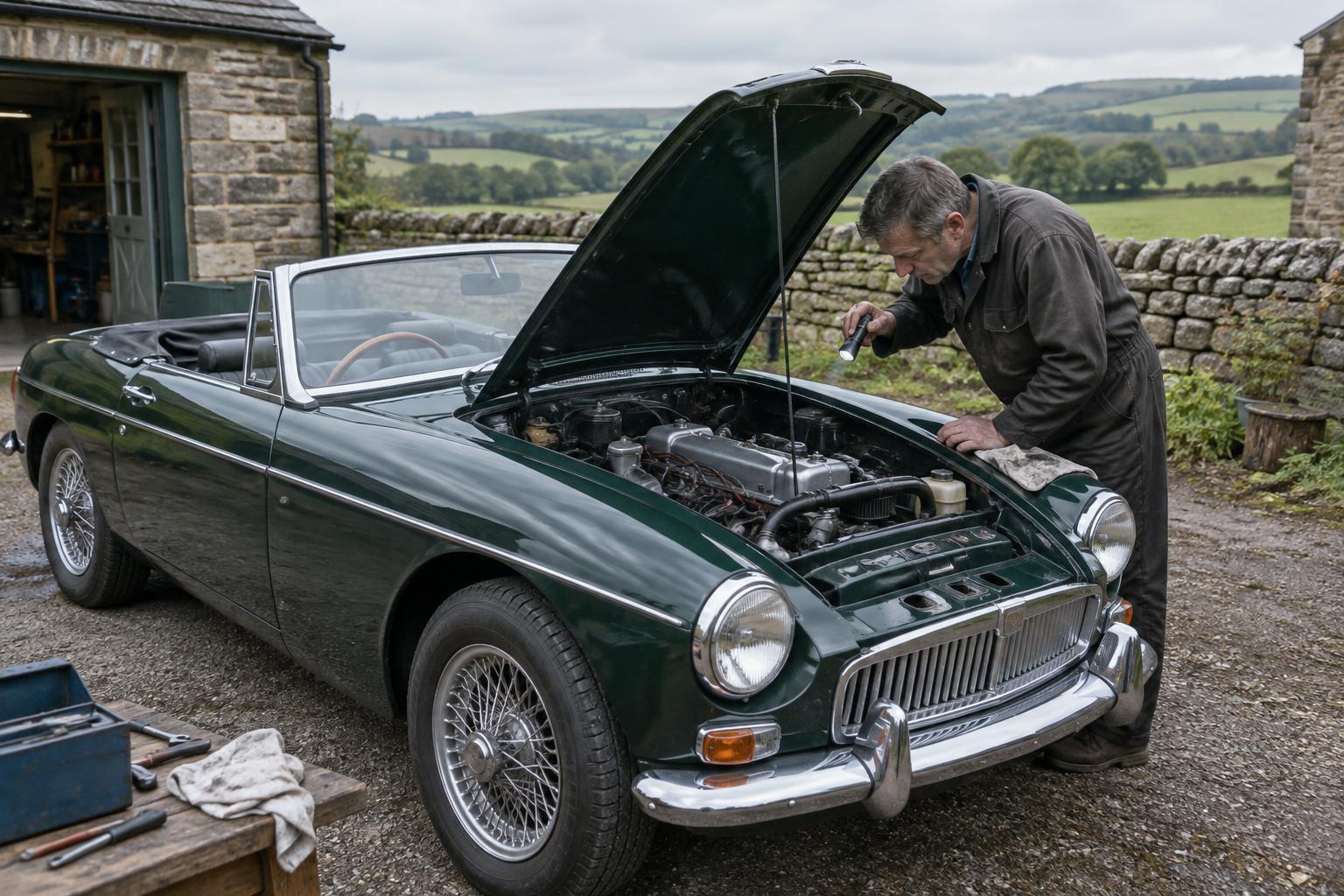
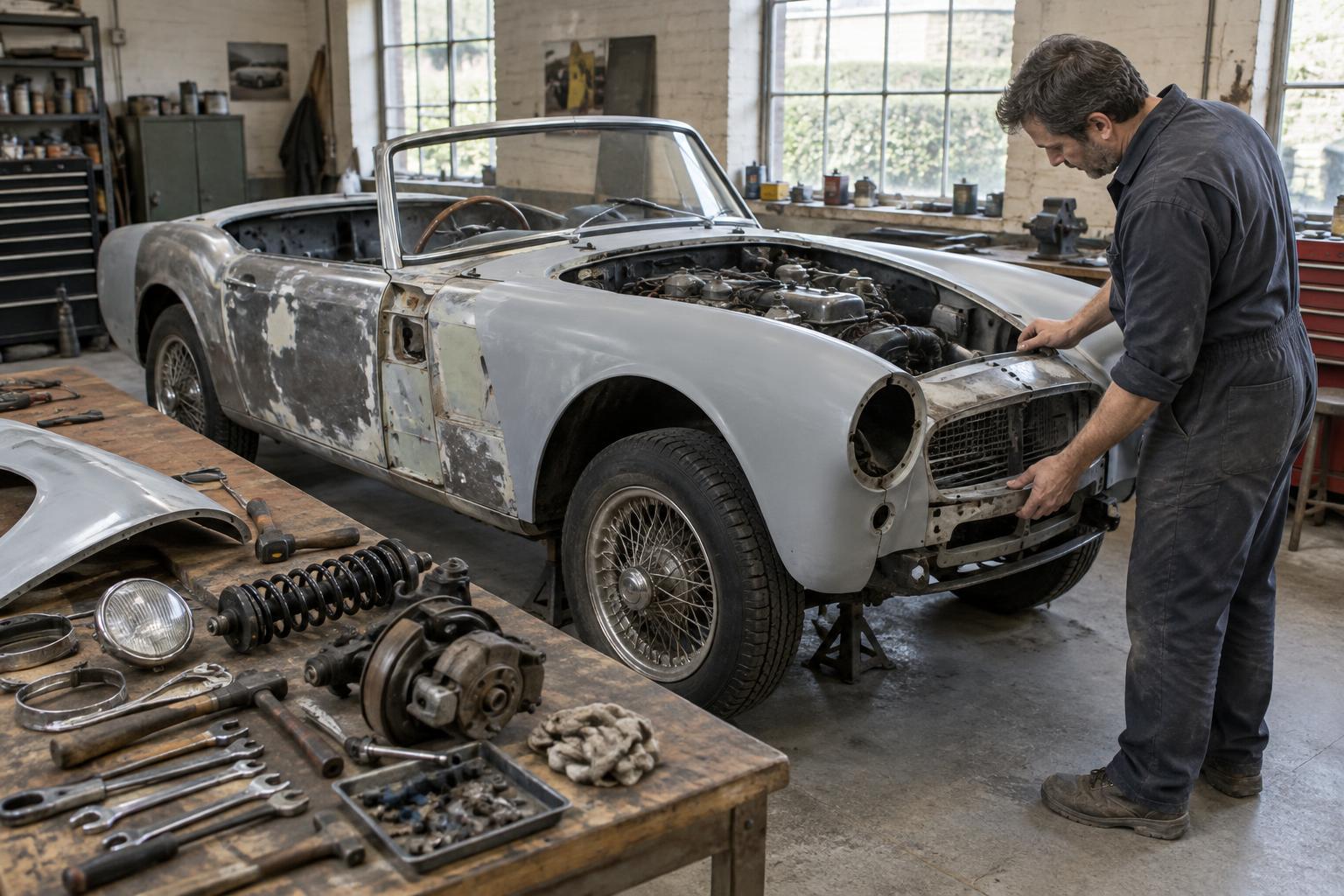
A classic car may fit neatly into a garage when complete, yet leave surprisingly little working room once its doors are open, panels are removed and parts are laid out. Before starting a long-term restoration, measure the space around the parked car. Allow room to walk around it, use tools and move a trolley without stepping over parts. Think about where a removed bonnet, seats or a gearbox could rest without blocking the exit.
Keep a clear route to the door and to any electrical controls you might need to reach quickly. Good lighting matters as much as floor area: overhead lights help with general work, while portable task lights reveal details beneath the dashboard or in an engine bay. Choose lights suited to workshop use, and route their cables where they will not be crushed, cut or tripped over. A dry, reasonably level floor makes lifting and moving equipment easier to manage.
Make lifting and access deliberate
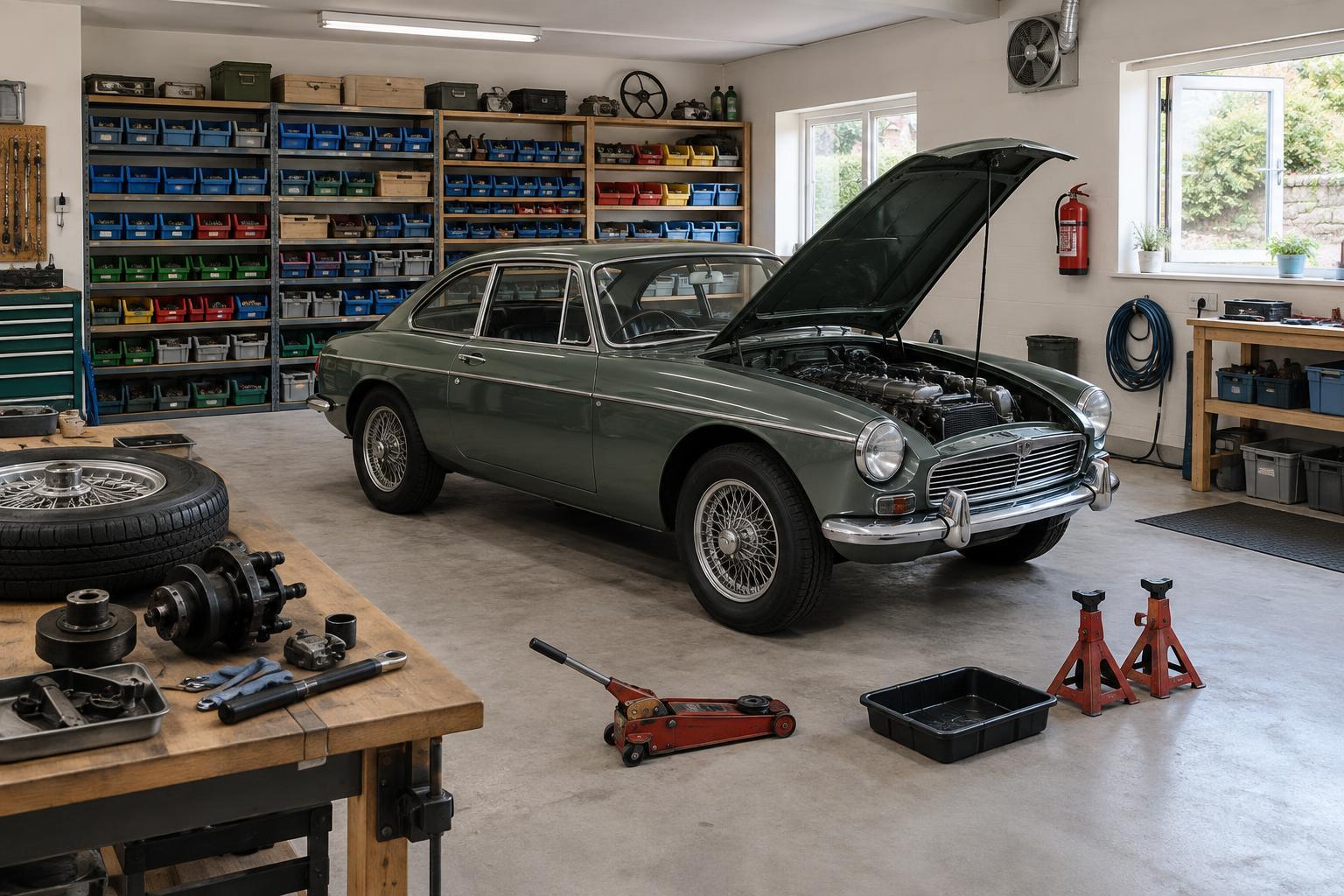
Work beneath a car deserves particular care. Use lifting equipment appropriate to the vehicle and the task, on a surface that can support it. Never rely on a hydraulic jack alone to hold a car while anyone is underneath. Position suitable stands at sound support points, follow the equipment instructions and check stability before beginning work. On an older vehicle, corrosion or previous repairs may make an apparently convenient lifting point unsuitable.
Decide early which jobs can be done safely in your space. Removing a heavy drivetrain, lifting a body or working on major structural corrosion may call for equipment, assistance or specialist premises that a domestic garage cannot provide. Leaving enough room to stop a job and lower or secure the car is better than arranging the workshop so tightly that every task becomes a manoeuvre.
Control air, ignition sources and spills
Restoration work can put dust, vapours and fumes into a small room. Ventilation should be part of the workspace plan, but an open door alone is not a reliable solution for every task. Read product labels and equipment instructions before using cleaners, paints or adhesives. Abrasive dust and old coatings may present risks that are difficult to assess by sight; if their composition is uncertain, seek competent guidance before disturbing them. Spray painting and other high-exposure work may be better left to a properly equipped facility.
Keep fuel, solvents and oily waste away from heaters, sparks and hot work. Store products in their labelled containers, close them after use and avoid keeping more than the project needs. Have a suitable fire extinguisher accessible and know when to leave rather than attempt to fight a fire. Welding, grinding and cutting need a cleared work area and particular attention to hidden trim, wiring and residues on the other side of a panel. A spill kit or absorbent material close at hand also makes small leaks easier to contain promptly.
Give every part a place to go
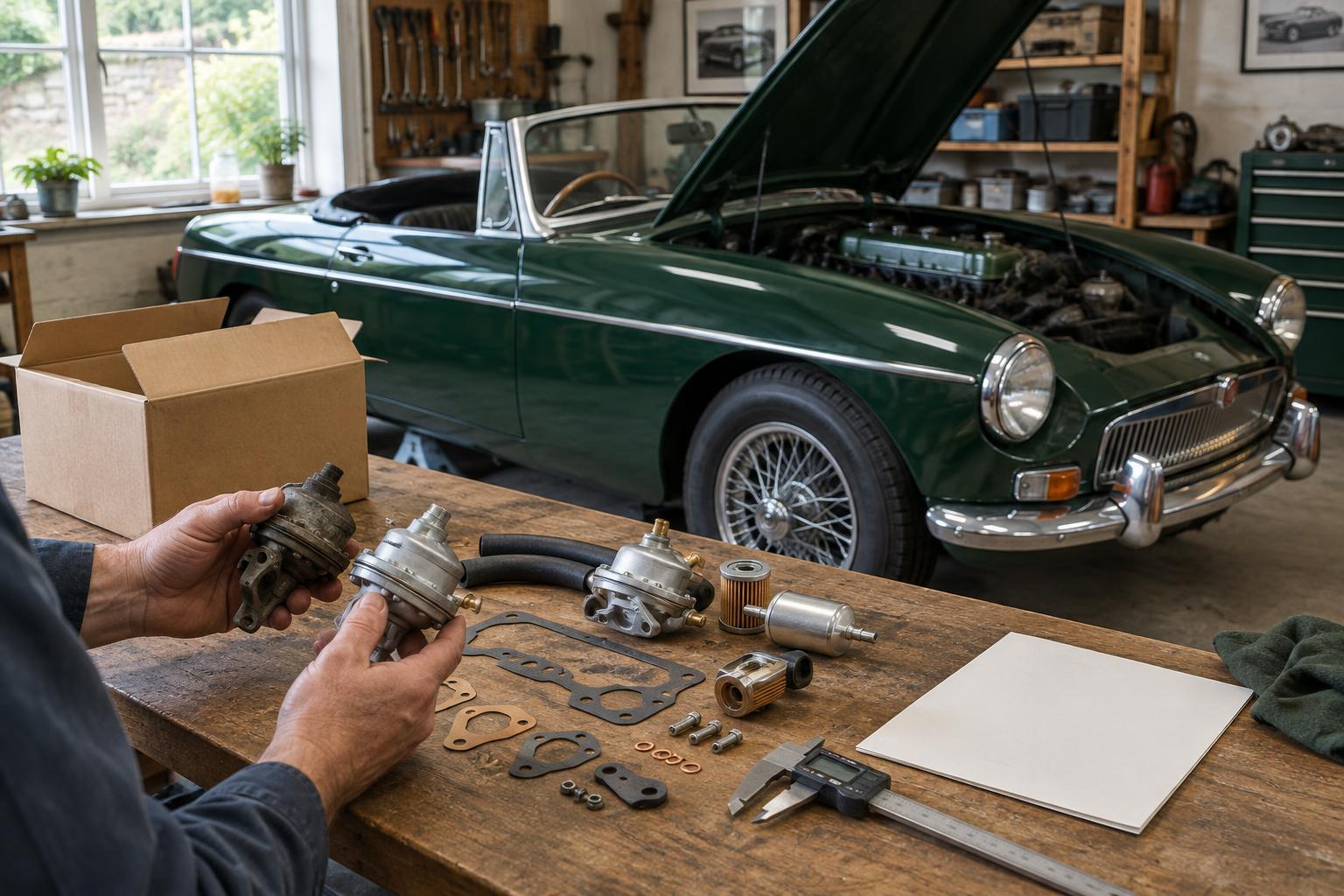
A restoration often stalls not because a component is difficult to remove, but because its fasteners, shims or orientation are forgotten months later. Set up shelves and sturdy bins before dismantling begins. Bag small fixings by assembly, label them in plain language and take photographs as parts come off. Keep an inventory that notes where larger components are stored and which items need inspection, repair or replacement.
Store heavy parts low down, and make sure shelves are secure and not overloaded. Protect fragile trim and glazing from accidental knocks; keep cleaned components separate from dirty ones. Leave a dedicated bench area for the current job rather than letting every available surface become permanent storage. This makes it easier to notice a missing fastener or a tool left inside an assembly.
Build routines that still work a year later
A long-term project benefits from a short end-of-session routine. Put tools away, cap containers, collect sharp offcuts, check for leaks and leave the car stable. Disconnect or make safe any temporary electrical setup before leaving the workspace. If work is paused mid-repair, attach a clear note to the car so that nobody assumes a disconnected brake line, loose wheel or unsupported component is ready for use.
Treat the workspace plan as something to revise. As the car moves from dismantling to metalwork and then reassembly, the main hazards and storage needs change. A periodic clear-out, a check of lighting and equipment, and an updated parts list can prevent small compromises from becoming normal practice. The aim is not a showroom-perfect garage, but a space where you can find what you need, work without unnecessary risks and return to the project with confidence.