Why occasional use calls for a fuel routine
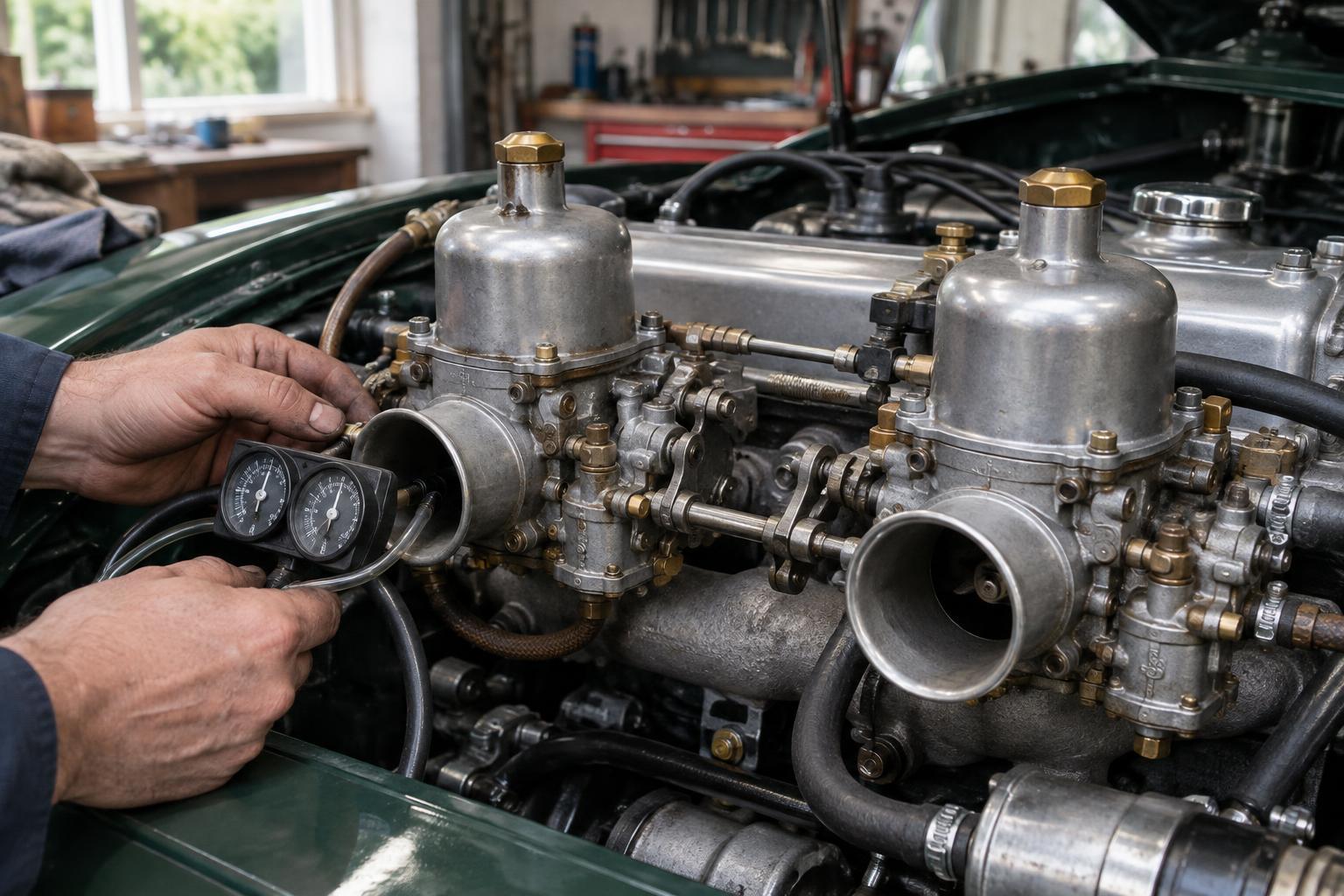
A classic car that sits for weeks or months needs a different fuel routine from one driven regularly. Petrol can change during storage, particularly where it is exposed to air. Lighter components may evaporate, and residue can collect in small passages such as carburettor jets. How quickly this becomes troublesome depends on the fuel, the car’s fuel system and its storage conditions; there is no single deadline after which petrol is unusable.
Possible clues include difficult starting, uneven running or hesitation after a long lay-up. Those symptoms have other potential causes, though, so avoid treating stale petrol as a certain diagnosis. A strong smell of petrol is a different matter: it may indicate a leak and deserves attention before the engine is started or the car is driven.
Plan ahead before parking the car
The simplest way to reduce fuel-related trouble is to plan around realistic use. If you expect to drive the car again soon, aim to leave it with fuel you will use rather than repeatedly topping up old petrol. Before a longer lay-up, consider whether a fuel stabiliser is appropriate for your car and fuel. Follow the product instructions and the vehicle’s guidance; adding more than directed is not a substitute for a sound storage plan.
Advice to leave a tank full is not universal. Reducing the air space may help in some systems, but older cars differ in tank design and venting, and petrol needs room to expand. Never overfill. Store the vehicle in a suitable, well-ventilated place away from flames, heaters and other ignition sources. If storage will be prolonged, ask a knowledgeable specialist about the best approach for your particular tank, pump and carburettor arrangement.
When bringing a car back into use, check its condition before assuming a fresh top-up will solve rough running. If the petrol smells markedly different from fresh fuel, or the car runs poorly after storage, seek advice before attempting to drain or dismantle the system. Unwanted petrol needs appropriate handling and disposal; it should not go into household drains or onto the ground.
Inspect hoses without disturbing the system
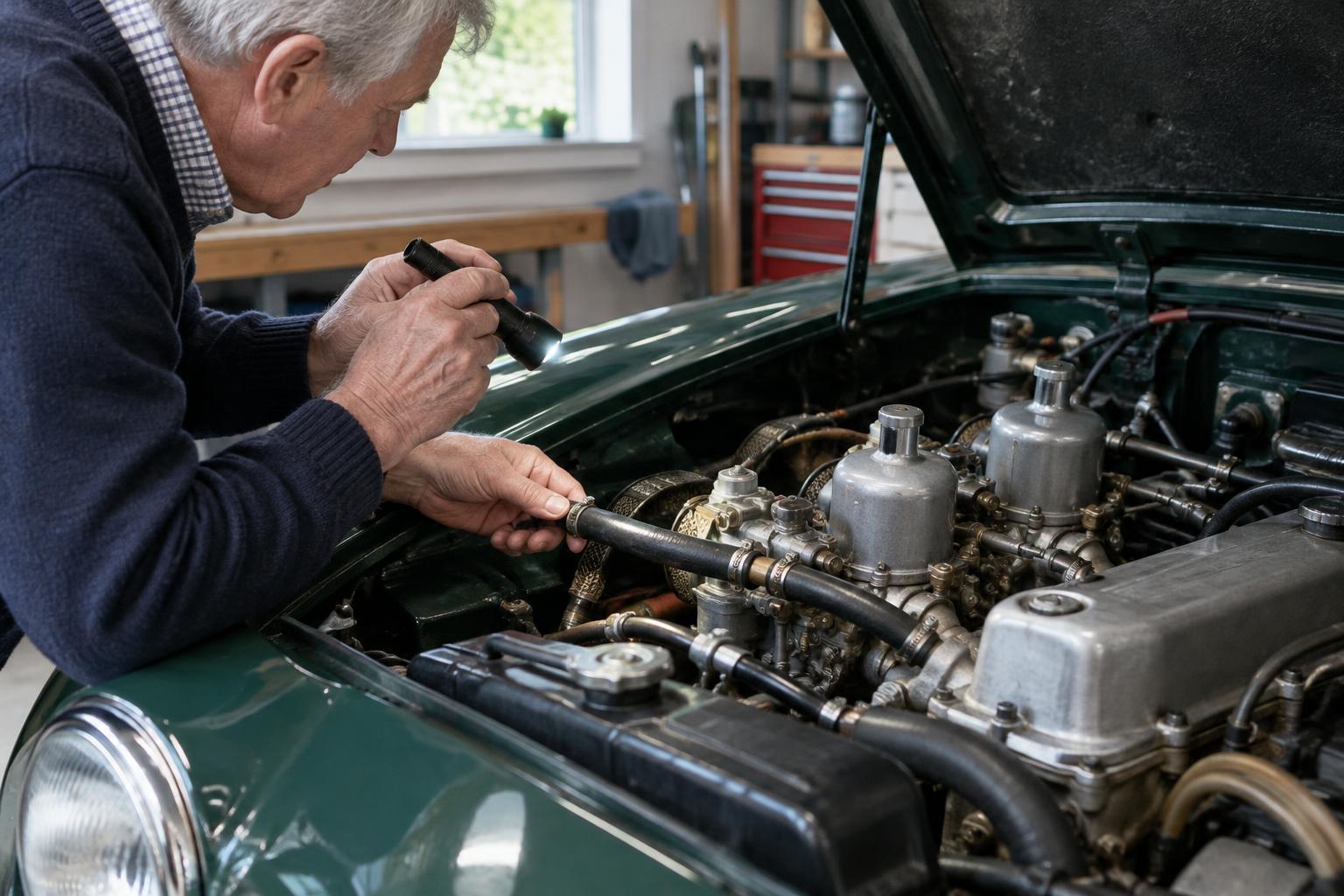
Fuel hoses deserve a visual check even when the car starts and runs well. With the engine off and cool, in good light and a ventilated area, trace the accessible flexible sections between the tank, pump, filter and engine. Look for cracks, splits, swelling, damp patches, staining, abrasion and hoses that are kinked or stretched. Check where a hose meets a metal pipe or fitting, as movement and chafing can cause trouble at those points.
Do not rely on appearance alone to judge age or suitability. A hose may look tidy externally while its material has deteriorated, and a replacement must be suitable for petrol and for the pressures and routing of that particular system. Owners of cars with modified or fuel-injected systems should be especially cautious: pressurised fuel systems need procedures and components appropriate to their design. An uncertain hose specification is a good reason to consult a specialist rather than fit a convenient-looking length of tubing.
Avoid pulling on hoses or loosening connections as part of a casual inspection. Fuel may remain in lines after the engine stops. If you need to see beneath the car, never rely on a jack alone; have it safely supported or let a workshop perform the check.
Treat leaks as a stop-and-check problem
A wet hose, visible drip or persistent petrol smell is a reason not to start or drive the car. Keep ignition sources away and arrange for the fault to be assessed. Do not assume that tightening a clip will fix it: the hose, fitting or nearby pipe may be damaged, and an overtightened clip can create another problem.
Once a repair has been made, the entire affected run should be checked for secure routing, protection from sharp edges and clearance from hot or moving parts. It is also worth confirming that the repair has not left a second old hose hidden farther along the system. A planned inspection before touring season is far less disruptive than discovering a fuel fault at the roadside.