Choose the buying route that suits you
A classic car is rarely a purchase you can judge from a description alone. Two examples of the same model may differ greatly in corrosion, past repairs, originality and how they drive. Before choosing where to shop, decide what you want from the car: a usable weekend companion, a restoration project or something in between. Be honest about your ability to inspect it and the time you have to put faults right.
Private sales, dealers and auctions can all lead to a satisfying purchase. None guarantees a bargain or a sound car. The most useful question is not simply which route has the lowest asking price, but which gives you enough opportunity to understand the car before you commit. Leave room in your budget for transport, initial servicing and surprises; spending everything on the purchase itself can make an otherwise enjoyable classic feel like a burden.
Private sales: time to learn, but more to check yourself
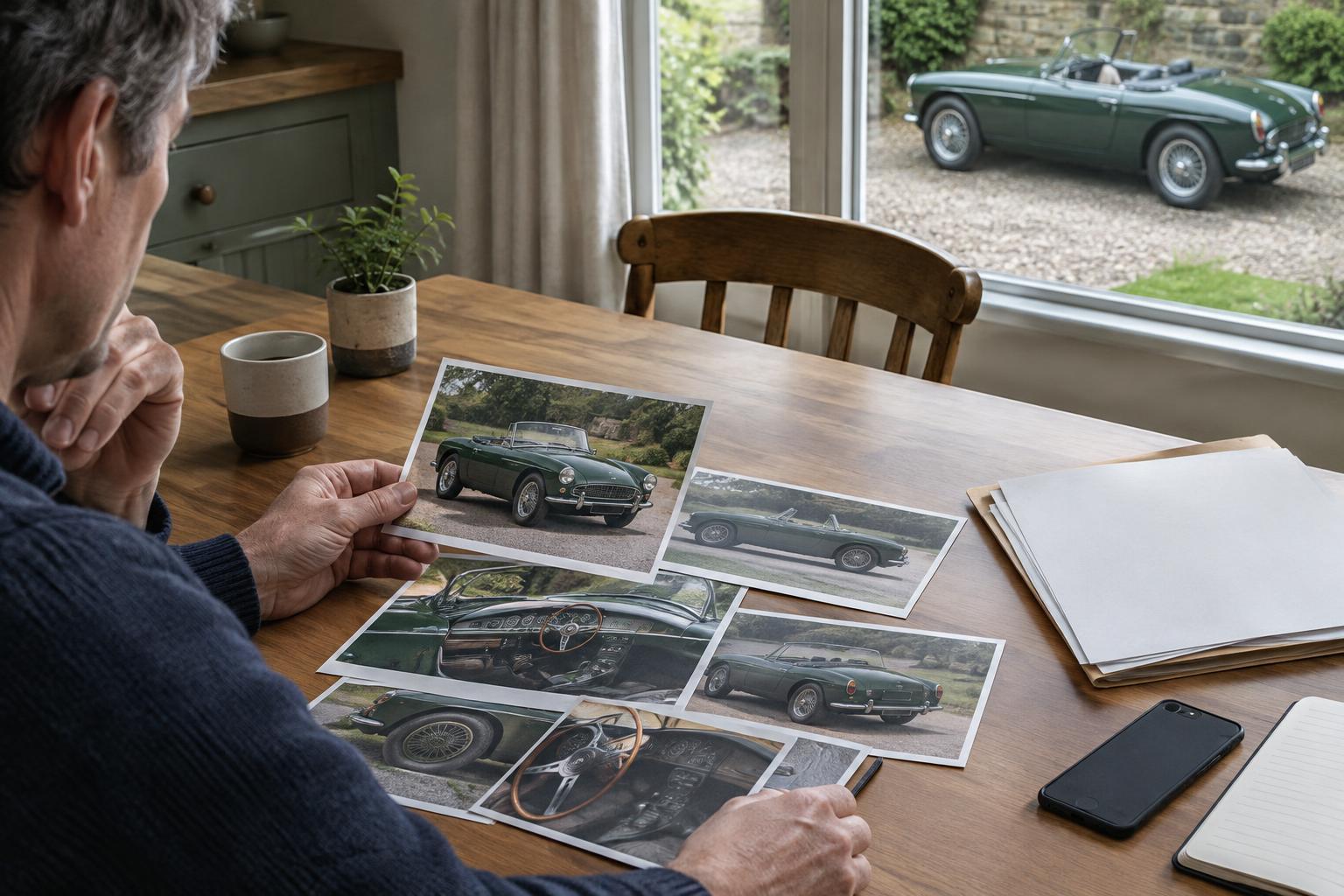
Buying from a private owner can give you a valuable conversation about how the car has been used and maintained. A seller who has lived with it may know which jobs were completed, which parts came with it and what still needs attention. Ask specific, open questions, then compare the answers with invoices, photographs and the car itself. A thick folder is helpful, but it is not a substitute for checking the condition today.
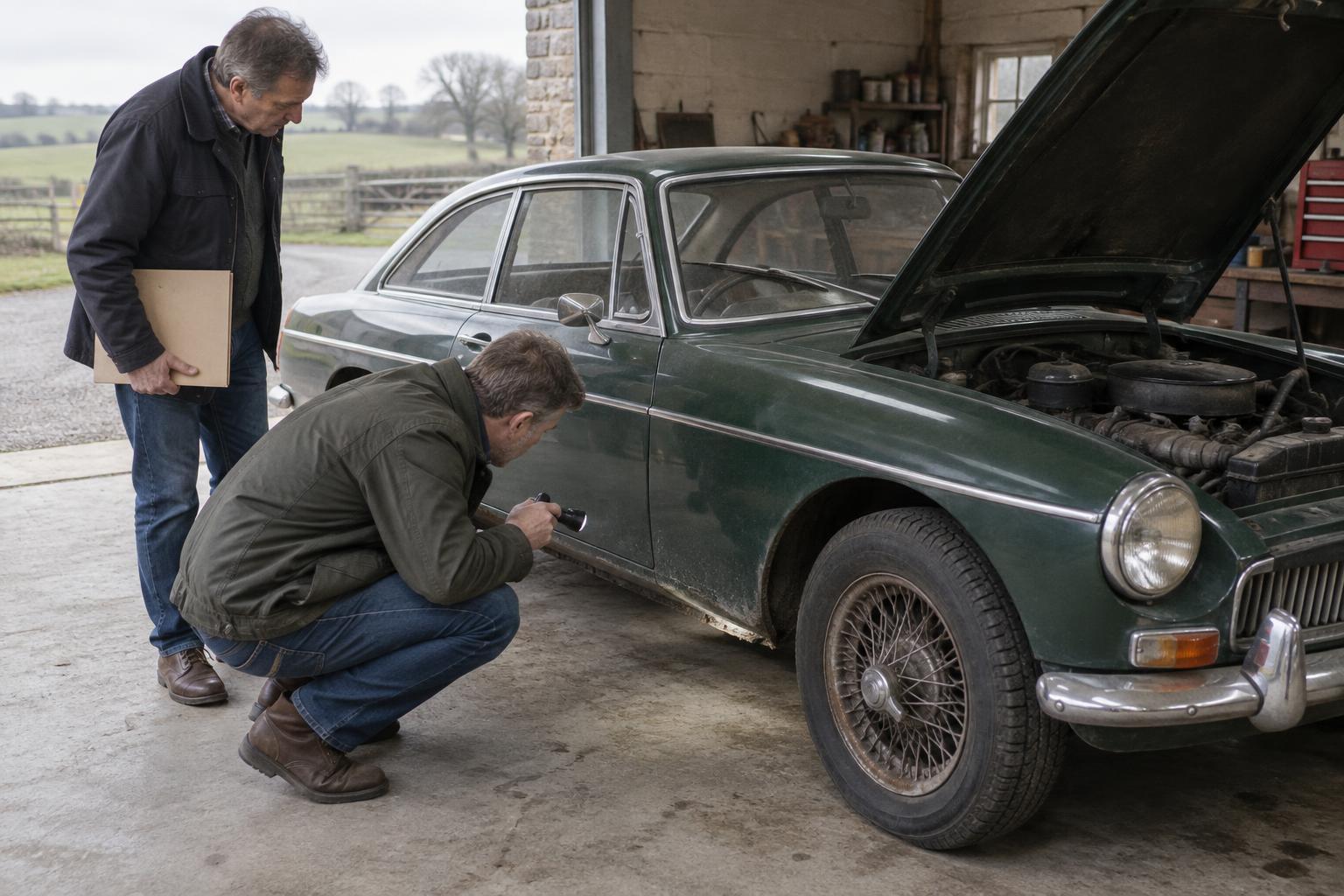
Arrange to see the car in good daylight and, if possible, start with a cold engine. Look beyond polished paint: inspect accessible areas for corrosion, uneven repairs, fluid leaks and worn trim. Take a proper test drive where practical, noting how it starts, steers, brakes and behaves when warm. If you do not know the model well, bring a knowledgeable companion or arrange an independent inspection.
A private sale may offer flexibility over price, especially when you can explain the cost of visible work. It also places more responsibility on you to establish what is being sold and to keep a clear record of the agreed terms. Check that identifying details and documents match the car, and do not feel obliged to make a decision while standing on the seller’s driveway.
Dealers: convenience is useful, not a substitute for inspection
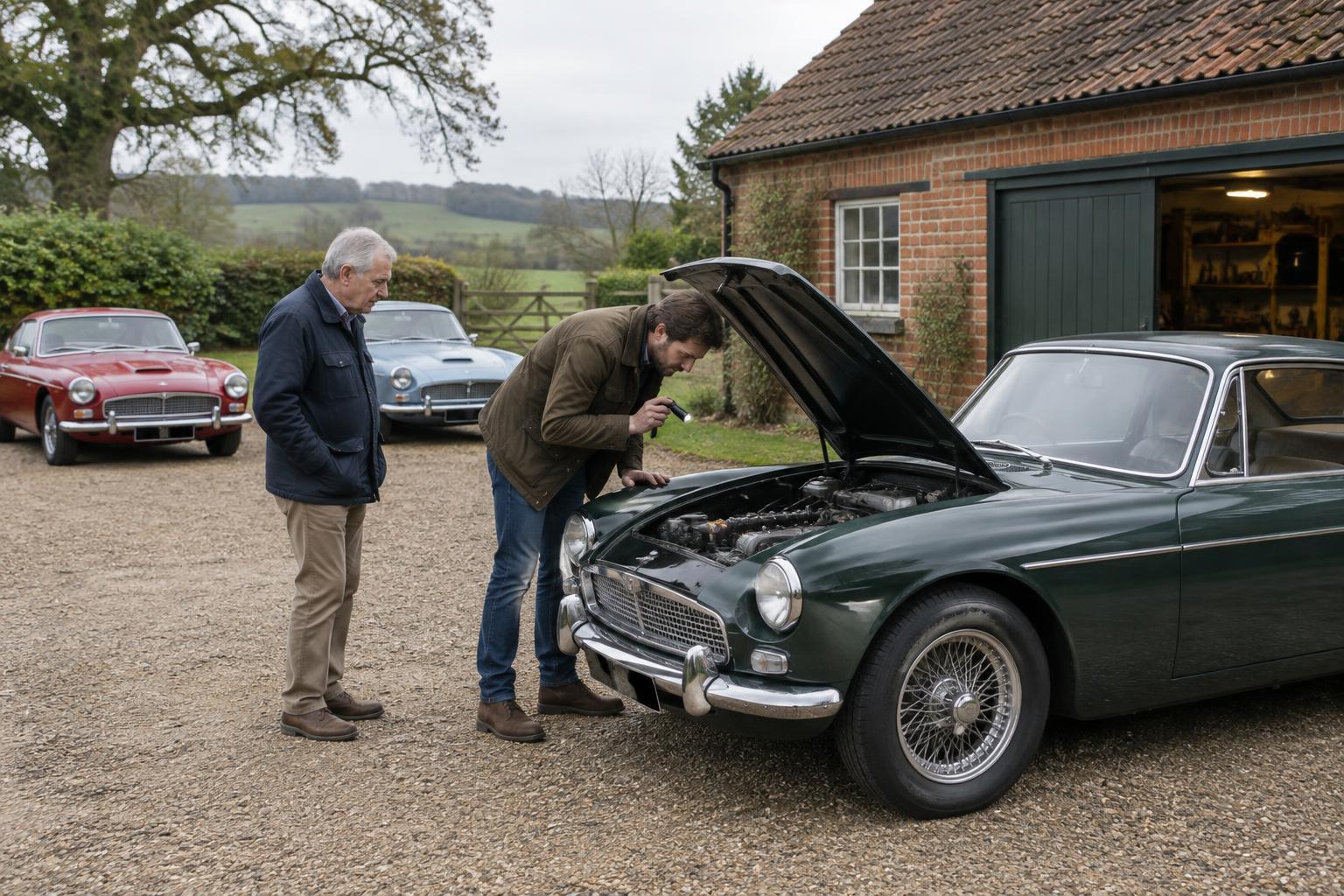
A specialist dealer may let you compare several classics in one visit and discuss the strengths and weaknesses of a particular model. Some prepare cars for sale or can explain work they have commissioned. Ask what has actually been done to the specific car, what is included in the price and what, if anything, will be addressed before collection. Do not assume a high asking price means that every component has been renewed.
View a dealer’s description as a starting point for questions, not an inspection report. Confirm whether you can examine the underside, review available history and take a meaningful test drive. If the car is far away, establish what you need to know before travelling and consider an independent inspection. Terms and buyer protections can vary by location and transaction, so read the paperwork carefully rather than relying on a general idea of what buying from a dealer provides.
Dealer stock may cost more than a similar-looking private-sale car, but the relevant comparison is total value: condition, preparation, documented work and the clarity of the transaction. A cheaper car that immediately needs substantial repairs may not be the more affordable choice.
Auctions: set your limit before bidding begins
Auctions can bring an interesting range of cars together, including projects and models that are hard to find locally. They also compress the decision. A brief viewing and a catalogue entry may leave important questions unanswered, while the pace of bidding can encourage you to overlook doubts. Study the sale conditions in advance, including any buyer’s premium, payment deadlines and collection arrangements, so you know your total potential cost.
Inspect the car during the viewing period if one is available. Read its description closely, but verify what you can: identity, visible condition, documents and whether the car can be started or driven. If a proper inspection is not possible, treat that uncertainty as a cost. Decide on a maximum all-in figure before the sale, including fees and likely immediate work, and be prepared to stop bidding. Winning is not the same as buying well.
Use the same checklist wherever you find the car
Begin with the structure. Rust and poorly repaired damage can be more demanding than worn upholstery or a tired service item. Check areas known to trap water, look for inconsistent panel fit and ask how previous repairs were carried out. Then assess the mechanical systems, electrics and interior against the seller’s description. A usable classic need not be flawless, but its faults should be understood and reflected in your plans.
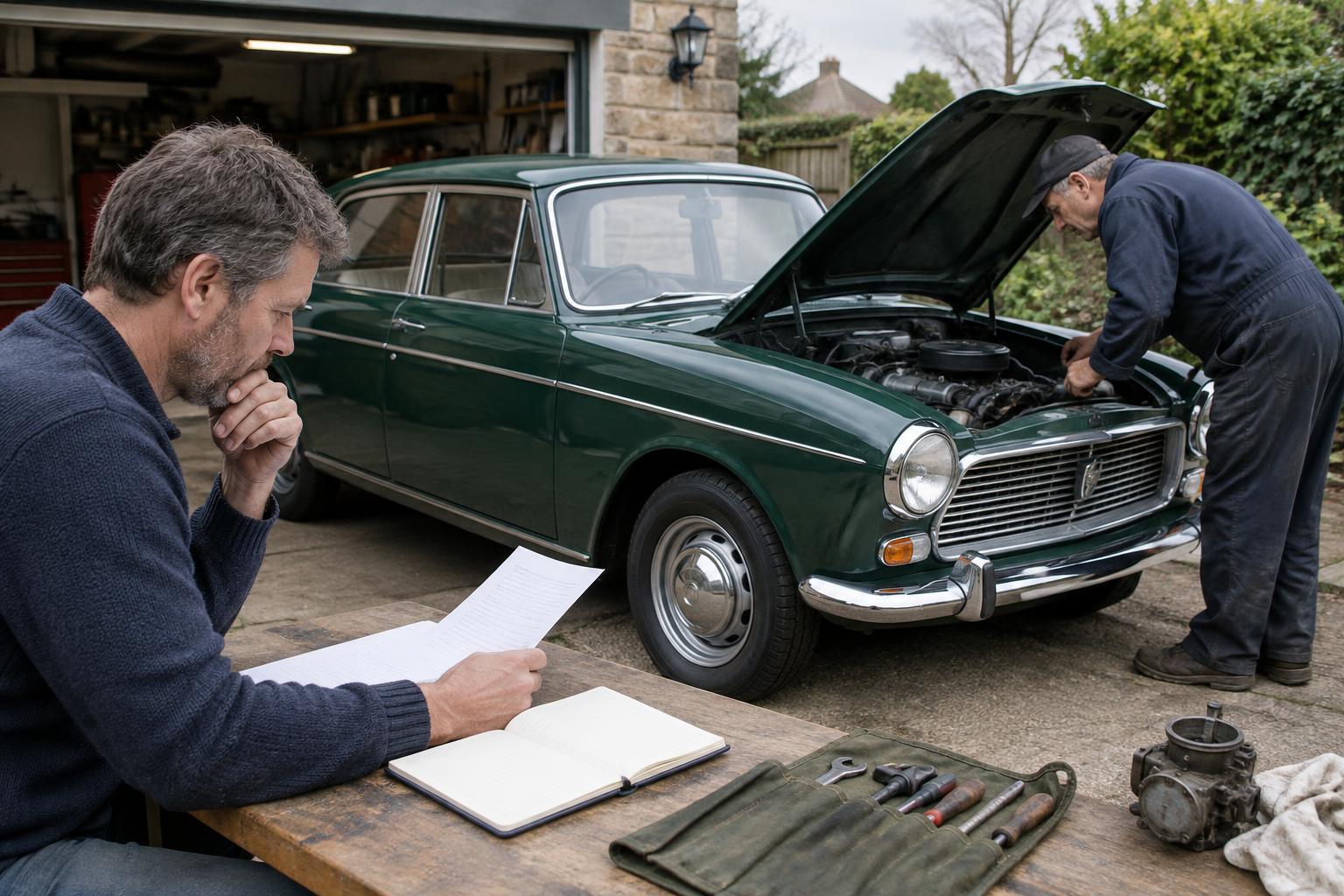
Paperwork helps you build a picture rather than prove that the car is perfect. Review the available registration details, maintenance records and receipts; note gaps and ask sensible questions without assuming every missing document signals trouble. For modified cars, make sure you understand what has changed and whether replacement parts or specialist knowledge may be needed. If the car will be used regularly, consider whether its driving position, weather protection and maintenance demands suit your life.
Finally, allow yourself to walk away. Another car may be less exciting at first glance yet better suited to your budget and intended use. Whether you buy from an owner, a dealer or an auction room, patience and a clear-eyed inspection are more valuable than securing the first example you see.