Start with what the advert actually says
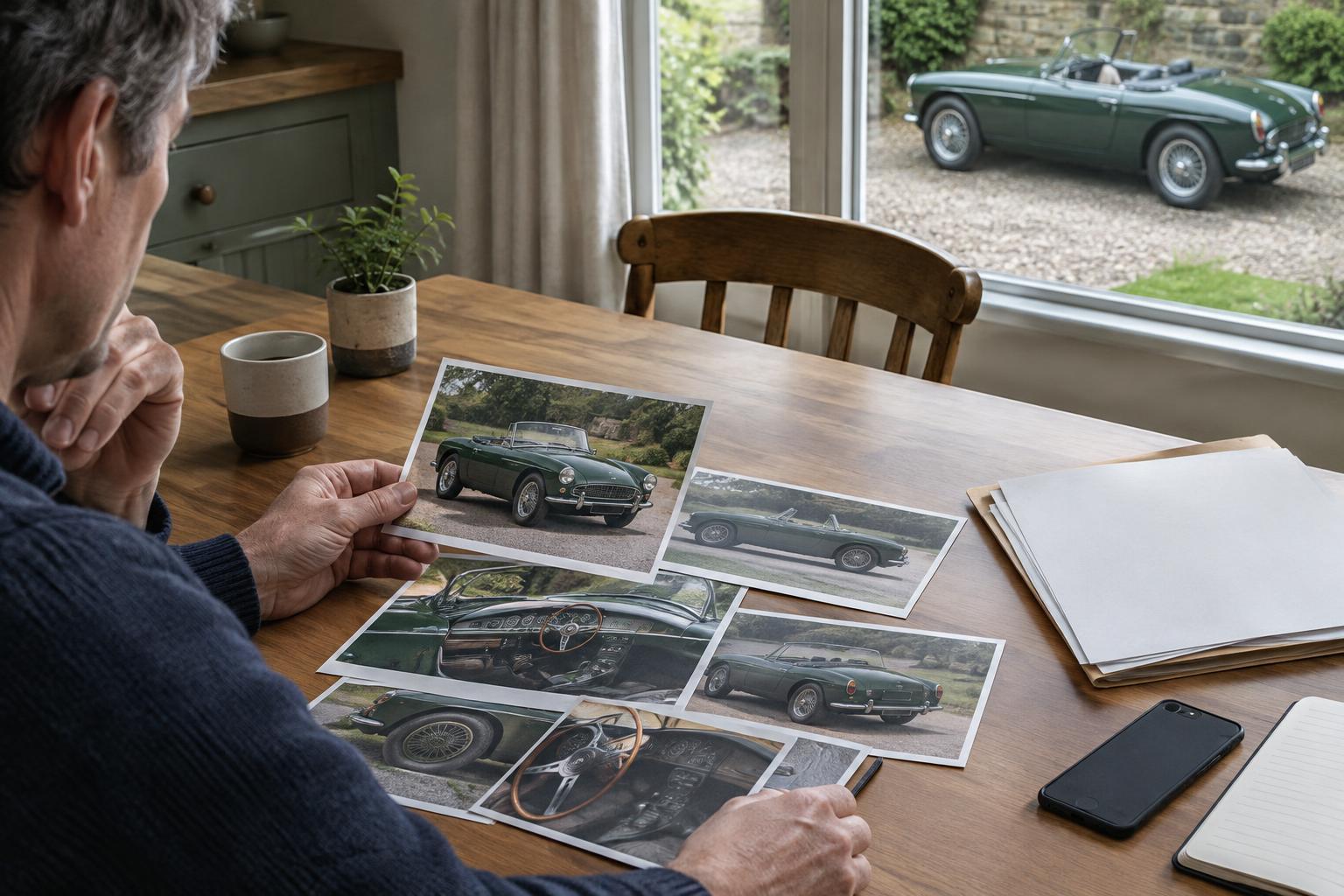
A classic-car advert is an introduction, not a condition report. Read it once for the overall impression, then again for specifics. Does it identify the model, year, engine and gearbox? Are the asking price, location and reason for sale clear? Phrases such as “restored,” “solid” or “ready to enjoy” are useful starting points, but they do not explain what work was done, when it was done or how the car has been used since.
Make a short list of gaps before contacting the seller. If an advert highlights fresh paint but says little about the underside, ask about corrosion and previous metal repairs. If it describes a car as a long-term restoration project, ask whether it is complete enough for your intended plans. This keeps the first conversation focused and gives the seller a fair chance to clarify brief wording.
Confirm the car’s identity and paperwork
Ask the seller to confirm the registration, chassis or vehicle identification number, and engine number where relevant, and whether these agree with the documents they hold. On an older car, an engine change or replacement body component is not automatically a problem. It is something to understand before you travel, especially if originality matters to you. Ask whether the seller is the person named on the registration document and whether there are any known discrepancies in the recorded model or date.
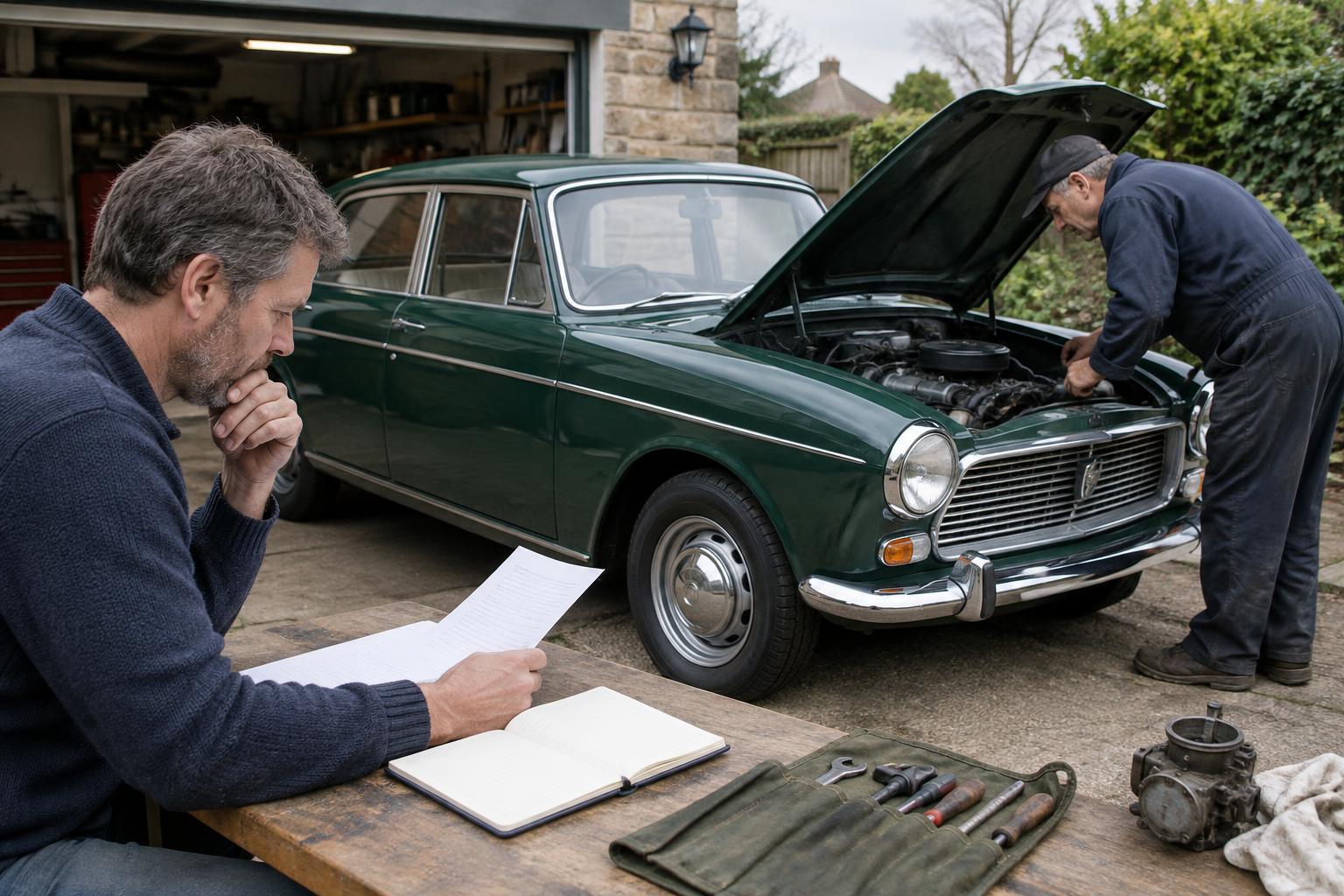
Find out what paperwork comes with the car: registration documents, invoices, photographs of work, an owner’s handbook or records of past inspections. A thick folder can be helpful, but look for evidence of particular work rather than treating its size as proof of condition. Ask whether any restoration was completed by the owner or a workshop, and whether there are records showing the scope of the job. You can examine the documents themselves at the viewing.
Ask for detail on condition, not a single verdict
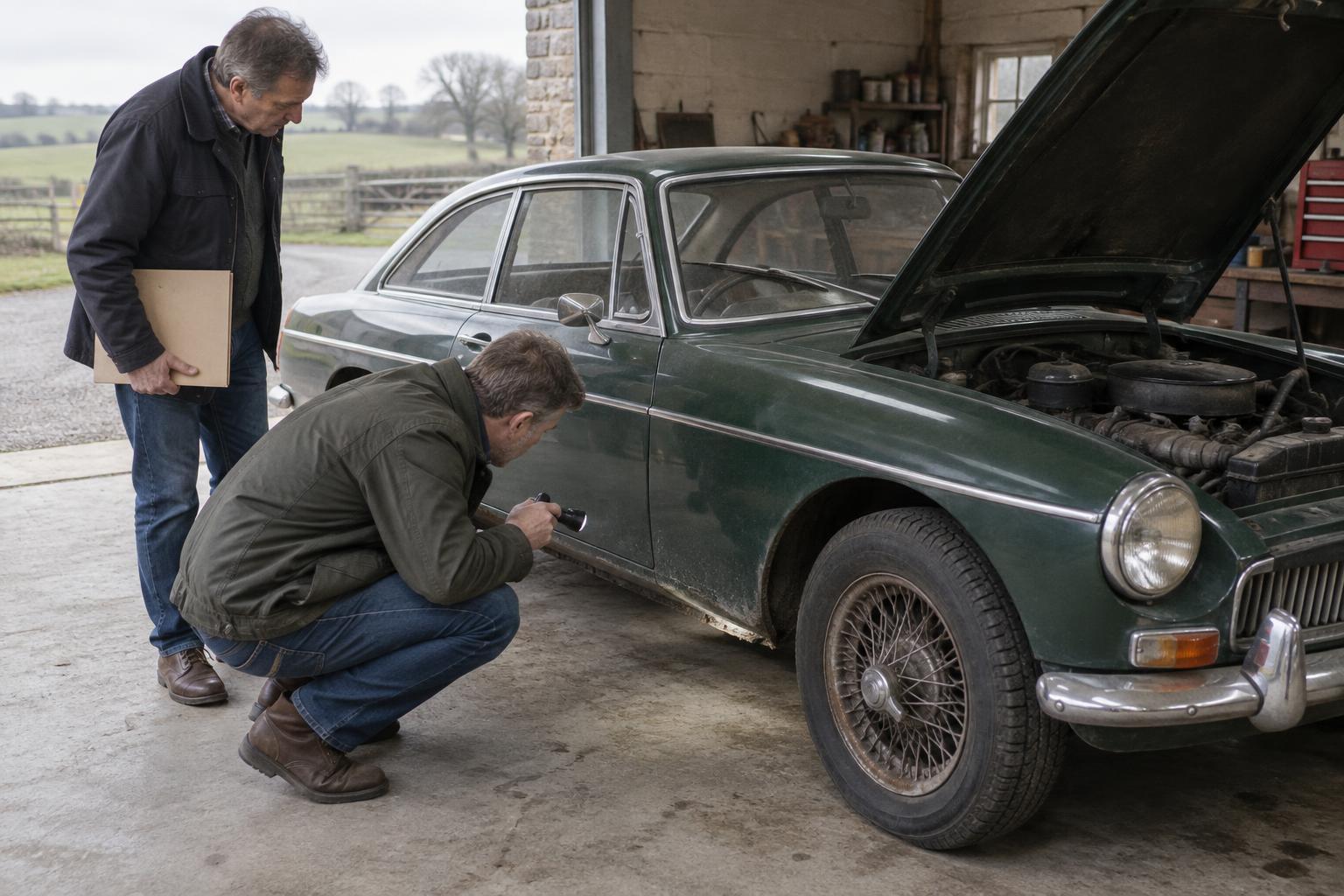
Rather than asking whether the car is “good,” ask what the seller would improve if keeping it. Follow up with specific questions about known rust, accident damage, leaks, overheating, electrical faults and parts that do not work. For a British classic, it is worth asking about structural areas such as sills, floors, chassis members or mounting points, while remembering that vulnerable areas differ by model. Request clear photographs of any repairs and of the underside if the advert does not show them.
Separate appearance from soundness. Shiny paint may cover excellent preparation or work that needs a closer look; worn trim may be an acceptable compromise on a mechanically dependable car. Ask when the tyres were fitted, whether the brakes have been serviced recently and how long the car has been standing. These answers will not replace an inspection, but they help you judge whether the seller’s description matches the type of car you want to own.
Establish how the car starts and drives
A car described as “running” might start and idle on a driveway, or it might be used regularly for longer journeys. Ask when it was last driven, roughly how far it went and whether it can be started from cold when you arrive. A cold start may reveal behaviour that is less obvious after the engine has been warmed up. If the car cannot currently be driven, ask what prevents it and whether it can be moved safely for an inspection.
Invite the seller to describe any symptoms without suggesting an answer: smoke, unusual noises, difficult gear changes, pulling under braking or gauges that behave unpredictably. Classic cars vary in their normal feel, so an unfamiliar noise is not a diagnosis on its own. The aim is to learn what to expect and decide whether a knowledgeable companion or specialist inspection would be worthwhile.
Agree on a useful viewing before setting off
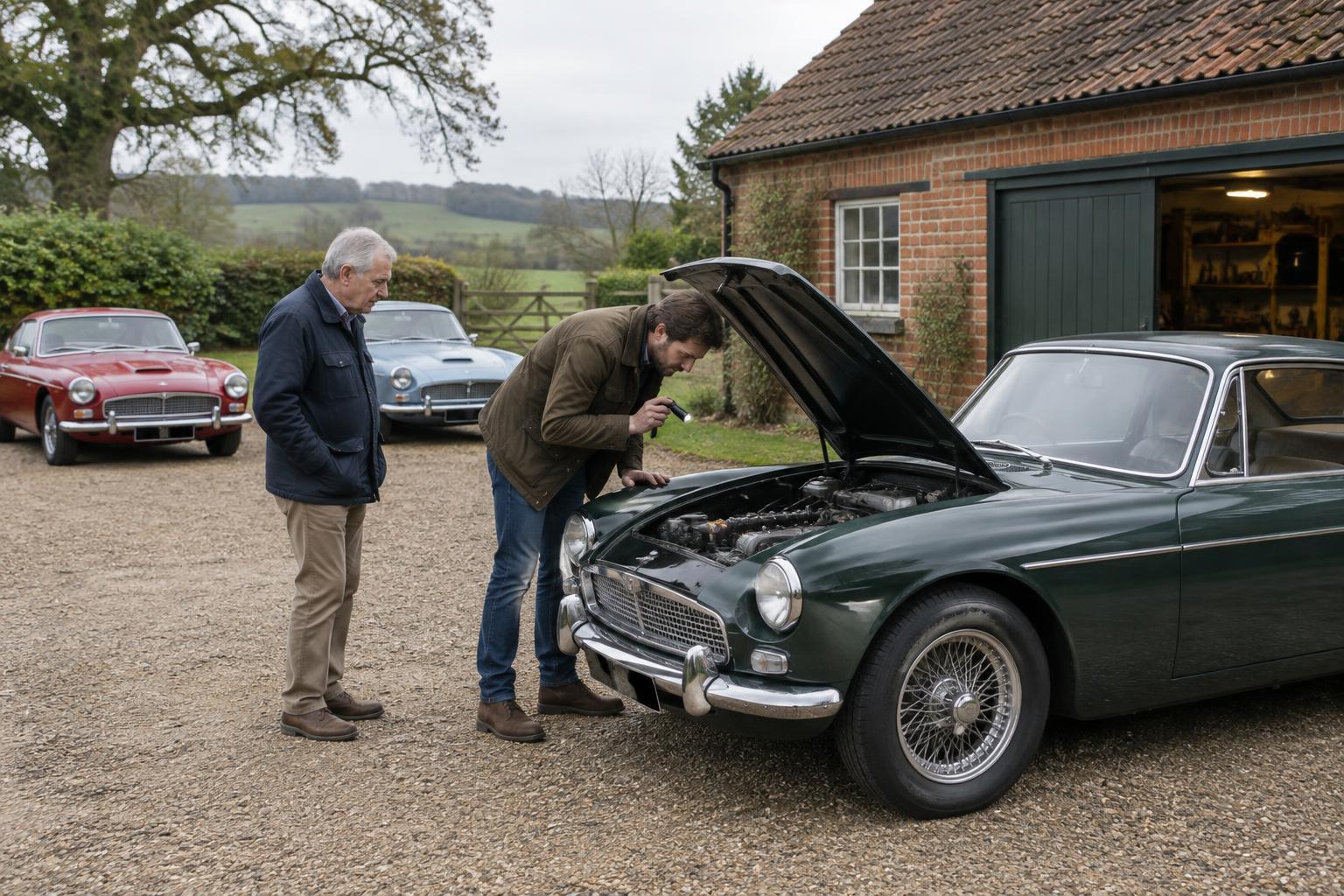
Before committing to a journey, confirm exactly where the car can be seen and what the viewing will include. Will there be daylight, space to walk around it and access to the paperwork? Can the seller make the car available for a cold start, and is a test drive possible? If you hope to inspect underneath, ask what access is available rather than assuming a lift or ramp will be provided. Confirm who will be present and whether the seller can allow enough time for questions.
Clear, patient answers are encouraging; uncertainty is not always a warning sign, particularly when a seller has inherited a car or owned it only briefly. What matters is whether unknowns are acknowledged rather than presented as certainties. Keep your notes, compare the answers with the advert and decide whether the journey fits your budget and expectations. A viewing is an opportunity to verify a promising car, not a commitment to buy it.