Start with the symptoms, not the wrapping
On a British classic, a few electrical quirks can become familiar companions: a reluctant indicator, dim lamps at idle or an instrument that comes and goes. None proves that the entire loom needs replacing. Poor earth connections, tired switches, corroded terminals and unsuitable bulbs or accessories can produce similar symptoms. Equally, tidy-looking loom tape does not guarantee sound wiring underneath.
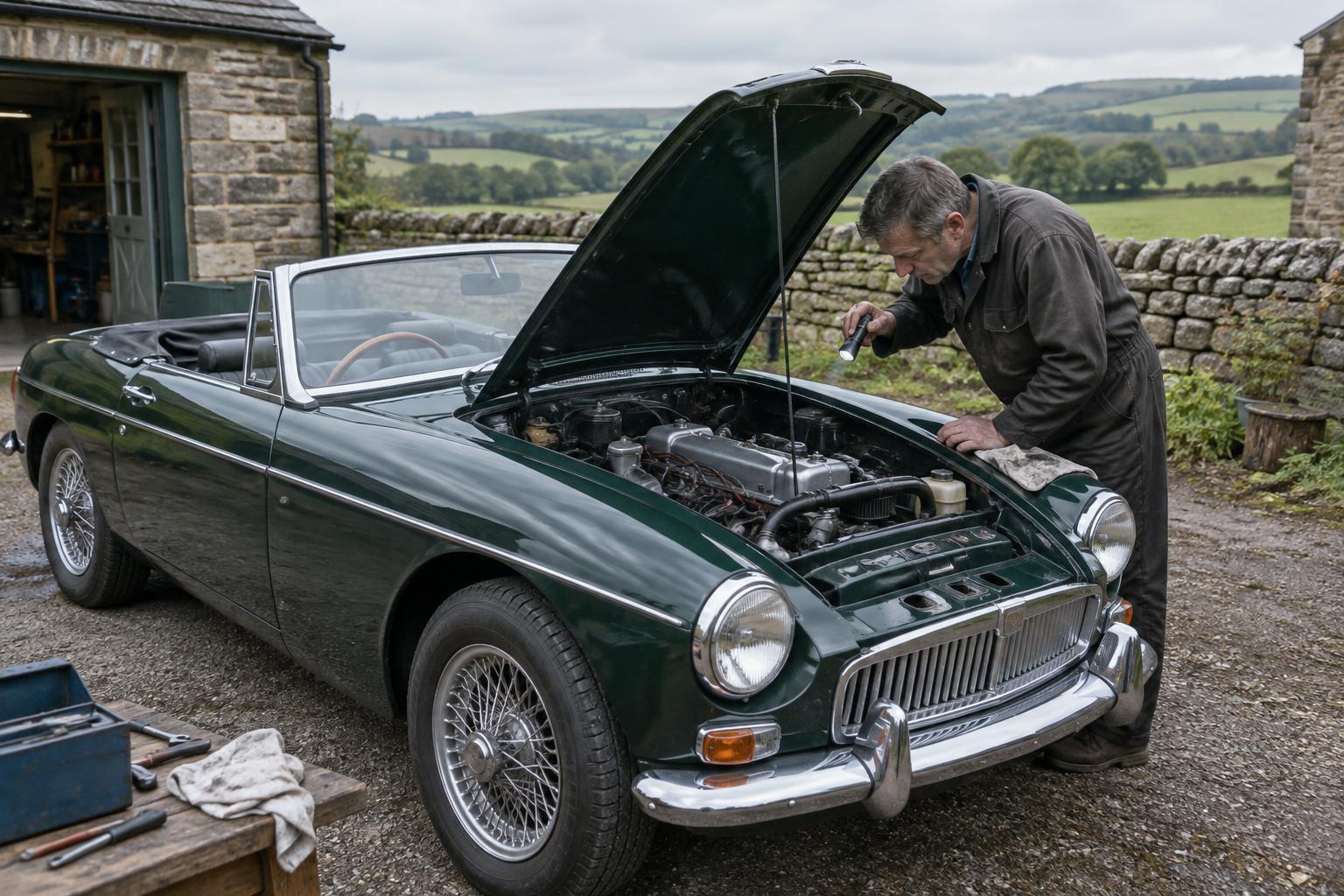
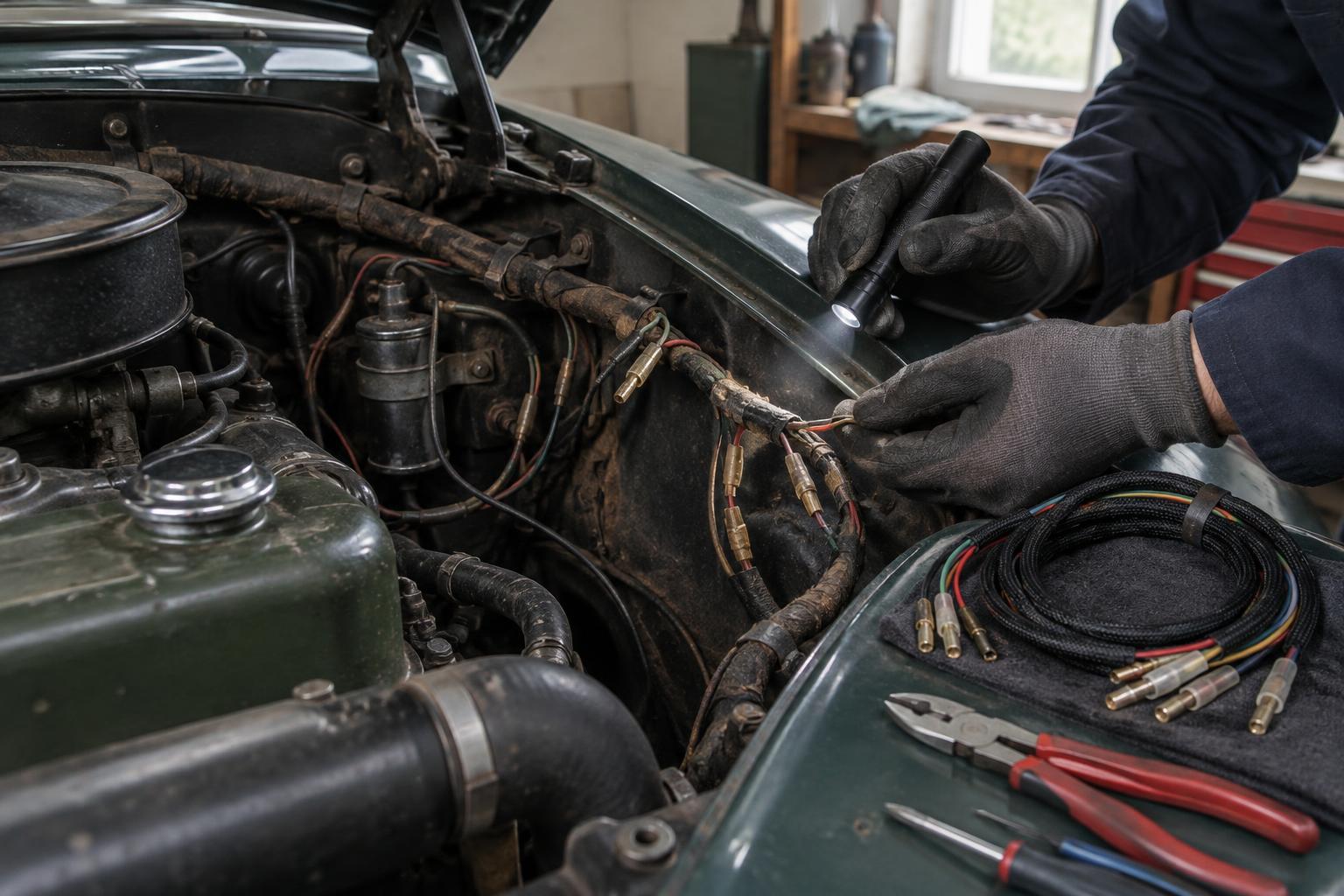
Begin by recording what fails, when it fails and which circuits are affected. Check the battery and charging system before blaming the harness. Then inspect accessible runs and connection points for brittle insulation, exposed conductors, green corrosion, heat damage, chafing and previous repairs. Pay particular attention where wires pass through bulkheads, around brackets and near hot components. Disconnect the battery before opening connections or disturbing wiring; if you find melted insulation, smoke damage or repeated fuse failures, leave the circuit unused until the cause is found.
When a careful repair makes sense
A local repair is often reasonable when the surrounding loom remains flexible and intact, the fault is confined to one accessible area, and the rest of the car's wiring is broadly consistent with its diagram. A damaged terminal or a short section rubbed through at a missing grommet need not condemn every wire in the car. The lasting repair must address the cause as well as the damage: replacing the conductor alone will not help if the same sharp edge remains.
Use wire of a suitable type and size, make sound connections, and provide proper insulation and support. Preserve or clearly document circuit identification, especially if replacement wire colours differ from the original scheme. Avoid burying an unexplained fault under fresh tape. If an old connection is suspect, inspect both sides of it; corrosion can extend beyond the visible terminal. A repair that can be inspected and understood later is more valuable than one that merely looks neat today.
Signs that replacement deserves serious consideration
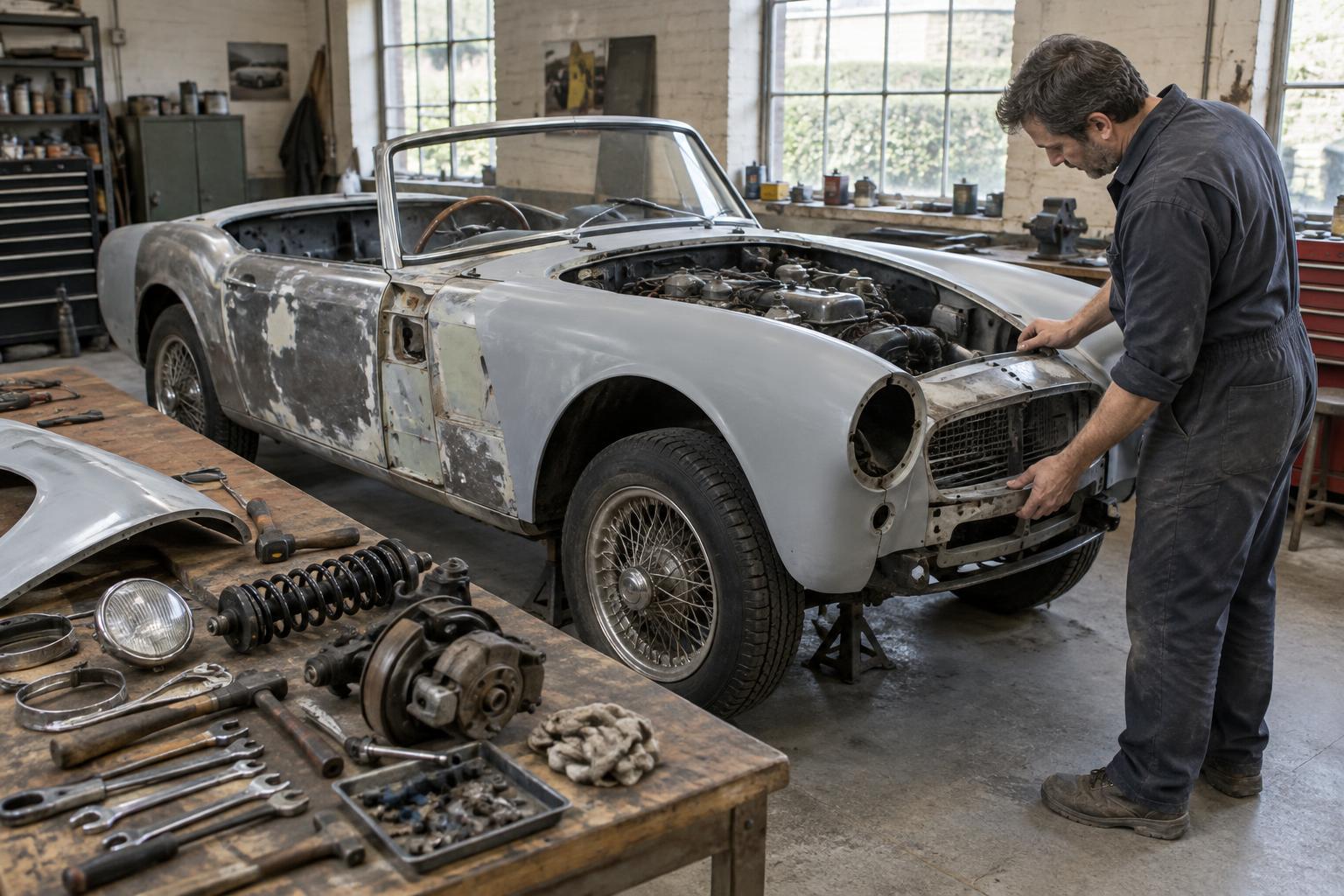
Replacement becomes more persuasive when insulation is brittle across several branches, numerous conductors have overheated, or the loom contains a confusing accumulation of splices and abandoned accessory wiring. Widespread damage from water, rodents or an earlier electrical fault may also make individual repairs impractical. A car already stripped for a substantial restoration offers better access than one with its trim and dashboard in place, which can change the balance of labour.
Consider the uncertainty as well as the visible damage. If one repair reveals several more hidden faults, the time spent tracing them may exceed the effort of fitting a suitable new loom. Conversely, a complete replacement is not an automatic upgrade. A new harness still needs to match the car's specification, its equipment and any well-considered modifications. Models changed during production, and decades of owners may have fitted different lamps, instruments or charging components.
Balance originality, usability and cost
An original loom may matter to the character of a particularly unaltered car. Before removing it, photograph routing, clips, branch points and connections, and label wires at both ends. Keep a copy of the relevant wiring diagram nearby, while checking the car itself rather than assuming every detail still matches the drawing. If preservation is the priority, carefully repairing sound original wiring may be preferable to replacing it simply because it looks old.
For a car intended for regular touring, confidence and serviceability may carry greater weight. Price a decision as a complete job, not just as a length of wiring: connectors, grommets, clips, appropriate protection and the time needed to remove and refit interior parts can all matter. Plan any accessory changes separately so they do not turn a straightforward harness replacement into an undocumented collection of extra circuits. Where specification or safe circuit protection is unclear, an experienced auto electrician can help review the plan.
Make the finished work easy to trust
Whether repairing or replacing, work methodically rather than disconnecting everything at once. Photograph each area before disturbing it, label connections, and keep fasteners and small fittings organised. Route wires away from moving parts, sharp edges and heat; replace missing grommets and secure the loom without pulling branches tight. Do not assume that a new harness will fit correctly if brackets or components have been moved during an earlier rebuild.
Test each circuit as the work progresses, then check the complete system with the car stationary before taking it on the road. Confirm that lamps, indicators, charging equipment and accessories behave as intended, and look again for warmth, rubbing or loose connections after initial use. Keep a simple record of what was repaired or changed. The best outcome is not necessarily the most extensive restoration: it is a wiring system whose condition, routing and purpose the next person can understand.