Find the full extent of the rust
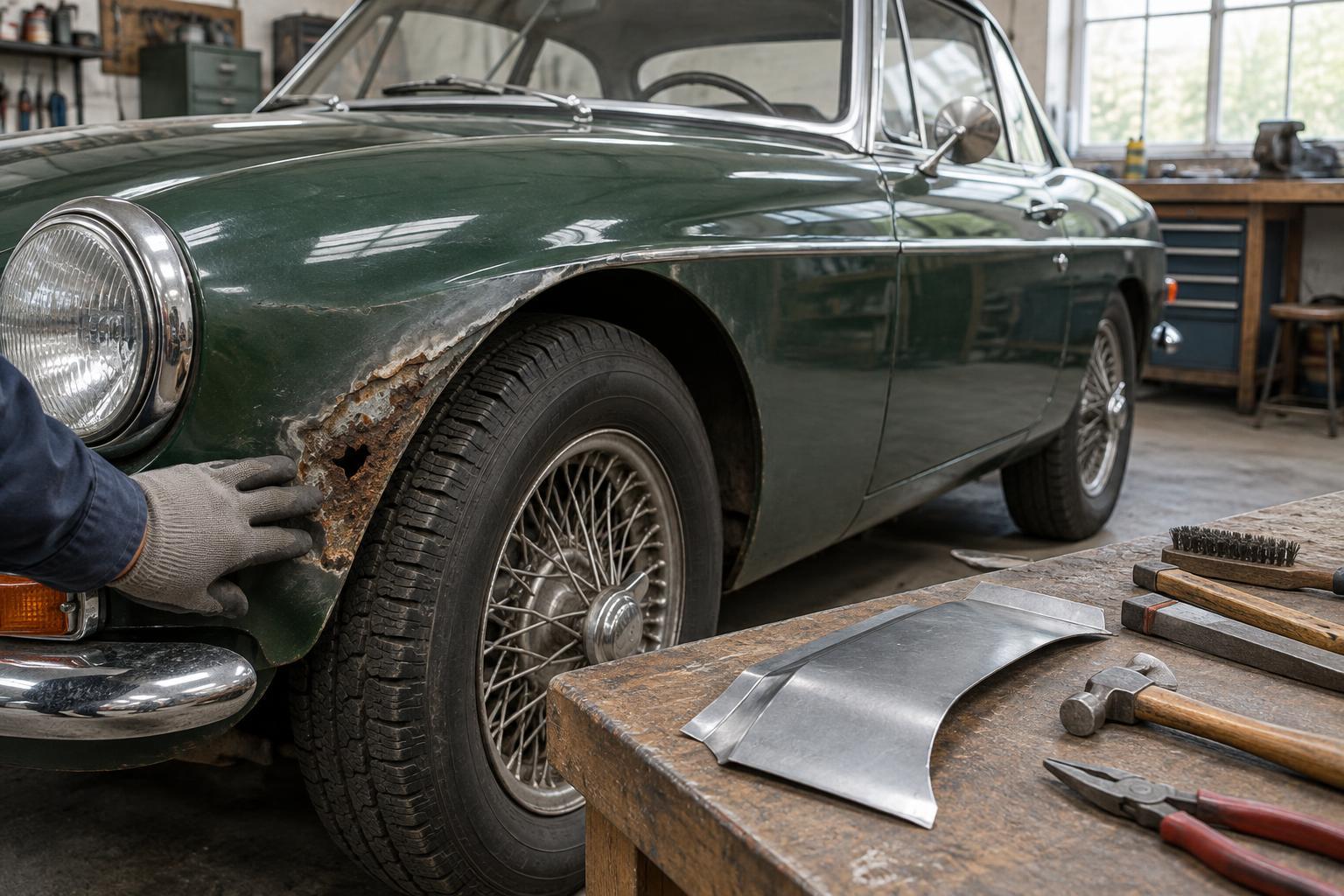
The visible blister is a starting point, not a measurement of the whole problem. Rust often develops from the back of a panel, around a seam, or beneath a trim fixing before it breaks through the paint. Inspect both sides where access allows, and look beyond the obvious spot for swelling, pinholes, soft edges and earlier repairs. Paint, filler and underseal can hide weakened metal, so a decision made from appearance alone is likely to be premature.
Work out what the panel does as well as what it looks like. A bolt-on wing and a sill are different propositions: corrosion near mounting points, suspension attachments, seat-belt anchors or other load-bearing areas raises safety concerns. If the metal is difficult to assess or may be structural, ask a suitably experienced body specialist to inspect it before planning a cosmetic repair. Photograph what you find and mark the boundaries of sound metal; those notes will make estimates easier to compare.
When a local repair makes sense
Repairing a section can preserve more original material and may be sensible when damage is limited, surrounding metal is sound, and the panel’s shape would be hard to reproduce with a replacement. The usual aim is to remove the weakened area and fit new metal into a sound edge. Simply covering perforation with filler may improve the appearance briefly, but it does not restore the missing steel or address rust behind it.
A good local repair depends on access and finish as much as the size of the hole. A wheel-arch lip, for example, may look like a short patch from outside while its inner return is also corroded. Complex curves and visible surfaces demand careful shaping and welding if the repair is to blend in without excessive filler. Ask how the reverse of the repair will be cleaned, finished and protected: a neat outer surface is only part of a durable job.
When replacement is the better route
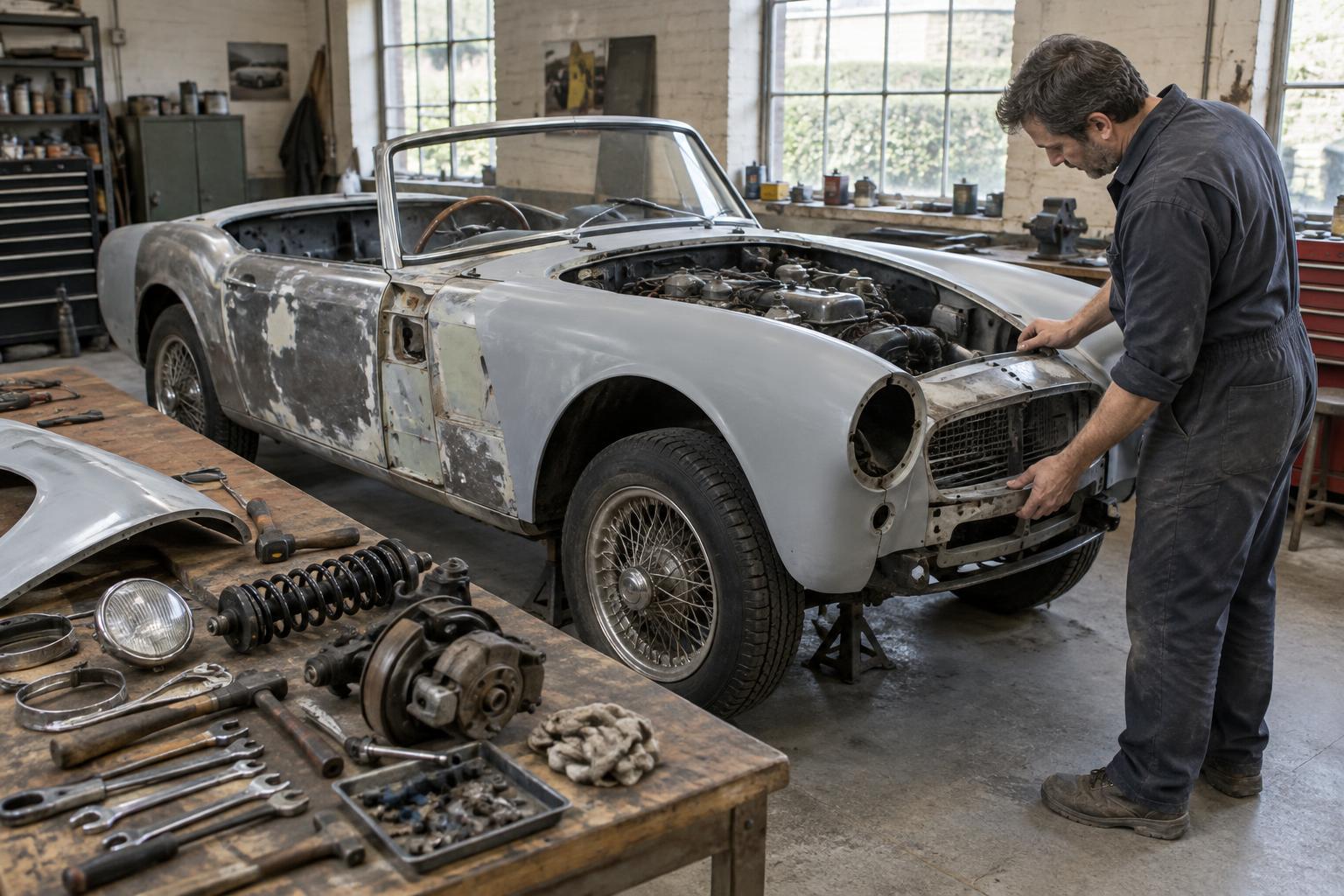
Replacing a complete panel, or using a substantial repair section, can be more straightforward when corrosion is widespread, old patches overlap, or too little sound metal remains for a reliable local repair. A replacement may also reduce the time spent making many small pieces. It is not automatically the cheaper or more original choice, however. Removing the old panel can reveal rust in adjoining metal, and fitting the new one may involve substantial adjustment.
Check what the proposed part actually includes. Some panels are complete assemblies; others are outer skins or sections that leave inner structures to be repaired separately. Fit and metal quality can vary, so it is worth discussing a trial fit before final attachment and paint. On a classic with distinctive panel gaps or hand-finished contours, retaining a sound original panel may give a better result than assuming a new pressing will fit perfectly.
Compare the whole job, not just the panel price
Ask for each option to be described as a sequence: removal of trim, investigation, metalwork, trial fitting, surface preparation, paint and corrosion protection. A low price for a patch and a higher price for replacement may not cover the same work. Paint blending into neighbouring panels, replacement fasteners and repairs discovered after stripping can all affect the scope. Agree how unexpected damage will be documented and discussed before extra work proceeds.
Your intended use matters too. A car kept for regular touring may call for a different balance of appearance, durability and downtime from one undergoing a detailed restoration. Original metal has value, but keeping a badly weakened section solely for its originality can be a false economy. Conversely, replacing a largely sound panel to eliminate one small, accessible rust spot may remove more historic material than necessary. Set your priorities before asking anyone to quote.
Make corrosion protection part of the decision
Neither a carefully welded patch nor a new panel will last well if moisture can return to bare metal. Before closing a cavity, plan how seams, weld areas and the back of the repair will be protected with materials suitable for those locations. Keep drain paths clear and check that trim fittings and seals will not trap water against the finished panel. The exact products and application order depend on the repair method, so agree the approach with the person doing the work.
The most useful question is not simply, “Can this panel be saved?” It is, “Which option gives sound metal, a good fit and accessible protection without unnecessary work?” Inspect first, compare like-for-like scopes, and leave room in the plan for what dismantling may reveal. That approach turns a worrying rust bubble into a manageable restoration decision.