A new direction for Lotus
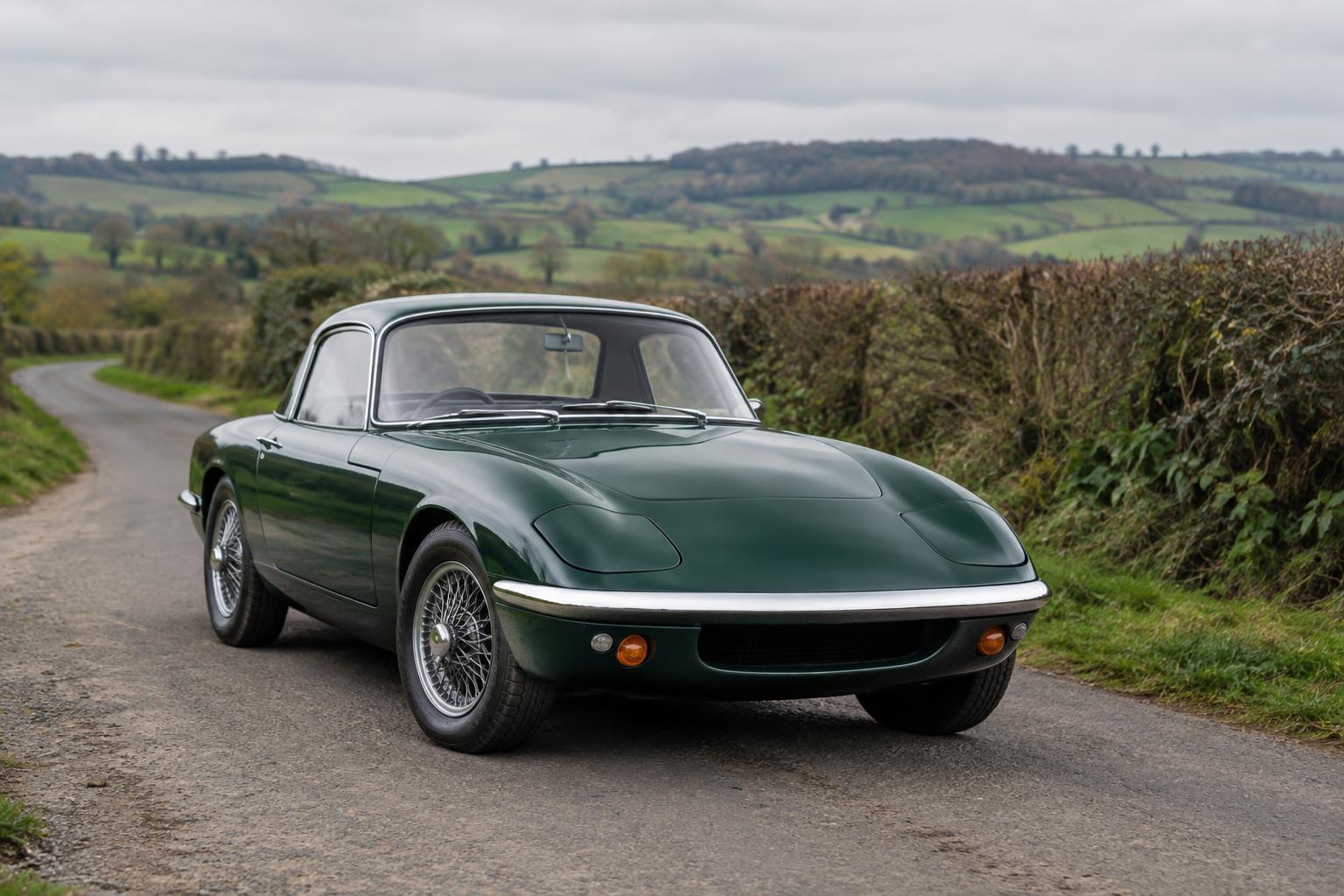
When Lotus introduced the Elan in 1962, it was already known for making cars that found performance through low weight rather than sheer engine size. The new two-seat sports car brought that approach to a form more readily suited to ordinary roads. It offered the responsiveness expected of a Lotus while giving drivers a folding roof, a usable cabin and the familiar layout of an engine at the front driving the rear wheels.
The Elan followed the earlier Lotus Elite, an ambitious coupé whose glassfibre structure had been central to its design. For the Elan, Lotus took a different path: a separate steel chassis carried the main mechanical loads beneath a glassfibre body. That distinction matters because the Elan was not simply an Elite with a softer shape. It was a fresh attempt to combine lightness, engaging handling and a more practical basis for production.
Lightness built into the structure
At the heart of the original Elan was a steel backbone chassis. A central spine connected the front and rear sections that supported the suspension and other mechanical parts. The body could therefore be light without having to serve as the car’s primary load-bearing structure. Its moulded glassfibre panels also allowed Lotus to give the Elan its low nose, rounded wings and compact proportions without relying on a conventional pressed-steel body.
This construction shaped both the car’s appearance and its driving character. Keeping weight down meant the engine had less mass to move, while the suspension had a lighter car to control. It also created a distinctive ownership consideration: the chassis and body need to be understood as separate parts of the same design. The simplicity of the idea should not be mistaken for carelessness; the Elan’s character came from making each component serve a clear purpose.
A familiar engine with a Lotus character
Lotus equipped the Elan with its twin-cam four-cylinder engine, developed around a Ford-derived block. That combination suited the project. It gave the small car an eager engine without demanding a large, heavy power unit. Early examples differed from later ones in detail, but the underlying formula remained a compact front-engined roadster with enough performance to make its modest weight count.
The Elan was about more than acceleration. Its independent suspension, precise steering and compact dimensions helped make changes of direction feel immediate. The driver did not need an exceptionally wide road or high speed to notice the response. This balance of engine, chassis and steering is a large part of why the original car remains a reference point in discussions of lightweight sports-car design.
From launch car to a small family of Elans
The first Elan was an open two-seater, but Lotus continued to develop the model through a succession of series. A fixed-head coupé joined the range, and later cars brought changes in equipment, appearance and engine specification. These revisions did not erase the original idea; they show how Lotus adapted it as expectations for comfort and performance evolved during the decade.
The Elan +2, introduced later in the 1960s, extended the concept into a larger car with occasional rear seating. It shared the Elan name and much of its design philosophy, but it is worth distinguishing it from the smaller original two-seater. Doing so makes the history clearer: the launch Elan established the lightweight roadster formula, while the +2 explored how far that formula could stretch toward grand touring.
Why the origins still matter
The original Elan is sometimes reduced to a list of appealing features: a twin-cam engine, a glassfibre body and famously responsive handling. Its origins tell a more useful story. Lotus chose a structure, powertrain and layout that worked together, rather than treating low weight as a final adjustment. The result was a car whose performance and road manners flowed from the same set of decisions.
For anyone comparing classic British sports cars, the Elan offers a distinctive answer to a familiar question: how much car is needed to make a journey enjoyable? It was neither the biggest nor the most lavish option of its era. Its lasting interest lies in the way it made modest size feel like an advantage—an idea that began with the engineering choices behind the 1962 car.