A familiar shape with a long life
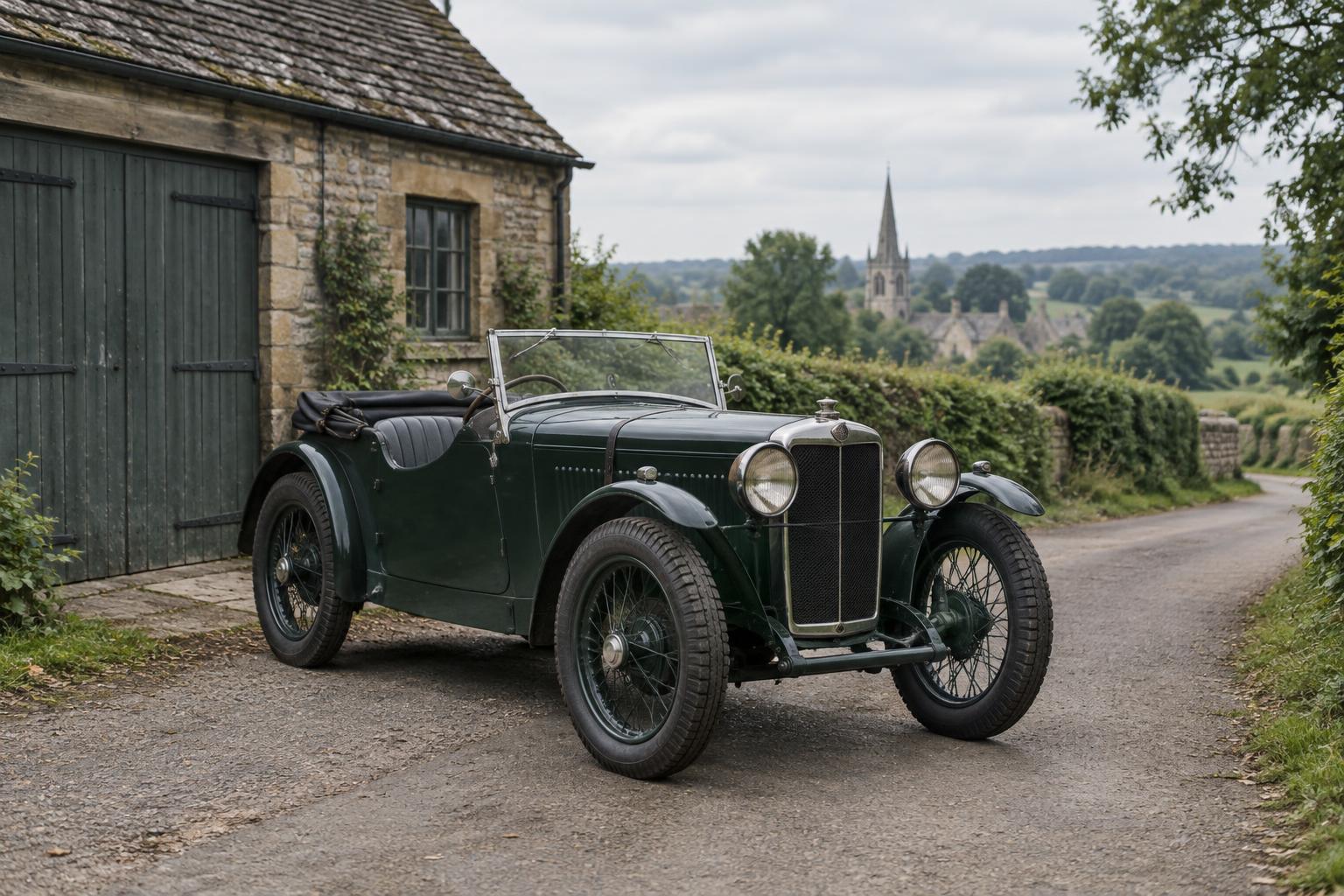
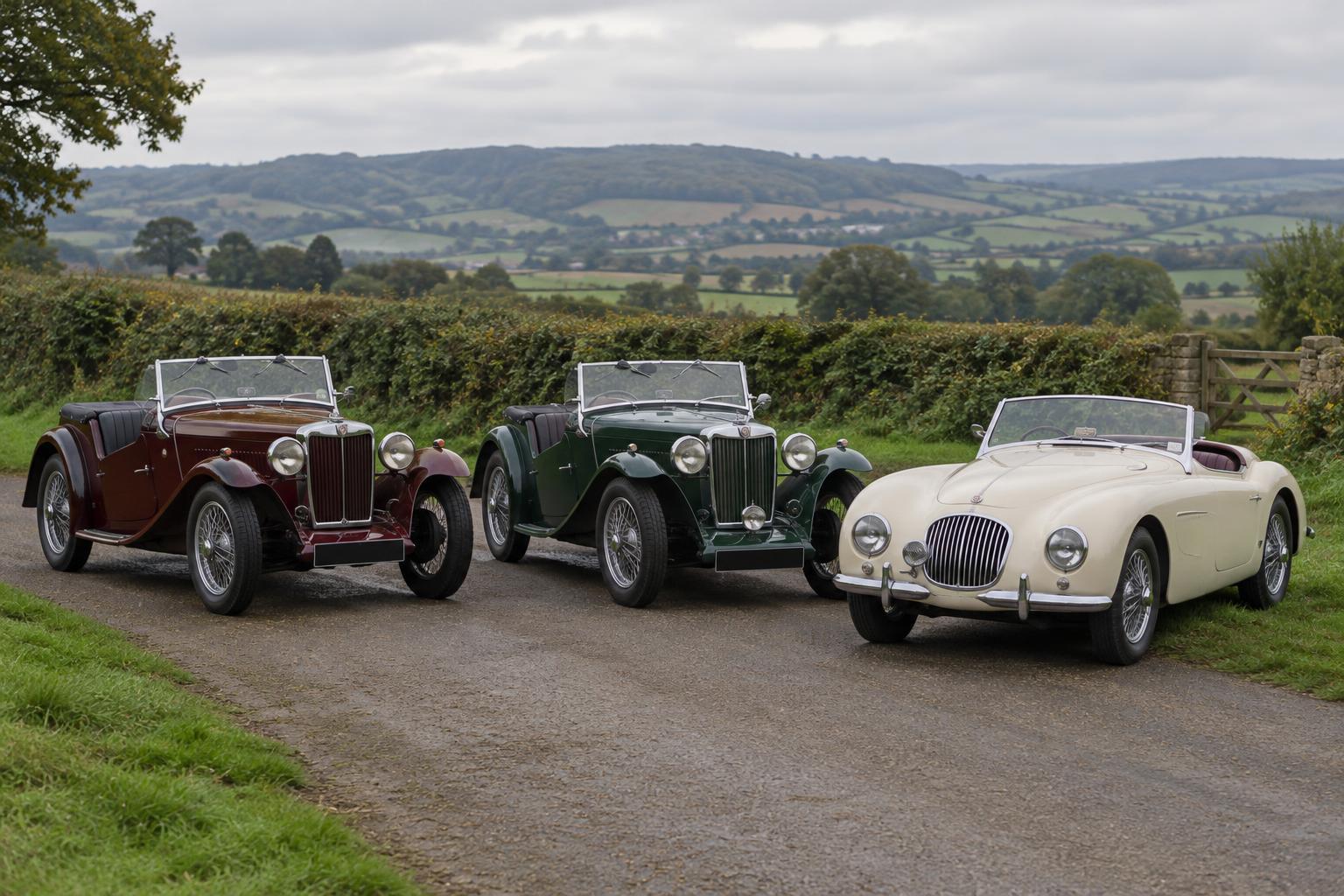
An upright radiator, separate wings, running boards and a low, open cockpit give the MG T-Series its instantly recognisable silhouette. That appearance can make the cars seem like variations on one pre-war design. In fact, the series spans a period of considerable change: it began with the TA in 1936, paused during the Second World War and continued through the TF 1500 until 1955. Its five principal models are the TA, TB, TC, TD and TF.
The attraction was not simply nostalgia. These were compact sports cars built around accessible mechanical ideas and a direct connection between driver and road. Their development shows how MG retained a successful character while adapting engines, steering, suspension and styling. Looking at each model in sequence makes the family resemblance clear without overlooking the differences that matter to anyone exploring T-Series history.
TA and TB: the pre-war foundations
The TA established the basic T-Series pattern in 1936. Its long bonnet and traditional body shape followed the style of earlier MG sports cars, while its 1,292cc four-cylinder engine marked a change from some of its predecessors. It offered the simple, open-air driving experience that would remain central to the line. Today, the TA is best understood as the starting point rather than a template that every later T-Type followed mechanically.
The TB arrived in 1939 and had only a short production life before wartime manufacturing interrupted civilian car building. Its most consequential change was the adoption of the 1,250cc XPAG engine. Despite its smaller capacity, this engine became an important part of the T-Series story because a version of it also powered the post-war TC. The TB is consequently a useful bridge: visually close to the TA, but carrying a power unit associated with the next phase.
TC: an old-fashioned sports car for a new era
When MG resumed sports-car production after the war, the TC carried forward the T-Type look rather than making a clean break. Produced from 1945 to 1949, it retained the separate wings, upright stance and XPAG engine. Its appeal lay partly in that continuity. At a time when car design was beginning to move toward more integrated bodies, the TC still offered the exposed, close-to-the-road character of a pre-war roadster.
The TC also helped establish MG’s reputation beyond Britain, notably in the United States. Its export success did not mean that it was a modern car in disguise: its layout and driving feel remained rooted in the earlier T-Types. Rather, it showed that the traditional small British sports car could find an audience after the war. For many enthusiasts, the TC became the defining image of the series, even though substantial changes were still to come.
TD: traditional looks, revised road manners
The TD, introduced in 1950, demonstrates why the T-Series should not be judged by appearance alone. It kept the separate-wing silhouette and XPAG engine but adopted independent front suspension and rack-and-pinion steering. It also had a wider stance and, in standard form, pressed-steel disc wheels. These changes made the TD a more thoroughly revised car than its familiar outline might suggest.
That balance of old and new is central to the TD’s place in the family. It did not abandon the T-Series identity, yet it moved beyond the TC’s more explicitly pre-war underpinnings. Someone comparing the two should therefore look past the grille and wings to the chassis and controls. The TD illustrates MG’s gradual approach: preserve the open sports-car experience while improving aspects of how the car meets the road.
TF and TF 1500: the final T-Types
The TF arrived in 1953 with a lower-looking front end, a sloped radiator grille and headlights set into the front wings. It still belonged unmistakably to the T-Series, but its styling softened the upright form that had characterised the TA through TD. Underneath, it was an evolution rather than a wholly new generation, retaining the broad mechanical direction established by the TD.
The later TF 1500 brought a larger, 1,466cc engine before T-Series production ended in 1955. The MGA that followed took MG sports-car styling in a markedly different direction, making the TF a natural closing chapter for the separate-wing line. Taken together, the T-Types tell a story of continuity and adaptation: five related models, each reflecting a different point in the passage from pre-war motoring to the sports cars of the 1950s.