A new approach to the affordable sports car
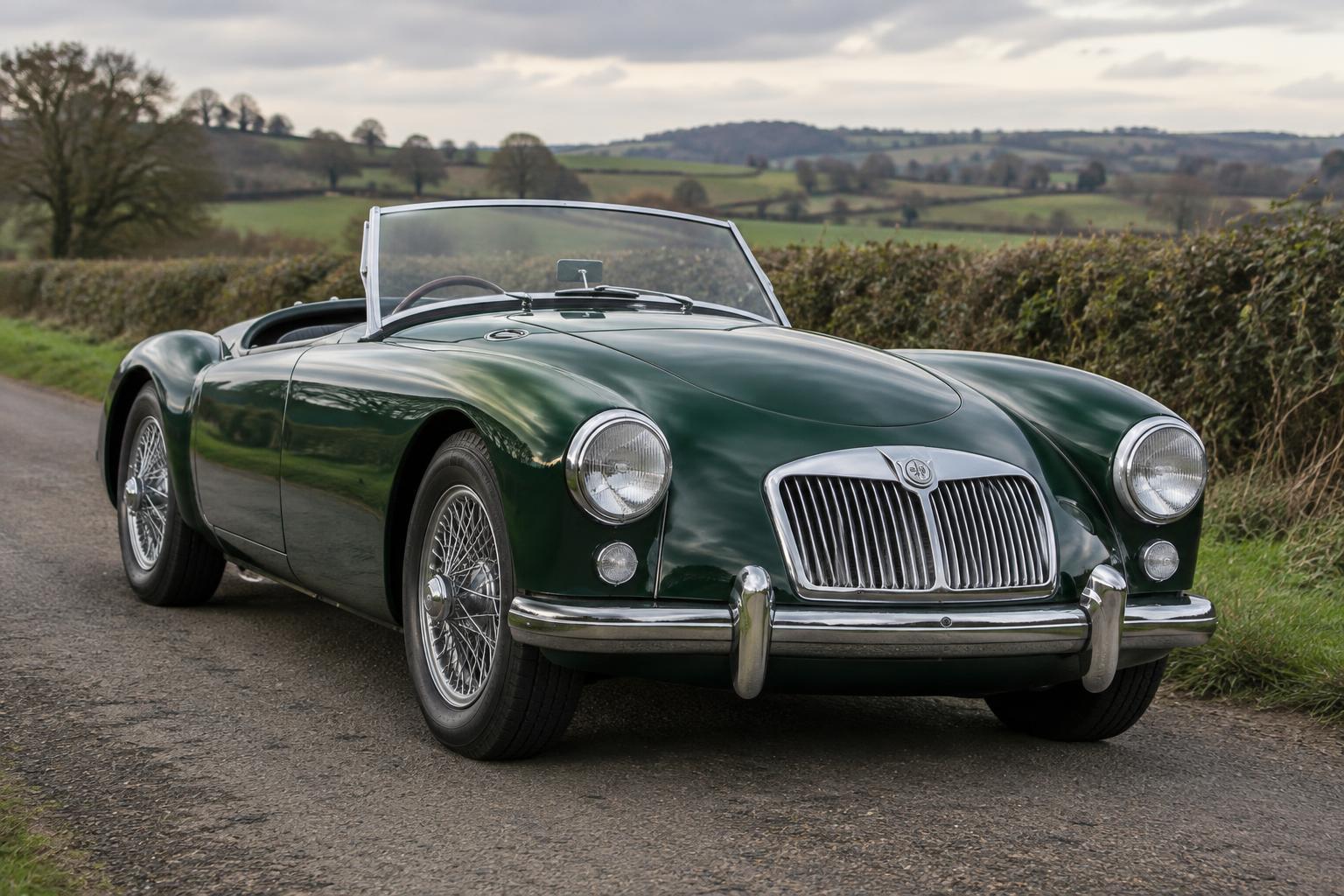
When the MGB appeared in 1962, it succeeded the MGA without abandoning the familiar idea of a compact, accessible British sports car. The new car was more practical for everyday use, with a roomier cockpit and useful luggage space, while retaining a straightforward front-engine, rear-wheel-drive layout. Its styling was crisp rather than radical: the low bonnet, simple grille and short rear deck gave the roadster a shape that remained recognisable throughout production.
A major structural change lay beneath the bodywork. Where the MGA used a separate chassis, the MGB had a unitary body structure. That decision influenced the car’s packaging and manufacture, but it also matters to owners today: corrosion in structural body areas deserves particular attention. The MGB’s 1.8-litre B-series four-cylinder engine and conventional mechanical layout helped make it a car that could be used regularly, not merely saved for special occasions.
Early refinement and the arrival of the GT
The original roadster established the MGB’s character, but development continued soon after launch. Early engines used a three-main-bearing crankshaft; a five-main-bearing version followed during the 1960s. Changes such as this are less visible than a new grille or dashboard, yet they are part of why two apparently similar MGBs may differ in their mechanical details. Production changes did not always align neatly with calendar years, so individual cars are best identified by their specifications rather than by appearance alone.
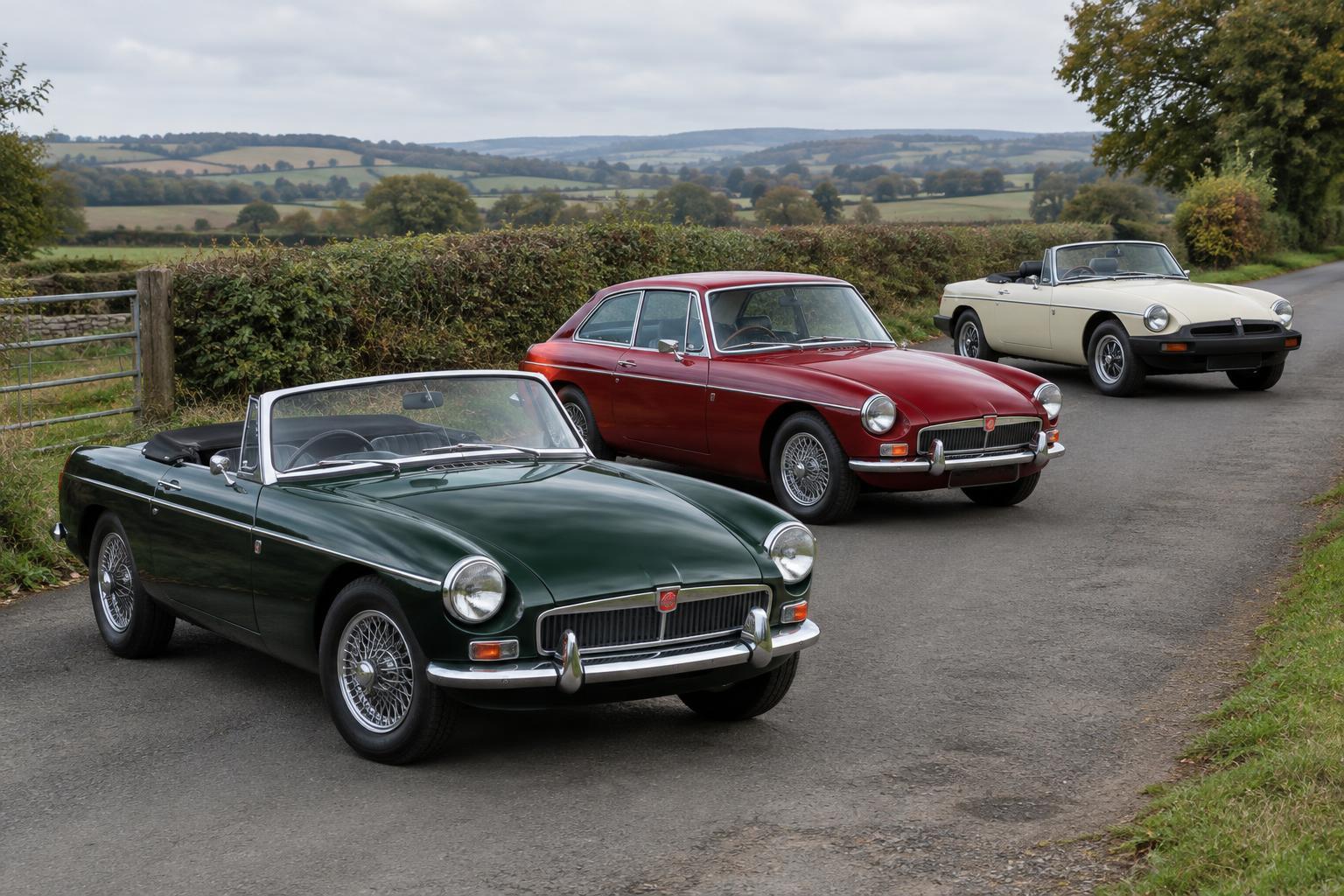
In 1965 the MGB GT joined the range, adding a fixed roof and a rear hatch to the basic MGB formula. Its sloping roofline gave the car a different profile, while the enclosed cabin and accessible luggage area made it attractive to drivers who wanted a sports car for longer journeys or year-round use. The small rear seats offered limited passenger space, but added flexibility. The roadster and GT shared much of their mechanical character, giving buyers two interpretations of the same design.
Adapting the car through the late 1960s and early 1970s
As the MGB matured, changes accumulated in the gearbox, electrical equipment, interior and trim. An all-synchromesh gearbox replaced the earlier arrangement that lacked synchromesh on first gear. Such revisions could make a later car feel different in ordinary driving without changing its essential layout. At the same time, requirements varied between export markets, particularly as safety and emissions rules developed. A feature found on one country’s car cannot always be assumed to apply to another from the same period.
The MGB also became the basis for related models, although they are worth keeping distinct from the standard four-cylinder car. The six-cylinder MGC had a comparatively brief production run, while the factory MGB GT V8 arrived in the 1970s. Neither displaced the familiar MGB roadster and GT. The core model’s long life depended less on wholesale reinvention than on adapting an established design to changing expectations and requirements.
The rubber-bumper years
The most conspicuous change came in the mid-1970s, when large impact-absorbing bumpers replaced the earlier chrome style. The car’s ride height was also raised, changing its stance as well as its appearance. These alterations are often used as a quick way to divide MGB history into “chrome-bumper” and “rubber-bumper” periods, but the distinction should not overshadow the many smaller changes made across both eras.
Late MGBs retained the underlying roadster or GT concept, even as their looks and some driving characteristics changed. Engine specifications also varied by market, with emissions requirements particularly significant for cars sold in North America. For anyone comparing examples today, it is more useful to consider an individual car’s market specification, condition and maintenance history than to assume that every MGB from a given bumper era is mechanically identical.
Final production and an enduring design
MGB production ended in 1980, closing a run of roughly eighteen years. By then, the car had outlasted many of its contemporaries without losing the basic proportions and mechanical simplicity established at launch. The final cars looked noticeably different from the earliest roadsters, yet the continuity is clear: an approachable two-seat sports car, also offered in practical GT form, built around a durable underlying idea.
That long development history is part of the MGB’s appeal. It offers several distinct versions of British sports-car motoring rather than one fixed specification. Understanding when and why the car changed helps enthusiasts appreciate an early roadster, a touring-minded GT and a late-production example on their own terms.