A new kind of Morgan
When the Morgan 4/4 appeared in 1936, its name described the important departure: four wheels and a four-cylinder engine. Morgan had built its reputation on distinctive three-wheelers, so a conventional four-wheeled sports car was a significant addition to the range. Yet the 4/4 retained the compact proportions, open cockpit and direct driving character that suited the company’s established identity.
The early car belonged to a British motoring world in which a lightweight sports car could be valued as much for its involvement as for outright pace. Its appeal lay in the relationship between driver, road and machine: a long bonnet in view, little separation from the surroundings and a sense that every journey was an occasion. That combination would help define the 4/4 through many later mechanical changes.
A familiar shape through changing times
The 4/4’s history was not a single, unchanging production run. Manufacture was interrupted during the Second World War, and later cars reflected changing components, regulations and customer expectations. Engines and other mechanical details evolved across generations, even while the basic visual idea remained remarkably recognisable.
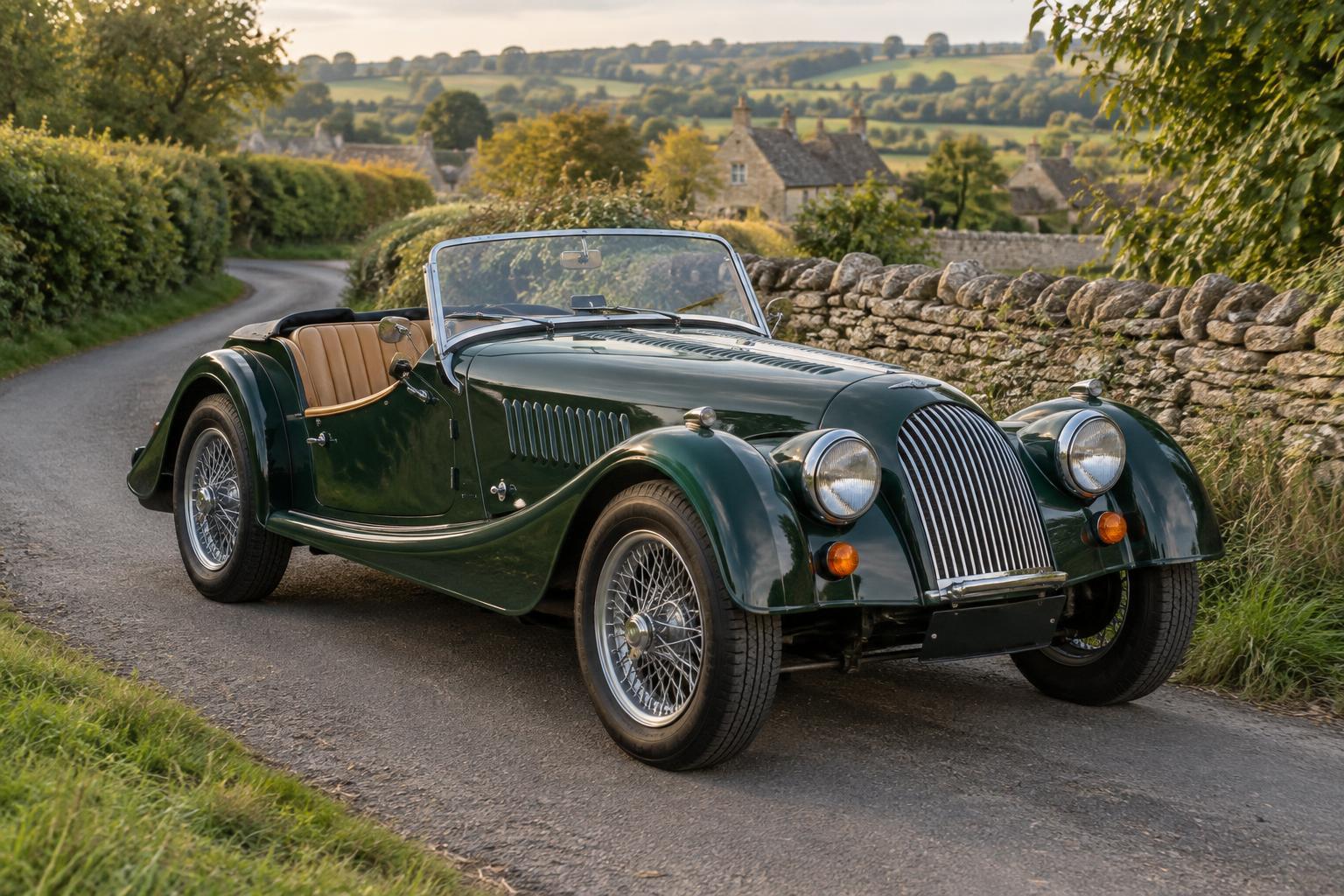
That continuity can make two 4/4s from different decades look closely related at a glance. Both may present the same broad themes: separate wings, a long bonnet, a small cabin and a low, upright windscreen. Look more closely, though, and the details of the body, dashboard, lighting and running gear tell a more specific story. For anyone exploring the model’s history, the build period matters more than the familiar outline alone.
Morgan’s traditional construction is part of that story. The cars are associated with an ash-wood body frame carried on a separate chassis, an arrangement that distinguishes them from most mass-produced sports cars. It does not mean every panel is made of wood; the frame supports metal bodywork. Nor does traditional construction imply that the engineering stood still. The interest of the 4/4 lies partly in how an established method accommodated successive updates.
Different engines, consistent purpose
Early 4/4s used four-cylinder engines supplied by Coventry Climax. Across the model’s later life, other units, including Standard and Ford engines, appeared in various versions. These changes were more than entries in a specification list. They affected the way individual cars delivered their power, the parts needed to maintain them and the experience from behind the wheel.
The 4/4 generally occupied the lighter-engined side of Morgan’s four-wheeled sports-car range, alongside alternatives such as the Plus 4. Its character was therefore not defined simply by having the largest engine available. A willing motor, modest size and an open driving position made it a car to enjoy at ordinary road speeds. The precise feel depends on the example: tyres, gearing, suspension condition and past modifications can all make a noticeable difference.
Because the badge spans so many mechanical combinations, it is worth treating “Morgan 4/4” as the beginning of a description rather than the whole description. A pre-war car and a much later one share a lineage, but they should not be assumed to have the same controls, performance or maintenance needs.
Why the 4/4 endured
Many sports cars are remembered because they introduced a radical new shape or a dramatic advance in performance. The 4/4’s significance is different. It demonstrates how a recognisable design can remain desirable while being adapted, piece by piece, to new eras. Its long life also offers a view of British sports-car culture beyond racing results: weekend drives, small workshops, patient upkeep and the pleasure of travelling with the roof down.
That appeal comes with practical realities. A traditional open car can require more attention to weather protection, body condition and routine maintenance than a modern vehicle. Older examples may also have lived through several rounds of repair or restoration. Those considerations do not diminish the 4/4’s history; they are part of what makes each surviving car an individual.
The most useful way to appreciate the Morgan 4/4 is therefore to hold two ideas together. It is an enduring symbol of traditional British motoring, and it is also a family of cars changed by time. The shape invites nostalgia, but the details reward curiosity.