A new sort of everyday car
When the Morris Minor appeared in 1948, British families were emerging from years in which private motoring had been difficult for many. A modest car that could serve daily needs had obvious appeal. The Minor was not a luxury machine or a sporting special. Its importance lay in making ordinary journeys feel manageable, whether the destination was work, the shops or a weekend visit.
Designed under Alec Issigonis, the car paired a compact body with features that helped distinguish it from older small-car thinking. Its unitary construction dispensed with a separate chassis, while independent front suspension and rack-and-pinion steering contributed to its reputation for pleasant handling. Those details mattered because owners experienced them every time they drove. The Minor offered useful transport, but it also had a character that made routine miles enjoyable.
An unmistakable shape that kept evolving
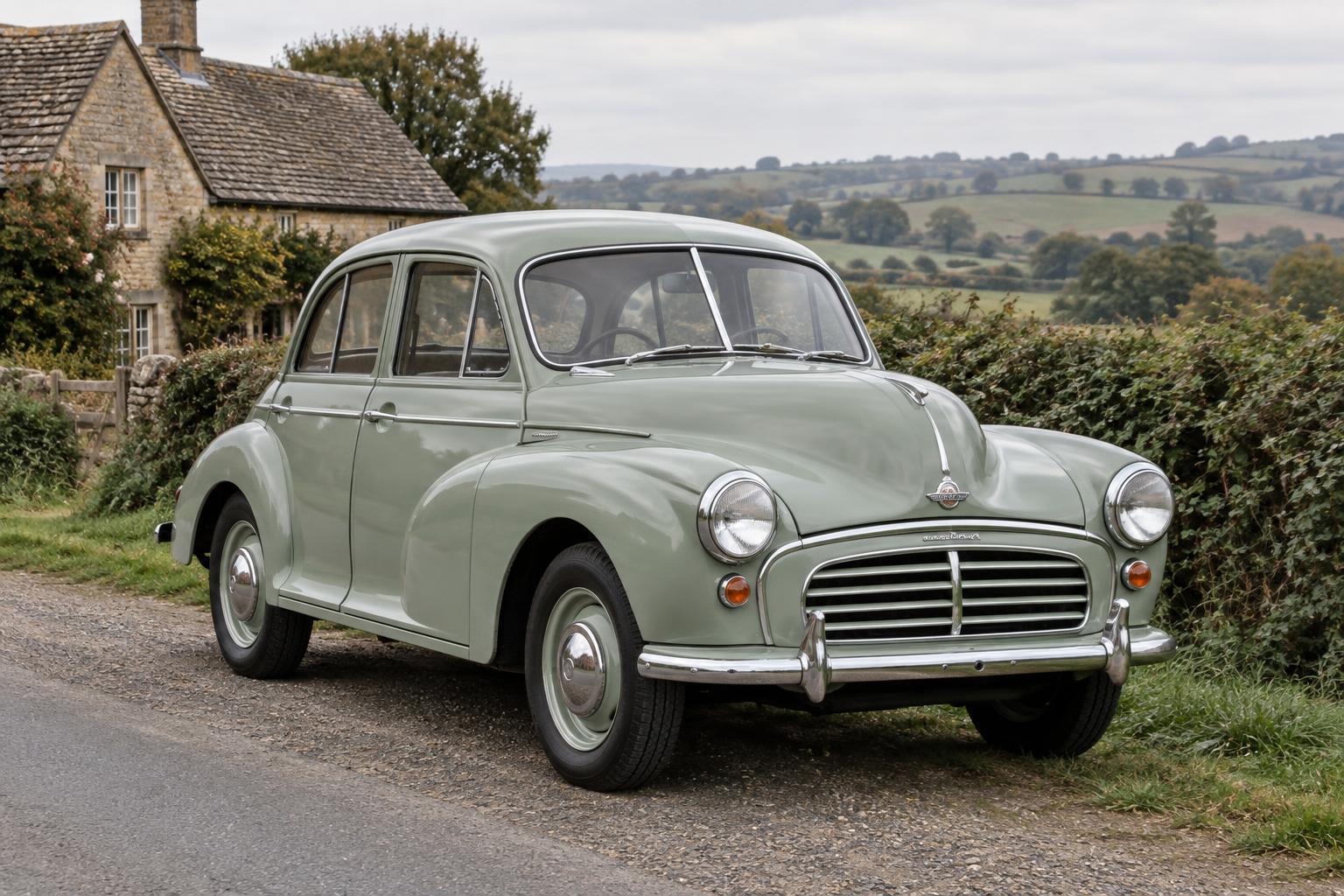
The Minor’s rounded wings, upright cabin and friendly proportions gave it a silhouette that remained recognisable throughout its life. It first appeared as a two-door saloon and convertible, with a four-door saloon following. The Traveller estate, with its exposed timber framing at the rear, became one of the best-known versions. Vans and pick-ups showed that the same basic idea could suit working life as well as family travel.
The familiar outline can make the Minor seem unchanged, yet it developed steadily. Early cars used a side-valve engine; later Series II models gained an overhead-valve engine. The Minor 1000 brought further changes, including a larger engine and a one-piece windscreen in place of the earlier split screen. Another engine increase followed. These revisions helped the car remain useful without sacrificing the appearance that owners had come to know.
Why it fitted British life
The Minor’s success was not simply a matter of specifications. Its size suited narrow streets and modest parking spaces, while its cabin could take passengers and everyday luggage. Different body styles let buyers choose a car for household duties, trades or deliveries. It was accessible in spirit: a driver did not need to treat it as an occasion car, even if a trip in one might later become a fond memory.
That breadth of use put Minors into many settings. A saloon might be a family’s regular transport; a van might be recognised around a neighbourhood by its trade markings. The Traveller offered a distinctive way to carry extra belongings. Such roles made the car visible across generations. Its place in British culture grew through repeated, ordinary encounters rather than through a single celebrated achievement.
From working car to cherished classic
As newer cars offered more speed, space and convenience, the Minor gradually moved out of daily service. Yet its straightforward layout and strong visual identity encouraged many owners to keep theirs running. The continued availability of parts and shared practical knowledge have also helped, although any individual car’s condition depends on its history and the quality of past repairs.
Preservation involves choices. Some owners aim for a period-correct appearance; others make discreet changes to better suit regular use. Neither approach erases the car’s original purpose as dependable transport, but careful work should respect its structure and condition. Rust, especially in structural areas, deserves more attention than shiny paint when assessing a Minor. On a Traveller, the exposed timber also needs close inspection: it is part of the body’s construction, not just decoration.
A lasting place on the road
The Morris Minor remains appealing partly because it connects a distinctive design to familiar routines. It was made in several forms, improved over time and used for jobs that rarely make motoring headlines. Today, seeing one on a country lane or outside a village shop can evoke that history without requiring the car to stand still as a museum piece.
For someone encountering the Minor for the first time, its story is a reminder that a classic need not have been rare or powerful when new. A car can become significant by serving people well, adapting to their needs and staying recognisable long after its original working life. That combination made the Morris Minor a fixture of British motoring—and continues to make it worth understanding.