A small car with a lasting appeal
Introduced in 1962, the Triumph Spitfire offered open-top motoring in a compact, approachable package. Its styling came from Giovanni Michelotti, while its mechanical roots lay in the Triumph Herald. The combination gave the Spitfire a distinct identity: a low two-seat body, a lively small engine and a forward-hinged bonnet that opened wide to expose much of the running gear.
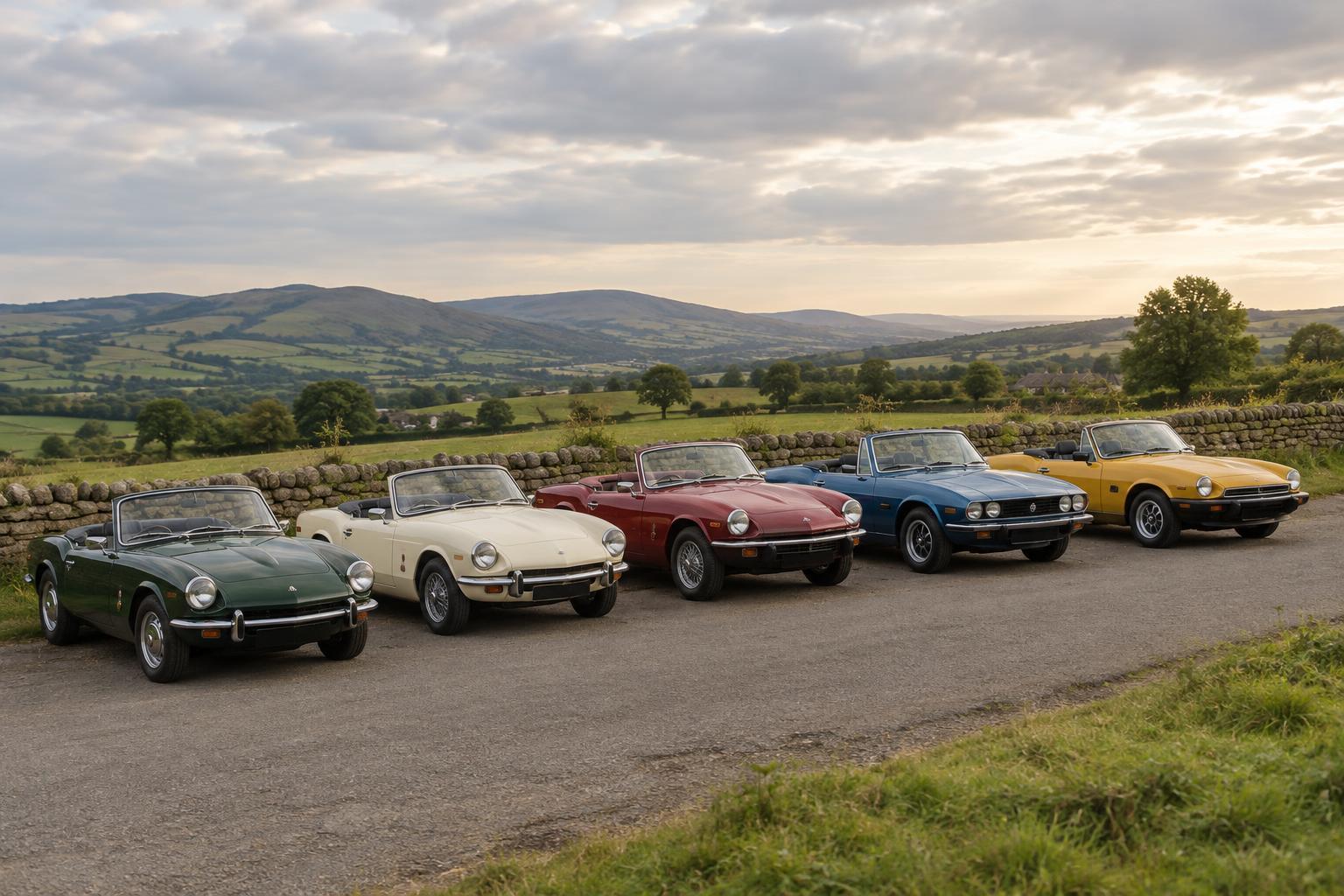
The five main generations are usually identified as the Mk1, Mk2, Mk3, Mk IV and 1500. None was a complete break from the original idea. Instead, Triumph gradually revised the engine, trim, body and rear suspension. Knowing that sequence makes it easier to understand why two Spitfires that look similar may feel different on the road.
Mk1 and Mk2: establishing the formula
The original Spitfire, later commonly called the Mk1, used an 1147 cc four-cylinder engine. Its appeal was not overwhelming power but the way a light, small roadster could make an ordinary journey engaging. Early cars have a particularly simple appearance, with a low nose, modest brightwork and a cabin that leaves little doubt about the car’s sporting intentions.
The Mk2 followed in 1964. It kept the 1147 cc engine but brought revisions intended to improve performance and everyday use, along with detail changes inside and out. To a casual observer, a Mk1 and Mk2 can be harder to distinguish than later generations. For an enthusiast, their attraction lies in that early, uncluttered Spitfire character.
Mk3: more engine, familiar shape
The Mk3 arrived in 1967 with an engine of roughly 1.3 litres. The extra capacity gave the car more flexibility while preserving its eager, lightweight feel. Styling changes included a raised front bumper, giving the nose a noticeably different expression from that of the earlier cars. Changes to details such as lighting and interior trim also helped move the Spitfire forward without disguising its origins.
This generation illustrates the Spitfire’s gradual development. It still looks and feels closely related to the first model, yet its added engine capacity makes it a distinct chapter rather than a minor trim update. As with any classic built over several years and sold in different markets, individual specifications deserve checking against the particular car.
Mk IV: a sharper look and a significant suspension change
Introduced in 1970, the Mk IV brought the most obvious visual restyle in the Spitfire’s story. The rear was squared off, the front was revised and the overall effect was more modern, though the basic two-seat layout remained. It retained the approximately 1.3-litre engine, so the new appearance did not signal a wholesale change of purpose.
Underneath, a revised rear suspension arrangement was especially important. Earlier Spitfires’ independent rear suspension could produce pronounced changes in wheel angle under some conditions. The Mk IV’s swing-spring layout was intended to make the car’s behaviour more manageable. It did not turn the Spitfire into a modern sports car, but it is a meaningful difference for anyone comparing an early example with a later one.
1500: the final development
The last generation took its name from its larger, approximately 1.5-litre engine. The Spitfire 1500 offered stronger low-speed pull than its smaller-engined predecessors, a useful quality for relaxed driving and touring. Power output and equipment varied by market and year, so the badge alone does not describe every car’s performance or appearance.
Later Spitfires also reflect the changing requirements of the markets in which they were sold. Bumpers, lighting and other details can differ, particularly between British and North American cars. Production ended in 1980, closing an unusually long run for a design that had begun with modest Herald-based underpinnings.
Which generation best represents the Spitfire?
There is no single answer. The Mk1 and Mk2 offer the simplest expression of the original concept; the Mk3 adds useful engine capacity while keeping much of the early look. The Mk IV pairs more angular styling with an important rear-suspension revision, while the 1500’s extra torque may suit drivers who prefer an easier pace on longer journeys.
Condition and the quality of past work matter more than a model badge when considering an individual car. The Spitfire’s wide-opening bonnet makes many components easy to see, but it cannot reveal every issue with a body, chassis or mechanical system. Appreciating the five generations is therefore about more than choosing a favourite shape: it is a way to see how Triumph kept an accessible British roadster appealing across changing tastes and expectations.