A different kind of Triumph
When the Triumph Stag entered production in 1970, it offered a different proposition from the marque’s two-seat sports cars. It was an open-topped grand tourer with space for four, a V8 engine and an emphasis on relaxed distance driving. That combination gave it a character of its own: less focused on nimble back-road driving than a small roadster, but more open and informal than a conventional saloon.
The Stag emerged during a period when British manufacturers were trying to serve buyers who wanted performance alongside everyday comfort. Its rear seats were modest, especially for adults, yet they made the car more flexible than a strict two-seater. The appeal was not simply speed. It was the prospect of taking a longer journey with luggage, company and the roof down when the weather allowed.
From Michelotti’s design to a production car
Italian designer Giovanni Michelotti had a long association with Triumph, and his work helped give the Stag a recognisable family resemblance to other models of its era. The car began as a styling exercise based on Triumph mechanical components before being developed into a production model. Its broad front end, low waistline and clean body sides made it look substantial without disguising its open-car purpose.
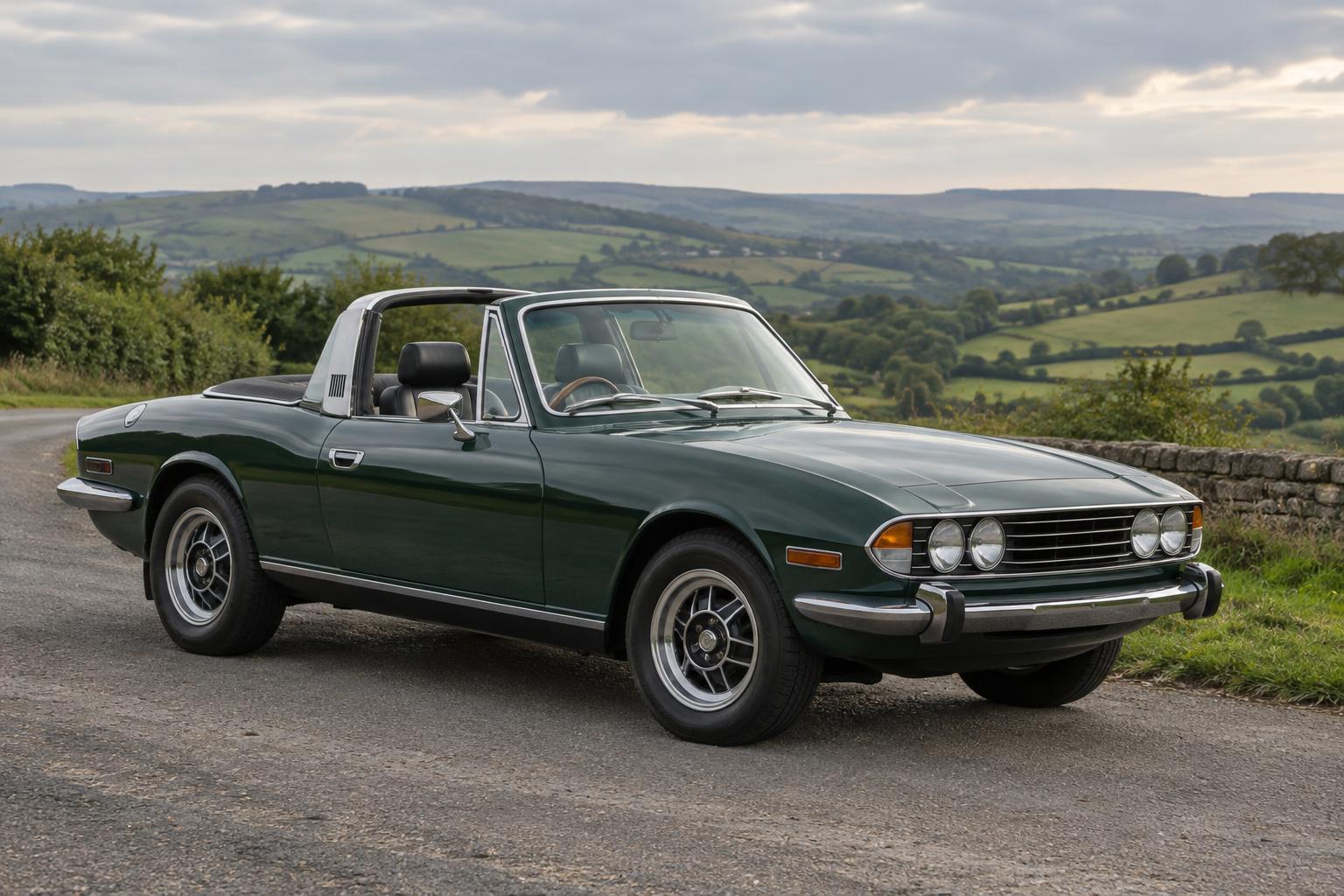
Turning a striking design into a car that could be built and sold required compromises. A four-seat convertible needs a body capable of coping with the loss of a full fixed roof. On the Stag, the prominent T-shaped structure above the passenger compartment became part of the solution as well as its most recognisable feature. Rather than hiding a structural necessity, the finished design made it central to the car’s appearance.
The V8 and the touring brief
Triumph developed a three-litre V8 for the Stag, giving the car an engine that suited its grand-touring ambitions. Smooth power delivery mattered to the concept: the Stag was intended to cover ground comfortably, not merely to feel lively on a short drive. Buyers could choose between manual and automatic transmission, allowing the car to serve different ideas of what an enjoyable long-distance journey should feel like.
The driving position, cabin fittings and available weather protection reinforced that touring role. Owners could use a folding soft top or a removable hardtop, though living with either arrangement involved the practicalities familiar to many classic convertibles. The Stag’s appeal lay in how these elements worked together. Its engine, seating and open-air layout offered an experience distinct from both Triumph’s smaller sports cars and its closed family models.
Why its reputation became complicated
The Stag’s history cannot be separated from the reputation of its engine and cooling system. Overheating and associated engine trouble became closely linked with the model in owners’ discussions. It would be too simple, however, to treat every surviving car as having the same weaknesses. Maintenance, earlier repairs and the standard of any later work can make a substantial difference to an individual example.
That distinction matters when looking back at the car. The Stag was an ambitious design whose ownership demands did not always match the easy-going image suggested by its styling. Over time, enthusiasts have developed approaches to caring for these cars, while some have been altered from their original specification. Such changes form part of the model’s history, but they also mean that two Stags can tell quite different stories about how they have been used and preserved.
The Stag’s place in British motoring history
Production ended in 1977, leaving the Stag as a relatively short-lived model with an unusually clear identity. It did not become a broad family of successors, and it was never simply a convertible version of an existing Triumph saloon. Its four-seat layout, dedicated V8 and unmistakable roof structure made it a distinctive attempt to create a British open-air grand tourer.
Today, the Stag is worth considering on those terms rather than measuring it only against smaller roadsters or more powerful coupes. Its history brings together elegant styling, practical engineering choices and the consequences of a demanding mechanical design. For enthusiasts, that mixture explains why the car remains interesting: the Stag captures both the confidence and the complications of British carmaking in the 1970s.