Choose the kind of day you want
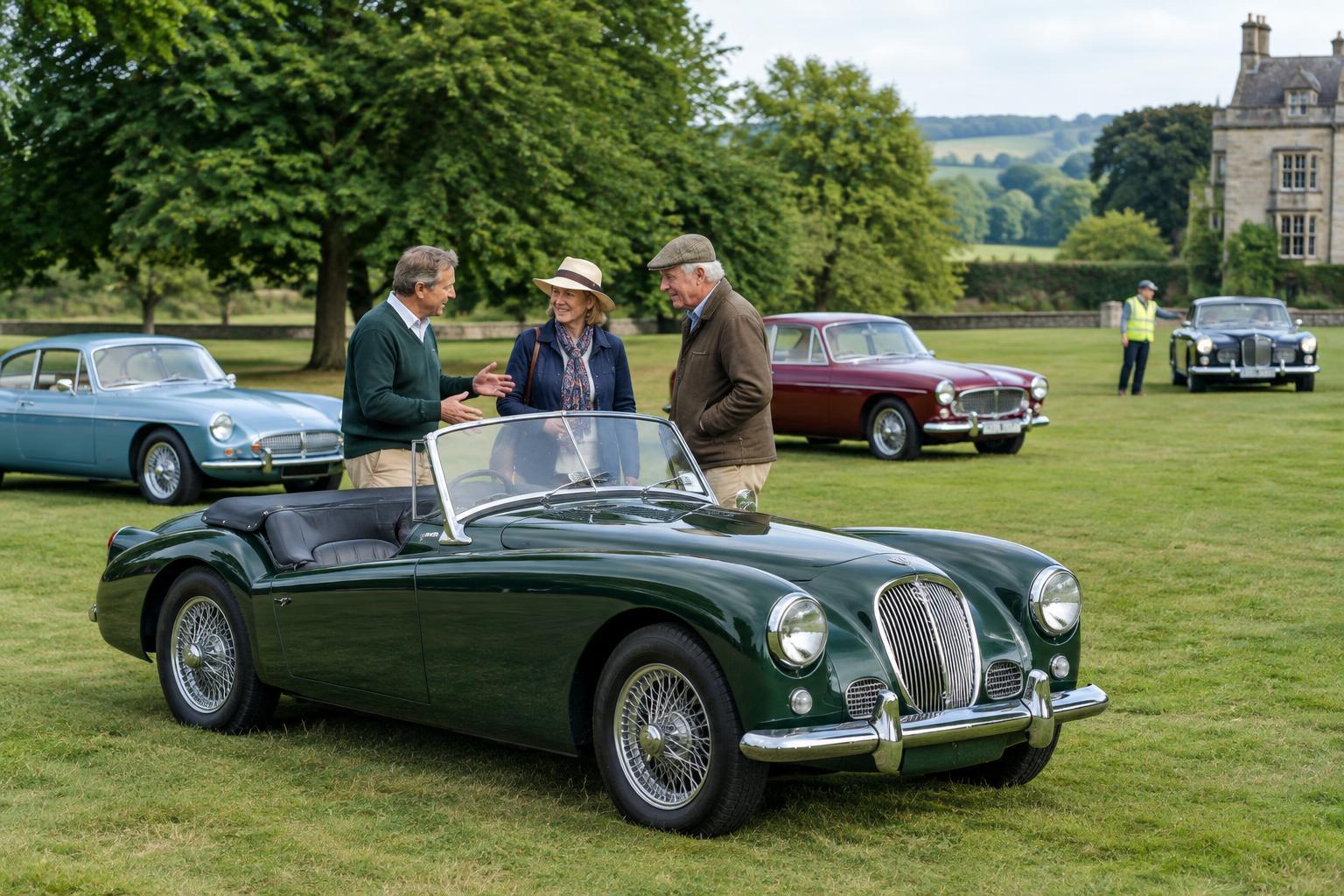
Classic-car shows range from informal gatherings on a village green to large events with displays, traders and scheduled activities. Some welcome any interesting older vehicle; others have eligibility rules or space reserved for particular marques. Before setting off, check the organiser’s information for opening times, tickets, parking, accessibility, pets and weather arrangements. If you hope to display a car, look for a separate exhibitor entry process rather than assuming a visitor ticket includes display space.
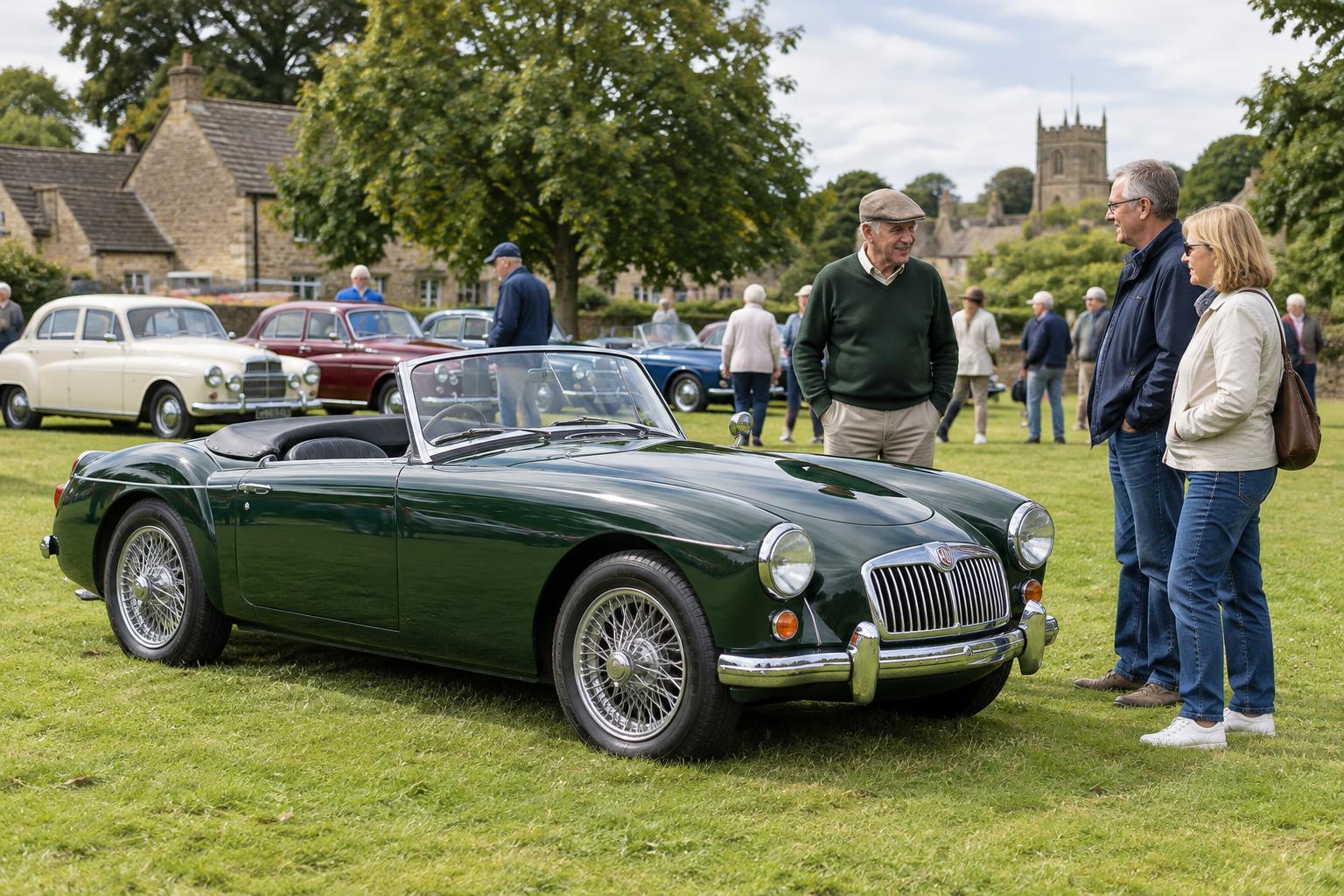
As a visitor, give yourself time to wander without trying to inspect every car. You might follow a favourite British marque, compare different eras or simply see what catches your eye. Event programmes and signs can help you find your bearings, but conversations often provide the most memorable discoveries. An owner may explain why they chose a particular colour, how a car feels on the road or which small jobs keep it usable.
Arriving as a visitor
Comfort matters more than specialist knowledge. Wear shoes suitable for grass or gravel, dress for changeable weather and bring water if you expect to spend several hours outdoors. A small bag leaves your hands free for a programme or camera. If you are considering buying a classic someday, take notes on what appeals to you as well as what does not. A car that looks wonderfully compact in photographs may feel quite different when you see its cabin and luggage space in person.
You do not need to identify every model to enjoy the show. Read any display cards before asking questions, then ask owners about their own cars rather than expecting them to speak for an entire model range. Some will be delighted to talk at length; others may be taking a break or watching an activity. A friendly greeting and a little patience make it easy to judge whether it is a good moment to chat.
Bringing a car to display
If you are exhibiting, read the joining instructions carefully. Organisers may specify an arrival window, an entrance for display vehicles and rules about movement while the public is on site. Allow extra travel time so you can follow stewards’ directions without rushing. Before departure, make the usual roadworthiness checks appropriate to your car and the journey: tyres, fluid levels, lights and anything you have recently worked on. Pack the items you ordinarily need for a drive, along with a cloth for light cleaning once parked.
A show car does not have to be a flawless restoration unless the event sets a particular standard. A tidy, regularly driven classic can be just as interesting to visitors as a concours entry. Remove loose valuables, leave room for neighbouring cars and consider a short display card naming the model and sharing a few accurate details about your example. If you are unsure whether to open the bonnet or use a sign, look at the event guidance and the space around you. Keep keys secure, and ask a steward before moving the car during show hours.
Etiquette around the cars
The simplest rule is to look closely but touch only with permission. Avoid leaning on bodywork, reaching into open windows or opening doors, bonnets and boots yourself. Keep bags, umbrellas and camera straps clear of paint and trim. If you are visiting with children, help them enjoy the shapes, badges and details while giving displayed vehicles enough space. Owners usually appreciate genuine curiosity far more than a confident guess about what a car must be worth.
Photography is generally part of the experience, but be considerate when an owner is cleaning, manoeuvring or having a conversation. Ask before photographing someone inside a car, and respect any requests for privacy. Exhibitors can help too: a clear path around the vehicle makes it easier for visitors to look without squeezing between bumpers. If something goes wrong or an obstacle creates a hazard, tell an organiser rather than trying to direct vehicle movements yourself.
Leave time for the unexpected
A classic-car show can be a useful lesson in the variety within British motoring culture. Restored cars sit alongside well-used survivors, modified examples and vehicles whose owners have taken different approaches to preservation. Try asking what a change has made easier to live with, or why an original detail mattered to its owner. You may come away with ideas for a future tour or maintenance job, even if you arrived only to spend a pleasant afternoon among cars.
If you are exhibiting, do not feel obliged to stand beside your car all day. Take breaks, see the other displays and return in good time for any departure instructions. As a visitor, leave a little energy for one final walk past the cars that drew your attention earlier. Whether you bring a classic or simply bring your curiosity, the best first show is one that helps you feel welcome enough to visit another.